Before you start worrying — where do these concerns even come from?
Microdermabrasion is mechanical exfoliation of the epidermis — the device removes a layer of dead cells, stimulating skin renewal. Sounds intense? On paper, yes. In practice, it's one of the gentler professional exfoliating treatments. The problem lies in the name itself — _micro_, _dermabrasion_ — which sounds like something from a dermatology clinic. Online, it's easy to come across descriptions of laser or chemical treatments that get mixed up with microdermabrasion.
7 concerns — worry versus reality
Below, we compare what you're most likely worried about with what specialists actually see in the salon every day.
Concern
what you hear before the treatment
- "It hurts like being scrubbed with sandpaper"
- "Your skin peels off in big flakes"
- "You can't leave the house for a week"
- "Your face is completely red afterwards"
- "With acne, it's an absolute no"
- "Sensitive skin disqualifies you"
- "You only see results after a month"
Reality
what specialists say in the salon
- The sensation feels like a gentle massage with light suction — pain-free for most people
- Exfoliation is subtle, often invisible to the naked eye for the first 1–2 days
- Most people return to daily activities the next day
- Some people notice mild redness — usually gone within a few hours
- For mild acne, the treatment can be suitable following consultation
- Protocols exist for sensitive skin — the decision rests with the specialist
- Improved texture is often visible after just one session
What the treatment looks like step by step — so nothing catches you off guard
Knowing the stages of the treatment removes unnecessary stress. Here's what typically happens during a microdermabrasion session:
- 01
Thorough skin cleansing
The specialist removes makeup and impurities — skin needs to be clean for even exfoliation.
- 02
Skin assessment and intensity calibration
You examine your skin together with the specialist. She adjusts the settings to its current condition — sensitivity, thickness, problem areas.
- 03
The exfoliation itself
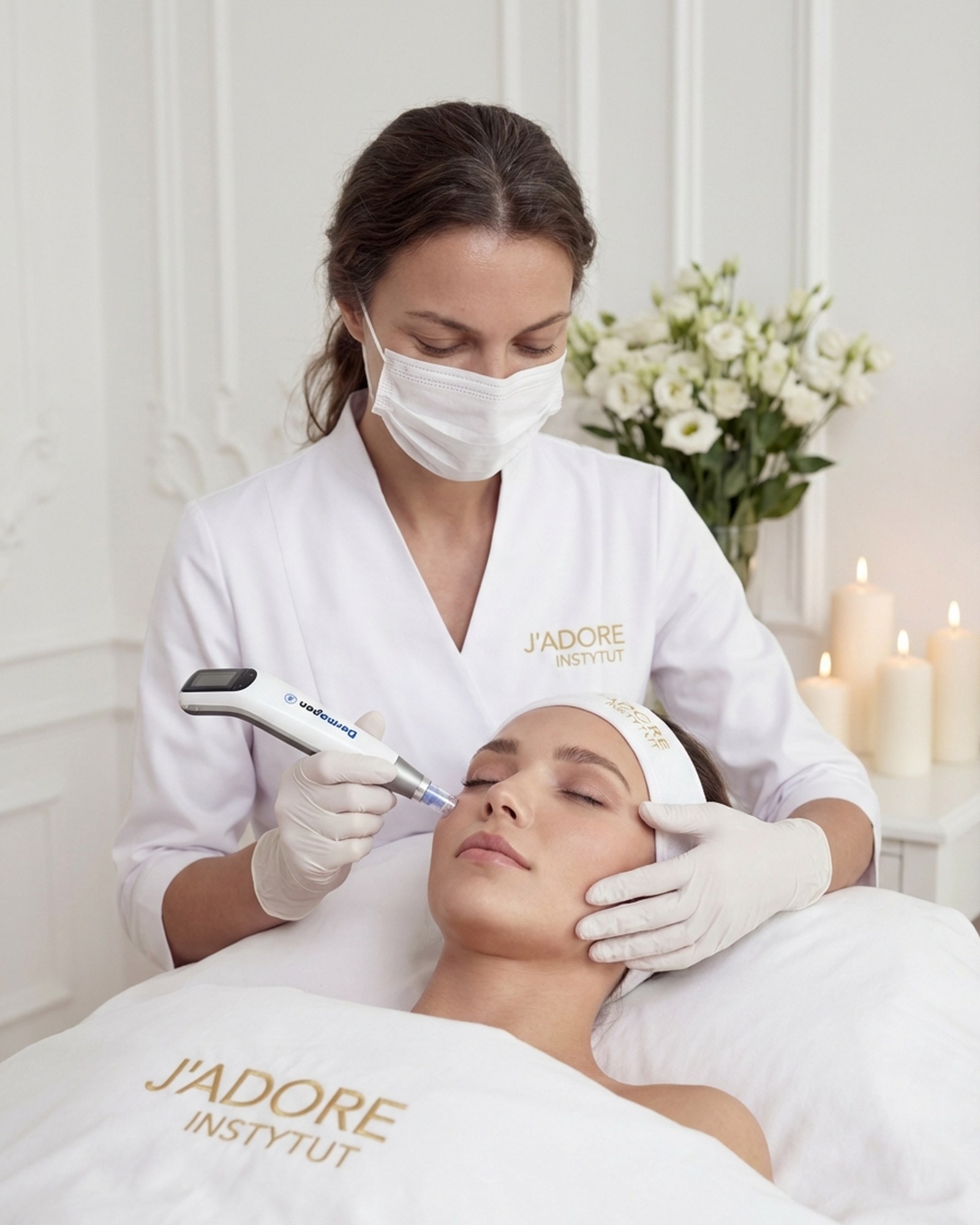
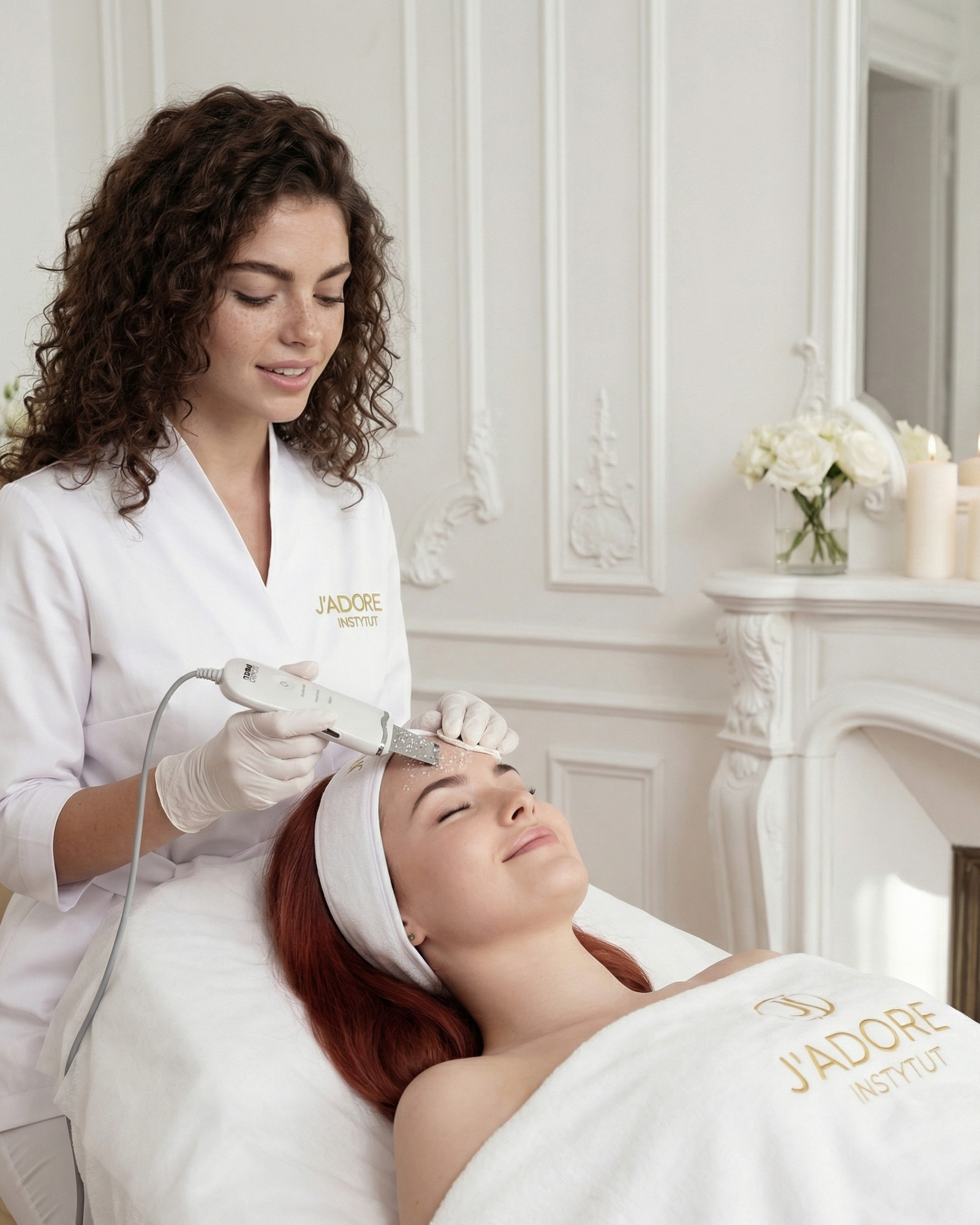
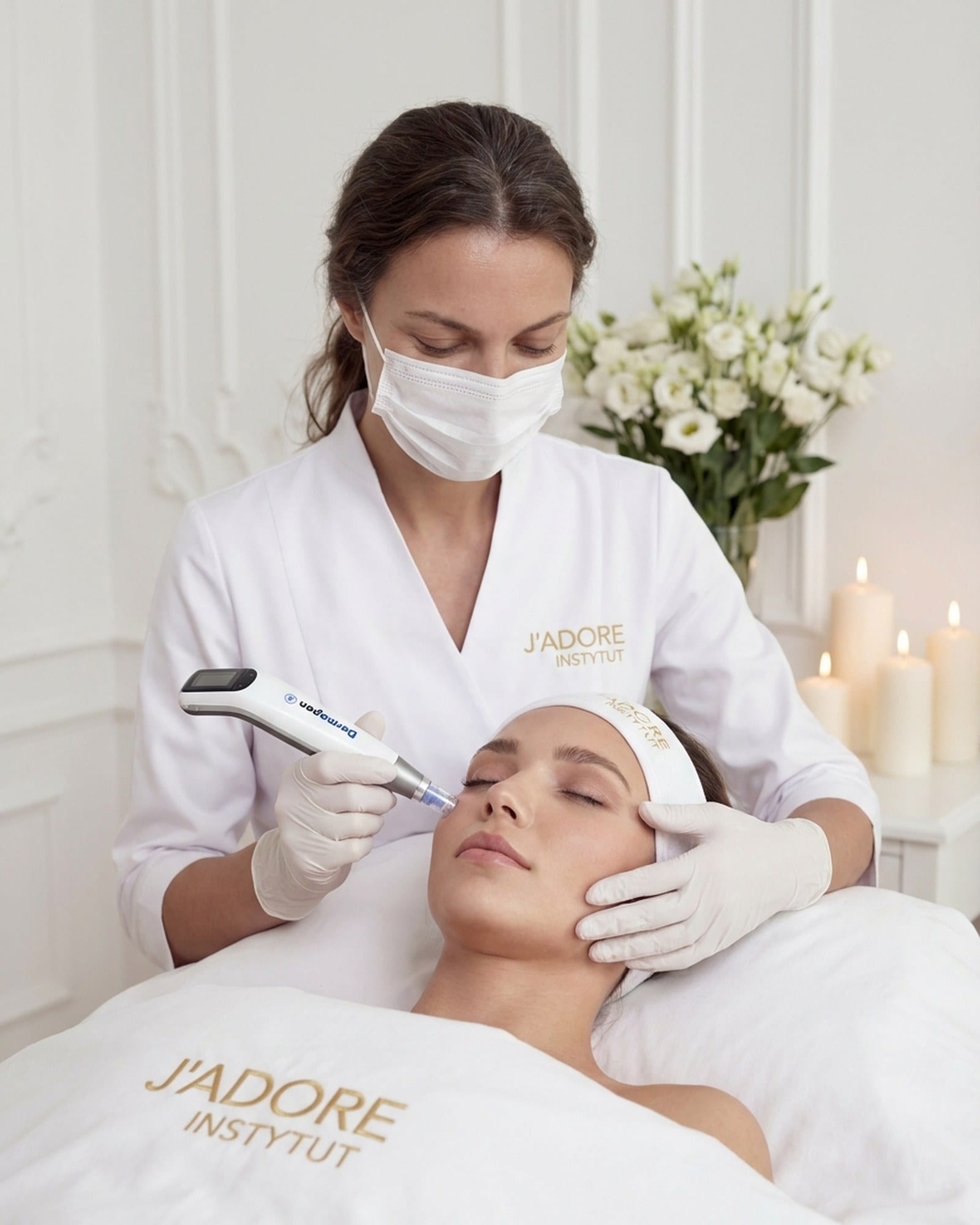
The device tip glides across the skin, removing a layer of dead cells. The sensation is most often described as gentle suction or warmth — not pain.
- 04
Aspiration — removing exfoliated skin
The device simultaneously suctions away what it removes. Skin isn't left covered in residue — it stays clean and ready for the next step.
- 05
Application of active ingredients
Right after exfoliation, skin absorbs ingredients far more effectively — a good moment for a serum with vitamin C, hyaluronic acid or other active substances.
- 06
Final hydration and SPF
The treatment closes with a soothing, hydrating cream and sunscreen. SPF after microdermabrasion is essential — skin is temporarily more sensitive to sun exposure.
What happens after the treatment — and why this stage matters just as much
Microdermabrasion isn't the end of your visit — it's the starting point. What you do over the next 48–72 hours has a real impact on how your skin heals and how quickly you see results.
- SPF every morning — for at least a week after the treatment, skin is more sensitive to UV; skipping sunscreen is a simple route to hyperpigmentation
- Avoid makeup for 24 hours — skin needs to breathe; freshly cleaned pores shouldn't be clogged straight away
- No active acids in your own routine — wait at least 3–5 days before using AHA, BHA or retinol
- Moisturise more intensively than usual — skin is temporarily drier and may sting on contact with alcohol in cosmetics
- Avoid saunas, swimming pools and intense physical activity — for 24–48 hours, to avoid irritating warmed-up skin
Diamond or crystal microdermabrasion — does it matter?
The two most popular versions of the treatment differ in how they exfoliate: the diamond version uses a tip covered in diamond particles, while the crystal version "fires" tiny crystals and suctions them back up. Which is better?
Diamond microdermabrasion
exfoliation using a diamond-tipped head
- Precise — works well around the eyes and nose
- No risk of crystals getting into the eyes
- More often used for sensitive and vascular skin
- Allows more precise control of intensity
Crystal microdermabrasion
exfoliation using a stream of aluminium oxide crystals
- Often recommended for thicker skin prone to keratosis
- A more intense exfoliating option
- Long history of use in cosmetology
- Available in most salons
In practice, the choice between the two versions depends on your skin's condition and the specialist's preference — both can deliver very good results. The skill and judgement of the person performing the treatment matter more than the method's name.
What to combine microdermabrasion with
Microdermabrasion works well as part of a broader skincare plan. After exfoliation, skin absorbs active ingredients much more effectively — and it's worth making the most of that.
Microdermabrasion + needle or needle-free mesotherapy
Exfoliated skin transports active ingredients deeper — mesotherapy's effectiveness can be noticeably higher.
Microdermabrasion + algae or enzyme mask
A standard finish for many treatments — the mask enhances the soothing and hydrating effect.
Microdermabrasion + hydrogen cleansing or cavitation
A combination of mechanical exfoliation with deeper cleansing — popular for skin with enlarged pores and a tendency towards blackheads.
Microdermabrasion as preparation for chemical peels
Removing an uneven layer of dead skin often improves how evenly acids are absorbed in the next stage.
Who microdermabrasion works best for
The treatment isn't suited to everyone in the same way, but the range of people it can help is wide. It's most often chosen by people who want to:
- Improve skin texture — dullness, roughness, uneven surface
- Reduce surface-level hyperpigmentation — sun spots, post-acne marks, uneven skin tone
- Minimise the visibility of pores — particularly in the T-zone
- Refresh skin regularly — as a maintenance treatment supporting results from in-salon skincare
- Prepare skin for an important occasion — a few days before a wedding or major event (not last minute — you need time in case skin reacts)
- Boost absorption of active ingredients — for skin that isn't responding to home skincare