Where does Kobido come from — and why does it matter?
Kobido did not originate in a cosmetic salon. Its roots reach back to 15th-century Japan and the Anma technique — a manual bodywork method based directly on martial arts systems and oriental medicine. The word “Kobido” can be translated as “the ancient way of beauty” — but beauty is the result, not the starting point. Precision is the starting point.
For hundreds of years, the technique was passed down within a small circle of masters and formed part of the rituals of the Japanese imperial court. It was not publicly available. This shaped its character: it developed outside commerce, without pressure for quick results, but with an obsession for detail. Kobido only appeared in Europe in the second half of the 20th century. Even today, it remains a technique taught through a strictly codified and certified system.
What does a facial massage really do — and where does a regular massage stop?
To understand what makes Kobido different, we need to go one level deeper — literally. Beneath the facial skin are 44 muscles. They, rather than the skin alone, largely determine how the face looks. These muscles are unique. Unlike those in the arms or legs, most attach directly to the skin rather than the bone. This is why we can smile, furrow the forehead and wrinkle the nose. It is also why the face changes shape and proportions when muscles lose tone or shorten due to habitual tension.
Regular facial massage
surface-level work
- Mainly works with the fascia and skin
- Improves circulation and lymph flow in the superficial layer
- Relaxation, relief and temporary radiance
- Pleasant, safe and accessible
Kobido
muscle-focused work
- Targeted activation and relaxation of specific facial muscles
- Works with muscle attachments and the fascial layer
- Lymphatic drainage as part of the sequence
- A precise sequence, not improvisation
The difference is similar to that between a walk and strength training. Both engage the legs. But only one builds strength and muscle tone. A relaxing facial massage does many good things: it calms, improves skin circulation and gives you a moment to breathe. Kobido targets something different. It aims to change the state of the muscle — relaxing those that are chronically tense, which pull the skin in the wrong direction, and stimulating those that have weakened and no longer hold the face upright.
The Kobido mechanism: what happens step by step
Kobido is not a single technique — it is a sequence of several dozen precise movements that must be performed in a specific order. Each has a different purpose and works on a different layer. This is one feature that distinguishes Kobido from “freestyle” massage, where the specialist selects movements intuitively.
- Lymphatic drainage (opening). The treatment begins by working with the lymph nodes in the neck and décolletage — before the specialist touches your face. This is not accidental: the lymphatic system needs an open “outlet” before facial tissue is mobilised. Without this stage, the drainage effect would be much weaker.
- Fascial work. Fascia is a thin, fibrous tissue that surrounds every muscle and connects the layers of the face. With age and under stress, it becomes hardened and adheres together, restricting muscle mobility. Kobido uses specific pressure and “gliding” techniques to gently release these adhesions.
- Muscle activation and toning. This is the key stage — a series of fast, rhythmic taps and vibrations that stimulate the muscle to contract. As a result, the muscle “remembers” that it needs to work. These techniques originate directly from Anma. They may feel most unfamiliar to anyone expecting relaxing strokes.
- Acupressure (energy points). Kobido incorporates work with acupressure points on the face — the same points used in Chinese medicine for thousands of years. Pressure on specific points is intended to regulate muscle tension and support circulation. This element has no equivalent in any Western facial massage.
- Closing and cooling. The treatment ends by returning to drainage techniques and gentle strokes. After intensive stimulation, the muscle needs to “calm down” — much like after physical training. This stage also determines whether the skin is calm and even after the treatment, rather than red.
Kobido results: what to expect — and what not to
Kobido has become popular under the phrase “natural lifting without a scalpel”. While this description is appealing, it can also be misleading. It is worth separating what is real and well documented from what is sometimes overpromised.
- Improved tone and a “lifted” facial contour — some people notice this result after the first session. It comes from muscle tone and reduced swelling. For some, it is noticeable; for others, subtle. It depends on the initial condition of the muscles and how much tension or weakness has accumulated over the years.
- Reduced puffiness and contouring — lymphatic drainage, an integral part of the sequence, can visibly reduce morning swelling and facial “heaviness”. This is one of the more predictable results. It is particularly noticeable in people prone to water retention.
- Improved skin tone — intensive circulation stimulation makes the complexion look radiant and more “alive” immediately after the treatment. In the long term, regular sessions may support skin oxygenation.
- Release of tension — especially in the forehead, jaw and eye area. People who unconsciously clench their jaws or furrow their forehead, which commonly happens when working at a computer, often report clear relief after the treatment.

Kobido and other methods — when to choose which
Kobido does not exist in isolation. In good salon practice, it is one element of a broader facial plan. Understanding when to choose Kobido and when to use other methods is key to a sensible approach — rather than collecting treatments without logic.
Kobido
when the concern lies in the muscle
- Loss of tone and “drooping” facial contour
- Chronic muscle tension (jaw, forehead)
- Morning swelling and lymphatic congestion
- A need for regular skincare without intervention
Relaxing massage
when you mainly need to unwind
- Stress, tension and a need for calm
- Improved wellbeing and sleep quality
- Temporary radiance and skin relaxation
- Complementing your home skincare
Salon treatments
when deeper work is needed
- Loss of volume and support (volumetry)
- Skin laxity requiring regeneration
- Discolouration, scars, skin texture
- Structural changes beyond manual techniques
Kobido and salon treatments are not alternatives — they are often a natural complement. Massage prepares the skin and muscles, and supports microcirculation. After some aesthetic procedures, it is even a recommended part of recovery. That is why reputable salons do not ask “Kobido or a treatment?”, but “in what order and how often?”
What to do — where to start
Kobido is not difficult to understand. However, to bring real results, it must be performed correctly. It requires the right sequence and someone who truly understands facial anatomy. Poorly performed Kobido may simply be ineffective. In rare cases, technical errors may also cause unnecessary tissue irritation.
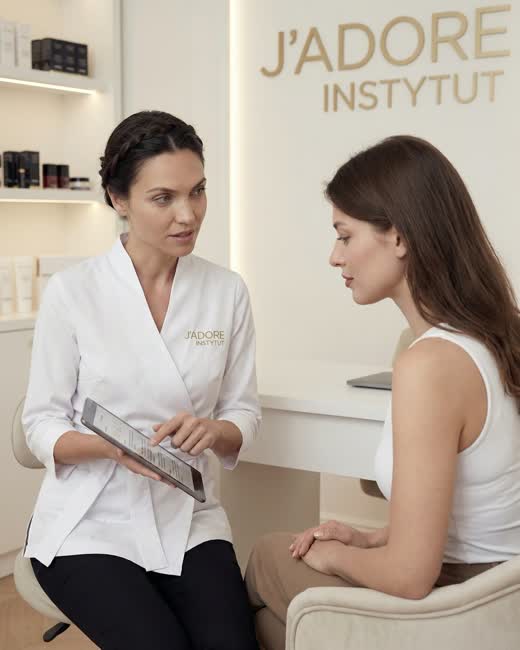
- Start with a consultation, not a treatment booking. A good specialist will ask about your goals, assess your skin and muscles, and honestly tell you whether Kobido is the right choice at this stage. If not, they should suggest what to choose instead or what to do beforehand.
- One treatment is a trial, a series is an investment. Results after the first session may be visible. However, just like after your first gym workout, they do not yet say much about the long-term potential. Kobido works cumulatively. Regular sessions build on one another.
- Kobido combines well with home skincare. After the treatment, your skin is well prepared to absorb active ingredients. This is a good time to use a high-quality serum or mask. Your specialist should advise what makes sense and what is best avoided immediately afterwards.