Where the massage-lift myth came from
The myth was born where three things meet: real, short-term effects of massage, the demand for a cheap, at-home solution, and social media's remarkable skill at selling "before and after" results. That last point deserves its own sentence. The "after" photo is usually taken minutes after the massage — when the face is literally rosier, plumper, more relaxed. No one ever posts the shot from the next morning. And that's exactly where the line blurs between a momentary effect and a lasting change in skin structure.
The myth was reinforced further by the Japanisation and Koreanisation of beauty — Kobido massage, Gua Sha and cupping techniques entered mainstream beauty carrying an aura of ancient effectiveness. Many of them have genuine therapeutic value. None reverses changes caused by progressive loss of collagen, subcutaneous fat and facial bone. That's not a flaw in these techniques — it's simply physics.
What massage really does — and it's actually quite a lot
Before we start dismantling the myths, it's only fair to say this plainly: facial massage has real, proven value — you just need to know what it consists of. Regular, correctly performed mechanical stimulation of tissue can improve several things at once.
- Lymphatic drainage. Massage along lymphatic pathways clears excess fluid from tissues. The face often looks noticeably lighter afterwards, less puffy. This is particularly visible in the morning, when overnight stillness encourages fluid build-up.
- Microcirculation. Mechanical pressure and stretching of tissue stimulates blood flow in the capillaries. Skin looks fresher, more "awake" — and it genuinely receives better nourishment for a few hours after the massage.
- Muscle tension. Chronically tense facial muscles — forehead, jaw, around the eyes — respond to the relaxing work of massage much like neck muscles after hours at a computer. Releasing that tension can visually "open up" the face.
- Cosmetic absorption. Massage with a serum or oil improves the penetration of active ingredients into the skin. It doesn't push them deeper than the skin barrier allows, but it definitely improves contact with the skin's surface.
- Relaxation effect. The soft tissue of the face and scalp is linked to the autonomic nervous system. Massage can reduce tension, which affects not just how you feel but also how your face looks.
What massage won't do — and this is where the myth begins
Myth 1: "Massage lifts sagging tissue." This is the most popular claim and the biggest misunderstanding. A sagging facial contour results from several things at once: loss of fat in the subcutaneous compartments, weakened skin ligaments, reduced facial bone density and collagen loss. None of these changes respond to surface-level mechanical massage. Massage can temporarily improve drainage and relax muscles — contours may look sharper for a few hours. That isn't a lift. It's a contour with less fluid retention.
Myth 2: "Daily Gua Sha builds collagen." The Gua Sha technique involves moving a tool across the skin with moderate pressure, stimulating microcirculation and drainage. That effect is real. Building collagen, however, requires stimulating fibroblasts at the level of the dermis — deeper than the gentle pressure of a stone can reach. Treatments that genuinely stimulate collagen production work through controlled thermal, mechanical or chemical stimulation at that exact depth. Gua Sha doesn't reach those layers.
Myth 3: "Firmer pressure speeds up results." The opposite is true. Facial skin — especially around the eyes and mouth — is delicate. Excessive or overly intense pressure can stretch elastin fibres, irritate small blood vessels, and paradoxically accelerate tissue laxity. Tutorials where the presenter pulls the skin upward with considerable force aren't lifting — they're stretching. It looks impressive on camera. On your face, it can have the opposite effect long-term.
Myth 4: "Regular massage can replace a treatment." This is a regression to thinking of skin as a muscle at the gym — "the more you work it, the bigger the effect." Skin ages differently: volume loss, changes in collagen and elastin structure, and gravitational tissue shift are biological processes, not the result of neglect. Massage doesn't stop these processes. It can accompany them as good skincare — but not as a substitute for professional work on deeper structures.
When massage results disappear — the reality check
The most honest test of a "lifting" massage is simple: take the "after" photo two hours after finishing, not two minutes. Massage improves drainage and microcirculation — both effects are real and visible, but temporary. Once lymphatic fluid returns to its normal rhythm and blood stops being intensely pumped into surface vessels, the face looks the way it did before the massage. That doesn't mean the massage was useless — it means the effect was exactly what it is: tissue hygiene, not structural remodelling.
Temporary effects of massage
Visible right after the treatment, fading within hours
- Flushed, "awakened" complexion
- Reduced morning puffiness
- Sharper contour after lymphatic drainage
- Relaxed muscle tension
- Better absorption of subsequent skincare products
Lasting changes — what massage doesn't change
Structures that require deeper stimulation or treatment
- Depth of static furrows and wrinkles
- Loss of subcutaneous volume and bone support
- Tissue sagging caused by weakened ligaments
- Density and quality of collagen and elastin
- Hyperpigmentation and skin texture
When a "cheap lift" becomes an expensive delay
Facial massage is healthy — that's not an argument against it. The argument is different: when massage replaces the decision to have a real treatment, it delays the change you actually want. And in cosmetology and aesthetic medicine, timing matters. Many methods work better while tissue is still in relatively good condition — before volume loss becomes significant, before wrinkles set in deeply, before skin has lost a substantial amount of collagen.
People who put off a treatment decision for years, working daily with a Gua Sha stone, often arrive at the salon at a point where they need more, not less. This isn't a case for "massage is bad." It's an observation that the cheapest solution isn't always the cheapest in the long run, if it means putting off something that time only complicates.

Massage as part of a plan — not as an alternative
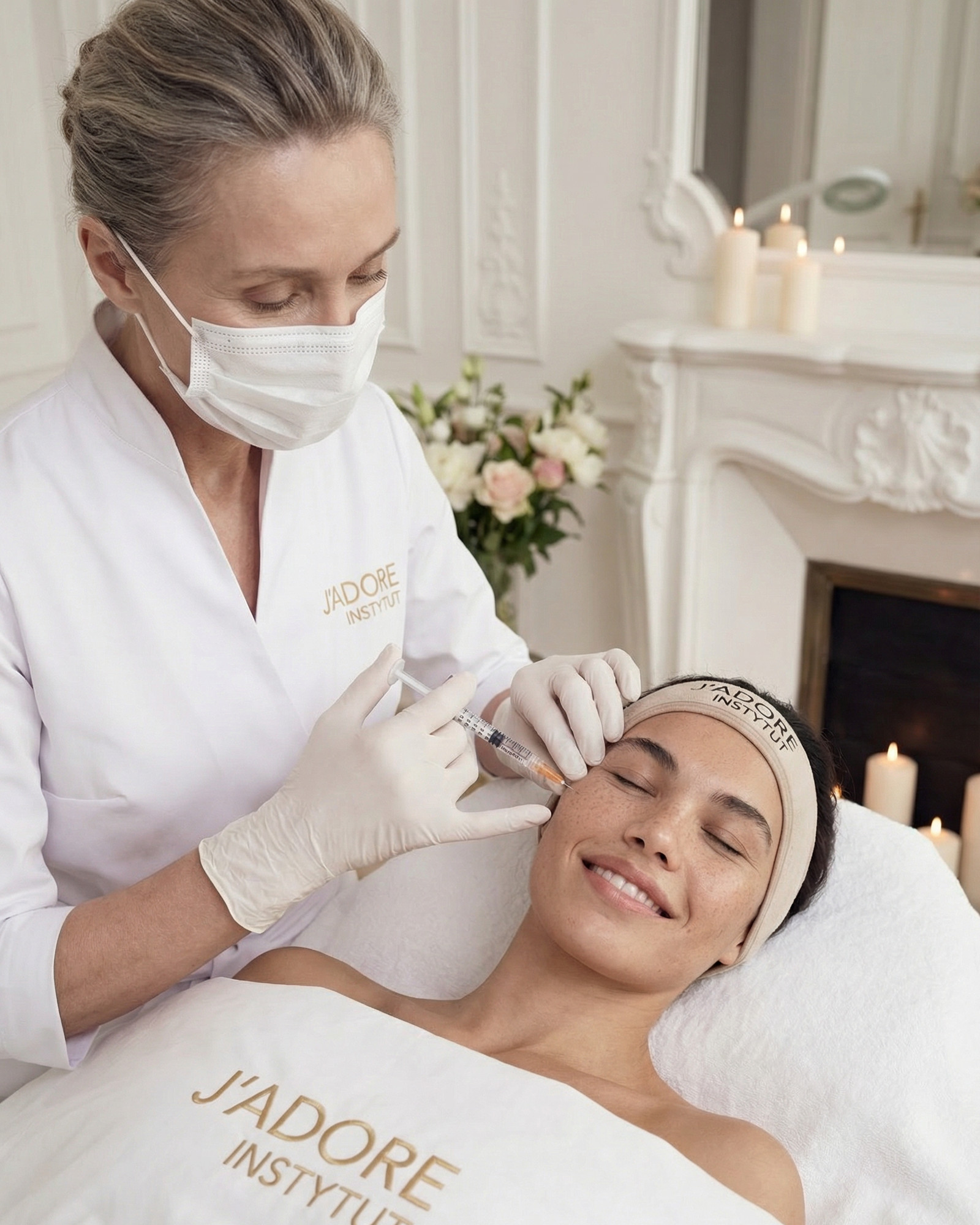
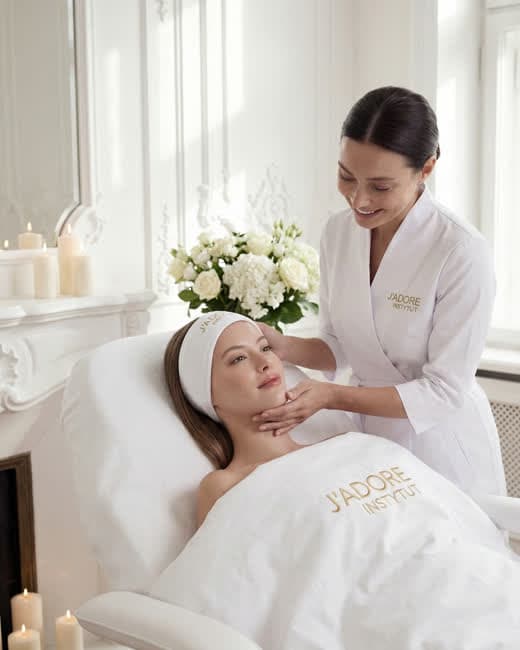
The best approach to facial massage is to treat it as part of a broader skincare routine — not as a stand-alone "lift". At J'adore, massage is a regular part of many treatment protocols. Before other techniques, it relaxes tissue and improves circulation. After some treatments, it supports recovery. As a home ritual, it makes sense. As the only tool against progressive change, it isn't enough.
- Facial lymphatic drainage massage works well for a tendency towards swelling, dark circles under the eyes, or a feeling of heaviness — especially after travel, a poor night's sleep, or long periods of sitting.
- Kobido massage — a Japanese technique with a complex sequence of movements — has significant relaxing value and improves circulation. As a regular salon treatment, it gives a genuine effect in maintaining skin condition.
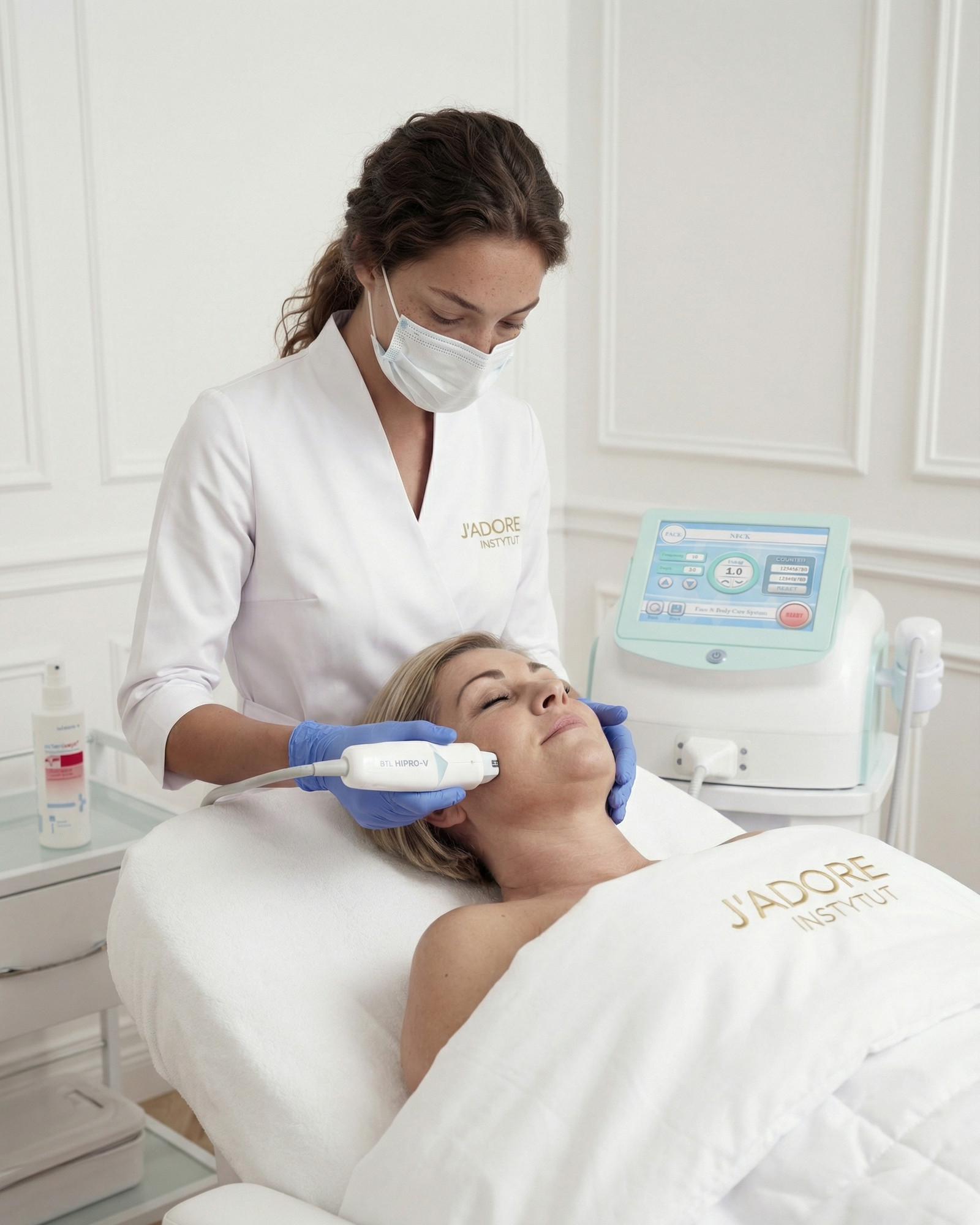
- Manual techniques supporting other treatments — many cosmetology protocols combine massage with other methods (device-based, acid, biostimulator), achieving a synergistic effect.
- At-home massage with skincare products — a real tool for boosting the effect of your skincare routine, provided you use proper technique rather than force.
Three questions worth asking yourself when choosing a method
Before deciding whether massage is all you need, three questions help clarify what you're actually dealing with. First: is the change I'm seeing there when my face is "at rest"? Dynamic (movement-related) and static (constant) wrinkles need different approaches. Massage doesn't smooth wrinkles that are visible at rest — that requires a different tool. Second: is swelling and "heaviness" my main concern — or am I seeing changes in contour and volume? If it's drainage, massage can achieve a lot. If it's sagging tissue, that's a different chapter of physiology and a different protocol. Third: how long does the effect last after the treatment? If your face only looks better for a few hours after massage and then returns to its starting point, the massage is doing its job — but what you're looking for needs a deeper conversation with a cosmetologist.