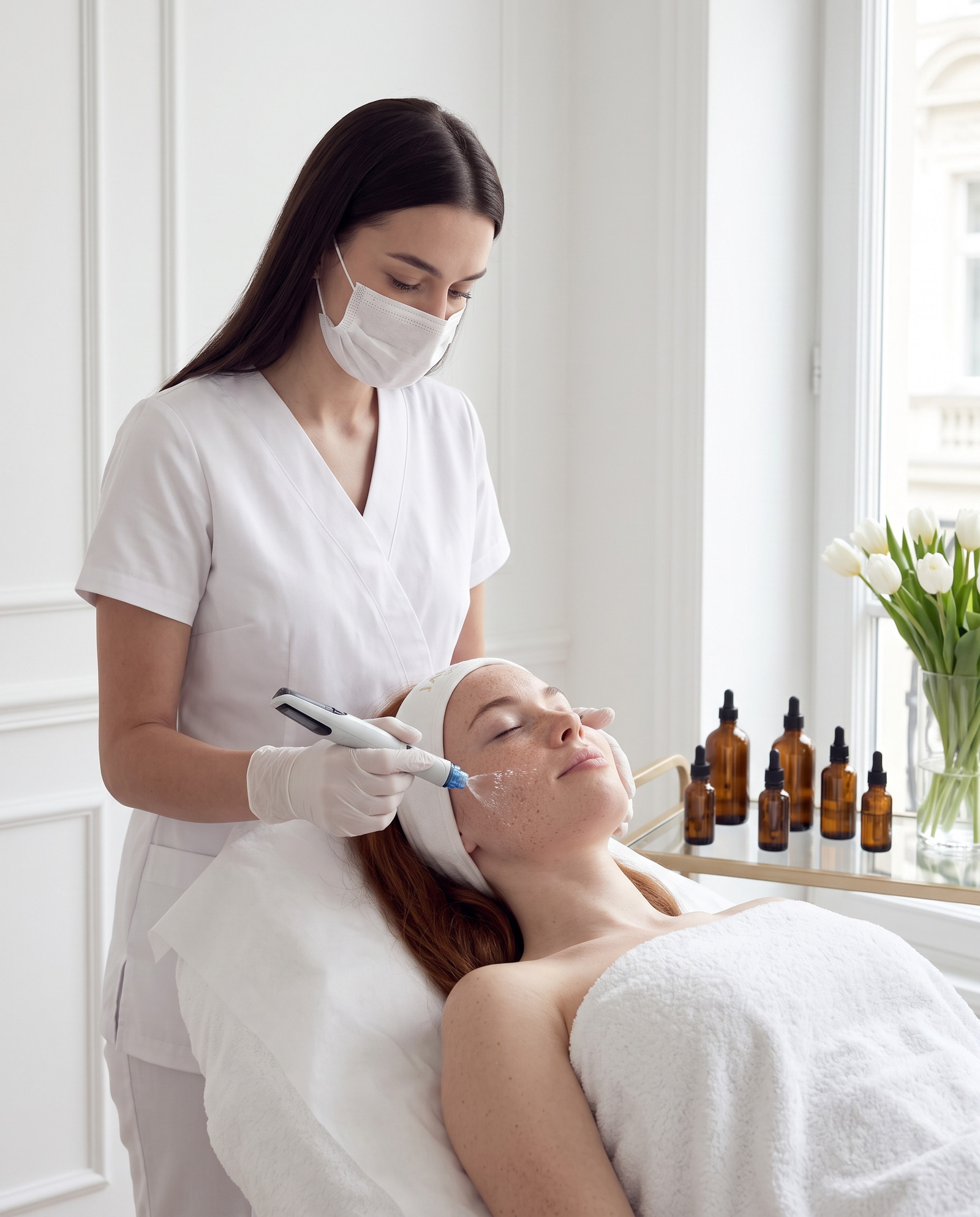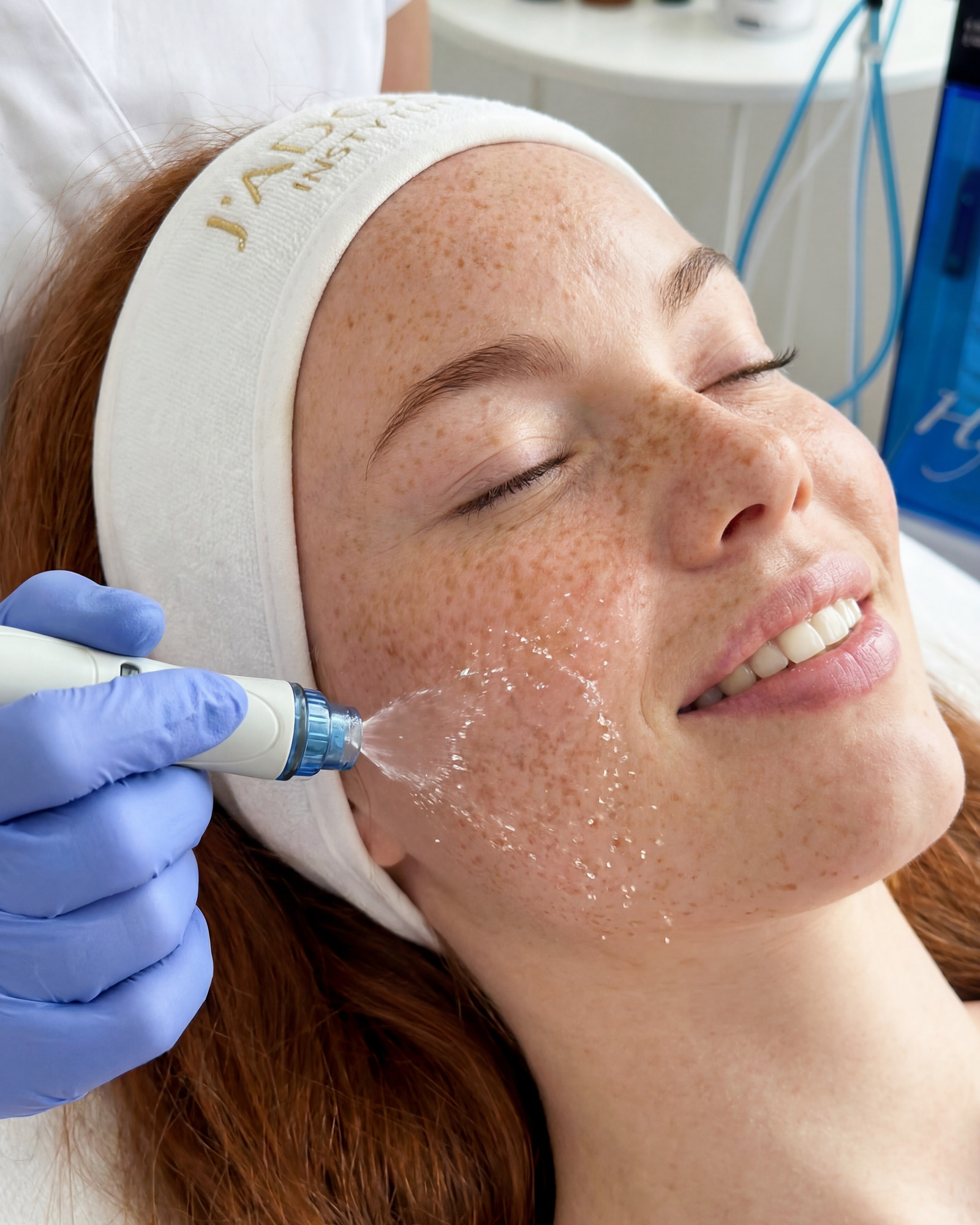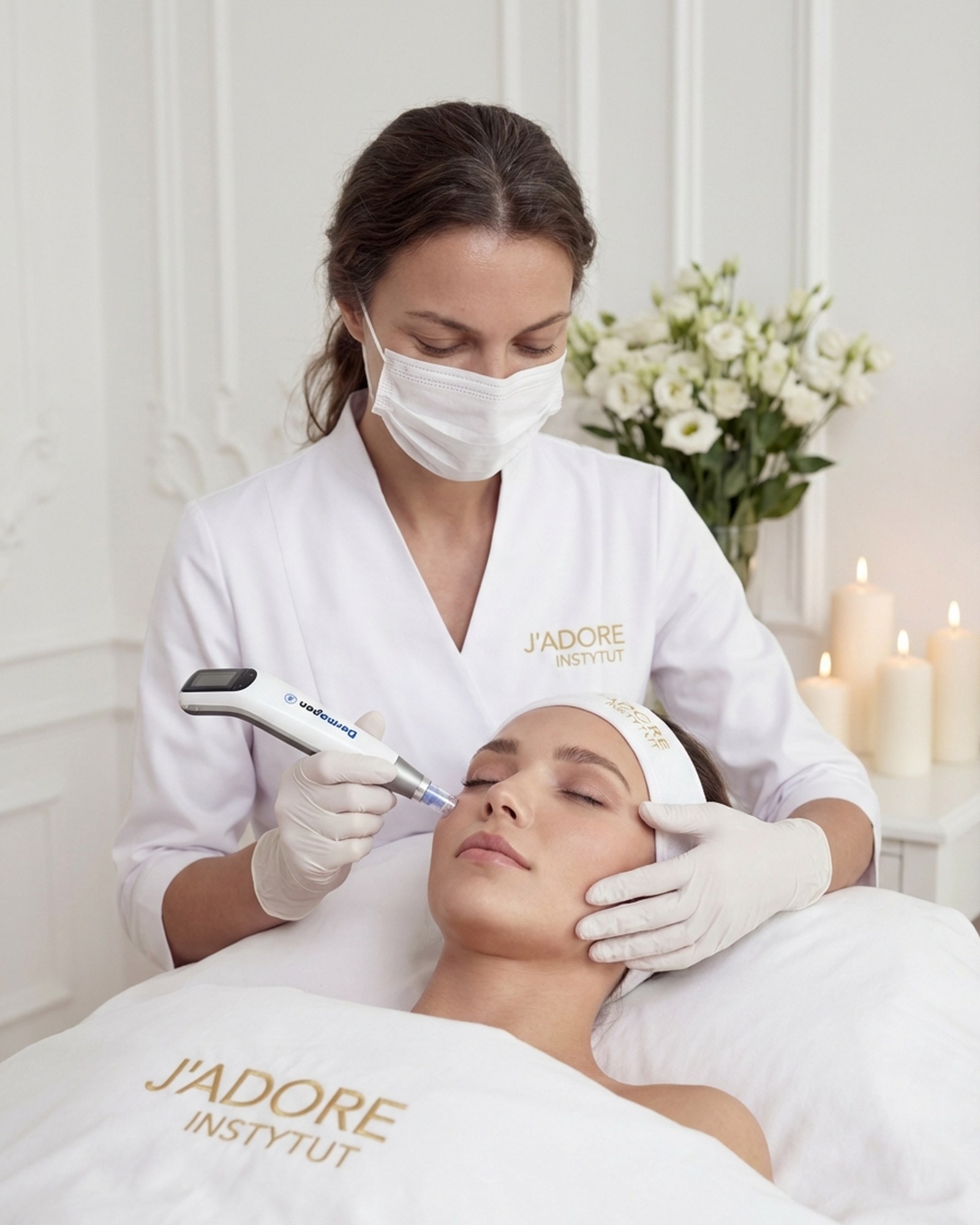
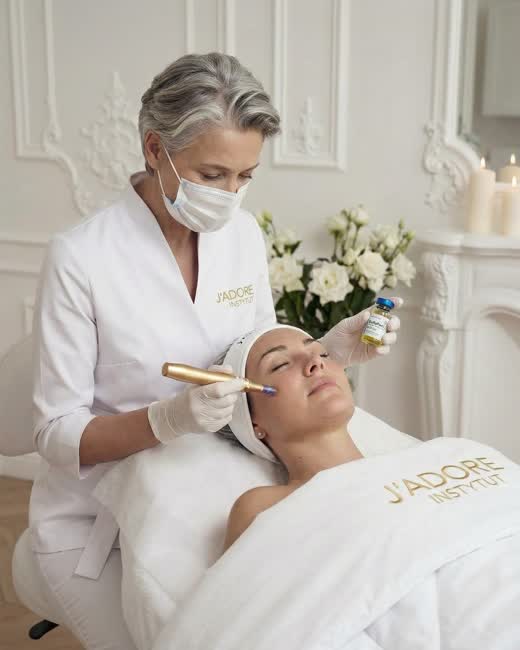
Three treatments, three jobs
The simplest way to remember it: hydrogen facial clears and oxygenates, HydraFacial cleanses and rebuilds hydration intensively, microdermabrasion smooths and refreshes the surface. Each one addresses a different part of the problem — which is exactly why they so often complement each other rather than replace one another.
Hydrogen facial
clears pores and oxygenates tissue
- blocked pores, blackheads, whiteheads
- dull, oxygen-starved skin with no radiance
- oily and combination skin that needs sebum regulation
- gentle, needle-free hydrogen mesotherapy as a complement
HydraFacial
cleanses and deeply hydrates at the same time
- dehydrated, dull, tired skin
- early signs of ageing, loss of elasticity
- sensitive, reactive skin — tolerates this better than mechanical methods
- visible glow immediately after the treatment
Microdermabrasion
exfoliates and smooths the surface of the epidermis
- thick stratum corneum, rough texture
- shallow sun-induced hyperpigmentation, minor scars
- normal and oily skin accustomed to cleansing treatments
- preparing skin for other active treatments

How to tell what your skin needs — a quick test
Before you book a specific treatment, take a moment to look at your skin in natural light — not through a camera filter, just by the window. A few questions to point you in the right direction:
- Is your skin dull, with visible blocked pores, blackheads or whiteheads? That's a sign it mainly needs clearing and oxygenating — go for: hydrogen facial.
- Is your skin dehydrated and tight, with early lines and a lack of elasticity? It needs hydration and regeneration, not just cleansing — go for: HydraFacial.
- Is your skin rough to the touch, with uneven texture, hyperpigmentation or shallow acne scars? It needs the surface of the epidermis smoothed — go for: microdermabrasion.
- Do you have several concerns at once? That's the most common situation — which is why cosmetologists often combine methods in a series or within a single visit.
This short test doesn't give you a ready-made prescription. What it does give you is a concrete starting point for the conversation with your cosmetologist. Instead of saying "I want something for my skin", you can say: "I have an issue with pores and dullness, and I'm considering a hydrogen facial." That changes the whole conversation.
When each treatment works best
Beyond skin type, the timing of your treatment matters too — the season, your skin's current condition and whether you have an important event coming up.
- 01
Hydrogen facial — a good place to start
Particularly recommended in autumn and winter, when skin needs to "breathe" after summer. It also works well as a regular ritual every few weeks for congested, oxygen-starved skin. No downtime — you can go straight from the salon to your next appointment.
- 02
HydraFacial — before an important event or as part of a course
It gives a quick radiance and smoothing effect, which is why it's often chosen before a wedding, a photoshoot or an important occasion. It also works well as part of a longer regenerative course — results build up over several visits.
- 03
Microdermabrasion — in spring and autumn, as a series
Best tolerated by the skin during transitional seasons, when sun intensity is lower. Not recommended in summer under intense sun exposure, or during active inflammation. Results build up over a series of several sessions, not after a single visit.
When it's worth combining them
The best results usually come not from a single treatment, but from a well-planned series — or a combination of methods planned by your cosmetologist. In practice, it works like this:
Hydrogen facial + HydraFacial
Deep cleansing as the first step, followed immediately by intensive hydration and care with active ingredients. For many people, this duo gives a much better result than either treatment alone — skin is cleared and deeply nourished at the same time.
Microdermabrasion + HydraFacial
Removing dead skin cells opens the way for active ingredients — right after abrasion, skin can absorb them more deeply and effectively. This sequence makes particular sense for skin with hyperpigmentation and dehydration.
Hydrogen facial as a recurring ritual
For skin prone to blocked pores, it's often worth returning to the hydrogen facial every few weeks — as a regular part of your skincare, not a one-off "fix". Regularity brings noticeably better results than occasional visits.
Ultimately, the choice between a hydrogen facial, HydraFacial and microdermabrasion — or a combination of the three — should come down to what your skin needs right now, not whatever sounds most cutting-edge or whatever a friend chose. Every skin has its own history. A good cosmetologist reads it and responds accordingly — based on observation, not on a price list.