Why laser isn't enough here
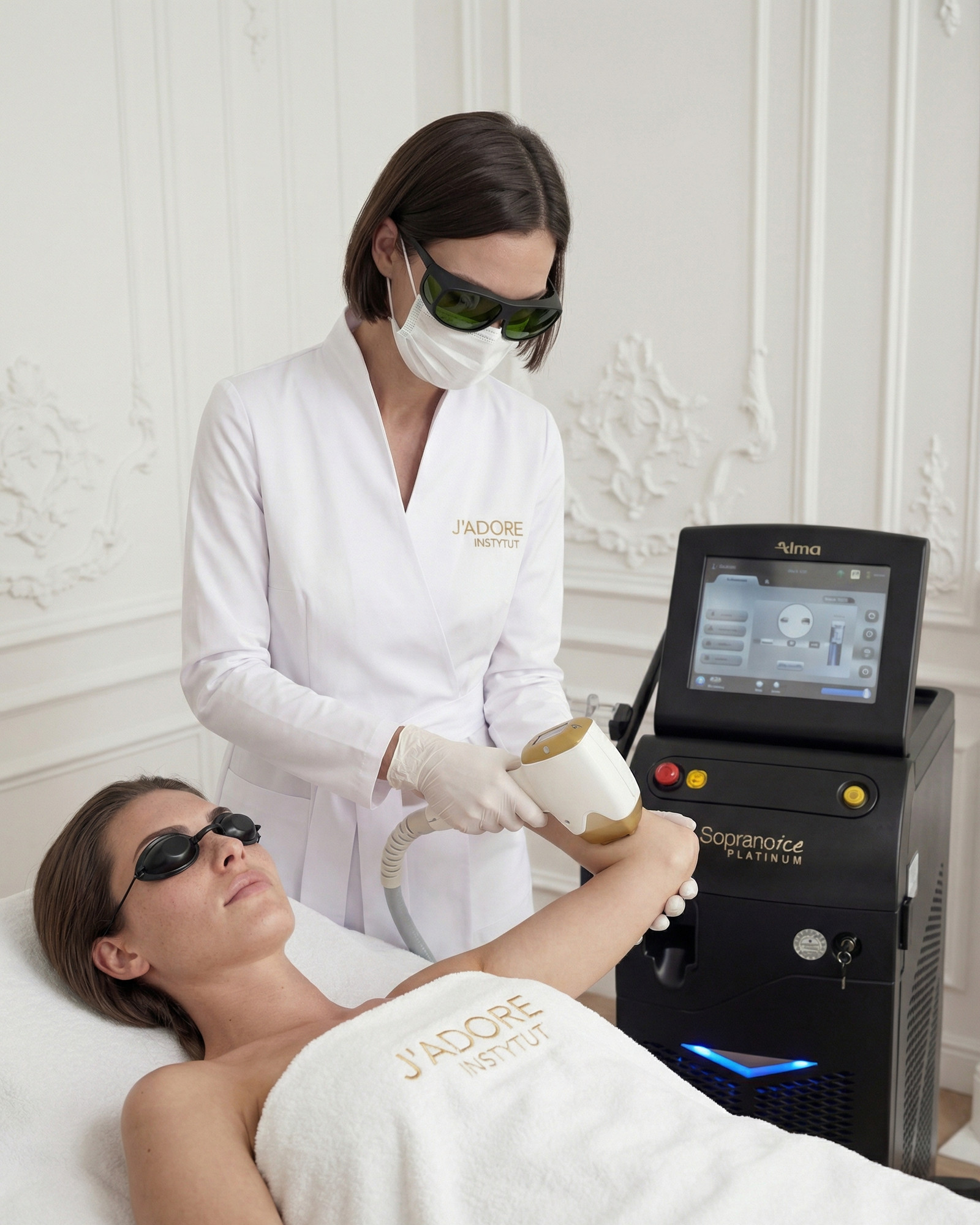
Laser and IPL work on melanin — the dark pigment in the hair shaft that absorbs light energy and converts it to heat in the follicle. Grey hair has no melanin. To a laser device, it's literally invisible — the beam passes it by, the follicle stays intact, and the hair keeps growing. This isn't about equipment quality or operator skill. It's physics.
The same applies to red, light and blonde hair — though here the gradient of melanin means laser results can be partial. With grey hair, there are none. So if you've paid for a laser series on your throat and neck and the grey hair is still growing, nothing's wrong with you — you simply chose the wrong method.
Electrolysis — how it works
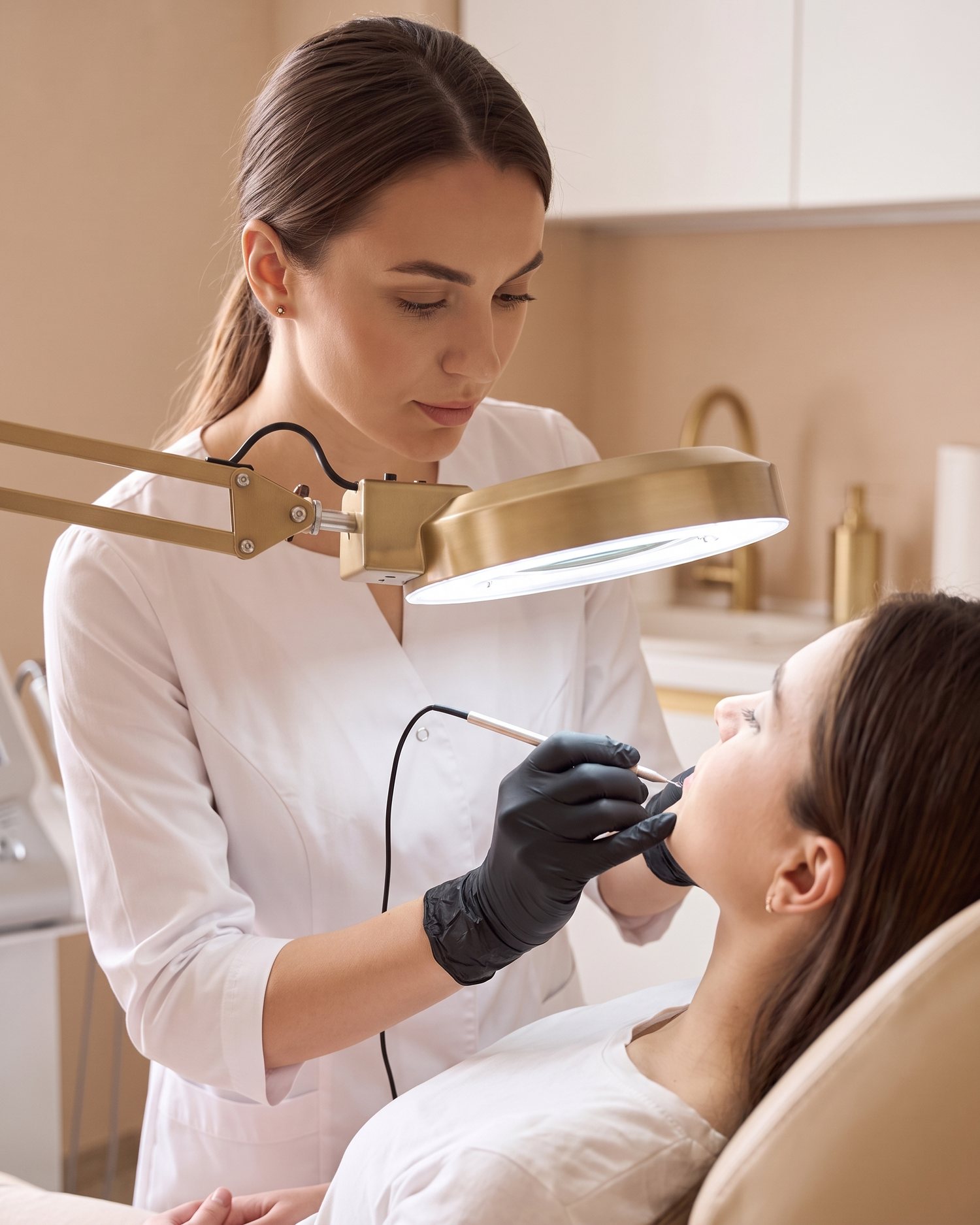
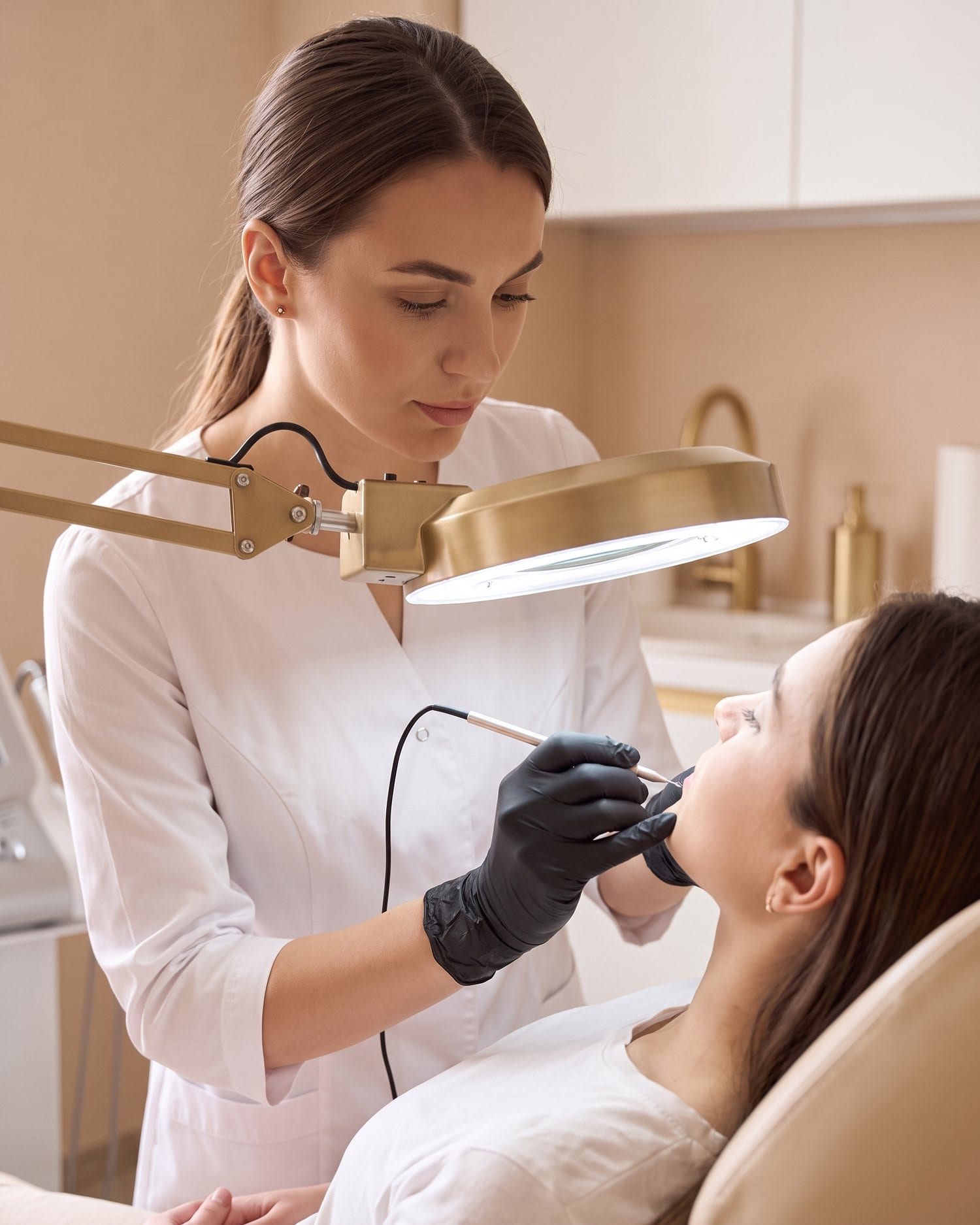
Electrolysis — also known as needle electrolysis or electroepilation — involves inserting a fine needle directly into the hair follicle and delivering a pulse of electric current. This pulse destroys the follicle papilla — the structure responsible for hair growth stops functioning. The hair slides out or is gently removed with tweezers. The follicle no longer produces a new hair.
The key difference from laser: the mechanism doesn't depend on hair colour or skin pigment. The current destroys follicle cells regardless of whether the hair is grey, white, black or red. This is why electrolysis remains the only method that gives many people lasting results with grey hair.
Laser / IPL
what it does
- targets melanin in the hair shaft
- effective on dark hair against light skin
- fast — treats large areas at once
Electrolysis
what it does
- destroys the follicle with electric current
- works regardless of hair or skin colour
- the only permanent method for grey hair
Neck, ears, throat — why it makes sense here
Electrolysis isn't a method for removing hair from the chest or back — the size of these areas makes treatment time impractical. But smaller areas that cause particular trouble are exactly where it excels:
- Neck — the area between the hairline and the collar. Grey hair shows especially clearly here, and shaving every few days can be tedious. Electrolysis can significantly thin this area or eliminate the problem altogether.
- Ears and ear rim — hair growing from inside the ear or along the rim is hard to shave, and for many men, accelerated greying in this area starts as early as their thirties.
- Throat and beard line — particularly with irregular growth, when grey hair appears around the beard. Electrolysis can even out the area.
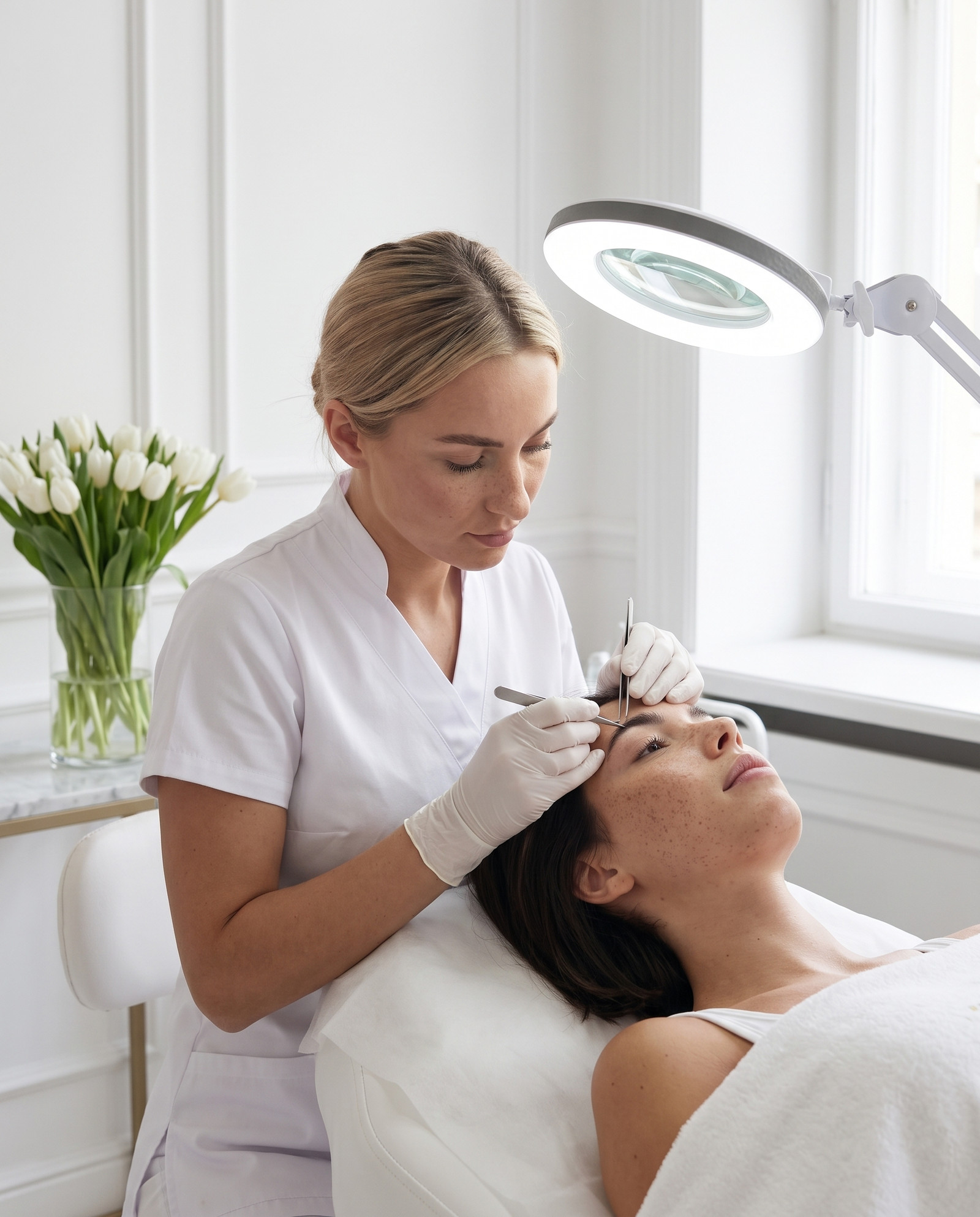
- Brows — fewer shape corrections and removal of thicker grey hairs that stray outside the line. Many men value this treatment here more than anywhere else.
What a series of treatments looks like
Each follicle needs its own pulse — which is why electrolysis is a gradual, multi-session method. It doesn't work in one go, because hairs sit in different growth phases and only active follicles respond to treatment. The same applies to laser, but with electrolysis this happens literally hair by hair.
- 01
Consultation
We assess the area, hair density and colour. We discuss your expectations and the session plan. Electrolysis is a time commitment — it's best to start with a realistic picture.
- 02
First session
Short, to assess the skin's response. Mild redness and sensitivity in the area are a normal reaction — they settle within a few hours to a day.
- 03
Series of sessions
Regular visits spaced a few weeks apart — the schedule depends on the area and hair growth rate. The neck and ears are areas where the series tends to be shorter than for larger zones.
- 04
Interim results
From session to session, hair may thin out, growing finer or slower. For many people, the change is visible after just a few visits.
- 05
Maintenance sessions
After the initial series, hair may still emerge from dormant follicles. Occasional top-up sessions help maintain the result.
Who this suits — no sugar-coating
Electrolysis isn't right for everyone, or for every area. But if at least one of the points below applies to you, it's worth discussing during a consultation:
- Grey or white hair on the neck, ears or throat that laser left untouched
- Regularly shaving an area that's hard to manage yourself
- Irregular hair growth along the beard or jawline, with grey hair involved
- Thick, grey brow hairs that stray outside the desired shape
- Wanting fewer barber visits made necessary only by your neck
Practical questions worth asking before the treatment
The consultation is the most important step — not because it's compulsory, but because it lets us assess your specific area and a realistic plan. A few things worth discussing:
- How dense is the area, and how many sessions are you likely to need?
- Is some of the hair dark — is it worth considering a combination of laser and electrolysis?
- How does your skin react to irritation (collars, shaving) — this affects the recovery plan after treatment
- What contraindications apply in your case (medications, skin conditions, pacemaker)