
First, let's take it slowly: what acids actually are and what they do
Let's start by defusing a word that sounds alarming. "Acid" brings to mind something corrosive, but in skincare it means something far gentler: substances that gently loosen the bonds between dead skin cells, so the older, "used-up" layers shed more easily and evenly. Skin naturally exfoliates throughout life — acids simply organise and speed up this process when it starts to slow down with age or skin concerns.
The result everyone's after is skin that feels smoother, looks more radiant and has a more even tone, with less congested pores. Acids can also help other products absorb better and support acne-prone skin. These are real benefits — as long as you don't confuse "regularly and sensibly" with "a lot, straight away".
Do you even need acids — and which one
Before buying anything, ask one question: what problem are you trying to solve? Acids aren't a skincare "must-have" that everyone needs on their shelf. They're a targeted tool — and the right choice depends on what's happening with your skin. Three main families work differently and suit different needs.
AHA (fruit acids)
Radiance and smoothing
- Water-soluble — work mainly on the skin's surface
- Mandelic and lactic — the gentlest, good for starting out
- Glycolic — a smaller molecule, penetrates deeper, stronger
- For: dull skin, uneven tone, minor discolouration, dryness
BHA (salicylic acid)
Pores and blemishes
- Fat-soluble — penetrates pores and "unclogs" them
- Works on blackheads, excess oil and oily skin
- Can be soothing for skin prone to redness
- For: combination skin, oily skin, blackheads and breakouts
PHA (next generation)
For sensitive skin and beginners
- Larger molecule — penetrates more slowly, works most gently
- Often better tolerated by reactive skin
- Also supports hydration
- For: sensitive skin, vascular skin, "first time with acids"
The simplest tip to start: if your concern is blackheads, oiliness and clogged pores — look towards BHA. If it's radiance, tone and smoothness — look towards gentle AHAs. And if your skin flushes and stings easily — start with the mildest forms (mandelic, lactic, PHA) rather than reaching straight for strong glycolic acid.
Where to start — step by step
This is the heart of the whole article. Most irritation comes not from the acid itself, but from the pace at which it's introduced. Follow these steps in order — from the safest to the more advanced. Rushing at the start usually ends with a week of hiding from the mirror.
- 01
Step 1 — Basics first, then acids
An acid is an addition, not a foundation. If your skin is dehydrated, scrubbed raw or irritated by harsh products, calm it down first: gentle cleansing, hydration and — crucially — an SPF cream in the morning. Applying acid to a damaged skin barrier is like applying it to a fresh wound.
- 02
Step 2 — Choose ONE gentle product
Instead of buying three acids at once, choose one, at a low concentration — ideally one considered gentle (mandelic, lactic, PHA) or a mild BHA if you're dealing with pores. One product means it's easy to tell how your skin reacts. Five products at once means guessing what caused the problem.
- 03
Step 3 — Introduce it slowly and observe
Start by using it infrequently — every few days, in the evening — and watch how your skin responds. A slight, temporary tingle can be normal; a burning redness that doesn't fade is a sign of "too much, too soon". Only once your skin tolerates it comfortably should you gradually increase frequency. This isn't a race.
- 04
Step 4 — Sun protection isn't optional
After using acids, skin becomes more sensitive to the sun, and without protection it's easy to end up with discolouration — exactly what many people are trying to fight with acids in the first place. A high-SPF cream every day is a requirement, not an extra. Without it, all that effort can backfire.
- 05
Step 5 — Give your skin time and judge results in weeks
The first "glow effect" can appear quickly, but real improvement in tone or texture takes weeks of consistency, not a single application. Don't switch products every few days chasing a miracle. Consistency achieves more here than strength.
Pay attention to the order. A healthy skin barrier and SPF are the foundation — acid is just another storey on top. The strongest peel won't compensate for dehydrated, irritated skin or a lack of sun protection. That's why we build from the ground up, not from the roof down.
What NOT to do at the start
Enthusiasm can do just as much damage as doing nothing at all. Before you reach for your first acid, read this short list of pitfalls — it will save you a week of stinging, flaking skin.
In short: understand first, then act. At the start, aim for one gentle product, a sensible frequency and consistent sun protection — not a "power package" your skin will read as an attack.
When to book a salon peel instead of going it alone at home
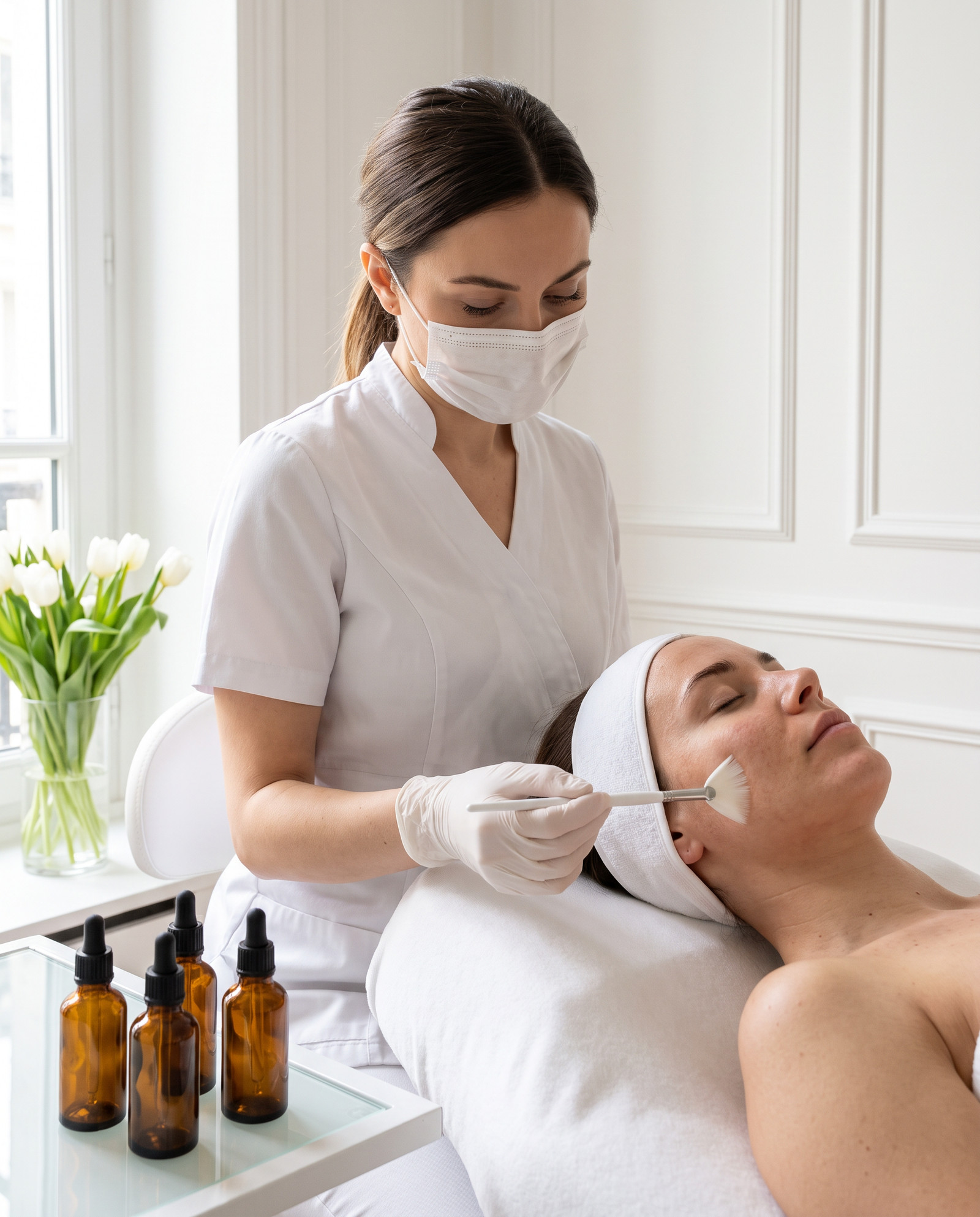
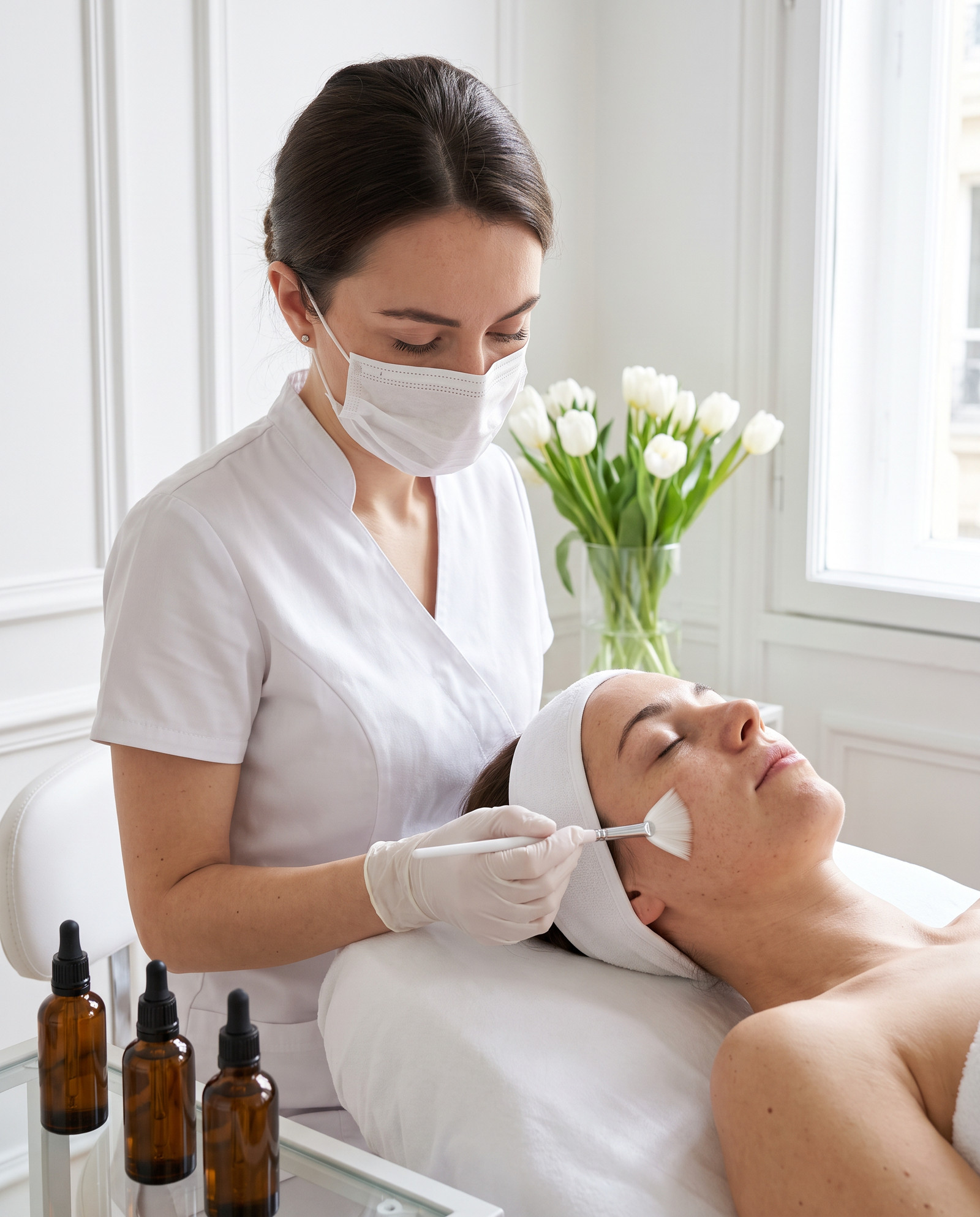
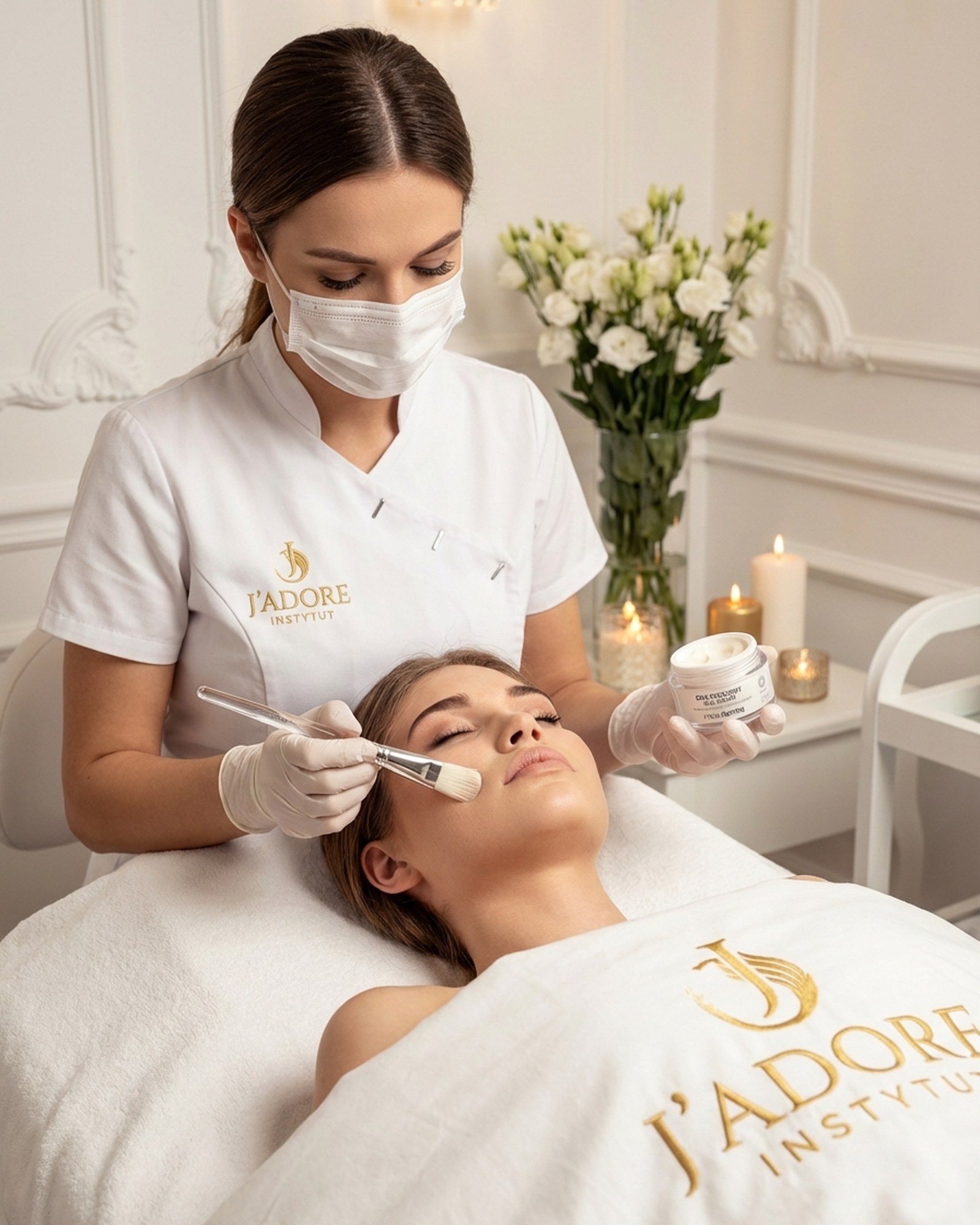
Home care and professional peels are two different leagues that complement rather than replace each other. At home, you work gently, "maintenance-style", mainly on condition and radiance. In the salon, a cosmetologist can use higher concentrations and stronger protocols, tailored to your skin after an assessment — and guide you through it safely.
The salon is where it makes sense to target concerns a mild off-the-shelf acid won't touch: more pronounced discolouration, melasma, scarring and acne marks, stubborn dullness. Stronger peels work deeper and can deliver results home care alone won't achieve — but they require expertise, careful selection and proper aftercare.
It's worth booking a consultation when:
- Your concern goes beyond "I want radiance" — discolouration, melasma, acne scars, persistent acne.
- You've tried acids at home and the results are weak, or your skin is reacting badly — this may be down to the wrong choice, not acids in general.
- Your skin is sensitive, vascular, reactive, and you're not sure how to choose a product yourself — it's better to start under a specialist's guidance.
- You're taking acne medication (especially vitamin A derivatives / isotretinoin), pregnant or breastfeeding — some acids are then not advisable, and an individual assessment is needed.
- You want a series tailored to your skin — in the salon, we'll build a plan instead of picking a random product.
A visit starts with a conversation and a skin assessment — only then is the type and strength of the peel chosen. Sometimes a gentle, cosmetic-grade series is enough; sometimes a stronger medical protocol makes more sense. Either way, you leave with a plan tailored to your skin, not a random product "because it worked for someone else".