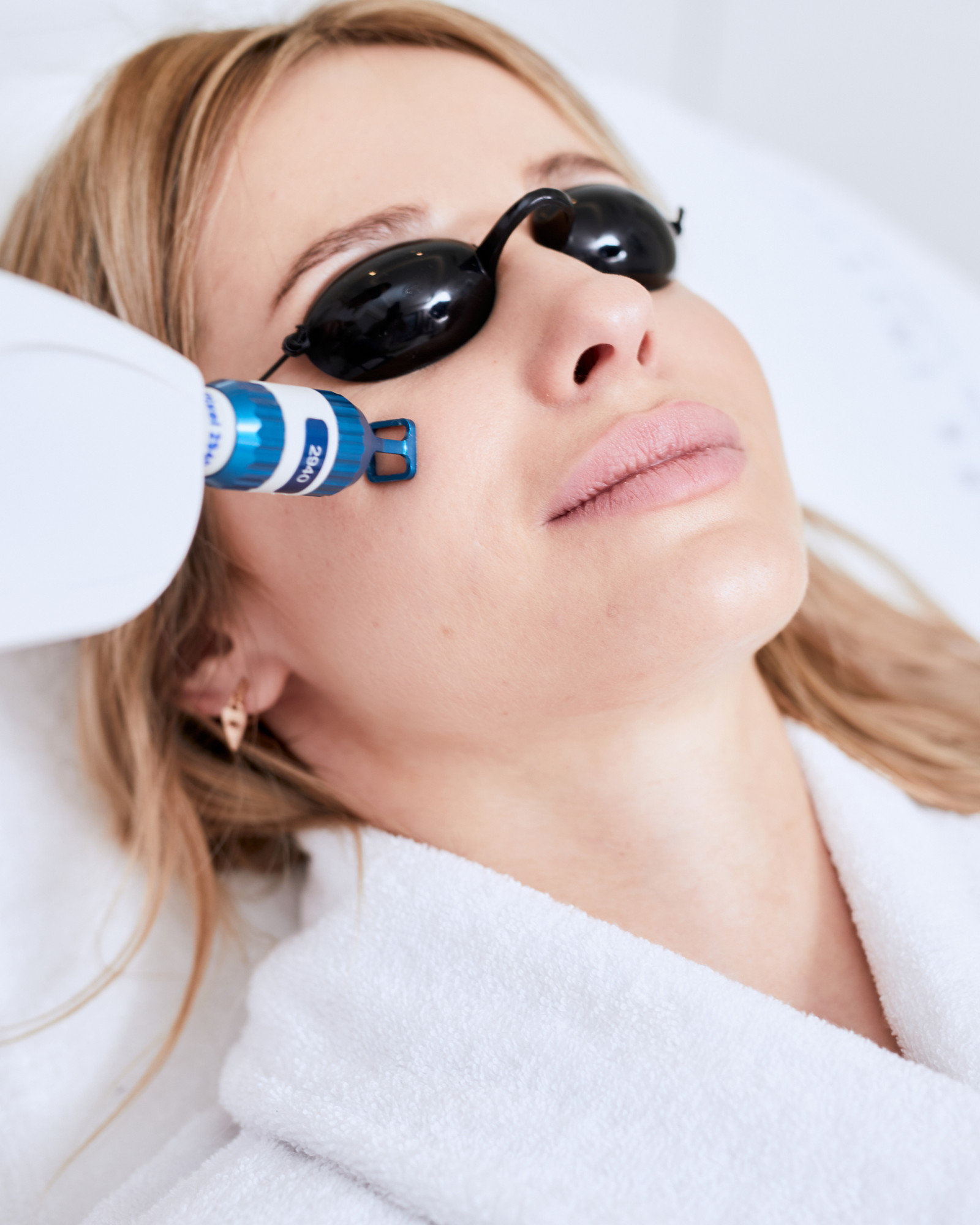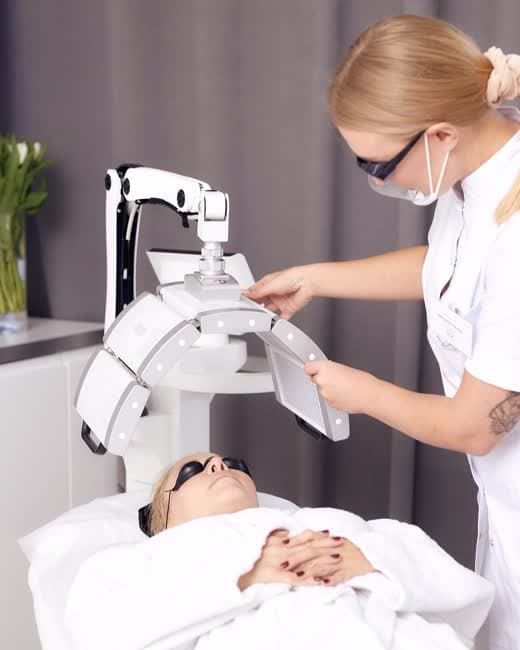
Before we compare — what actually is a fractional laser?
The word "fractional" doesn't describe a type of laser — it describes how the beam hits the skin. A traditional laser (so-called full-field) treats the entire surface evenly. A fractional laser splits the beam into hundreds or thousands of microscopic columns — known as MTZs (microthermal treatment zones). Each column penetrates the skin to a set depth, leaving untouched tissue between them.
Why is this clever? Because those intact "islands" of skin become a reservoir of stem cells and growth factors that speed up healing. The result: deep stimulation with a shorter recovery time than traditional resurfacing.
Ablative vs non-ablative — a fundamental difference
This is the most important distinction to understand before making a decision.
- CO2 laser
- Erbium laser Er:YAG
- iPIXEL (modified Er:YAG)
- Nd:YAG 1064 nm
- Diode laser 1440–1470 nm
- Some modes on multifunctional platforms
CO2 laser — the gold standard of resurfacing
The CO2 laser is the strongest ablative laser. Its beam is intensely absorbed by water in the tissue — and skin is about 70% water. The thermal effect reaches deep, which translates into significant skin remodelling.
- Deep acne scars (ice pick, boxcar, rolling)
- Deep wrinkles (around the eyes, lips)
- Advanced photoageing
- Stretch marks — especially old, white ones
- Cases requiring intensive, single-session remodelling
Erbium laser Er:YAG — precision and safety
The erbium laser is the second major player in the ablative laser category. Its wavelength is absorbed by water even more effectively than CO2 — meaning more precise, "cleaner" ablation with minimal thermal damage to surrounding tissue.
- Superficial to medium-depth wrinkles
- Sun-induced hyperpigmentation
- Uneven skin texture
- Shallow to medium acne scars
- Rejuvenating the hands and décolletage
- People with phototype III who want to avoid the risks of CO2
iPIXEL — a next-generation fractional erbium laser
iPIXEL is a technology developed by Alma Lasers, integrated into the Harmony XL Pro platform. Technically, it's an Er:YAG laser operating in fractional mode, with one key innovation: a special energy delivery system that combines ablation with controlled coagulation.
- Rejuvenating the face, neck, décolletage and hands
- Shallow to medium acne scars
- Stretch marks
- Uneven skin texture and enlarged pores
- Sun-induced hyperpigmentation
- People looking for an effective treatment with moderate downtime
- Phototype III–IV
A quick comparison of the technologies
The three technologies differ mainly in depth of action, recovery time and indication profile. Fractional CO2 offers the deepest remodelling and the fewest sessions, but requires the longest healing time and is mainly safe for lighter phototypes. The Er:YAG erbium laser is the safest for more sensitive skin, with short downtime, but gives subtler results and requires more sessions. iPIXEL sits in the middle — it combines Er:YAG precision with a thermal element closer to CO2, alongside moderate recovery time.
Which one to choose — a practical decision guide
What to expect after the treatment — realistic expectations
Whichever technology you choose, every ablative laser causes controlled damage to the skin. Healing happens in stages and requires patience.
- Day 0–3: Redness, swelling, a burning sensation. Skin may look like it's had severe sunburn. This is normal.
- Day 3–7: Peeling, micro-scabs. The skin begins to shed. Never scratch or pick at scabs, and avoid active cosmetics.
- Day 7–14: Redness fades — faster with Er:YAG/iPIXEL, slower with CO2. New skin is pink and sensitive.
- Week 2–4: Skin smooths out, pores appear smaller, and scars may look shallower. This, however, is only the beginning of the process.
- Month 1–6: Gradual new collagen production. For many people, full results of the treatment are only visible after several months. Patience is key.
Lasers at J'ADORE INSTYTUT
At J'ADORE, we work with the Harmony XL Pro platform and iPIXEL technology — a deliberate choice. iPIXEL gives us flexibility: we can adjust parameters to a specific problem and phototype, combine technologies within a single session, and offer effective rejuvenation with predictable, manageable downtime.
Every laser treatment at J'ADORE begins with a consultation, where we assess phototype, indications, dermatological history and realistic expectations. We don't believe in a "one laser for everything" approach — we believe in precisely matching the technology to the specific problem. Because with lasers, as in aesthetic medicine generally, the best results for many people come not from the strongest treatment, but from the best-matched one.