
Two tools, one fat deposit — completely different paths
Subcutaneous fat can be removed in two ways: destroy the fat cell from within (this is how injectable lipolysis works), or physically pull it out (this is how liposuction works). In both cases the fat cell disappears — but everything that happens after that point is radically different.
Injectable lipolysis
destroys fat without a scalpel
- formula injected directly into the fat deposit
- cells break down and are cleared by the lymphatic system
- a series of sessions spread over time — the effect builds gradually
- swelling and tenderness for several days to around two weeks after the treatment
- you can usually return to normal activity the next day
Liposuction
removes fat surgically
- surgery under anaesthesia — local or general
- a cannula mechanically extracts the fat tissue
- a single procedure that gives a clear volume reduction
- recovery takes weeks, with a compression garment worn for several weeks
- scars at the cannula insertion points
How to check which method makes sense for you — a home test
Before you book a consultation, you can assess for yourself what kind of issue you're dealing with. These three questions set the conversation on the right track:
- Pinch the fat deposit and assess its thickness. Can you grasp it between your fingers — a few centimetres' worth? Injectable lipolysis works well on such "local pockets". Can't grasp it? The issue may go deeper than subcutaneous fat alone.
- Assess the skin over that area. Elastic, springy, snapping back after a pinch → it's likely to sit well after treatment. Lax, stretched, with excess "slack" → neither lipolysis nor liposuction will tighten the skin — this may need a plastic surgeon's assessment.
- How many areas are affected, and how much do they affect your quality of life? One or two areas, moderate excess, no plans for surgery → injectable lipolysis is the direction. Multiple areas at once or a large volume, willingness to undergo surgery and several weeks of recovery → talk to a surgeon.
- Lifestyle and time. Working full-time, unable to take weeks off → injectable lipolysis. Full availability, planning post-surgical leave → liposuction may give a faster result in a single session.
Remember, the home test is guidance, not a diagnosis. Fat tissue, skin tension, anatomy — a doctor assesses these during consultation, often with the support of an ultrasound scan. But if these questions have told you "something near the injection site, one area, no surgery" — that's genuinely useful information for a specialist.
Who injectable lipolysis is really for
Injectable lipolysis works best in specific situations. It's not a solution for everything — but where it fits, it delivers results that training and diet can't achieve:
- Localised fat deposits — chin, love handles, abdomen (outer layer), inner thighs, hip "saddlebags", knee area
- Fat resistant to physical activity — genetically determined "pockets" that remain despite a lean physique
- People who prefer to avoid surgery — not ready for general anaesthesia, scarring, or recovery
- Follow-up after liposuction — correcting irregularities or areas that were missed
- Men with excess fat around the abdomen or chest (fatty gynaecomastia) — injectable lipolysis works regardless of gender
When injectable lipolysis and other methods complement each other
Injectable lipolysis rarely works in isolation — it gives the best results combined with supporting methods: ones that improve skin firmness, drain tissue, or speed up cellular metabolism. The logic is always the same: destroyed fat deposit + skin that responds to it = a result you can actually see.
Injectable lipolysis + device-based drainage
drainage speeds up the clearance of broken-down fat cells through the lymphatic system; it reduces post-treatment swelling and shortens the wait for results.
Injectable lipolysis + body mesotherapy
mesotherapy improves the firmness and hydration of the skin over the reduced deposit; important where the skin is thin or slightly lax.
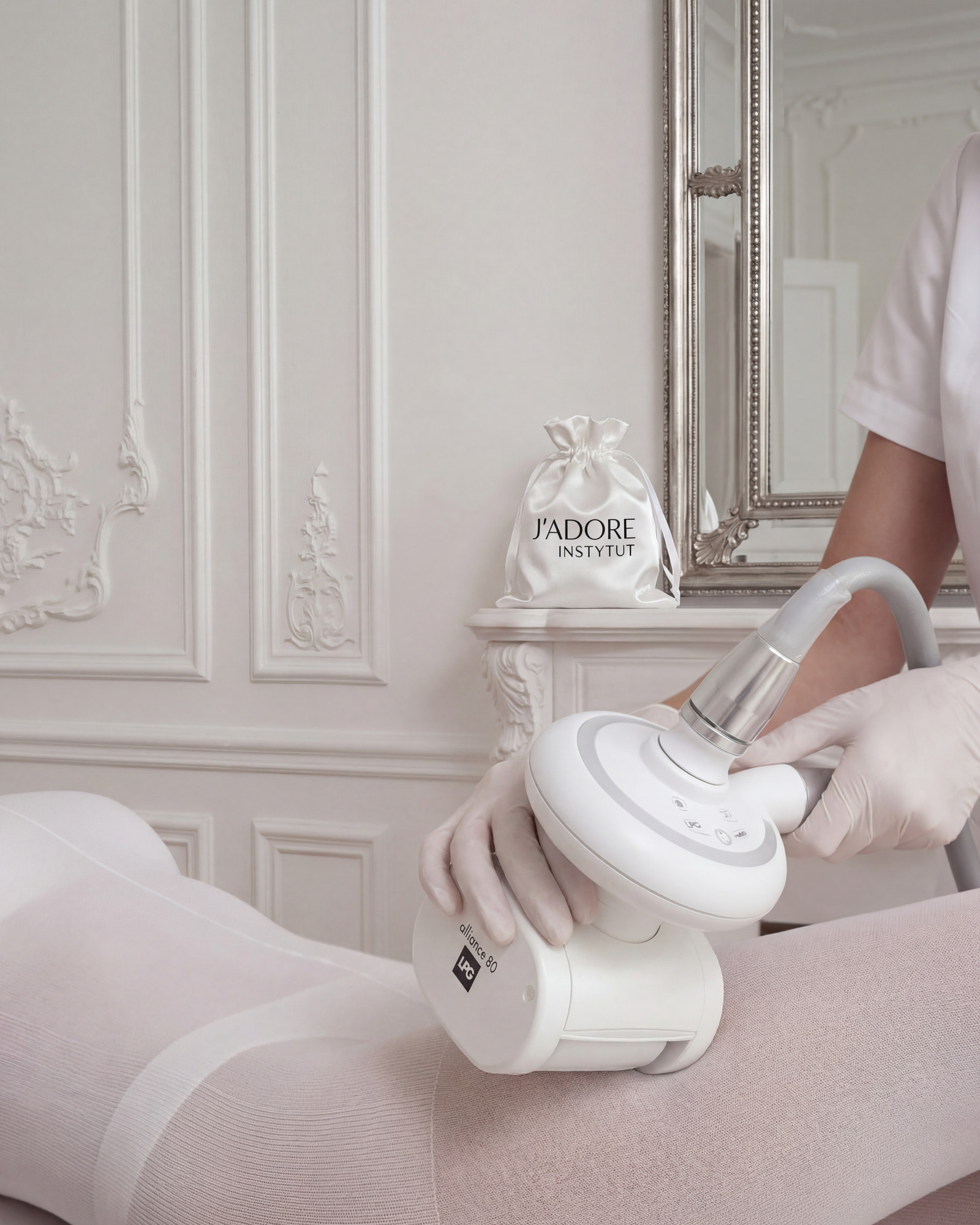
Injectable lipolysis + LPG endermology
stimulation of connective tissue + mechanical contouring; a good combination after a series of lipolysis sessions, once the deposit is reduced and the goal is smoothing and firming.
Injectable lipolysis + carboxytherapy
carboxytherapy improves blood flow and tissue oxygenation; it supports recovery after lipolysis in areas with poorer circulation.
The order and spacing between treatments is decided by your doctor or lead cosmetologist — there's no single formula, as it depends on the area, the thickness of the deposit and how the skin responds. It's worth asking directly during consultation: "what can we add to make the result better and longer-lasting?"
What to expect — an honest description of the process
Injectable lipolysis isn't a single treatment — it's a series of sessions, usually several, spaced a few weeks apart. Swelling appears after each session and can be quite pronounced — this isn't a side effect, it's proof that the formula is working: fat cells break down, the lymphatic system clears them, and the tissue temporarily looks "puffy". That's exactly why results aren't judged after the first session.
- First 3–5 days after treatment: swelling, tenderness, redness at the injection site — normal.
- Weeks 2–4: swelling subsides, and the first reduction in volume starts to become visible.
- After the series: full results become visible a few weeks after the last session, once all the broken-down cells have been cleared.
- The result is lasting — destroyed fat cells don't grow back. But new ones can form if you gain weight.