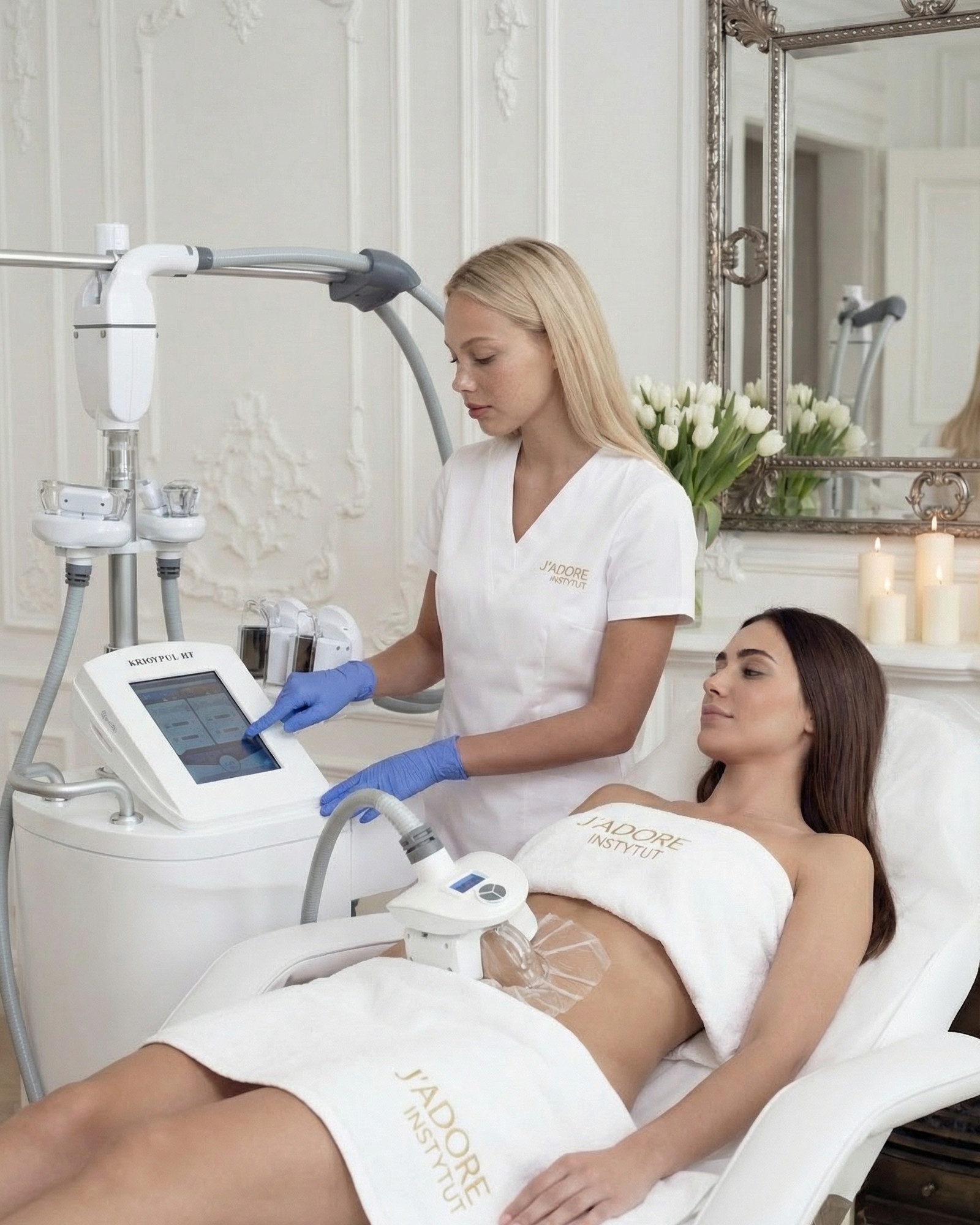

Two mechanisms, two jobs
The simplest way to remember it: cryolipolysis reduces volume by freezing, injectable lipolysis breaks down fat tissue chemically. The first works from the outside — through the skin, without a needle. The second reaches the tissue directly, through a series of precise injections. Each engages different cellular mechanisms and suits slightly different areas. The choice isn't a matter of preference — it's a matter of anatomy.
Cryolipolysis
freezes and removes fat cells from the outside
- larger fat deposits: abdomen, flanks, thighs, back
- a clear, graspable fold — the applicator needs to be able to draw the tissue in
- results build over several weeks after the treatment
- a single session per area, often enough on its own
Injectable Lipolysis
chemically dissolves fat tissue from within
- precise, hard-to-reach areas: chin, inner thighs, small folds
- works regardless of fold thickness — the needle reaches where the applicator can't
- results build up over several sessions
- high precision for targeted body shaping
How to tell which one you need
Before you decide, try a simple test in front of the mirror. It takes a moment, and it gives you a solid starting point for a conversation with your specialist:
- Pinch the fold between your thumb and index finger. If there's something to hold — a few centimetres of tissue, clear volume — that's a good sign for cryolipolysis. The applicator needs a fold like this to work effectively.
- If the fold is flat, thin, or in a hard-to-reach spot (chin, inner knee, the side of the waist near the hip), consider injectable lipolysis. The needle reaches precisely where the applicator has no chance.
- Several areas at once? You don't necessarily have to pick just one. A sensible plan often combines both methods — each one used where it fits the anatomy.
It's also worth knowing that neither method is a weight-loss tool — both are tools for body contouring. They work best when your weight is stable or close to your target, and the goal is a specific, stubborn area that isn't responding to lifestyle changes.
When each method really shines
Injectable lipolysis, on the other hand, excels wherever body geometry gives the applicator no chance: the chin (it shows up for many people even with a slim face), inner thighs, small deposits near the knees, or the back of the hips. These are areas that can resist even a very active lifestyle and a well-balanced diet — which is exactly why a precise tool matters.
Can they be combined — and is it worth it?
Yes — and this combined approach often gives the best results. The logic is simple: cryolipolysis reduces volume across larger areas, injectable lipolysis refines the detail. These aren't competing methods. They're different tools in the same body-contouring toolkit.
Cryolipolysis + Injectable Lipolysis
First, cryolipolysis on a larger area (for example, the abdomen or flanks). Then injectable lipolysis, precisely targeting any small deposits or hard-to-reach spots left behind. The plan is spread out over time — your specialist will set the right interval.
Cryolipolysis + Lymphatic Drainage
After cryolipolysis, the lymphatic system works hard. For many people, drainage massage can support the removal of dead fat cells. Ask your specialist whether this makes sense in your case.
Injectable Lipolysis + Body Firming Treatment
As fat volume decreases, the skin may need a boost to stay firm. Combining this with a collagen-stimulating or firming treatment is often a natural next step — especially in areas where the skin is thinner.
What neither method can do
It's worth saying this plainly, because this is where most misunderstandings happen. Neither cryolipolysis nor injectable lipolysis replaces lifestyle changes, and neither treats being overweight. Both methods remove a set number of fat cells from a given area — but the remaining cells can still grow if diet and physical activity don't keep them in check.
- Results last for as long as your lifestyle stays stable.
- Neither method reduces cellulite — that's a separate issue requiring separate tools.
- Neither works on visceral fat (the deep fat around internal organs).
- Neither replaces surgery for a very large excess of tissue — these are tools for finesse, not major reduction.