Your skin is better than you think
Before you start panicking in front of the mirror — one fact changes everything: between 14 and 18, your skin regenerates twice as fast as an adult's. Your epidermal renewal cycle takes about 21 days — for a woman in her thirties it's 28–35 days, and even longer by fifty. This means your skin turns over cells rapidly, produces collagen efficiently and heals fast.
This is good news. Genuinely good. It means you don't need aggressive treatments, strong acids or complicated routines. Your skin does most of the work itself — you just need to stay out of its way and give it a little help now and then.
What's OK at your age (and actually works)
What's NOT OK (yet)
Not because "mum says so". Because the science says so.
TikTok vs reality
Your routine should look like this:
- Facial cleansing gel — gentle, pH 5.5
- SPF — every morning, every day, even in March
- Moisturiser — in the evening
Acne — nothing to be ashamed of
- 85% of teenagers have some form of acne — look around your classroom; statistically, only a few people don't.
- Acne is hormonal, not dirt. You can wash your face several times a day — it won't help, and it may make things worse by damaging your lipid barrier.
- Androgens stimulate the sebaceous glands → more sebum → clogged pores → bacteria → inflammation. It's biology, not hygiene.
- Squeezing spots at home = scars. Acne scars are harder to treat than the acne itself.
What should you do about acne?
- Gentle cleansing (not harsh scrubbing!)
- Salicylic acid 2% — as a spot treatment or in a toner
- Azelaic acid — prescription-strength or lower-concentration OTC
- Niacinamide 5–10% — can help regulate sebum and strengthen the skin barrier
- A dermatology visit — if the acne is inflamed, painful, or leaves scars
Parental consent — how does it work?
- Under 16 — parental or legal guardian consent is required. No professional salon will perform a treatment without it.
- 16–18 — formally you can go on your own, but it's worth bringing a parent along for your first visit.
What you can do — a summary
At home:
- Three products. Cleanser, SPF, moisturiser. Not ten.
- Don't squeeze spots — never, ever, under any circumstances.
- Change your pillowcase every few days (that's where bacteria live).
- Don't touch your face during the day (phone + hands = bacteria on your cheeks).
- Drink water. Eat vegetables. Sleep. Boring? Yes. Does it work? Yes.
With a specialist:
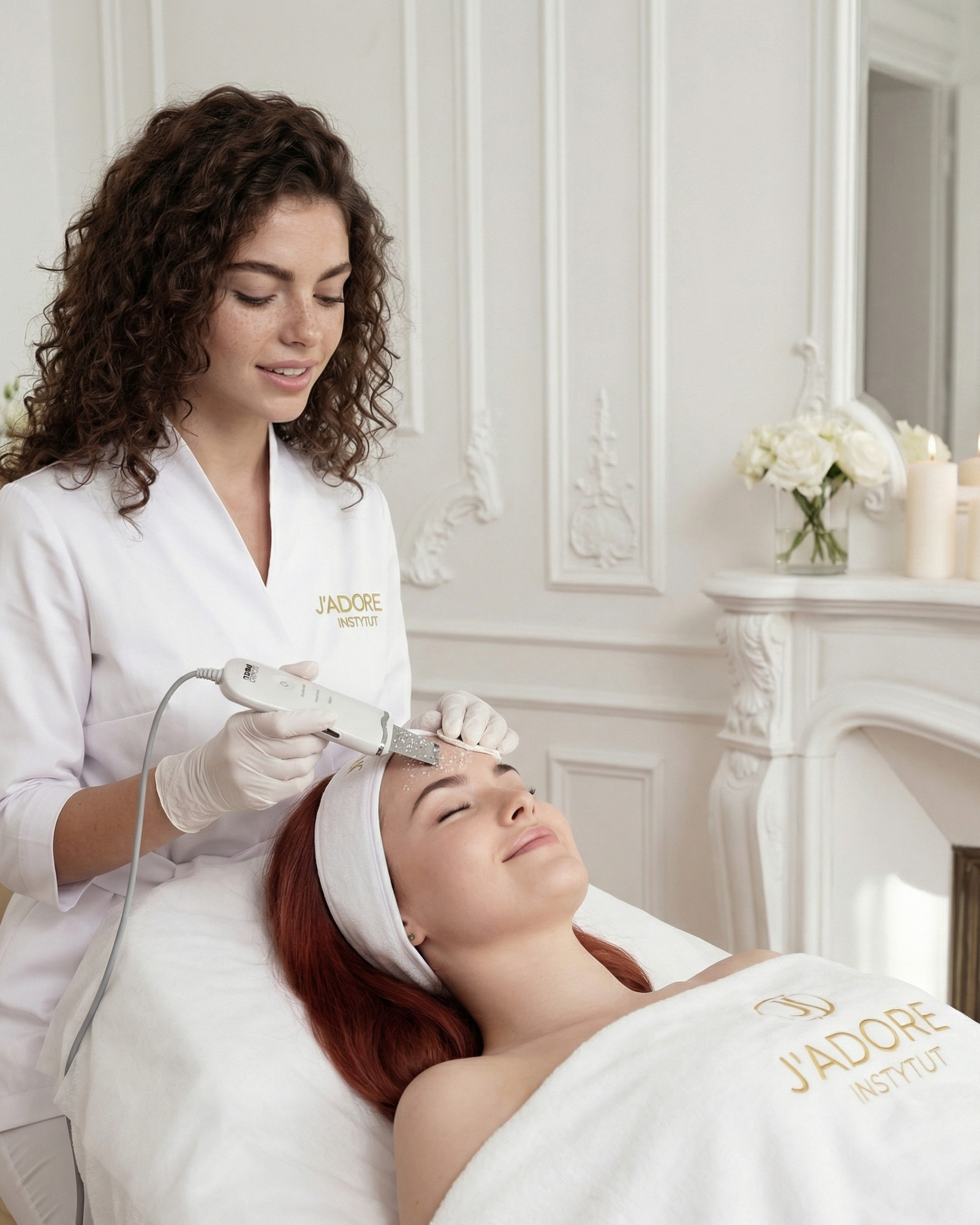
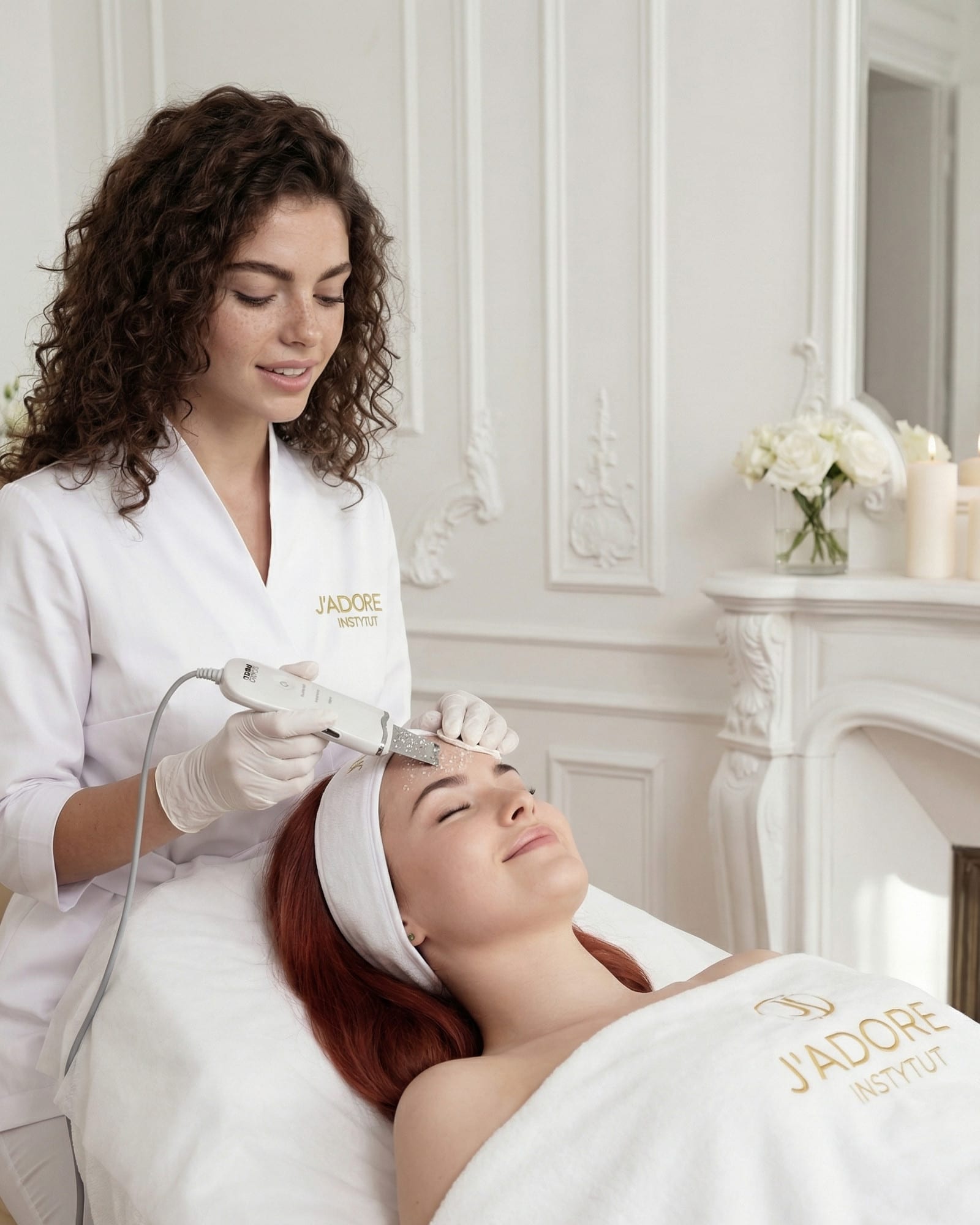
- A cavitation or enzyme peel every 4–6 weeks.
- Manual extraction instead of squeezing spots yourself.
- Blue light LED therapy for inflamed acne.
- A dermatology consultation if acne doesn't improve after a few months of basic skincare.
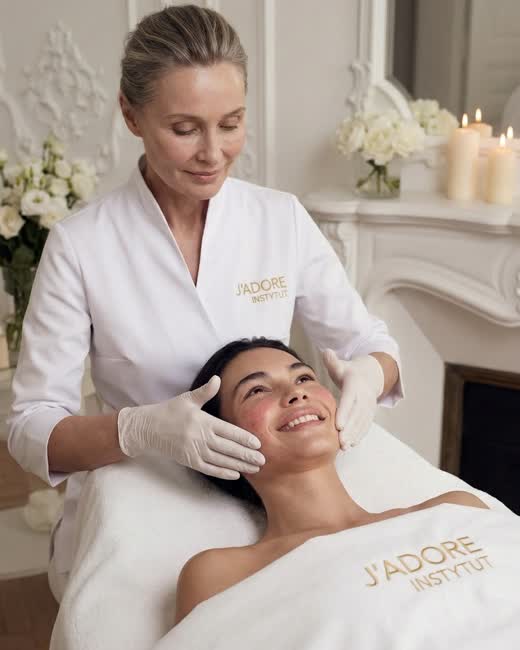
At J'ADORE INSTYTUT, facial cleansing and cavitation peels are the most common treatments among teenagers — safe, gentle and often effective for blackheads and spots. First visit? You can bring your mum along — no one judges, and a cosmetologist will explain everything calmly.