What happens to a man's body under chronic stress
In men, stress settles mainly in specific areas: shoulders, neck, lower back, jaw. This isn't a metaphor — it's a tension pattern with evolutionary logic behind it. The problem is that a mechanism designed for short bursts of adrenaline is now permanently switched on: work, deadlines, screens for 10 hours a day, not enough sleep. Muscles stay slightly contracted all the time. The nervous system never switches into recovery mode. Cortisol stays elevated.
The effects can be described plainly, without drama: you sleep worse, you recover more slowly from exercise, you get more tension headaches, and your ability to concentrate is better in the morning and drops sharply by the afternoon. This isn't about character. It's physiology — and it can be reset.
Massage for men vs "general relaxation" massage
Here's the difference worth knowing before you book anything. Massage aimed at highly tense, well-developed muscle tissue needs different pressure, a different rhythm and different techniques than a typical relaxation massage. Men generally have thicker, more resilient tissue — light surface stroking won't achieve anything there.
Classic relaxation massage
focused on unwinding
- even, steady pressure
- works on the surface of the tissue
- good for mild tension and stress
Deep tissue massage / intensive ritual
focused on release and recovery
- works deeper — fascia, postural muscles
- trigger points and pressure techniques
- effective for shoulders, neck, lower back
A good therapist asks about your issues before the session, checks your range of motion and adapts the techniques accordingly. There's no "one programme fits everyone" here — and that's exactly the value a professional salon offers over a hotel spa menu.
What the ritual includes — from head to toe
The word "ritual" has picked up a slightly frivolous reputation, somewhere along with rose petals. Technically, though, it simply means a structured treatment protocol — not one technique, but a sequence of steps that together achieve results no single technique could deliver alone.
- 01
Analysis and consultation
The therapist asks about strain, injuries and pain points. Without this, there's no way to know where to focus the work.
- 02
Warming the tissue
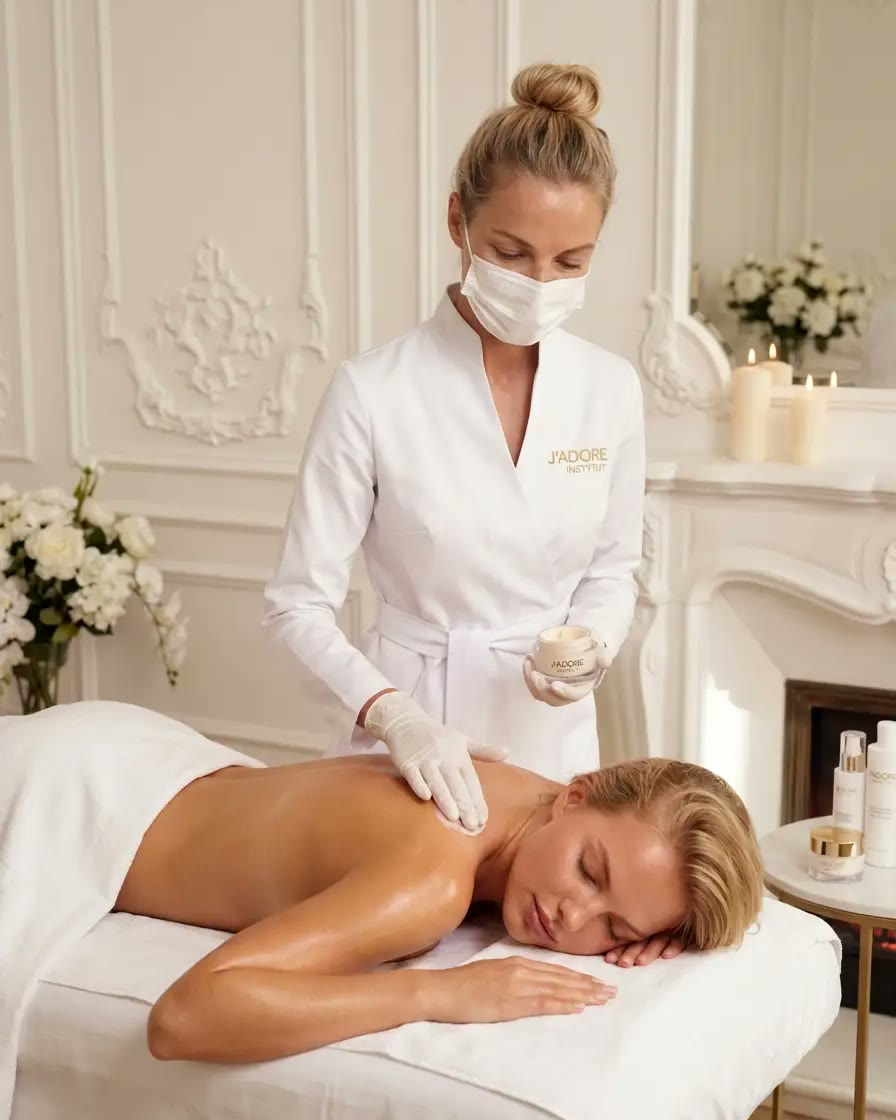
Heat — compresses, hot stones or a suitable product — prepares the tissue for deeper work. Without it, pressure is less effective and more uncomfortable.
- 03
The main work — muscles, fascia, trigger points
The longest part of the session. The therapist works sequentially — usually starting at the back and neck, moving through the arms, down to the legs. For areas of strong tension, the work concentrates on specific zones.
- 04
Drainage and toning
The session closes with techniques that support circulation and help clear metabolites from the tissue.
- 05
Time for the nervous system
A few minutes of quiet after the treatment — this isn't a formality. The nervous system needs a moment to actually settle into recovery mode after intensive work.
Stone-cold calm — hot stone massage the man's way
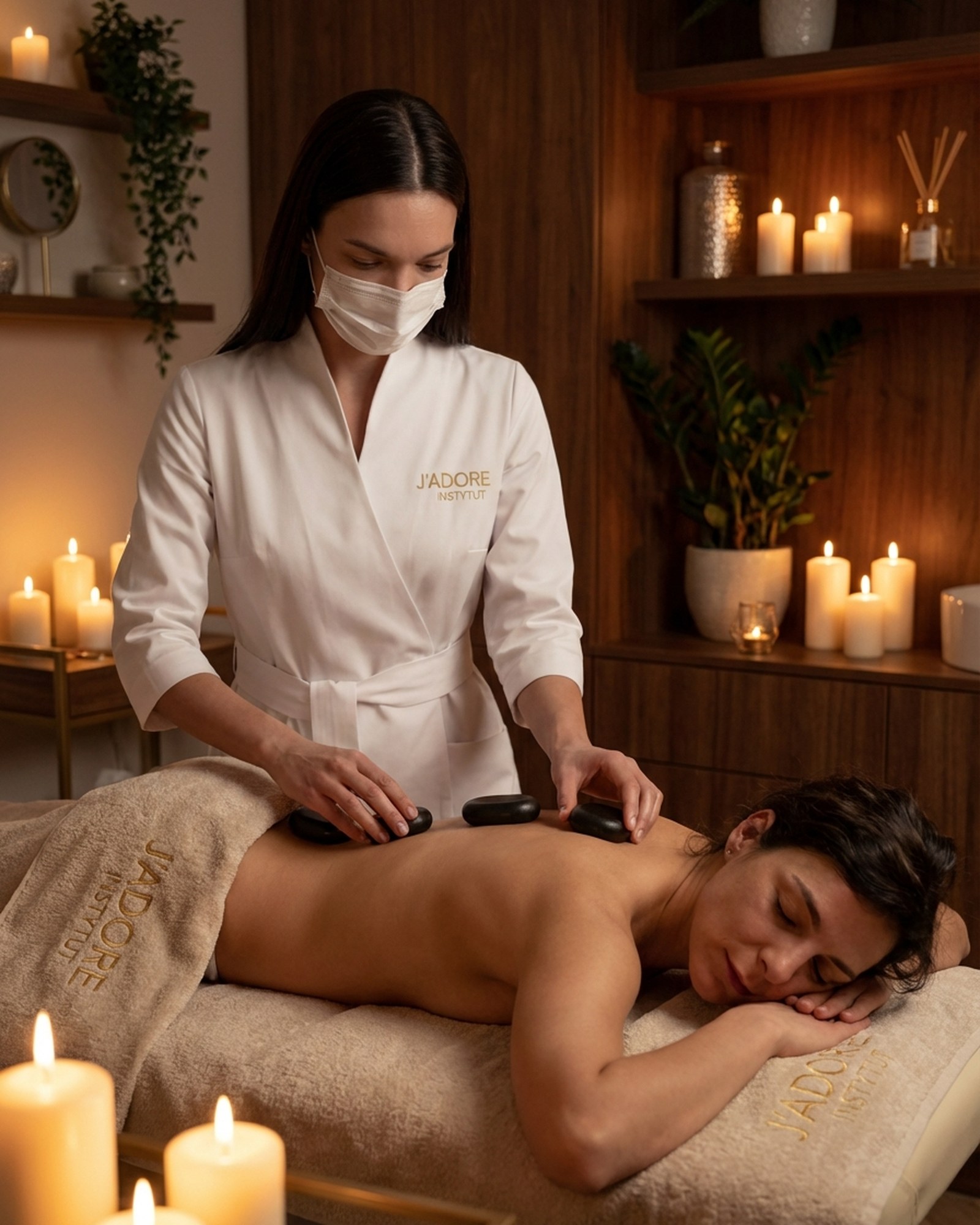
Hot volcanic stones are one of the few treatments men tend to discover by accident — and then become regulars. The heat from basalt stones penetrates far deeper than the therapist's hands, releasing muscle tissue from the inside. The effect is especially noticeable in highly tense, well-developed muscles — typical for men who train regularly or sit at a desk for 8 hours a day.
Combined with massage techniques, the stones deepen the effect — the therapist can work more gently while the heat does part of the job. The result: deeper tissue relaxation than a standard massage, with less discomfort from the pressure. For anyone with very strong tension that hurts to the touch, this is often the best starting option.

When to do it — and how often
A single session gives results. A series changes the pattern. The model is simple: one session releases acute tension, but changing the chronic state of your tissue and shaping a new baseline of muscle tension takes regularity. For many men, the optimum is once every 2–4 weeks, depending on lifestyle.
- Intensive physical work or strength training — recovery after load, faster return to full performance
- Desk work, 8+ hours a day — releasing postural tension patterns (neck, shoulders, lower back)
- Before or after a business trip — reset after flying, resetting your body clock
- A period of high stress — lower cortisol, better sleep quality
- Recovery after injury (once the acute phase has passed) — consult a physiotherapist before deciding
Combine — a series makes more sense than a one-off
Massage works well on its own. But combined with other treatments, the results come faster, last longer and go deeper. Below are the combinations that work best for men:
Massage + facial care for men
Body and face in one visit — a complete reset after an intensive week. Particularly important for men: skin exposed to daily shaving needs a different approach than women's skin.
Massage + back and chest treatment
For men with back acne or hyperpigmentation — skin responds much better to skincare treatments once it's been warmed and the tissue relaxed.
Massage + body contouring treatment
Relaxing the tissue before a contouring treatment (e.g. circumference reduction, lymphatic stimulation) improves the effectiveness of the whole session — the tissue has better blood flow and responds better to the device.