Three levels — three entirely different mechanisms
Before choosing a method, it helps to understand where your problem actually "lives". Skin isn't a single uniform layer — it's a stack of tissue, only a few millimetres thick, with different needs and different accessibility for active ingredients. Everything you apply from outside has to get through it — and not everything manages to.
Moisturising cream
surface hydration — stratum corneum
- occlusion: locks water into the epidermis
- humectants (glycerine, hyaluronic acid) draw moisture from the air
- immediate effect, needs daily use
- ideal for maintenance and preventive care
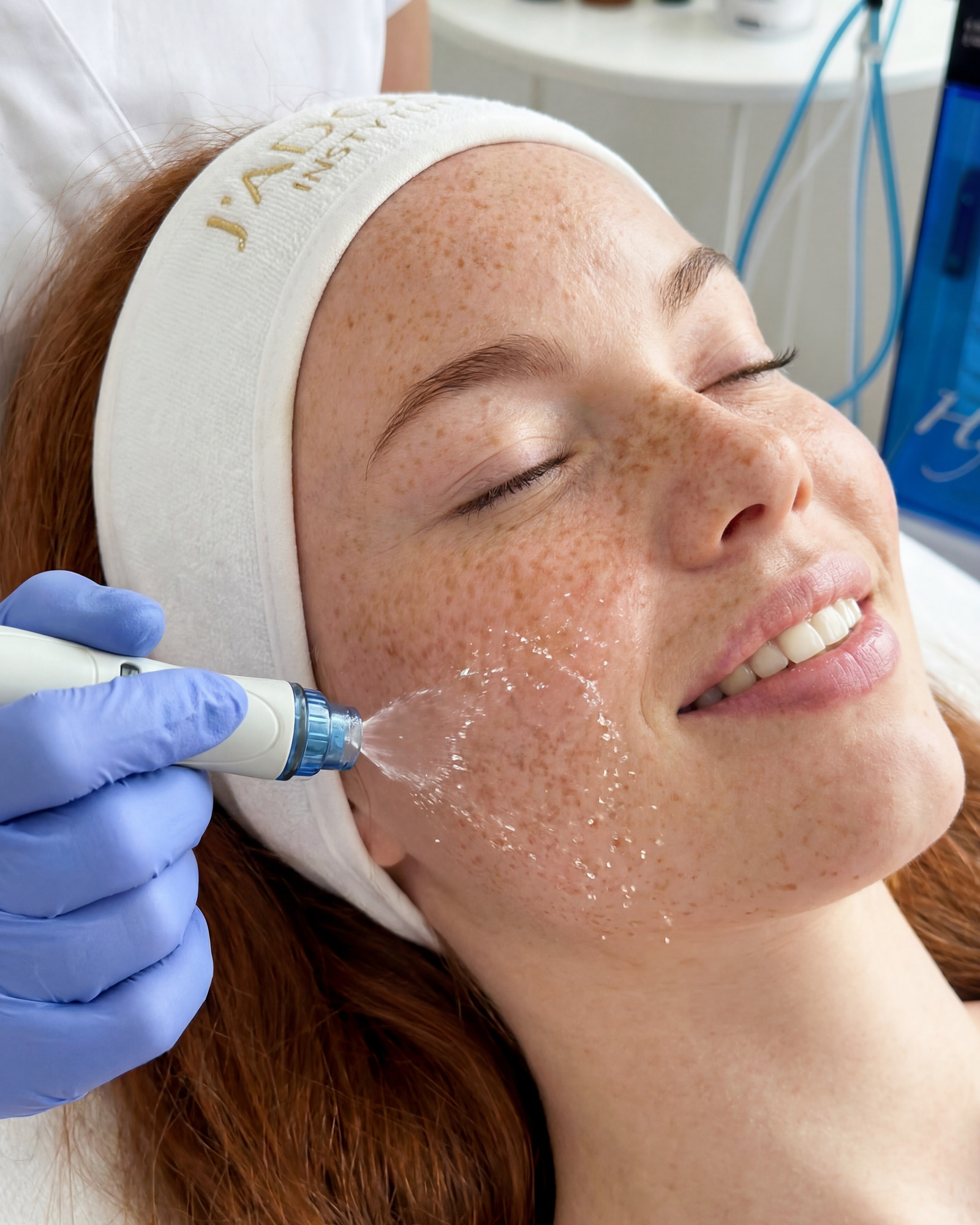
HydraFacial
cleansing + intensive replenishment of the epidermis
- multi-step cleansing removes "blockages" (dead skin cells, sebum)
- once cleansed, skin absorbs active serum several times more effectively
- hyaluronic acid and peptides penetrate the prepared epidermis
- result visible directly after the treatment, skin looks radiant and "plumped"
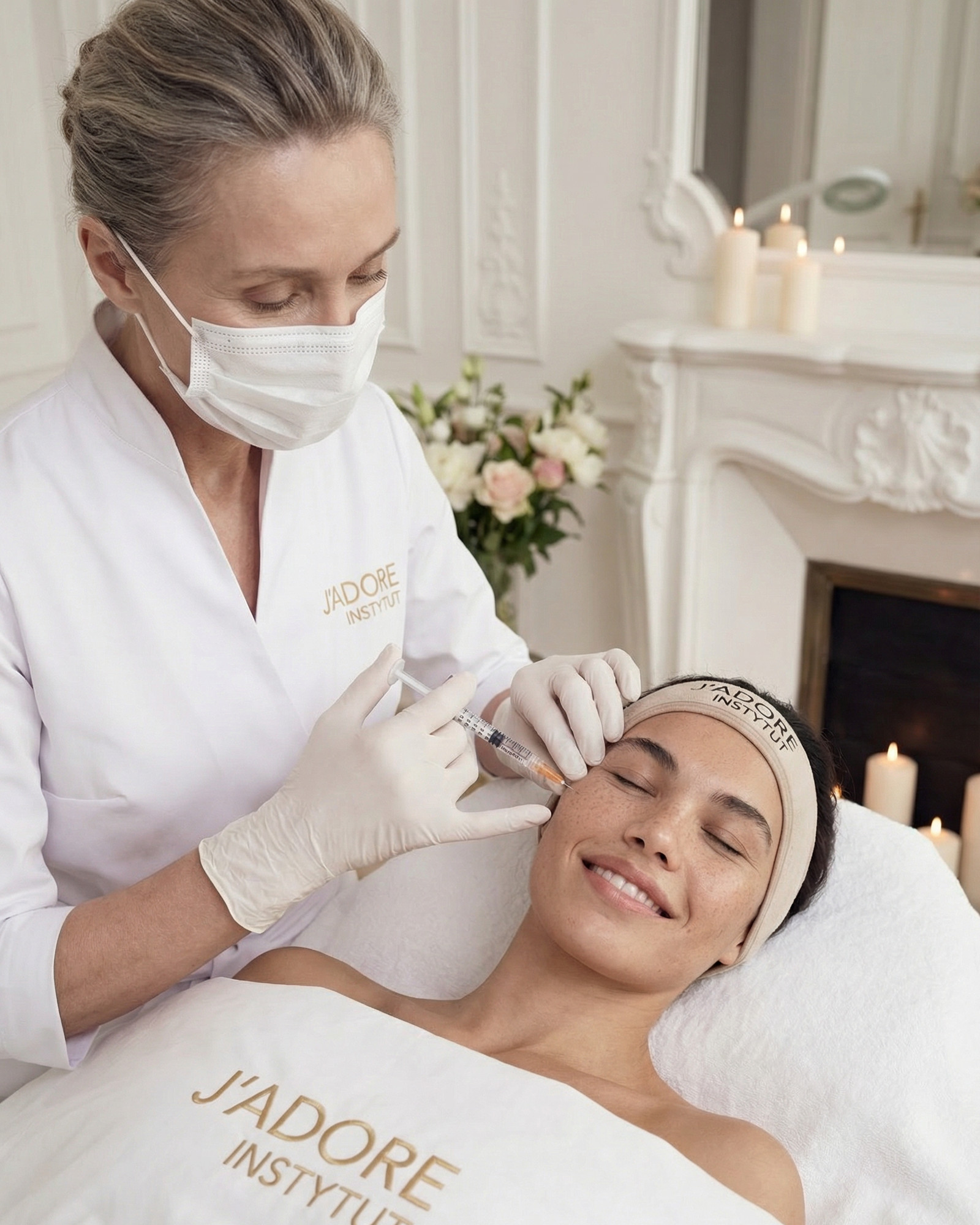
Needle mesotherapy
hydration of the dermis — the deepest level
- hyaluronic acid cocktails delivered directly into the dermis
- bypasses the skin barrier — ingredients reach exactly where they're needed
- the effect builds over several weeks, and for many people lasts for months
- often improves not just hydration, but also firmness and skin tone
How to identify which level your problem is on
Before deciding which treatment interests you, you can get a rough sense of the situation yourself. It won't replace a consultation, but it helps you ask your cosmetologist the right questions:
- Cream works, but the effect disappears after a few hours → the skin barrier is probably weakened, or your skin loses water quickly. Worth considering HydraFacial as a reset that also strengthens the barrier.
- Skin is dry and dull regardless of your routine, and reacts with irritation → possible hydration deficit in deeper layers. Cream alone won't be enough here — this is a topic for your consultation (mesotherapy or other methods of delivering ingredients deeper).
- Skin looks fine, but after summer / winter you want a "rebuild" → one or two HydraFacial sessions are often enough as a seasonal reset.
- Mature skin, losing density, with a "greyish" look and loss of radiance → here we usually see several issues at once; mesotherapy is often part of a broader plan.
An important distinction that's rarely mentioned: dry skin (lacking lipids) and dehydrated skin (lacking water) look similar but need a different approach. A ceramide cream and a hyaluronic acid cream are two different products for two different problems. We apply the same logic to treatments — hence a consultation before any decision.
HydraFacial from the inside — what this treatment is really about
HydraFacial is known as a "hydrating treatment" — and that's true, but not the whole truth. The strength of this method lies in the order of the steps: cleansing comes before hydration. Once dead cells, impurities and excess sebum are removed, skin absorbs active ingredients several times more effectively than "congested" skin.
- 01
Cleansing and exfoliation
A gentle, simultaneous peel and suction of dead epidermal cells. Skin becomes "clear and ready".
- 02
Acid pore loosening
A blend of salicylic and glycolic acids dissolves impurities in the pores without irritation — for many people, this is the step that makes the biggest difference to how pores look.
- 03
Extraction without pressure
Vacuum suction removes trapped blackheads — without the mechanical squeezing that irritates skin and leaves marks.
- 04
Serum saturation
A serum with hyaluronic acid, peptides and antioxidants is applied to the prepared skin. This is the moment hydration actually reaches deeper than with cream alone.
- 05
Protection
Sealing serum and antioxidants close the skin barrier — so the result lasts.
Needle mesotherapy — hydration cream can't reach
Needle mesotherapy is a method that bypasses the skin barrier — active ingredients are delivered directly into the dermis using very fine needles. For hydration, it mainly uses cocktails with hyaluronic acid of different molecular weights, often enriched with vitamins and minerals.
That's why the effects of hydrating mesotherapy are described differently from those of cream or even HydraFacial: skin can look more "filled" from within, with better tone and elasticity. Hyaluronic acid delivered into the dermis binds water exactly where it naturally belongs — not on the surface, where it evaporates quickly.
When it makes sense to combine, not choose
In practice, the question "HydraFacial or mesotherapy?" often comes up exactly when it's worth combining the two — or planning them in sequence. Each method works on a different level of the skin, so they aren't competitors — they're complementary. The logic is simple: there's little point applying active ingredients deep into the skin if the epidermis is over-keratinised and "congested" — the effect will be weaker. And the reverse is also true: cleansing the epidermis alone won't fix a hydration deficit in the dermis.
HydraFacial as preparation for mesotherapy
Cleansed epidermis is a better starting point for a needle treatment — ingredients work more effectively, and the risk of irritation is lower. Many treatment plans start with HydraFacial.
Hydrating mesotherapy + daily cream
Even after deep in-salon hydration, a daily home routine still matters — it maintains the result and protects the skin barrier from water loss.
Seasonal HydraFacial + mesotherapy as a series
A popular plan for mature or dehydrated skin: HydraFacial once or twice a year as a "reset", with mesotherapy as a series of 3–4 sessions.
Biostimulators + hydrating mesotherapy
For skin losing density — biostimulators stimulate your own collagen, while mesotherapy adds hydration. Two different goals, one plan.