Where did the idea of treating the body with energy come from?
Before entering cosmetic salons, electromagnetic waves, ultrasound and controlled cooling had a history in medicine — from physiotherapy and surgery to oncology. The principle was always similar: tissues respond to energy in predictable ways. They contract, regenerate, die or remodel depending on what is delivered and how precisely it is dosed.
Transferring these mechanisms into aesthetics came down to one key question: how can a controlled, predictable tissue response be induced without disrupting the skin? The answer varied by goal. This led to three distinct branches of devices now offered alongside each other in salons.
Radiofrequency — heat that restructures
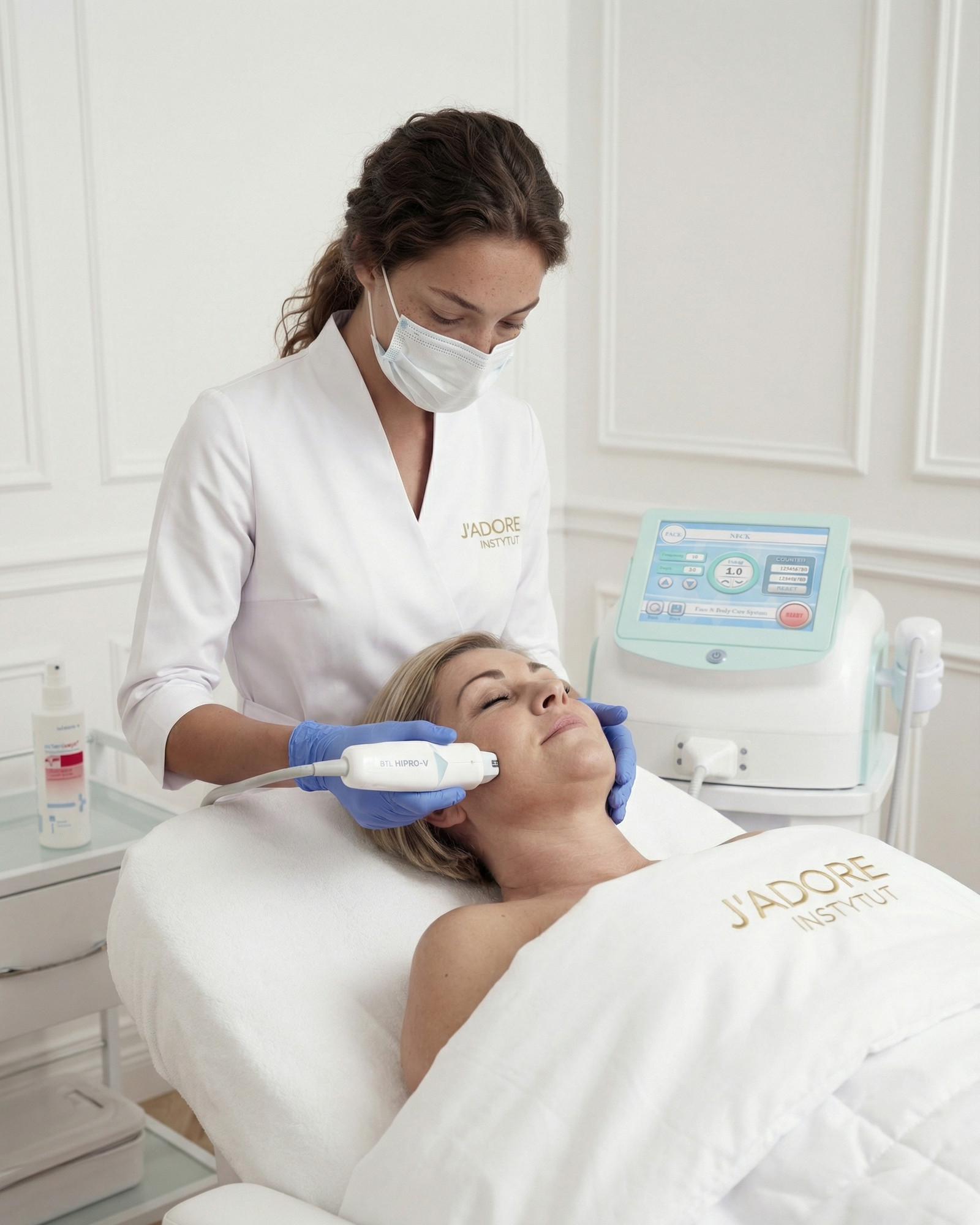
Radiofrequency is electromagnetic energy that converts into heat within the tissue. It is not random surface heating. It is a precisely controlled rise in temperature within deeper layers of skin and connective tissue, while the epidermis remains cool.
The mechanism is elegant: energy passes through the skin and causes charged water molecules and proteins in the tissue to oscillate. This movement generates heat from within, rather than from outside — much like a microwave heats food without heating the dish itself. The result? Connective tissue responds by contracting, while fibroblasts — cells responsible for collagen production — receive a signal to work more intensively.
- What happens immediately: existing collagen fibres contract under the influence of heat — which is why many people see improved firmness within a few days of the treatment.
- What happens over the following weeks: fibroblasts produce new collagen and elastin in response to ‘thermal damage’ — this process lasts from several weeks to several months.
- Depth of action: depends on the frequency of the applicator used — different applicators target different layers, from the skin surface to deeper structures.
- Most often ideal for: people seeking improved skin firmness, reduced cellulite, enhanced body contours, or treatment for laxity after pregnancy or significant weight loss.
Ultrasound — a wave that literally shakes cells
Ultrasound affects tissue mechanically, not thermally — although the boundary can be fluid depending on frequency and intensity. In body aesthetics, two main approaches are used: cavitation ultrasound and high-intensity focused ultrasound (HIFU for the body).
Cavitation works in a simple yet rather striking way: sound waves create microscopic bubbles within fat tissue. These bubbles pulsate and then implode rapidly — exerting pressure on fat cells that damages their membranes. The cell contents enter the intercellular space and are gradually removed by the lymphatic system. This is not heating or freezing — it is purely mechanical disintegration at a cellular level.
HIFU for the body (High Intensity Focused Ultrasound) follows a different principle: a focused ultrasound beam is concentrated like a lens at one point deep within the tissue — similarly to how a magnifying glass focuses sunlight. At this point, the temperature rises very rapidly, creating a targeted coagulative effect. This method may be used for both fat and fascia and skin firmness.
Ultrasound cavitation
mechanical disintegration of fat tissue
- Acts on fat cells through micro-implosions
- Cell contents are drained through the lymphatic system
- Recommended for visible fat deposits
- Requires an efficient lymphatic system
HIFU for the body
targeted thermal effect in deep tissue
- Focused energy destroys cells at a precise point
- Can act on both fat and fascia
- Depth precision resulting from focusing
- Also stimulates collagen production
Cryolipolysis — cooling that selects
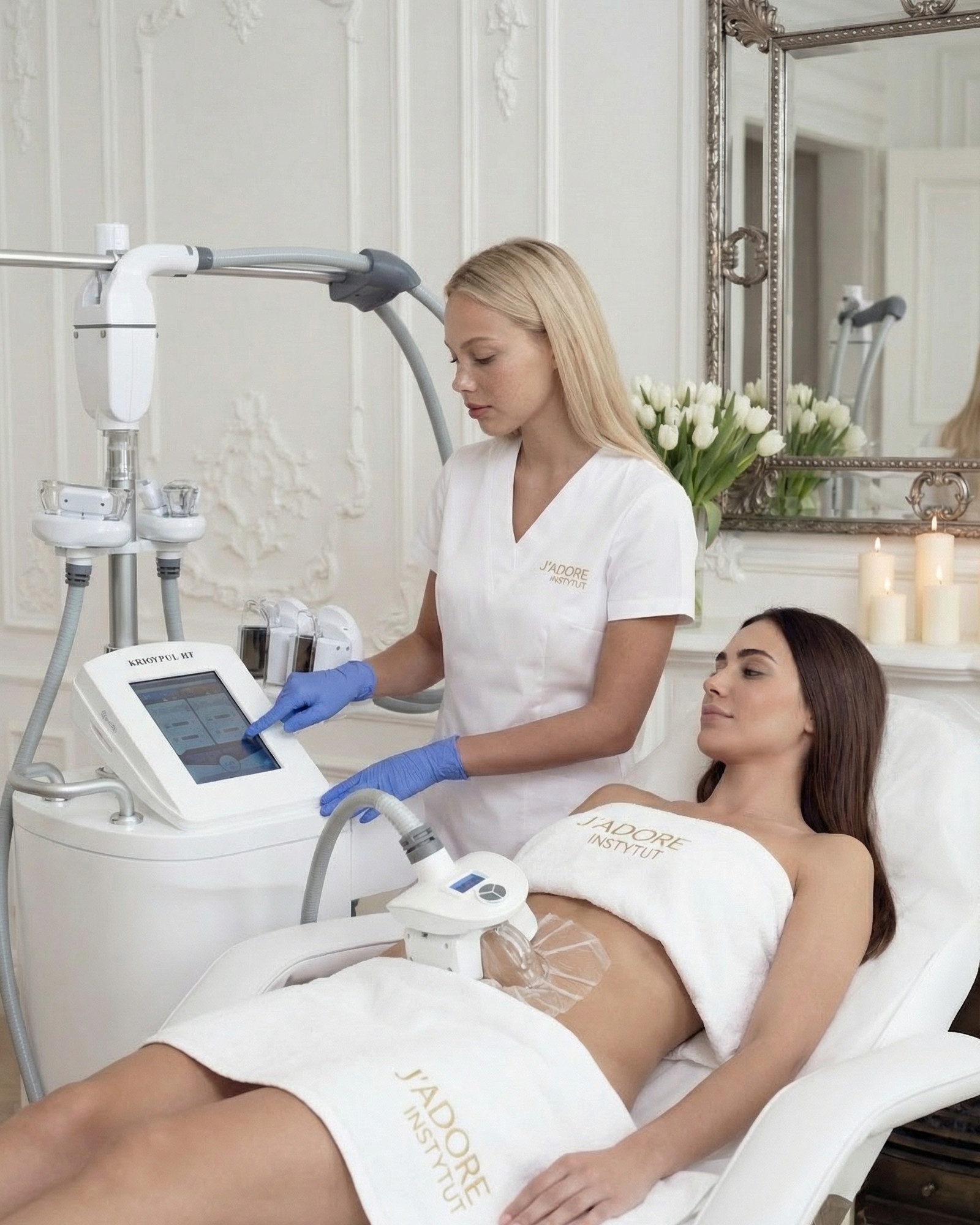
Cryolipolysis is based on a discovery that gained considerable scientific attention at the time: fat cells are more sensitive to cold than skin and muscle cells. This difference allows tissue to be cooled in a controlled way to a temperature at which adipocytes (fat cells) undergo apoptosis — or programmed cell death — while surrounding tissues remain undamaged.
The treatment works through a type of suction: the applicator ‘draws in’ a fold of tissue and cools it for a precisely defined time. The cold does not destroy cells immediately. It triggers a biochemical cascade that, over several weeks after the treatment, leads to the death and gradual removal of damaged adipocytes by the immune system. This is why cryolipolysis results are not visible immediately — they usually appear after four to eight weeks.
A key feature of cryolipolysis is the lasting nature of the result — a fat cell that dies and is removed by the body does not return. This distinguishes it from methods that reduce cell volume without eliminating cells. However, the result is not unlimited. It concerns specific fat deposits accessible to the applicator. It is not a weight-loss method as such, but rather contouring in areas resistant to diet and exercise.
Three mechanisms — three different goals
Comparing these three methods clearly shows that they are not in competition with one another — they address different concerns and different tissues. The choice between them should come down to one question: what is really the priority?
Radiofrequency
firmness, restructuring, collagen
- Mechanism: thermal — heat from within
- Goal: improved skin quality and firmness
- Result: gradual, over weeks and months
- Best when: the skin is lax and cellulite is structural
Ultrasound
disintegration or targeted coagulation
- Mechanism: mechanical (cavitation) or focused thermal (HIFU)
- Goal: reduction of fat deposits, work on fascia
- Result: visible after a few weeks
- Best when: there are clear fat deposits whose volume needs reducing
Cryolipolysis
elimination of fat cells through cooling
- Mechanism: cold-induced adipocyte apoptosis
- Goal: permanent reduction in fat tissue volume
- Result: after 4–8 weeks, permanent
- Best when: there is a resistant localised deposit with a defined shape and volume
In a salon setting, these methods often complement each other. Cryolipolysis can reduce volume, but it will not improve the quality of the skin above the area — this is where radiofrequency comes in. Ultrasound can reduce fat and support lymphatic drainage, while radiofrequency enhances the firming result. A combined approach is not a marketing trick — it follows from the fact that each method works on a different type of tissue.
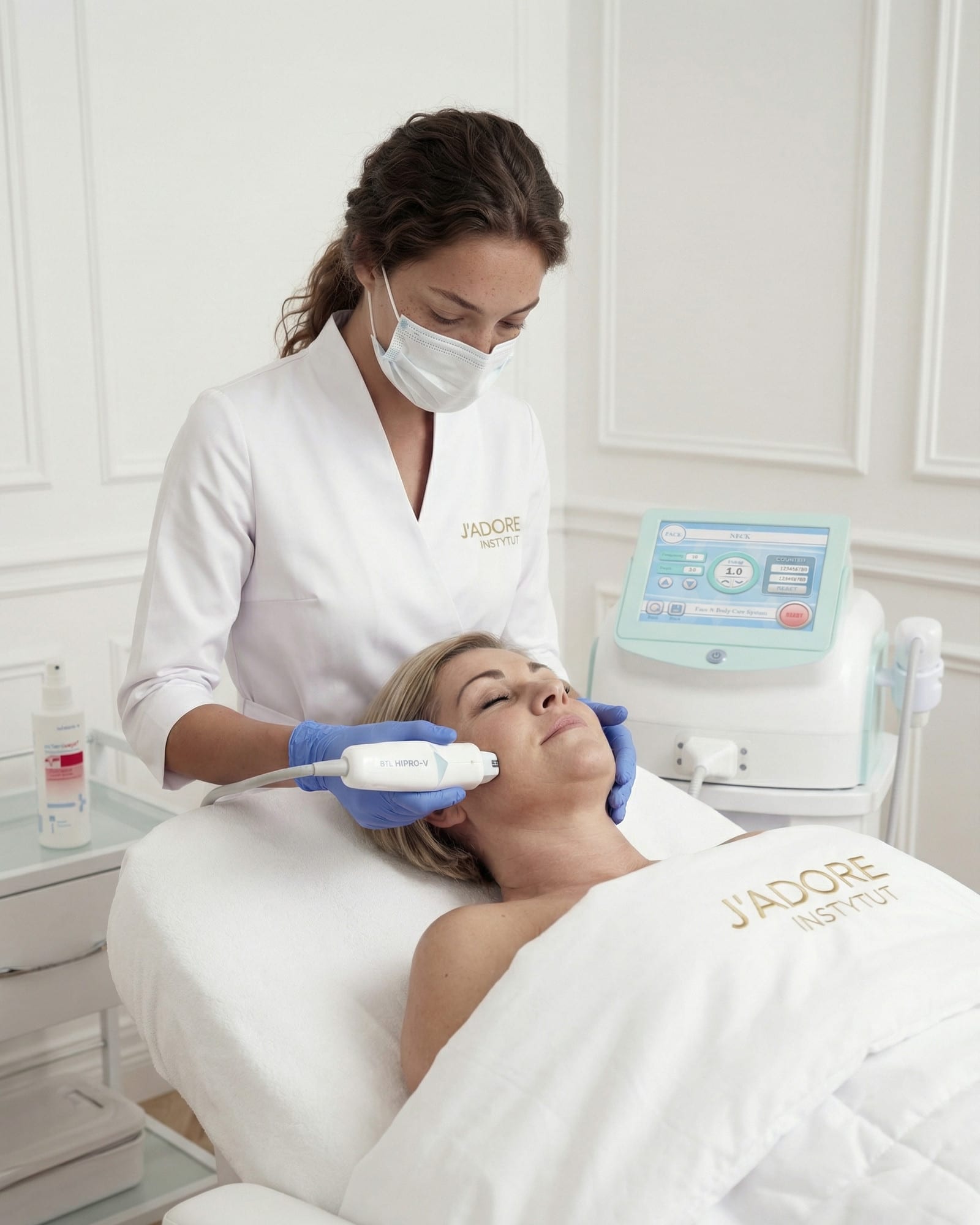
How to read a salon’s treatment offer
Salons rarely describe treatments by their mechanism. They more often focus on the result: “firming”, “contouring”, “slimming”. This is understandable from a communication perspective, but it can make an informed choice more difficult. A few questions during consultation can help you quickly understand the reasoning behind the proposed treatment.
- “What exactly does this device do to the tissue?” — the answer should include one of these terms: heat, vibrations/mechanical waves, cooling. If the answer is purely marketing-focused, it is worth asking further questions.
- “Which layer does it work on?” — skin, connective tissue, fat tissue, fascia. Each layer requires a different goal and a different tool.
- “When will I see results, and how long will they last?” — radiofrequency builds collagen over several months, cryolipolysis permanently removes cells, while cavitation requires support through drainage and lifestyle.
- “How many sessions do I need, and why?” — biostimulatory methods such as radiofrequency require a series; cryolipolysis often delivers a result after one or two sessions for a given area.
Combinations: when one device is not enough
In body aesthetics, one goal rarely means one issue. Loose abdominal skin after pregnancy involves reduced firmness, altered texture and often a resistant fat deposit in a specific area. Cellulite on the thighs involves fat, microcirculation and connective tissue. This is why the most effective protocols combine devices rather than choosing between them.
Cryolipolysis + radiofrequency
Cryolipolysis reduces the volume of a fat deposit. Radiofrequency, used in the following weeks, improves skin firmness where the supporting fat has been reduced. Without the second stage, the skin may look less elastic than before the treatment.
Cavitation + lymphatic drainage
Cavitation releases the contents of broken-down fat cells into the intercellular space — from where they must be drained through the lymphatic system. Drainage, whether manual or mechanical, speeds up and supports this process. It improves the effectiveness of the whole cycle.
Radiofrequency + endermologie massage
Radiofrequency heat relaxes and restructures connective tissue. The mechanical action of endermologie on the fascia and microcirculation enhances the result. This combination is often used for structural cellulite.