Why men's skin falls into this pattern more easily
Men's skin produces more sebum than women's skin — that's an anatomical fact, not a matter of diet or stress, although those play a part too. Thicker skin, a denser network of sebaceous glands and faster cell turnover all mean dead cells and sebum build up on the surface more quickly. Regular shaving irritates the skin barrier further and encourages clogged pores as hair regrows. The result is a classic loop: you exfoliate too rarely → pores clog → skin looks dull and grey → you switch to a stronger cleanser → skin responds with even more sebum.
That's why cleansing alone isn't enough here. You need exfoliation — done properly. Mechanical scrubs, with their granules and grains, often cause micro-tears and even more reactivity on sensitive, freshly shaved skin. This is where the enzymatic approach comes in: no friction, no granules, no irritation.
What pumpkin does — and why pumpkin specifically
Pumpkin contains natural proteolytic enzymes — mainly proteases — that selectively break down keratin. Keratin is the protein that makes up dead skin cells. Once its bonds break, the cells lift away on their own, without any mechanical pressure. You aren't scrubbing the skin — it's renewing itself. That's the key difference from mechanical exfoliation.
Mechanical peel
granules, grains, microdermabrasion
- removes dead cells through friction
- effective on thicker skin
- fast results, visible immediately
Enzymatic peel (pumpkin)
proteolytic enzymes from pumpkin
- dissolves protein bonds without friction
- works evenly across the whole surface
- doesn't irritate the skin barrier — safe after shaving
Besides enzymes, pumpkin also provides beta-carotene and vitamin C — antioxidants that neutralise free radicals and support collagen synthesis. In practice, this means the peel doesn't just cleanse — it nourishes too. That's something no mechanical method can offer.
Specific concerns men come in with
Men rarely come in saying "I want nicer skin." They come in with specific, annoying problems — and a pumpkin peel can genuinely address these:
- Grey tone and a tired look. Built-up dead cells literally dull the skin's brightness — they filter the light it reflects. After exfoliation, skin looks brighter and more even in tone. For many, this is the most visible change — and the one people around you notice first, as "you look well."
- Excess oil and shine. Clogged pores signal the sebaceous glands to produce even more sebum. Unclogging pores through regular exfoliation often breaks this cycle — the skin can "breathe" and stops overcompensating.
- Visible, clogged pores on the nose and cheeks. Blackheads are oxidised sebum mixed with dead cells. Enzymes break down the cellular component, which makes it easier to clear the pores — and reduces how visible they are.
- Uneven tone after shaving. Micro-irritation from the razor leaves marks of hyperpigmentation. Beta-carotene and vitamin C from pumpkin can help brighten these areas — gently, without harsh chemicals.
What the treatment involves — from start to finish
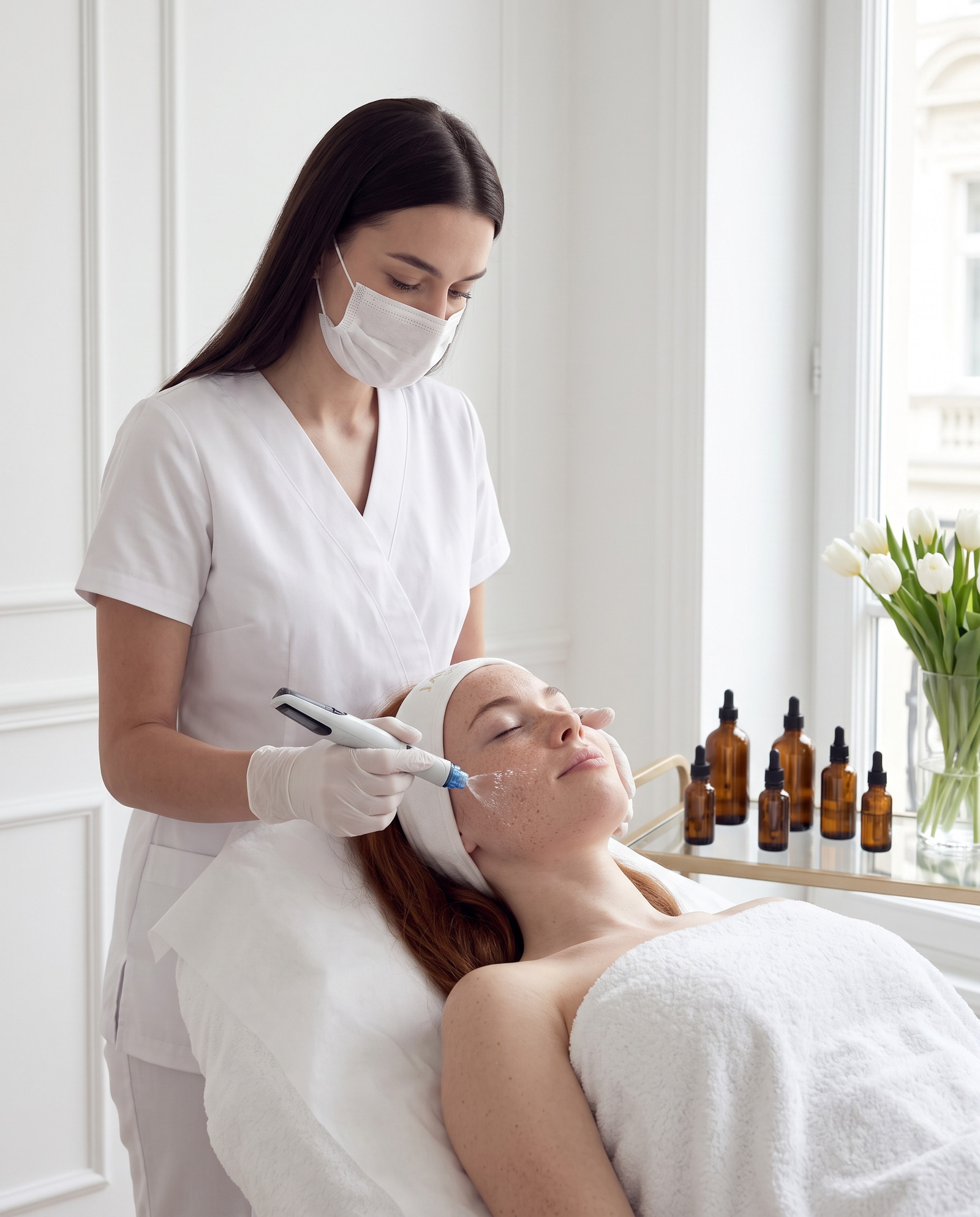
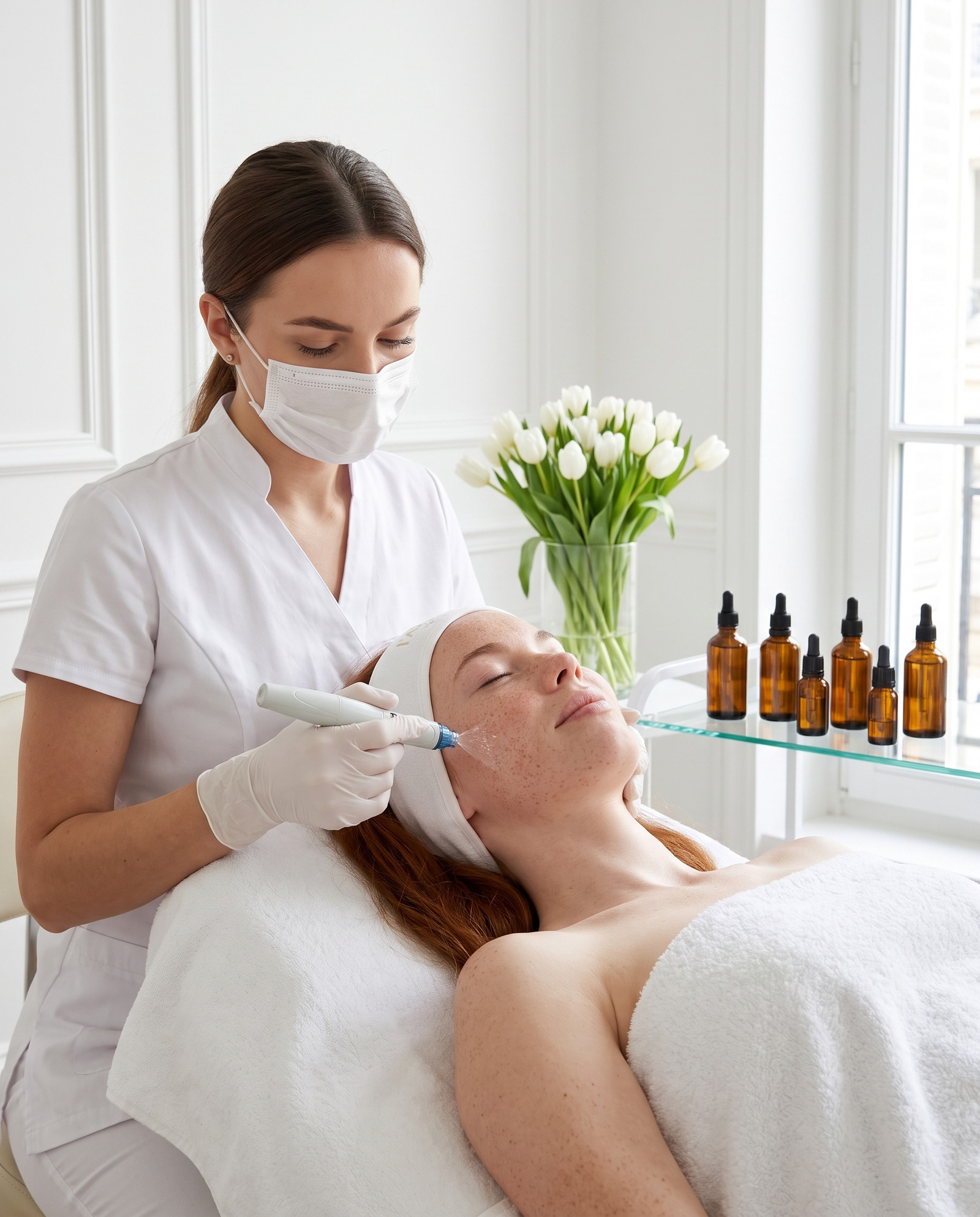
No preparation and no downtime — two reasons a pumpkin peel fits easily into a man's routine. There's no need to arrive with your face specially cleansed. Your specialist will cleanse your skin on site.
- 01
Make-up removal and cleansing
Your skin is degreased and cleared of any leftover cream or SPF. A dry, clean surface is essential for good enzyme penetration.
- 02
Applying the pumpkin formula
The enzyme is applied evenly across the whole face or selected areas. It stays on the skin for a set time — you may feel slight warmth or tingling during this stage.
- 03
The enzyme at work
The treatment requires nothing from you. The enzyme works on its own: it breaks down protein bonds, loosens dead cells, and prepares the skin to absorb nourishment.
- 04
Neutralisation and rinsing
The formula is rinsed off, and the enzymatic reaction stops immediately. There's no scrubbing effect and none of the redness typical of stronger chemical peels.
- 05
Hydration and SPF
After exfoliation, skin is more sensitive to UV — so a sun cream is applied at the end. You leave ready for your day.
After the treatment, skin is smooth and lightly radiant. There's no redness, flaking or swelling — you can head straight back to work, the gym or a meeting. The only thing to do that evening is avoid anything irritating, such as alcohol-based toners or strong retinol, and keep using SPF over the following days.
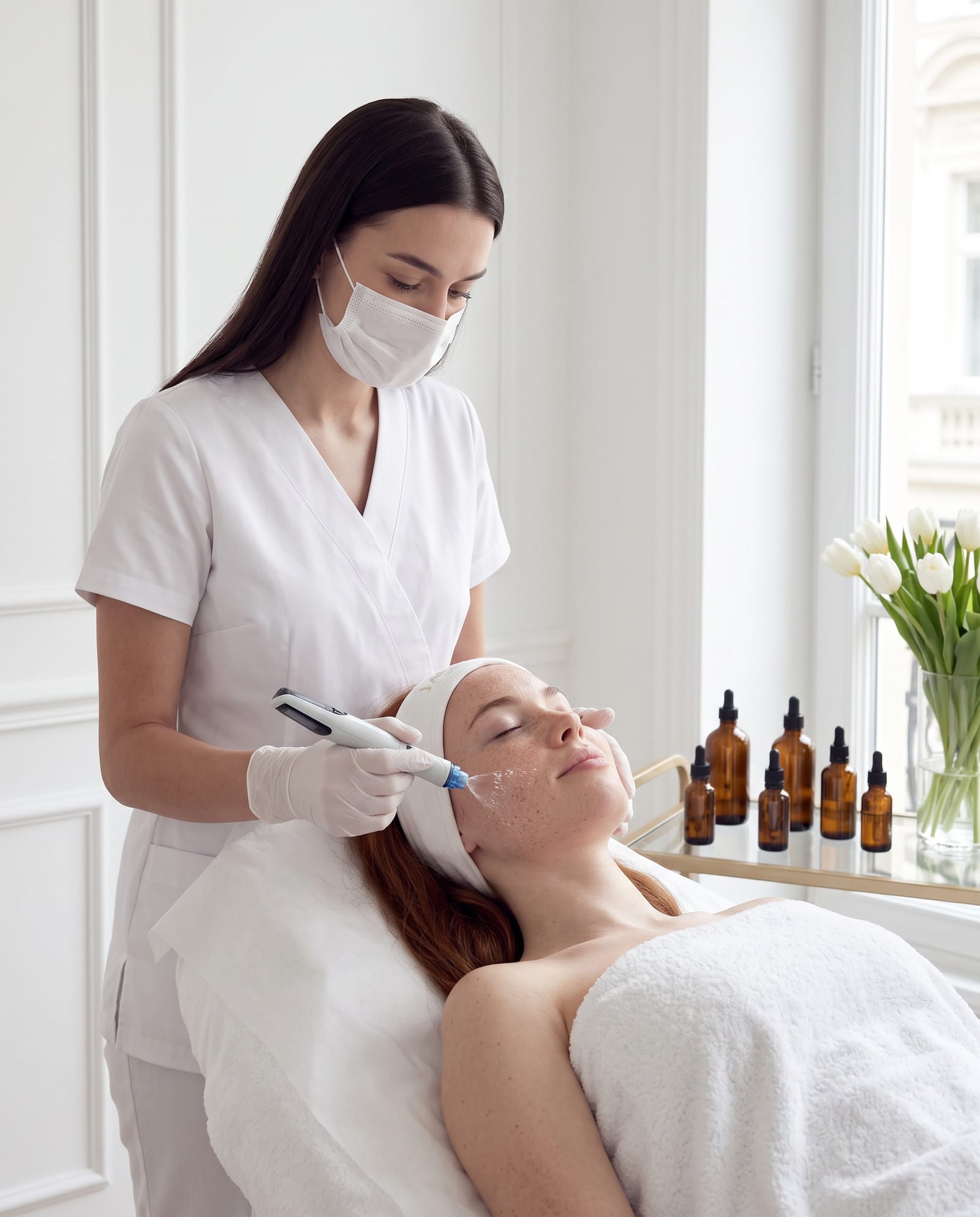
Combine with
A pumpkin peel works well on its own, but works even better as a first step before other treatments — cleansed, "open" skin absorbs active ingredients more effectively. Your cosmetologist selects the combination for your specific goal.
Needle-free mesotherapy
The peel prepares skin to absorb active substances such as hyaluronic acid, peptides and vitamins. Without exfoliation, the outer skin layer blocks their delivery — after a peel, mesotherapy becomes more effective.
Hydrogen cleansing (HydraFacial)
Combines enzymatic exfoliation with vacuum extraction and hydration in a single session — for men with heavily clogged pores alongside dryness in other areas, such as the cheeks versus the T-zone.
Algae or regenerating mask
Applied straight after the peel: intensive hydration and reinforcement of the skin barrier after exfoliation. Particularly recommended in spring and autumn, when skin needs a quick reset.
Questions men ask during consultation
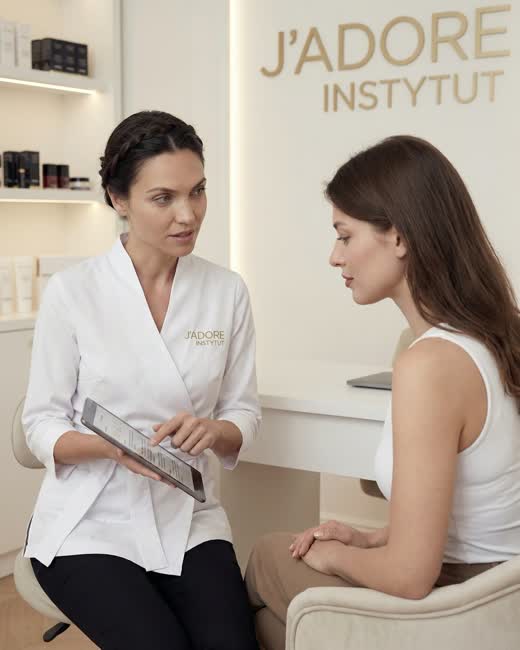
Instead of a Q&A section — three things we hear most often, worth settling before your visit.
- "Do I need to change my home care routine?" Not at the start. After a series of sessions, a specialist may suggest a specific product to maintain results — but there's no shopping list to work through before your first visit.
- "How many sessions?" Usually a series of several treatments, a few weeks apart. Then maintenance — for example once a month or every two months, depending on your skin. Without it, skin returns to its old rhythm.
- "Isn't this a treatment for women?" No more than seeing a physiotherapist or a dentist is. Men's skin has specific problems, and this peel addresses them. More and more salons now set aside spaces or time slots just for men — because demand is there.