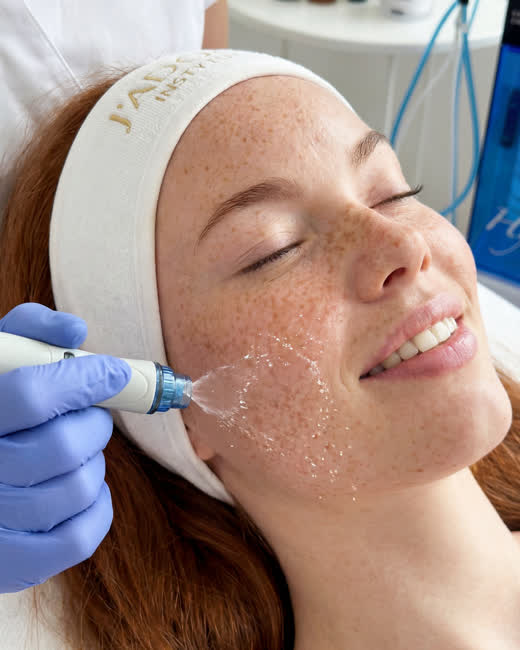
What we really do when we exfoliate the skin
Before comparing both worlds, it is worth understanding what happens to the skin during any form of exfoliation — regardless of the method. The epidermis constantly renews itself. Old cells move towards the surface, die and form the stratum corneum, which protects the skin like soft, thin armour. This natural cycle takes several weeks and differs slightly from person to person. It slows with age and may be disrupted by stress, hormones or overly intensive skincare.
Exfoliation — both at home and in a salon — accelerates or supports this process. It removes the surface layer of dead cells to reveal younger, more active skin beneath. Up to this point, the approach is similar. The difference lies in how deeply, how precisely and with what side effects — and this is where high-street products and professional treatments clearly diverge.
Home peels: a daily ally for the epidermis
Exfoliating cosmetics from high-street shops and pharmacies work mainly in the upper layers of the epidermis — and this is their natural, intended area of action. They are formulated for safe, regular use at home without specialist supervision. Their formulas need to deliver results with minimal risk of irritation across a broad range of users and skin types.
- Mechanical peels (scrubs): grains, microgranules, sugar and salt physically abrade the surface. The result is immediate: skin feels smoother straight after use. They work only on the outermost stratum corneum. They are best suited to the body. Use them on the face with caution, as overly coarse particles may irritate the skin or disrupt its microbiome.
- Enzyme peels: the gentlest category. Enzymes (papain, bromelain) “digest” protein bonds between dead cells without physical abrasion or acidification. They are ideal for reactive, vascular and post-retinoid skin — wherever other forms are too aggressive.
- Acid peels (BHA, AHA, PHA): fruit acids, salicylic acid, lactic acid and gluconolactone dissolve the bonds between cells and regulate renewal. They work more deeply than enzymes and scrubs, but remain within a safe range for home use. Over-the-counter concentrations are selected so they do not require neutralisation or medical supervision.
Professional peels: different levels, different rules
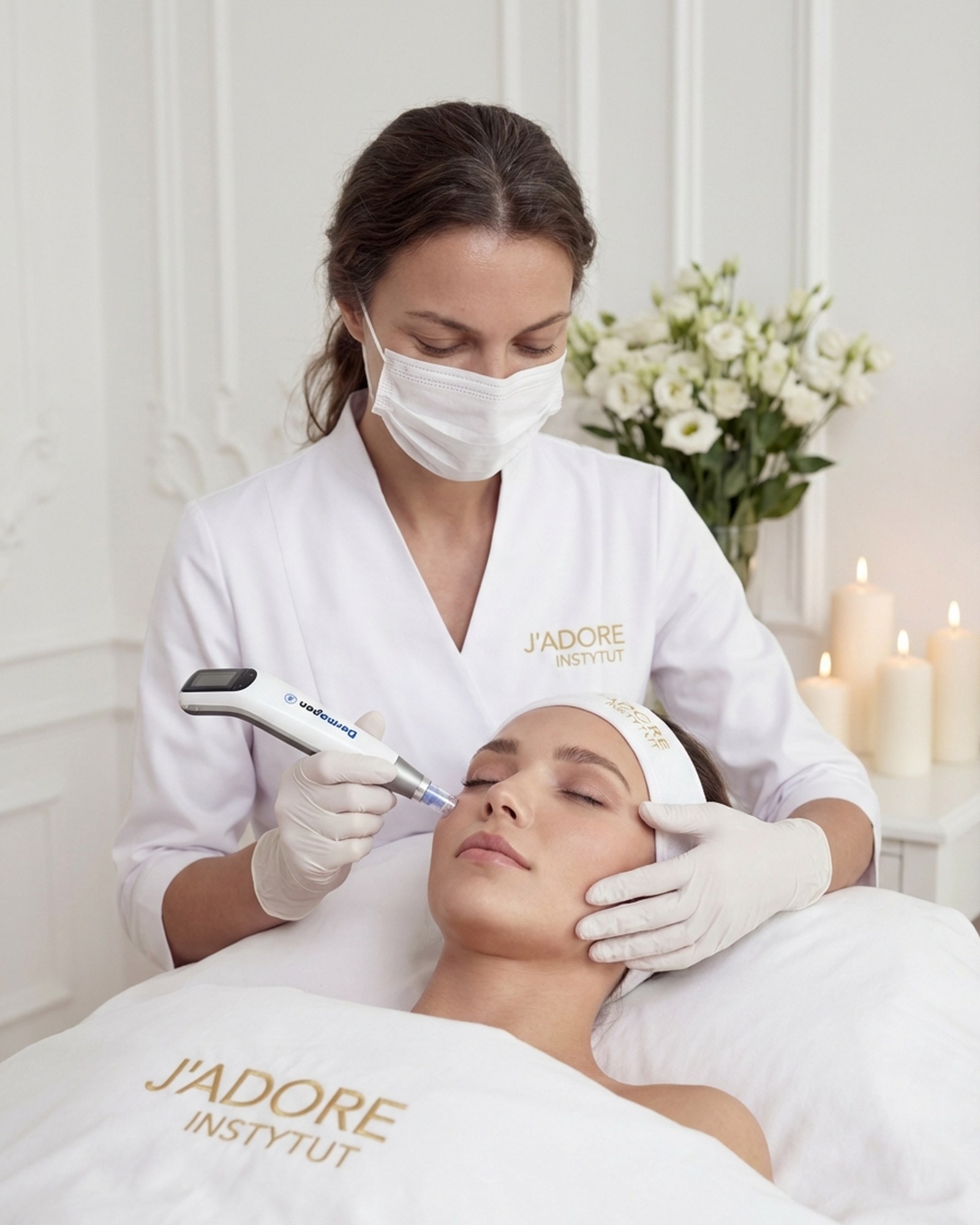
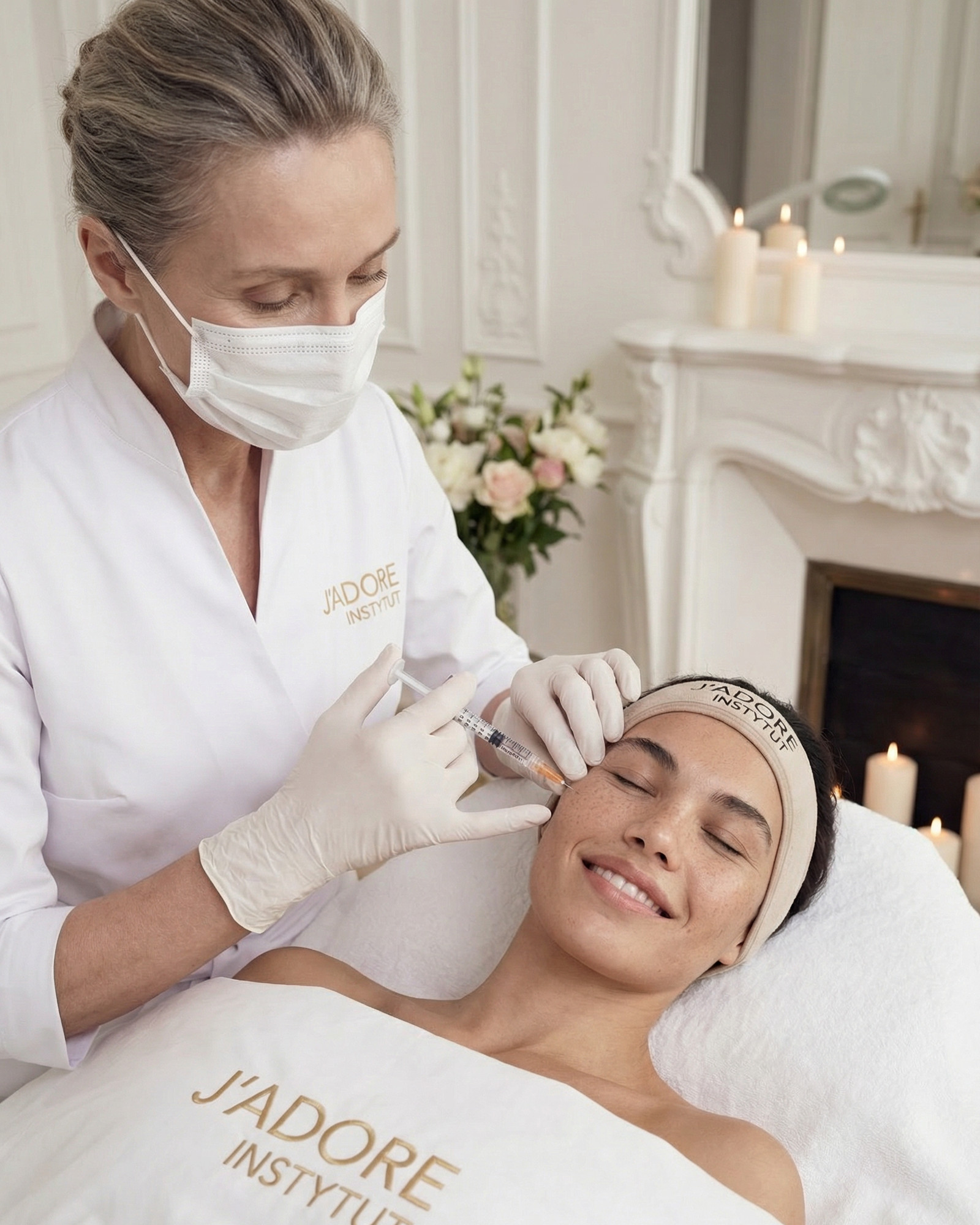
Exfoliating treatments in a salon are a different category. They are not simply “stronger high-street peels”, but tools based on a different approach. They work more deeply, often at the boundary between the epidermis and dermis or directly within deeper structures. This is why they require appropriate knowledge, skin assessment and supervision. Their purpose is not only to polish the surface. They often stimulate the skin to work from within.
Home peel
works on the surface of the epidermis
- Removes dead cells from the outer stratum corneum
- Skin feels smoother and looks brighter immediately after use
- Safe for regular home use
- Cosmetic results: radiance, improved texture
- No skin recovery period
Professional peel
works within deeper structures of the epidermis and skin
- Reaches living layers of the epidermis or deeper — depending on the type
- Stimulates skin regeneration and often new collagen production
- Requires skin assessment and selection by a specialist
- May involve gentle exfoliation or a controlled “shock” to the skin
- Results are often visible after several days or weeks, not immediately
Types of professional peels — what sets them apart
Professional peels are not one treatment, but a whole family of methods. They differ in their tool, depth of action and indications. It is worth knowing that the choice between them is not a matter of preference. It depends on assessing the condition of your individual skin.
- 01
Chemical peels (acid peels)
Acids are applied by a specialist in concentrations and formulas unavailable at retail. They work precisely at a selected skin level — superficially, within the epidermis, or more deeply. They require neutralisation and often a dedicated aftercare protocol. Indications include hyperpigmentation, acne, uneven texture and the first signs of ageing.
- 02
Microdermabrasion and dermabrasion
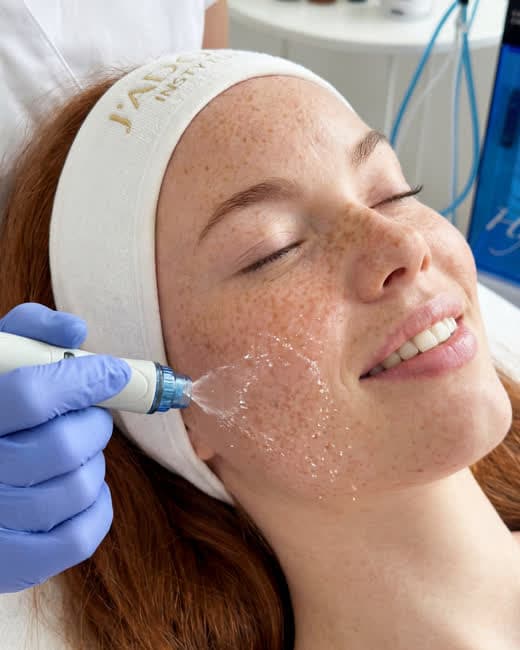
Mechanical exfoliation using a device with an abrasive tip or a stream of microcrystals. The specialist controls the intensity and direction of treatment. The result is more even than with a home scrub, while the ability to adjust depth is incomparably greater. Popular for acne scars, enlarged pores and dull-looking skin.
- 03
High-concentration enzyme peels
The principle is similar to home enzyme cosmetics, but the concentrations differ and they are often combined with other active ingredients. This is a gentler option for reactive skin or after laser treatments, when the skin needs support with regeneration but does not tolerate aggressive methods.
- 04
Combination and multi-step peels
Treatments combining several exfoliation mechanisms — for example, acid and enzyme peels, or mechanical and acid exfoliation. They allow work at several skin levels at once or in sequence. For many people, this delivers results unavailable with any method used alone.
What “depth of action” means in practice
Words such as “superficial” and “deep” may sound abstract, but they refer to specific skin structures — and to specific results that may or may not be achievable depending on where we work. Put simply, the deeper we reach, the stronger the skin’s regenerative response. However, healing takes longer and the specialist’s qualifications become more important.
When a home peel is enough, and when a salon visit is worthwhile
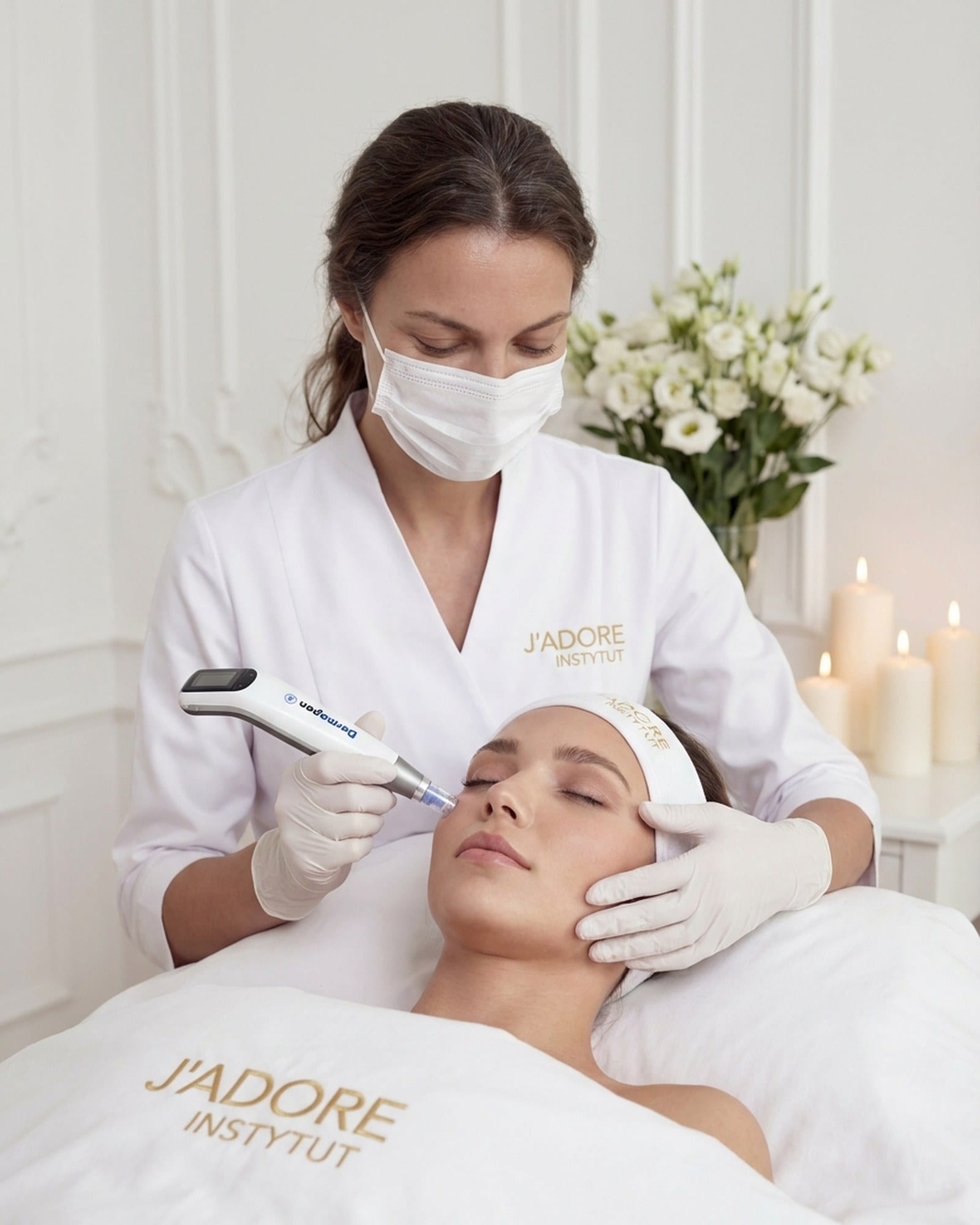
Both home and professional peels have an irreplaceable role in skincare. They work best when treated as complementary layers of one strategy, rather than alternatives. A home peel provides consistency and maintenance of results. A professional peel offers intervention and a reset. Ideally, these two layers work together.
Professional peels and at-home skincare — how to combine them
The most common mistake we see in the salon: you come in for an intensive peel while also using several acids, retinol and an active scrub at home. Each of these steps could be beneficial on its own — together, they create an excessive burden on the skin barrier. The result: irritation, reactivity and a paradoxical delay in treatment results.
A sensible strategy for combining at-home and professional peels looks different: before the treatment — stop using strong acids and retinol for several days, so your skin is in a calm baseline state. After the treatment — allow a recovery window without exfoliation, with hydration and barrier protection. Return to active skincare according to your specialist’s guidance — usually gradually, after several days to a week.
Peel + biostimulator
After a peel works on the epidermis, your skin is especially receptive. Combining it with a biostimulator can enhance the regenerative effect — the peel prepares the skin, while the biostimulator delivers building blocks deeper within.
Peel + mesotherapy
Mesotherapy directly after hydrating peels can deepen the effect of hydration and nourishment for renewed skin. Your specialist determines the order and interval between treatments individually.
A series of peels + SPF protection
A series of professional peels and intensive sun protection are an essential pairing — skin is more sensitive to radiation after exfoliation, and hyperpigmentation can return quickly without SPF.
What to tell your specialist — to choose the right peel
Your first visit before a professional peel is not a formality. It is the moment when your specialist gathers the information needed to select a safe and effective treatment. The more complete the picture, the better the choice. It is worth preparing a few things in advance:
- Your at-home skincare: which acids you use, how often and at what concentration. Retinol — yes or no, and how recently. This is particularly important for safely planning the treatment depth.
- Recent treatments: have you recently had laser treatment, IPL, other peels or injections? The time since your last treatment matters when planning the next one.
- Your skin’s tendency towards hyperpigmentation: does your skin darken easily after sun exposure or irritation? This is crucial for deeper peels — some require a specific protocol for skin prone to hyperpigmentation.
- Current medicines and supplements: especially prescription retinoids, oral hormonal contraception and photosensitising medicines. They directly affect which treatments are safe at a given time.
- Expectations: do you want smoother skin straight away? Are you working on a specific concern long term? Do you have an important event within a week or two? Your specialist also selects the intensity around your plans, not only your skin.