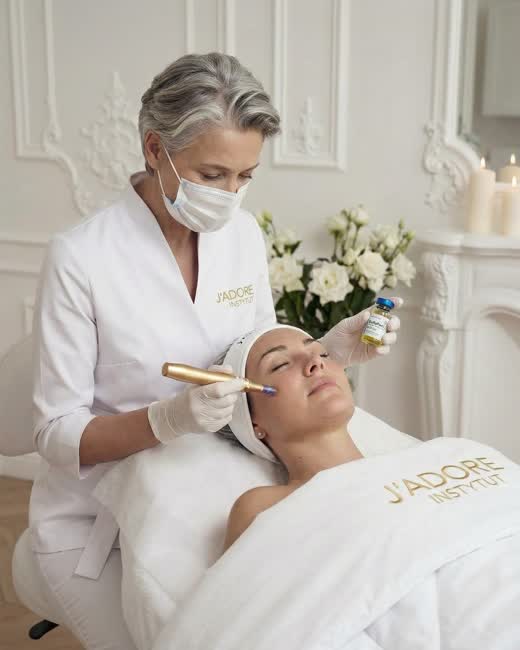
What PIH is — and why it isn't a scar
Let's start with a distinction that changes the whole approach to treatment. A scar is a change in skin structure — too much or too little connective tissue where a wound once was. Acne scars are either indented (atrophic) or raised (hypertrophic), and they genuinely need a different approach from pigmentation. PIH, by contrast, is a change in colour with the structure intact — the skin is smooth, its architecture untouched. Only the pigment is distributed unevenly.
This post-inflammatory mark can look different depending on the case: pink or red (more likely post-inflammatory erythema, PIE — linked to blood vessels, not pigment), light brown, dark brown, or in deeper skin phototypes, almost black or purple. Colour indicates the depth and type of pigment, which matters when choosing a fading method. A change in the epidermis calls for a different approach than pigment sitting in a deeper skin layer.
What happens in the skin during inflammation
To understand where pigmentation comes from, we need to go back to when the acne is still active. A papule, a pustule, and especially a burst blocked pore beneath the surface (a cyst) — each of these triggers local inflammation. This is a natural immune response: the body sends inflammatory cells to the site of the "crisis" to destroy bacteria and repair the damaged tissue.
The problem is that melanocytes — the pigment cells — respond to inflammation by ramping up melanin production. This makes evolutionary sense: melanin protects skin from UV radiation, and damaged skin needs extra protection. But pigment production here is uncoordinated and localised. Melanocytes at the site of inflammation speed up, and pigment settles unevenly. The result: a dark patch exactly where the spot used to be.
- 01
Inflammation
A spot, papule or cyst — inflammation activates the immune system locally. Skin becomes red, warm and swollen.
- 02
Melanocyte response
Inflammatory mediators — prostaglandins, cytokines — reach the melanocytes. Pigment cells speed up melanin production.
- 03
Melanin deposition
Melanin settles in the epidermis, and sometimes in the dermis. The deeper the pigment, the harder it is to fade.
- 04
The visible mark
Once inflammation subsides, a dark mark remains on the skin — most visible in bright light and in photographs.
- 05
Slow fading
For many people, melanin gradually breaks down and the mark fades — but this process takes months. Without support, it can drag on longer.
Why some skin types are more prone than others
Not everyone's spots leave equally visible marks. If you're wondering whether it's down to genes, phototype or something else — the answer is: a bit of everything. Melanocytes in different people "react" with different intensity to the same inflammatory trigger, and this is largely beyond our control.
- Skin phototype — the darker the phototype (skin that naturally contains more melanin), the more reactive melanocytes tend to be. People with phototype IV–VI (olive, brown, black skin) often experience more intense pigmentation from the same degree of inflammation than people with phototype I–II.
- Sun exposure — UV radiation is the second major amplifier of PIH. Melanocytes already stimulated by inflammation are unusually sensitive to UV, and respond with even more pigment production. Without SPF protection, pigmentation darkens faster and lasts considerably longer.
- Severity and duration of inflammation — a deep inflammatory cyst leaves a more pronounced mark than a superficial pustule. The longer skin stays inflamed (for example, with untreated acne), the more "signals" reach the melanocytes.
- Squeezing and mechanical irritation — any mechanical damage to skin over an acne lesion increases local inflammation, and with it the risk and intensity of PIH. This is why squeezing spots so reliably ends in dark marks.
Two pigment levels — why depth matters
Not every mark is the same, even if it looks similar. Melanin can settle at two different depths — and this determines both the colour of the mark and how long it takes to fade, and which treatment approach makes sense.
Epidermal PIH
shallower, better prognosis
- Melanin in the epidermal layer
- Colour: brown, light brown
- Under a Wood's lamp — darkens clearly
- Responds well to peels and brightening active ingredients
- With SPF protection, can fade within a few months
Dermal PIH
deeper, more resistant
- Melanin settled in the dermis (deeper)
- Colour: greyish, blue-grey, blue-black
- Under a Wood's lamp — less distinct, doesn't darken as much
- Responds more slowly to surface treatment
- Needs deeper-acting methods and more time
In practice, most post-acne pigmentation is epidermal or mixed type — good news, since these respond better and faster. Dermal-type pigmentation appears most often with deep inflammatory cysts, and in people with darker skin phototypes. This is why assessing pigmentation in a professional setting — with a Wood's lamp, and in the context of the whole skin — makes sense before choosing a specific strategy.
What really helps — the logic of fading
Fading PIH isn't magic — it's chemistry and biology, and both can be understood. Every effective method works through a handful of mechanisms: inhibiting melanin production, speeding up its breakdown and epidermal turnover, or both at once. Different active ingredients and treatments act at different points in this chain — which is why combining them often gives the best results.
- Inhibiting tyrosinase — tyrosinase is the key enzyme in melanin production. Ingredients such as vitamin C, kojic acid, niacinamide, arbutin and liquorice extract slow its activity. The result: melanocytes produce less pigment even while still stimulated.
- Speeding up keratinisation (epidermal turnover) — the epidermis naturally renews and sheds, and some pigment disappears along with it. AHAs (glycolic, mandelic, lactic) and BHA (salicylic) speed up this process, "removing" pigment-carrying cells faster than would happen naturally.
- SPF protection — an absolute basic — without a filter, every fading effort is undermined. UV radiation activates melanocytes and darkens pigmentation — especially marks already stimulated by inflammation. SPF isn't an optional extra. It's the condition for everything else to work.
- Retinoids — stimulate epidermal renewal, support regulation of melanogenesis (the process of melanin formation), and improve overall skin quality. They need patience and gradual introduction, but for many people they produce clear results.
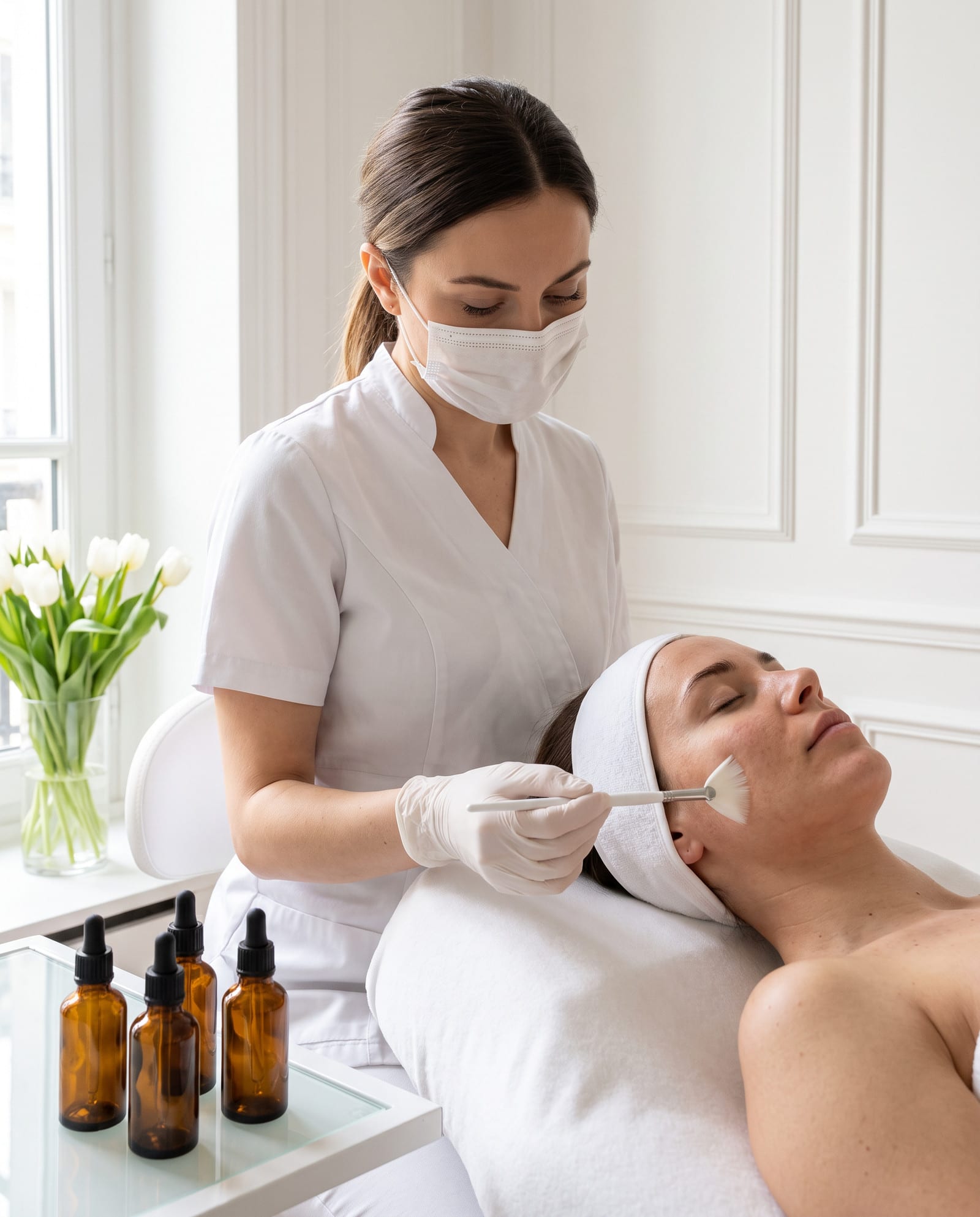
In-clinic treatments — when home care isn't enough
For deeper pigmentation, darker skin phototypes, or when a home routine hasn't delivered results after a few months — in-clinic treatments are worth considering. They work at deeper levels, more precisely and faster than daily creams. Some reach pigment in places cosmetic ingredients simply cannot.
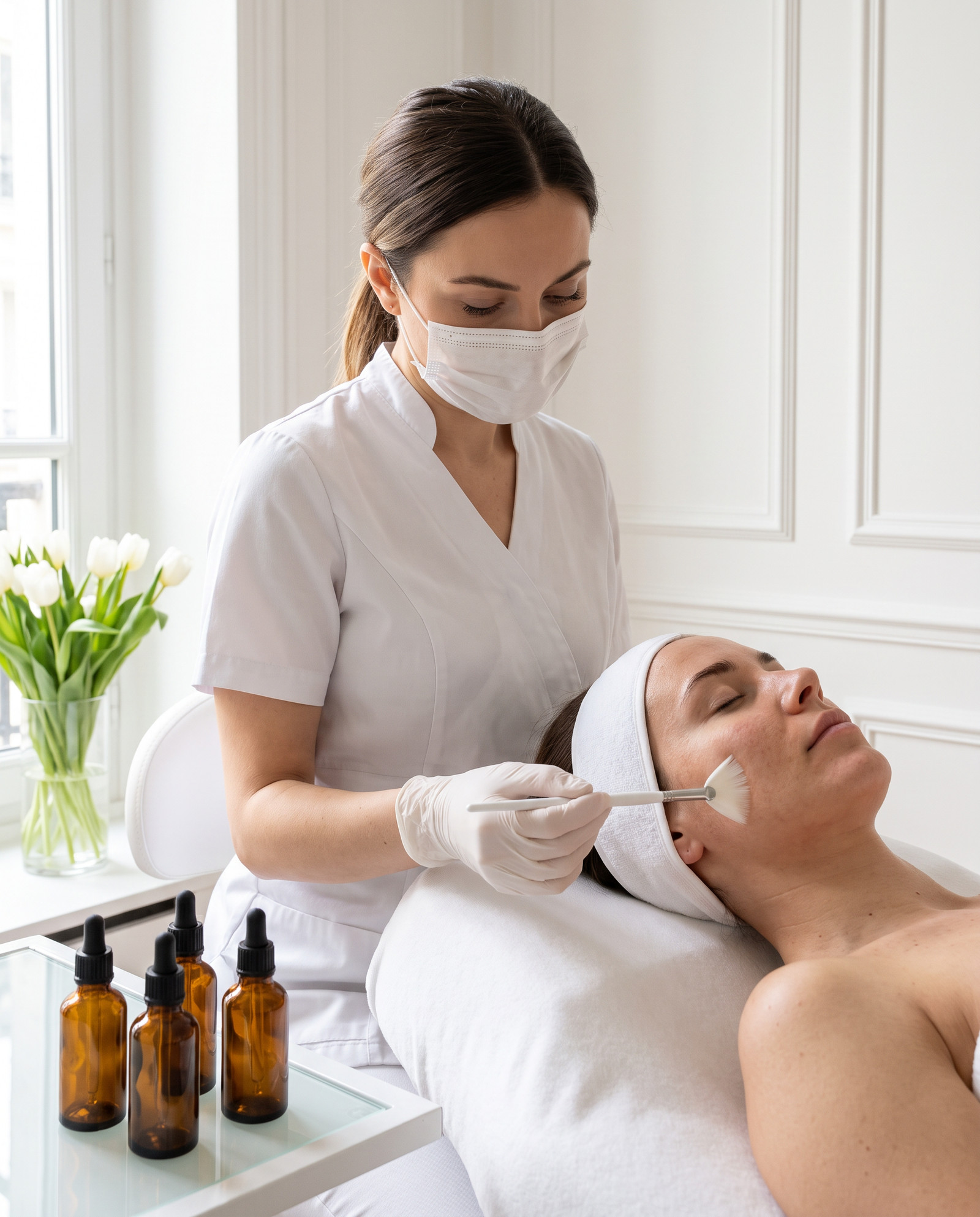
Chemical peels are one of the best-studied methods for PIH. Acids such as TCA, mandelic acid, resorcinol or acid combinations work through controlled acceleration of epidermal shedding. They remove layers where pigment has accumulated and stimulate renewal — the higher the concentration, the deeper and more precise the action, but also the greater the requirements around phototype and the risk of irritation. In darker skin tones, the choice of acid and concentration requires particular care, so the peel itself doesn't trigger inflammation and a fresh round of PIH.
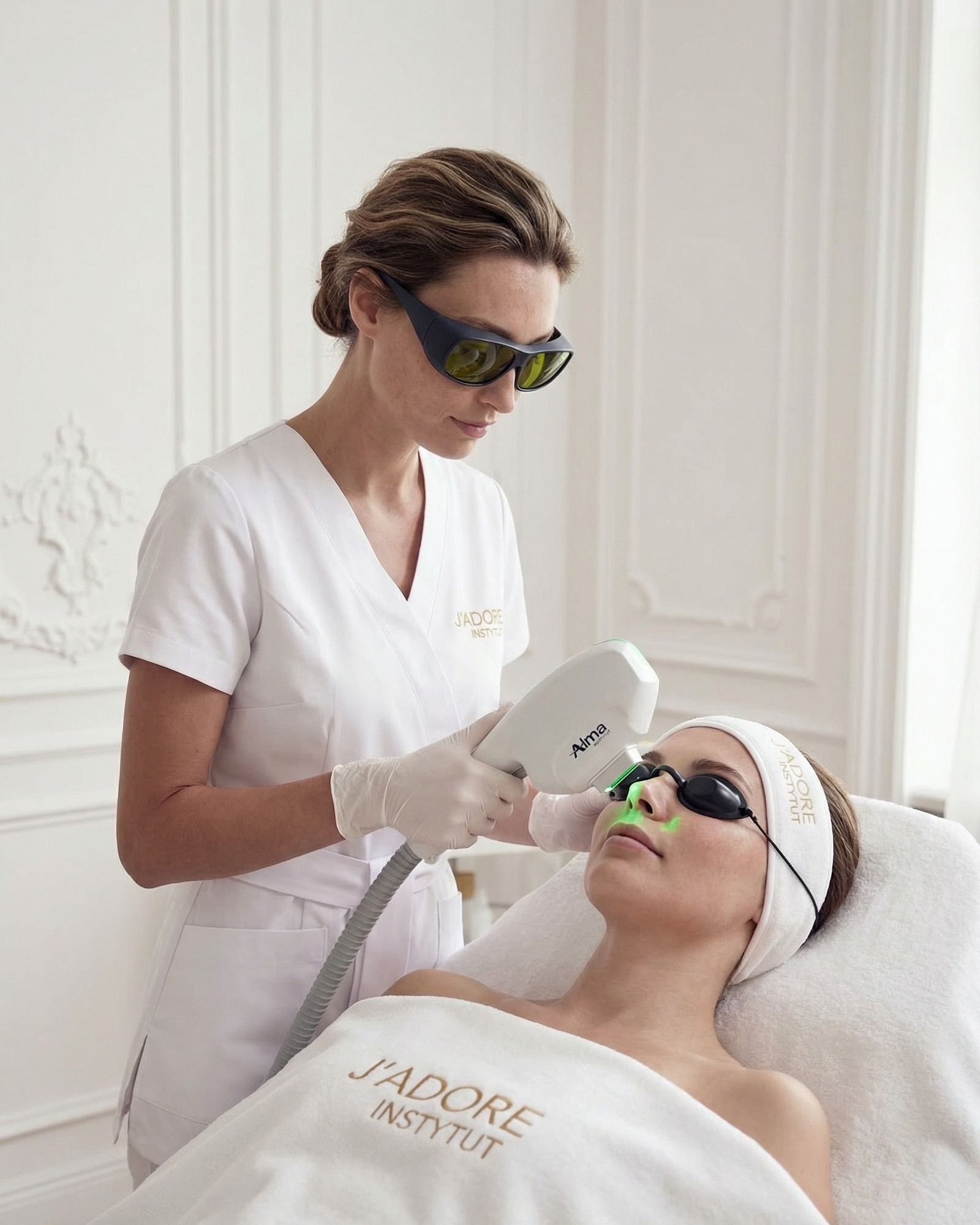
Laser therapy works on a different logic: light energy breaks up clusters of melanin, which the body then clears away. Different wavelengths and technologies have different affinities for pigment and different depths of action. This means a laser can be very effective on epidermal pigmentation, but it needs precise matching to skin phototype — in darker skin tones, an incorrectly chosen setting can, paradoxically, worsen pigmentation instead of fading it.
Chemical peel + brightening home care
A classic pairing: the peel speeds up epidermal turnover and removes surface pigment, while active ingredients used at home (vitamin C, niacinamide, SPF) prevent it forming again. The effect is synergistic — each one reinforces the other.
Peel + mesotherapy with brightening ingredients
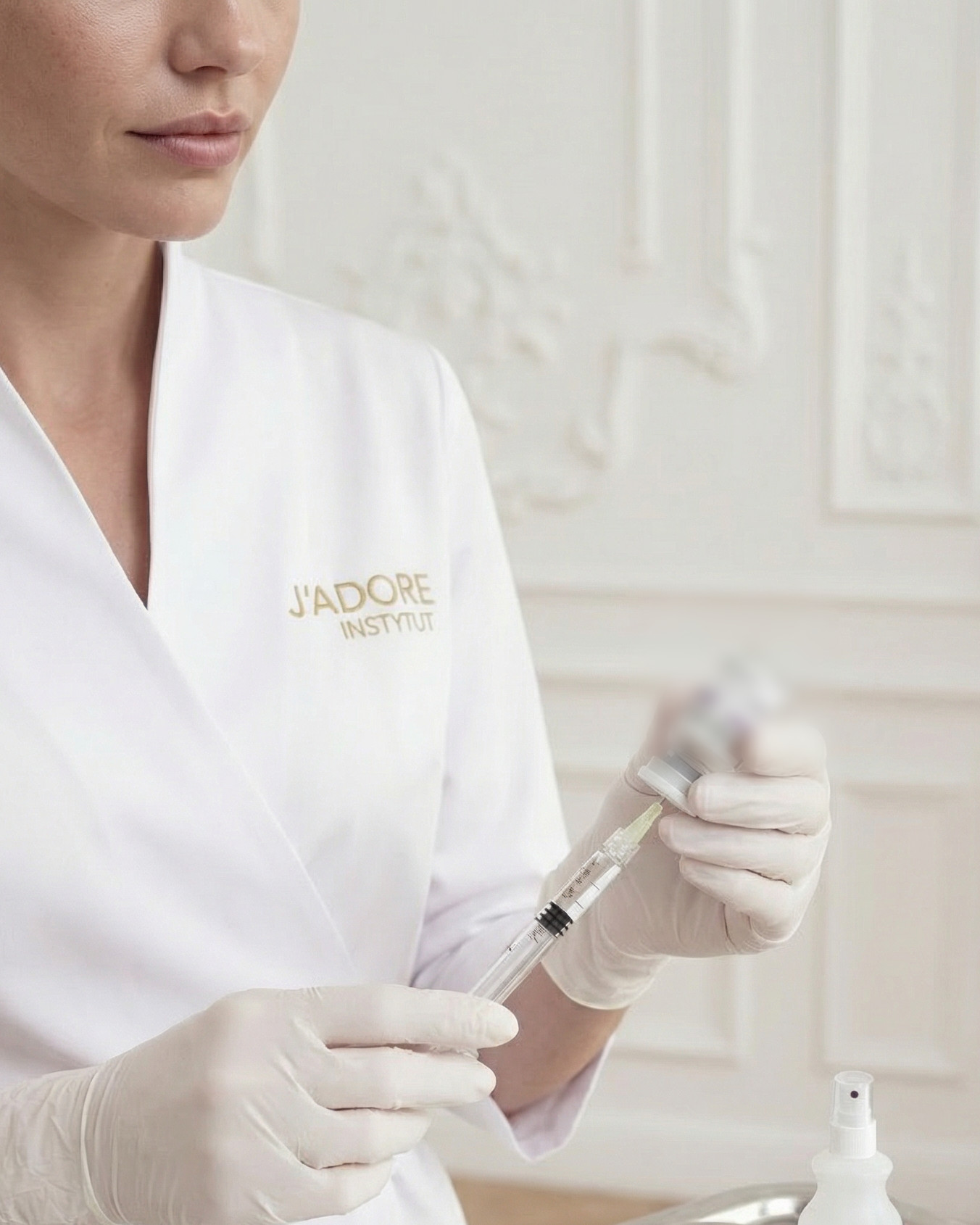
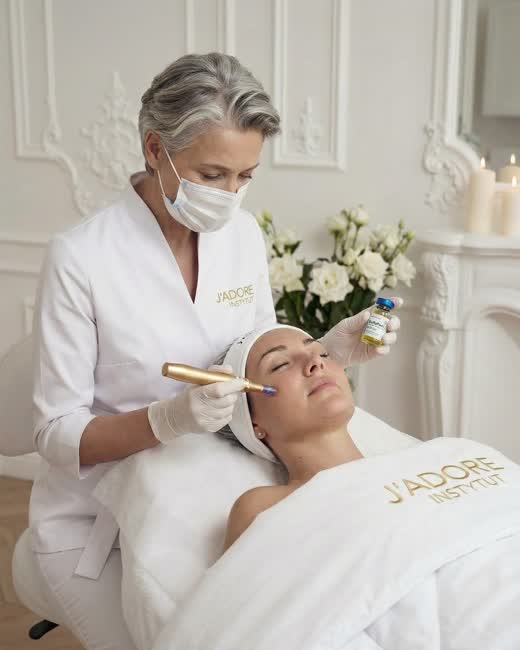
The peel opens a path to deeper layers, and mesotherapy delivers concentrated ingredients exactly where they're needed. This combination is especially useful for pigmentation resistant to peels alone.
Laser / IPL + maintenance peel
The laser breaks up clusters of melanin, and the peel maintains fast epidermal turnover to prevent recurrence. This sequence needs to be carefully matched to your skin phototype and condition.
How long it really takes
This is the question we hear most often — and the honest answer is often a disappointing one: weeks to months, depending on how deep the pigment sits and the approach used. Epidermal PIH, with consistent SPF and brightening ingredients, can start fading within a few weeks and largely clear within three to six months. Dermal pigmentation — particularly in darker skin phototypes — takes considerably longer, and usually needs in-clinic support.
It's also worth knowing that fading doesn't happen at a constant rate. Pigmentation may start fading quickly, then progress slows down — and this is exactly when many people give up on treatment. That's a mistake. The skin keeps working, just not on a visible timeline. Staying consistent at this stage delivers a better final result than escalating methods every few weeks.