Why home care isn't enough
Most men have one ritual: wash your face, maybe apply a cream. For a while, that works. The problem is that daily sebum, product residue and environmental pollutants gradually settle deeper than any facial wash can reach. Pores clog, skin starts to look dull and heavy, and blackheads come back right after squeezing — because their source lies deeper.
Add shaving to the mix — mechanical exfoliation of the top layer of the epidermis, which often leads to minor irritation, ingrown hairs and skin that reacts to poorly chosen products. Men's skin needs a deeper reset than standard home care can offer — and that's exactly the role of professional cleansing.
Cavitation — what it actually is and why it works
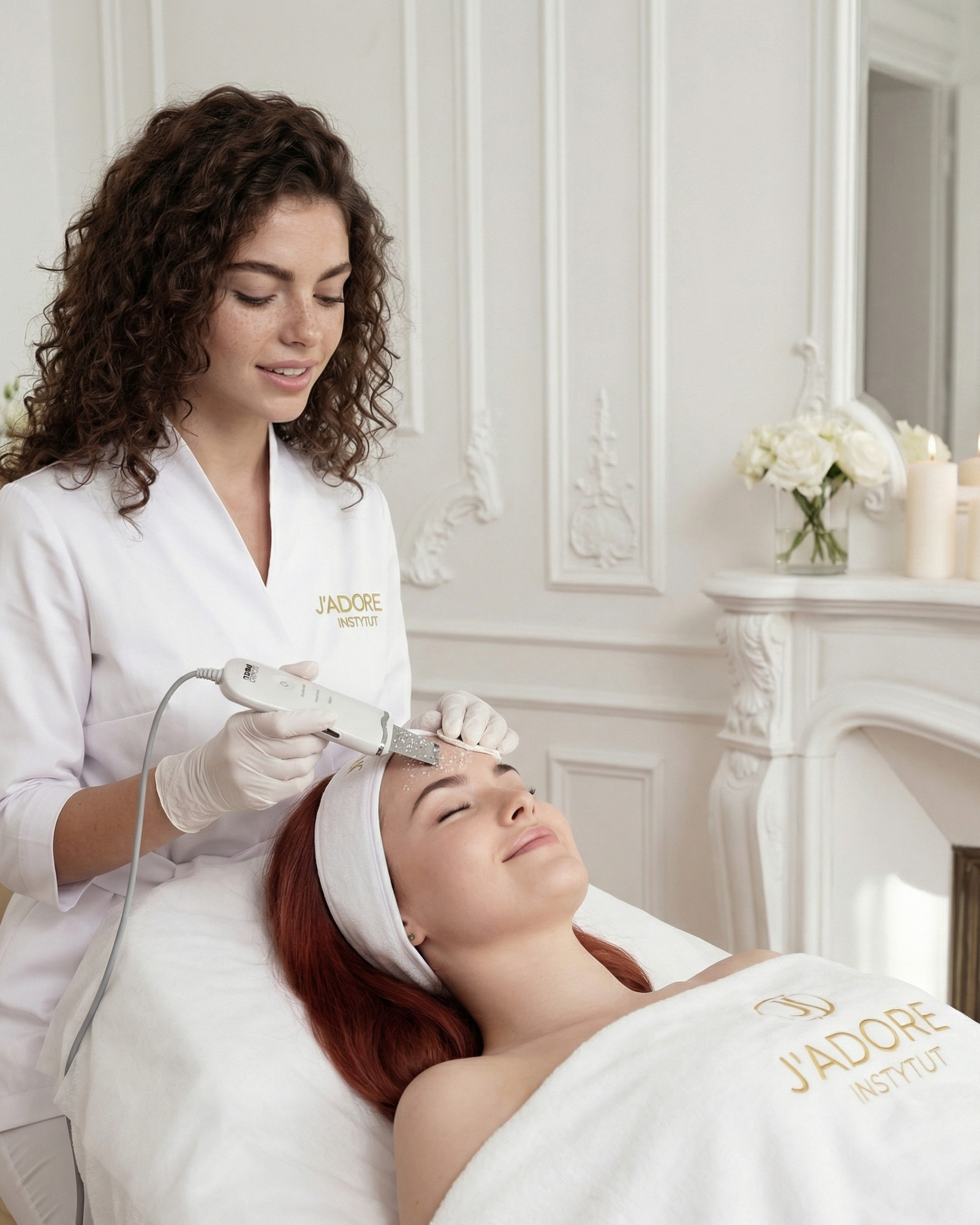
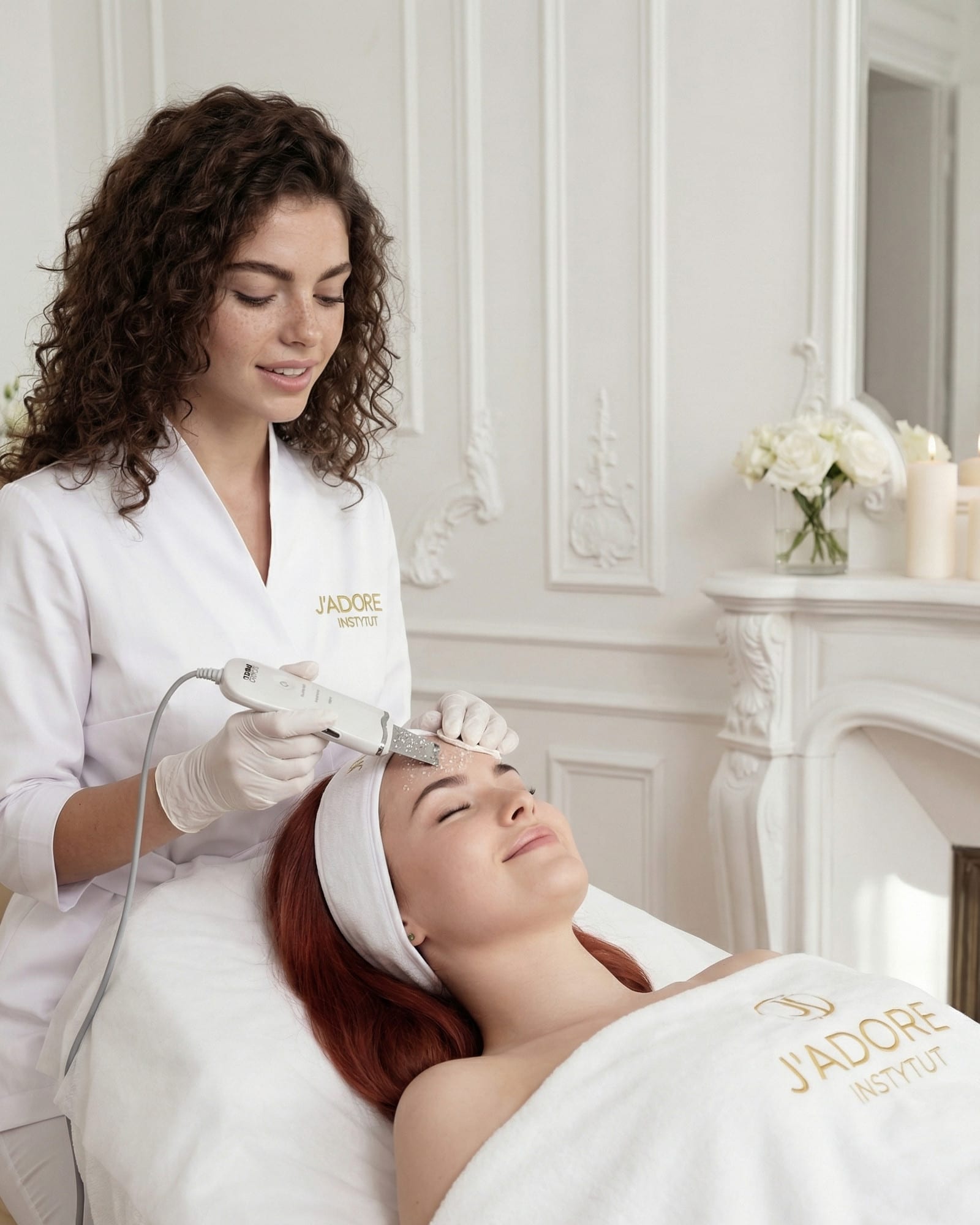
Cavitation is a physical phenomenon: an ultrasound wave creates microscopic bubbles in liquid, which then collapse rapidly. In cosmetology, this means an ultrasonic spatula that a cosmetologist moves over moistened skin — the vibrations break down impurities in the pores and push them out. Quite literally: dirt leaves the pores without any squeezing.
The result is visible to the naked eye — oily sebum and impurities that had been sitting in the pores collect on the spatula. Skin after the treatment is cleansed more deeply than any home wash can achieve. And importantly, without the micro-trauma that mechanical squeezing causes.
Manual extraction
immediate effect
- removes blackheads from specific spots
- results visible immediately
Cavitation peeling
deep cleansing
- flushes sebum out of pores with ultrasonic waves
- no mechanical trauma to the skin
- cleanses the surface and deeper layers
- results last longer — pores close back up
What the visit actually involves
This isn't a treatment you plan out in advance. You come in thinking about your pores — you leave with clean, matte skin and the sense that something has actually changed. The whole treatment takes a few dozen minutes. It usually consists of several stages.
- 01
Cleansing and skin analysis
Cleansing the face and assessing skin condition — oily zones, visible blackheads, shaving irritation. This determines the choice of head and the intensity of the treatment.
- 02
Steaming or a softening preparation
Skin needs to be moist for cavitation to work. A conductive gel or steam is usually used — this opens the pores and makes it easier to push out impurities.
- 03
Cavitation itself
The cosmetologist moves the ultrasonic spatula over the skin — particularly the T-zone (forehead, nose, chin), where pores are most concentrated. You may feel gentle tingling and warmth.
- 04
Additional steps (depending on your skin)
Iontophoresis (driving active ingredients deeper) or a pore-closing mask is often added. For men prone to blackheads — an acid preparation that regulates sebum production.
- 05
Cream and sun protection
After the treatment, skin is more absorbent — a light hydrating or mattifying cream is applied. Skipping SPF isn't an option — freshly cleansed pores are an unwelcome invitation to hyperpigmentation.
Who benefits most
Cavitation peeling doesn't suit everyone in the same way — but its range of applications is surprisingly broad. Contrary to what you might think, you don't need to have "bad" skin to benefit from it.
- Oily and combination skin with visible blackheads — the most obvious indication; cavitation literally pushes impurities out of the pores in the T-zone.
- Dull, tired, grey skin — deep cleansing improves microcirculation and can simply make your complexion look healthier and brighter.
- Post-shaving problems — ingrown hairs, small bumps, irritated skin on the neck; the treatment cleanses and smooths the epidermis, which reduces the risk of ingrown hairs.
- Normal skin, as a maintenance step — a few times a year as prevention, so pores don't start clogging.
The treatment is not recommended with active inflammation (pustules, cysts), severe acne requiring dermatological treatment, or fresh scars and sunburn. Your cosmetologist assesses this before the visit — if anything rules out the treatment, they'll tell you honestly.
What it feels like, what to expect — no exaggeration
Cavitation peeling doesn't hurt. That's probably the first question. The ultrasonic spatula may cause gentle tingling and vibration — not unpleasant, more unusual. Some men feel almost nothing. You're unlikely to leave with any redness — if anything, mild redness around the pores fades within a few hours.
The result? You often see it straight away: skin looks more deeply cleansed, less shiny in oily zones, "lighter". You can judge the full pore-closing effect the next day. How long it lasts depends on your sebum production and your home care routine. Typically, it takes a few weeks before pores return to their previous state — for many people, regular treatments produce a lastingly better result.
Combine with
Cavitation works well as a standalone treatment, but for men it's often combined with other methods — for a deeper or longer-lasting effect. A good cosmetologist will suggest the right combination after assessing your skin, not automatically.
Manual extraction
After cavitation, pores are open and softened — your cosmetologist can remove any remaining impurities manually, with minimal effort and no irritation. The combination gives a fuller result than either method alone.
Enzyme or acid peels
Cavitation cleanses — a chemical peel smooths and regulates. Used together or as a series, they improve skin texture and reduce pore visibility for longer.
Iontophoresis
Often combined in a single visit: cavitation opens access, iontophoresis drives active ingredients deeper (for example, sebum-regulating or soothing ones). This allows deeper work on the problem, not just the symptom.
Microdermabrasion
Mechanical exfoliation of the epidermis plus cavitation cleansing — a good combination for skin with keratinisation issues and blackheads. A set for skin that needs a sharper reset.