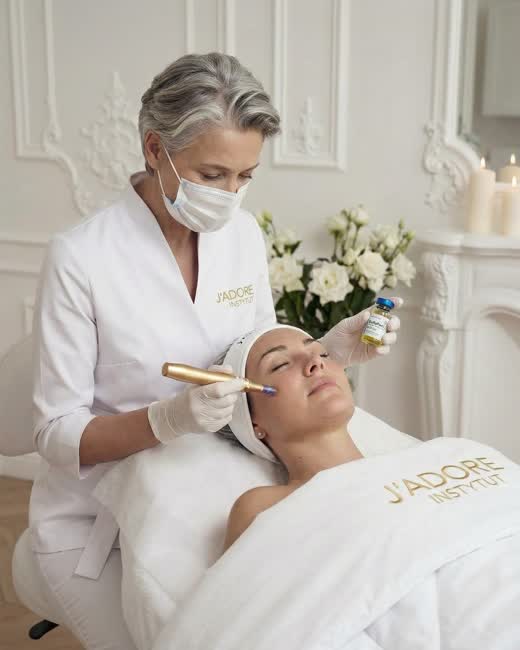
What a peel really does — and why it makes sense
Let us start with the basics. The exfoliation mechanism is more elegant than it may seem. Skin constantly produces new cells in the deeper layers of the epidermis. They gradually move towards the surface. Old, dead cells should shed naturally, but this process slows with age. Dead cells remain on the surface for longer. They stick together and form a dull, greyish layer that reduces radiance and makes fine lines look more pronounced.
A mechanical or chemical peel speeds up this natural cycle. It removes accumulated dead cells, revealing a fresh surface that reflects light more effectively. With acids such as AHA, BHA and PHA, something more happens. The active ingredient penetrates the epidermis, loosens the bonds between cells and gently stimulates deeper layers to regenerate. Skin often looks visibly better after a peel — and this is not an illusion.
- Smoother texture — the surface becomes more even, while orange-peel texture and irregularities are reduced.
- Brighter skin tone — sun-induced hyperpigmentation and age spots can become visibly lighter after a series of treatments.
- Improved radiance — removing dead cells restores the skin’s ability to reflect light.
- Better absorption — a “clean” surface absorbs serums and active ingredients from home skincare more effectively.
- Gentle stimulation — deeper peels can stimulate fibroblasts to produce collagen, although to a limited extent.
Where a peel stops
This is where the part rarely stated clearly by peel manufacturers begins. The epidermis — the layer treated by the vast majority of peels available in salons and pharmacies — is from several dozen micrometres to just under half a millimetre thick, depending on the area of the body. It is a thin, functional layer, but no more than that. Beneath it begins the dermis: denser and richer, home to fibroblasts that produce collagen and elastin, as well as a network of blood vessels and nerve endings.
It is in the dermis, and often even deeper in the subcutaneous tissue, that the processes driving wrinkles take place. Collagen fibres, which determine firmness and tension, lie beyond the reach of epidermal exfoliation. AHA and BHA acids renew the surface very effectively. But they reach deeper fibroblasts only to a very limited extent and at specific concentrations reserved for salon treatments performed under specialist supervision.
What a peel will change
work in the epidermis and upper layers of the skin
- Texture and surface smoothing
- Skin tone and superficial hyperpigmentation
- Radiance and an immediate fresh appearance
- Absorption of active ingredients
- Gentle fine lines caused by dryness
What remains unchanged
processes deeper than the epidermis
- Wrinkles caused by collagen loss in the dermis
- Expression lines driven by muscles
- Volume loss and downward displacement of fatty tissue
- Changes in facial bone structure
- Deep nasolabial folds and marionette lines
Where first wrinkles really come from
To understand what a peel cannot do, it is worth looking briefly at where wrinkles come from in the first place. There is not one single mechanism. Several processes occur at the same time, at different depths.
- 01
Collagen and elastin — the first losses
From the mid-20s, fibroblasts in the dermis produce less and less collagen and elastin. The fibres that give skin its elasticity and allow it to “bounce back” after a smile become fewer and weaker. Skin loses its ability to recover immediately. Permanent lines begin to form where there were previously only temporary expression lines.
- 02
Expression lines — muscle activity
Every smile, frown and squint involves thousands of repetitions each day. Facial muscles work constantly. Over time, the lines they leave behind stop disappearing. These are expression lines: crow's feet, vertical lines between the brows and horizontal forehead lines. They lie deeper than the epidermis — and no exfoliation will affect muscle tension.
- 03
Gravity and volume loss
Facial fatty tissue changes its distribution with age. Some compartments shrink, while others shift downwards. Skin that was once “stretched” over full cheeks begins to sag. Folds, shadows and lines appear. Their cause is not epidermal quality, but a loss of support from within. A peel will not stop gravity.
- 04
Sun and photoageing
Cumulative UV exposure accelerates collagen degradation, causes hyperpigmentation and damages the structure of elastic fibres. Photoageing accounts for a surprisingly large part of the changes we attribute to “the passage of time”. This is where a peel and suitable sunscreen work best together — at the level of the epidermis and protection.
Acids, enzymes, microdermabrasion — does it matter?
The peel market is now extensive and diverse — and this diversity is not accidental. Different exfoliation mechanisms work slightly differently, at different levels and with different intensity. Before dismissing a peel as “only superficial”, it is worth knowing what each type really offers.
- AHA acids, including glycolic, lactic and mandelic acid — water-soluble and work on the bonds between epidermal cells. Glycolic acid, as the smallest molecule in this group, penetrates the deepest. At higher concentrations, it can gently stimulate fibroblasts. Lactic acid also has moisturising properties. This is the most common category used in salon treatment programmes.
- BHA acid (salicylic acid) — fat-soluble and penetrates pores and sebaceous glands. Excellent for oily, acne-prone skin and visible pores. It is less focused on wrinkles and more on cleansing and smoothing skin texture.
- PHA acids, including gluconolactone and lactobionic acid — larger molecules that work more gently and more superficially than AHA acids. An ideal choice for reactive or vascular skin, or if you are only beginning to use acids.
- Enzyme peels (papain, bromelain) — the gentlest option, working as a “solvent” for dead epidermal proteins. They do not penetrate deeper or stimulate collagen, but can be used more often without the risk of irritation.
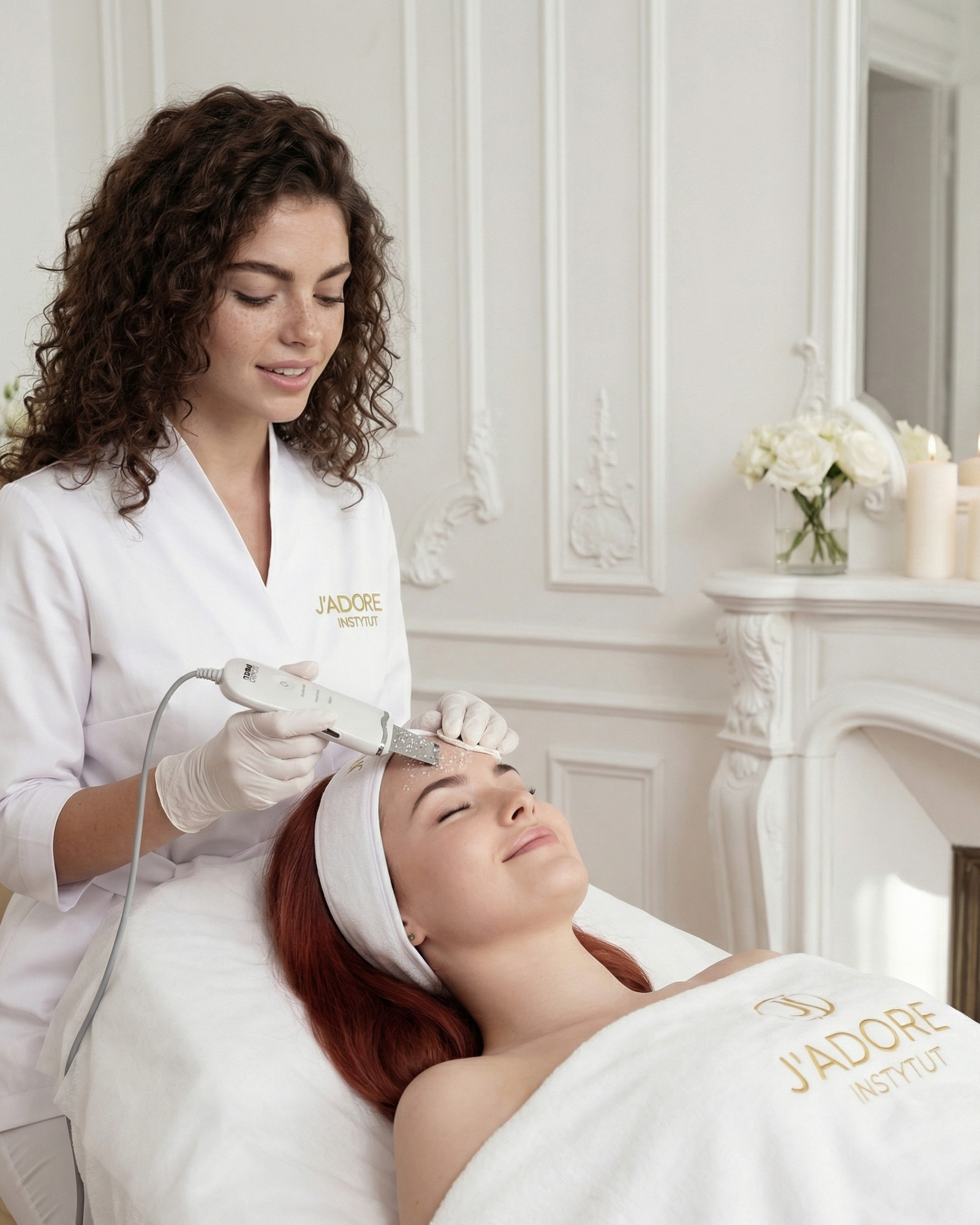
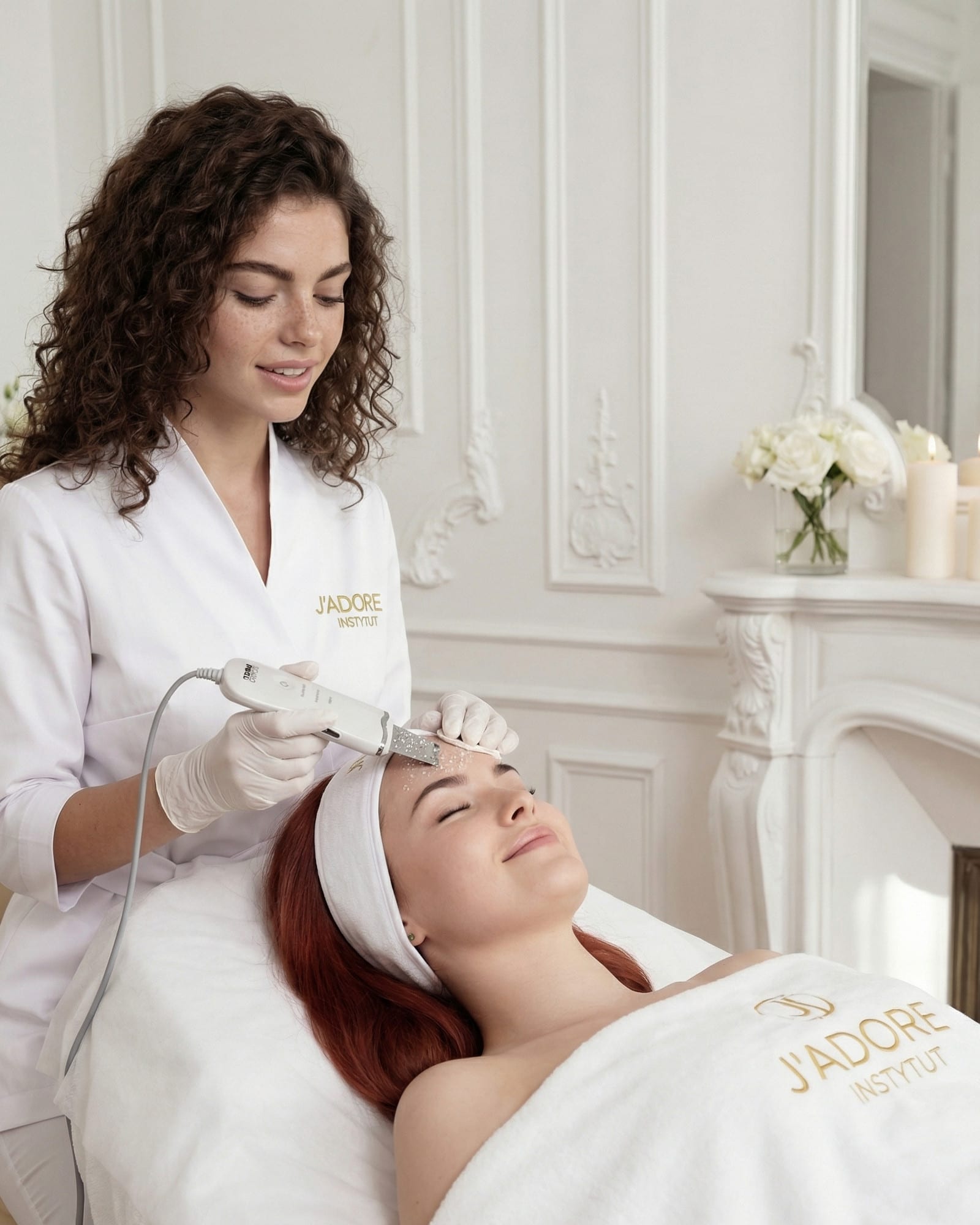
- Microdermabrasion — mechanical abrasion of the epidermis using microcrystals or a diamond tip. The effects are similar to superficial chemical peels — smoothing, radiance and improved absorption. A good complementary treatment, though not necessarily sufficient on its own for wrinkles.
What a peel can do — and where it needs support
The honest answer to the question in the title is that a peel can do a great deal — but not everything. Not because it is a “weak” treatment. Wrinkles are a multi-layered concern, and a peel works precisely on one of those layers. The most sensible approach is not to choose between “a peel or something more serious”. It is to understand what each option does.
A series of peels often provides an excellent foundation. It smooths the surface, improves absorption and evens skin tone. Skin properly prepared with acids responds better to collagen-stimulating treatments. Active ingredients can reach deeper layers more easily. This is why peels are often the first step before further stages of a skin treatment plan.
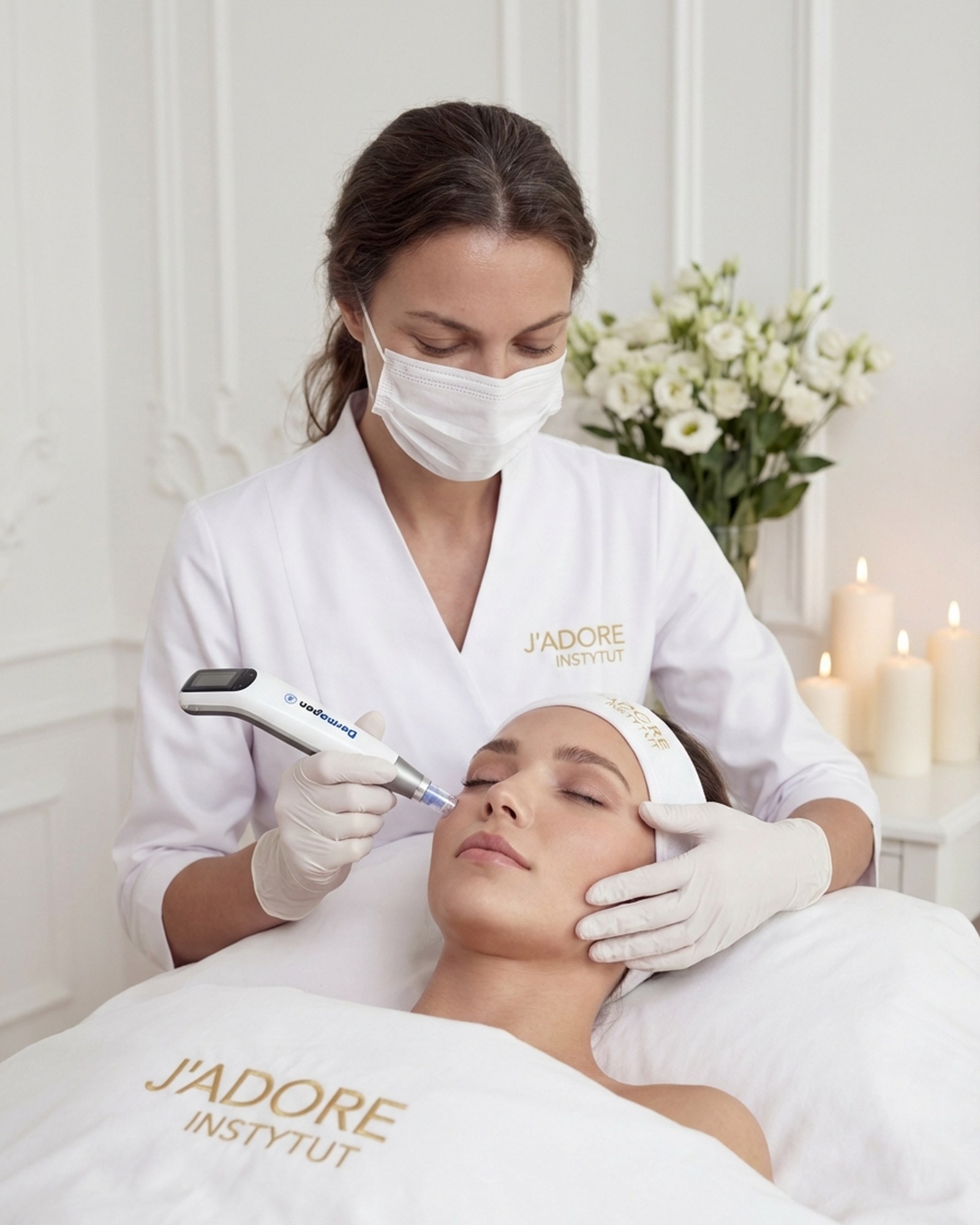
Needle mesotherapy
Delivers active ingredients, including hyaluronic acid, amino acids and vitamins, directly into the dermis — where a peel cannot reach. A good combination: a series of peels prepares the surface, while mesotherapy works deeper.
Biostimulators
Stimulate fibroblasts to produce collagen from within. They complement a peel, which works from the outside. Two pathways to better skin quality, each acting on its own layer.
Platelet-rich plasma (PRP)
Natural growth factors from the patient’s blood stimulate dermal regeneration. Combined with peels as part of comprehensive skin-rejuvenating programmes.
HIFU / focused ultrasound
Works on deeper layers — skin firmness and the tissues beneath it. It will not replace a peel for texture concerns, but it reaches where acid cannot.
What a peel will not do — and what is worth knowing from the outset
Expression lines caused by repeated facial muscle movement? A peel will not stop them, because their cause lies in the neuromuscular system, not the epidermis. Deep nasolabial folds or marionette lines driven by volume loss? Exfoliation will improve the surrounding skin quality, but it will not replace lost tissue. Visible laxity of the facial contour or a heavy lower face? A peel will not lift tissue that has begun to descend.
This may sound like a list of disappointments, but it is quite the opposite. It is a map. When you know where a peel truly works and where it stops, you can make better decisions. You can invest in a series of exfoliating treatments as a foundation, rather than a remedy for everything. And you know when it is worth asking about something that reaches deeper.