Two ingredients, two different jobs
The simplest way to put it: AHA acids exfoliate the surface, while retinol rebuilds skin from within. This isn't about strength or novelty — it's two separate philosophies of skin treatment.
AHA acids (glycolic, mandelic, lactic)
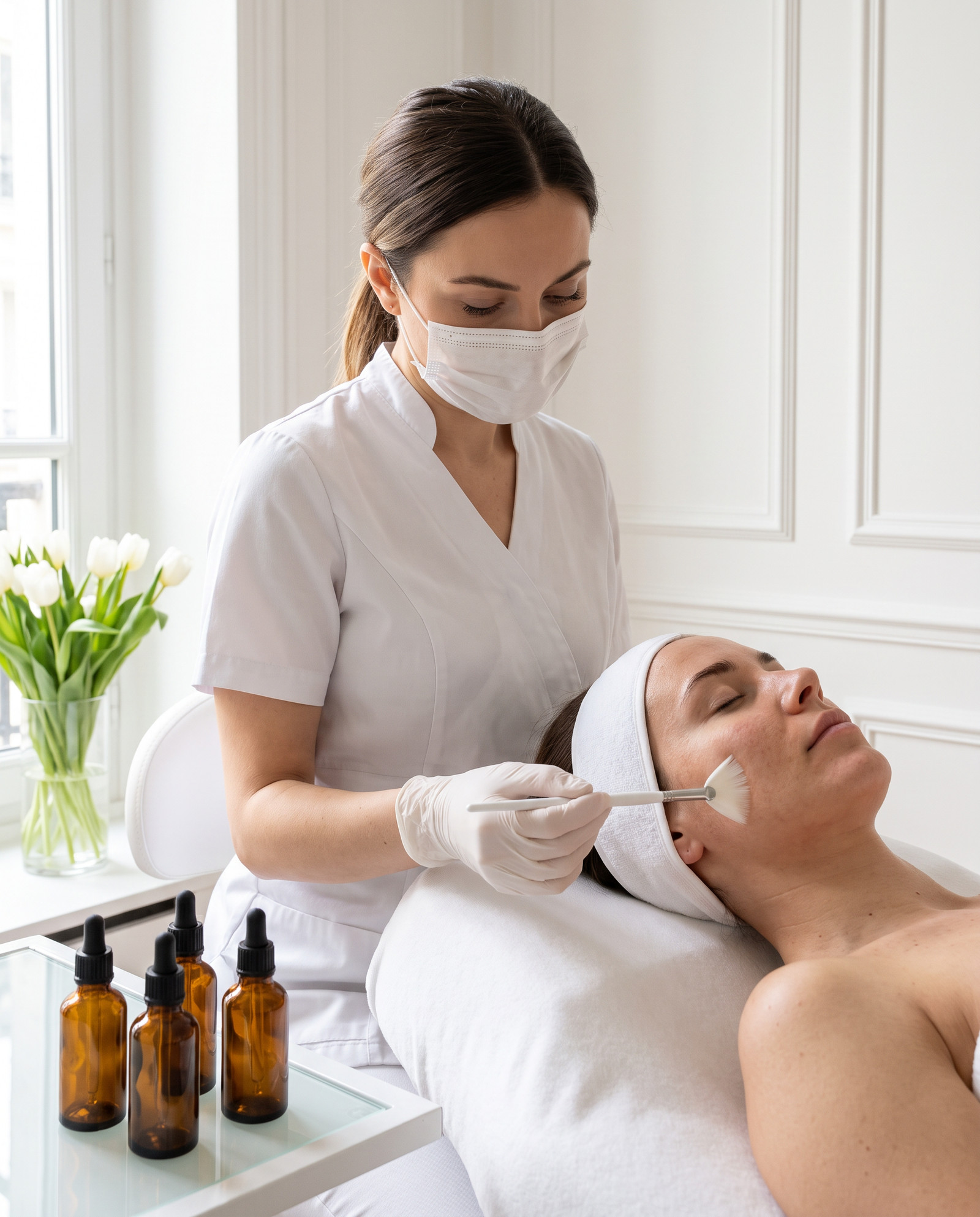
exfoliate dead skin cells, brighten and smooth the surface
- remove dead cells from the skin — results are often visible quickly
- brighten sun-induced and post-inflammatory hyperpigmentation
- smooth skin texture and minimise the appearance of pores
- well tolerated when starting out with acids
- suitable for sensitive skin, with the right concentration
Retinol (vitamin A and its derivatives)
rebuilds skin — stimulates collagen and normalises keratinisation
- speeds up cell renewal in the dermis
- can reduce fine lines and wrinkles
- normalises sebum production — helpful for acne
- for many people, smooths and improves skin elasticity long-term
- results build gradually over several weeks
How to recognise what your skin really needs
Before your specialist selects an ingredient, it helps to make a rough diagnosis yourself. The questions below help steer the conversation in the salon in the right direction:
- Dull, grey skin, uneven texture, sun-induced hyperpigmentation? → A sign the top layer of skin needs refreshing → direction: AHA acids.
- First expression lines, skin losing elasticity, no radiance? → This calls for deeper work at the collagen level → direction: retinol.
- Acne, enlarged pores, oiliness? → Retinol normalises keratinisation and sebum production → direction: retinol (often combined with salicylic acid BHA, not AHA).
- Skin after summer, hyperpigmentation but no wrinkles? → Quick refreshing without a long adaptation period → direction: AHA acids.
- Looking for long-term results, not just a quick fix before going out? → A treatment course that requires patience → direction: retinol.
Important note: these two paths don't exclude each other, but they aren't used at the same time without a specialist's supervision. Combining high concentrations of retinol with strong AHA acids simultaneously is a direct route to chronic irritation and a damaged skin barrier.
AHA acids — a quick guide to what and when
Within the AHA family, each acid has a slightly different character — and not every one suits every skin type. The three most common in salons:
- 01
Glycolic acid
The smallest molecule among the AHAs — it penetrates deeper and works more intensively. Recommended for hyperpigmentation, dull skin and early wrinkles. Skin needs time to adjust, so treatment starts with lower concentrations.
- 02
Mandelic acid
A larger molecule with slower penetration — gentler and better tolerated by sensitive skin and rosacea-prone skin. Often the first choice for anyone new to acid treatments.
- 03
Lactic acid
Exfoliates and hydrates at the same time. Good for dry, dehydrated skin that needs refreshing without the risk of further drying. A gentle starting point for reactive skin.
Retinol — where to start and what to expect
Retinol has a well-earned reputation as an ingredient that genuinely changes the skin — but only with patience and a gradual introduction. The first weeks of a course can be discouraging: skin may dry out, flake or become hypersensitive. This isn't a mistake — it's the adaptation effect, which passes for most people after a few weeks.
Retinol's results — improved firmness, fewer fine lines, more even skin tone, less visible pores — start to appear for many people after a few weeks of regular use. This isn't an ingredient for tomorrow evening. But if you're after something that genuinely changes skin quality over months, retinol is often exactly what you need.
When it's worth combining both approaches
In a well-planned course, retinol and AHA acids can complement each other — but not at the same time, and not without guidance. The logic behind combining them is staged: one goal first, then the other, or both methods used at different points in the week under a specialist's supervision.
Acid peel + retinol course (in separate sessions)
AHA acid refreshes and cleanses the epidermis, while retinol works deeper on collagen. Spaced apart, together they can deliver more noticeable results than either alone.
Mandelic peel + biostimulators
Surface exfoliation improves the absorption of subsequent treatments. A good combination for skin that needs refreshing and regeneration at the same time.
Home retinol course + salon acid peel (seasonal)
A model used for skin prone to hyperpigmentation — a break from retinol in summer, followed by a more intensive course with both ingredients, monitored, in autumn.
Acid peel + mesotherapy
Exfoliated skin absorbs active ingredients better. Acid peels often precede intensive hydration and nourishment treatments.
The key to combining treatments safely is a plan, not improvisation. A specialist who knows your skin's history will choose the sequence and intervals so the effects add up, rather than causing irritation.