What TCA usually does — and why flaking is not a side effect
Let us start with the basics: what TCA acid is and where flaking comes from. TCA, or trichloroacetic acid, belongs to a group of acids that penetrate the skin and trigger a controlled chemical reaction — protein coagulation. Put simply, the acid reaches a specific depth and, in a sense, “coagulates” cellular structures there. This signals to the skin that it needs to regenerate. It is intentional damage that initiates repair.
Flaking after a classic TCA peel is not a complication or side effect — it is a natural repair mechanism. The epidermis damaged by the acid needs to be replaced. The skin sheds it and creates new tissue. During this time, the outer layer peels away. The deeper the acid reaches, the more epidermal layers are shed and the longer this process takes. A classic TCA peel does exactly what it is designed to do: it penetrates deeply and forces a thorough renewal of the outer layers.
This raises a question: if PRX-T33 contains the same concentration of TCA, why does the epidermis not exfoliate? The answer is not a lower acid concentration. It lies in adding one compound to the formula that completely changes how the acid behaves just beneath the epidermis.
Hydrogen peroxide — the ingredient that changes everything
Alongside TCA acid, the PRX-T33 formula contains hydrogen peroxide (H₂O₂) — and this is the key to understanding the whole mechanism. It is well known in its own right. At low concentrations, it is used in in-salon teeth-whitening treatments. At higher concentrations, it serves as a disinfectant. In this context, however, it performs a completely different role.
As TCA acid begins to penetrate through the epidermis, H₂O₂ acts as a permeability regulator. It triggers a reaction in the upper epidermal layers that significantly reduces their resistance to the acid. This allows TCA to almost freely “slide” through them and reach deeper layers, at the boundary between the epidermis and dermis — the basement membrane and the area directly beneath it. The epidermis does not undergo coagulation because the acid does not remain at this level. The upper layers remain intact.
From the perspective of classic peels, the effect is almost paradoxical: TCA reaches deeper than in many standard treatments, yet the epidermis is not damaged. There is nothing to flake because the upper layer of skin has not undergone coagulation. Meanwhile, deeper down — in the boundary layer and dermis — repair and stimulation processes begin. The skin interprets them in exactly the same way as significant stimulation: “time to regenerate”.
What happens deeper down — bioregeneration without flaking
When TCA with H₂O₂ reaches the basement membrane zone, it initiates a cascade of reactions that can be compared to an alarm signal for fibroblasts. Fibroblasts are cells in the dermis responsible for producing collagen, elastin and hyaluronic acid — structural components that determine skin density, elasticity and hydration. In young skin, they work actively. With age and oxidative stress, their activity decreases.
- 01
The epidermis allows TCA through
H₂O₂ increases the permeability of the upper epidermal layers — the acid passes through them without coagulating them. The epidermis remains intact.
- 02
TCA reaches the basement membrane
At the boundary between the epidermis and dermis, TCA triggers controlled stimulation — a signal to stem cells and fibroblasts below.
- 03
Fibroblasts work faster
Dermal cells receive the signal and increase their production of collagen, elastin and hyaluronic acid — a classic response to bioregenerative stimulation.
- 04
No epidermal replacement, deeper skin remodelling
Because the epidermis has not been damaged, there is no healing phase. Bioregeneration results develop over several to more than a dozen days — without flaking, redness or recovery time.
This is what distinguishes PRX-T33 from classic acid peels: a classic peel replaces the epidermis (flaking = a new surface) and also stimulates deeper layers. PRX-T33 bypasses epidermal replacement and targets deeper stimulation directly. These are two different approaches to the same goal — skin renewal — but with a completely different in-salon experience.
PRX-T33 vs classic TCA peel — two different approaches
Before comparing both approaches, one important point: there is no universally “better” or “worse” peeling tool — there is a tool suited to a specific goal and person. A classic TCA peel has its strengths; PRX-T33 has different ones. Understanding the difference helps you choose more wisely.
Classic TCA peel
epidermal replacement + deeper stimulation
- Epidermal coagulation — replacement of the outer layer
- Visible flaking for several days
- Effective for changes at epidermal level (superficial hyperpigmentation, texture)
- Recovery time depends on concentration and depth
PRX-T33
deep stimulation without epidermal replacement
- TCA reaches the basement membrane, epidermis remains intact
- No flaking — back to normal the same or following day
- Fibroblast stimulation, bioregenerative results (collagen, firmness, hydration)
- Can be performed before an event — popular as a "lunch peeling"
The difference is not which one is “stronger” — it is which level of the skin we want to work on and how much time we can allow for regeneration. PRX-T33 is often chosen by people who want an “inside-out” effect — firmness, skin quality and radiance lost with age — without giving up their usual routine. A classic TCA peel is appropriate when the goal is thorough epidermal replacement — for example, with deeper hyperpigmentation or pronounced texture changes.
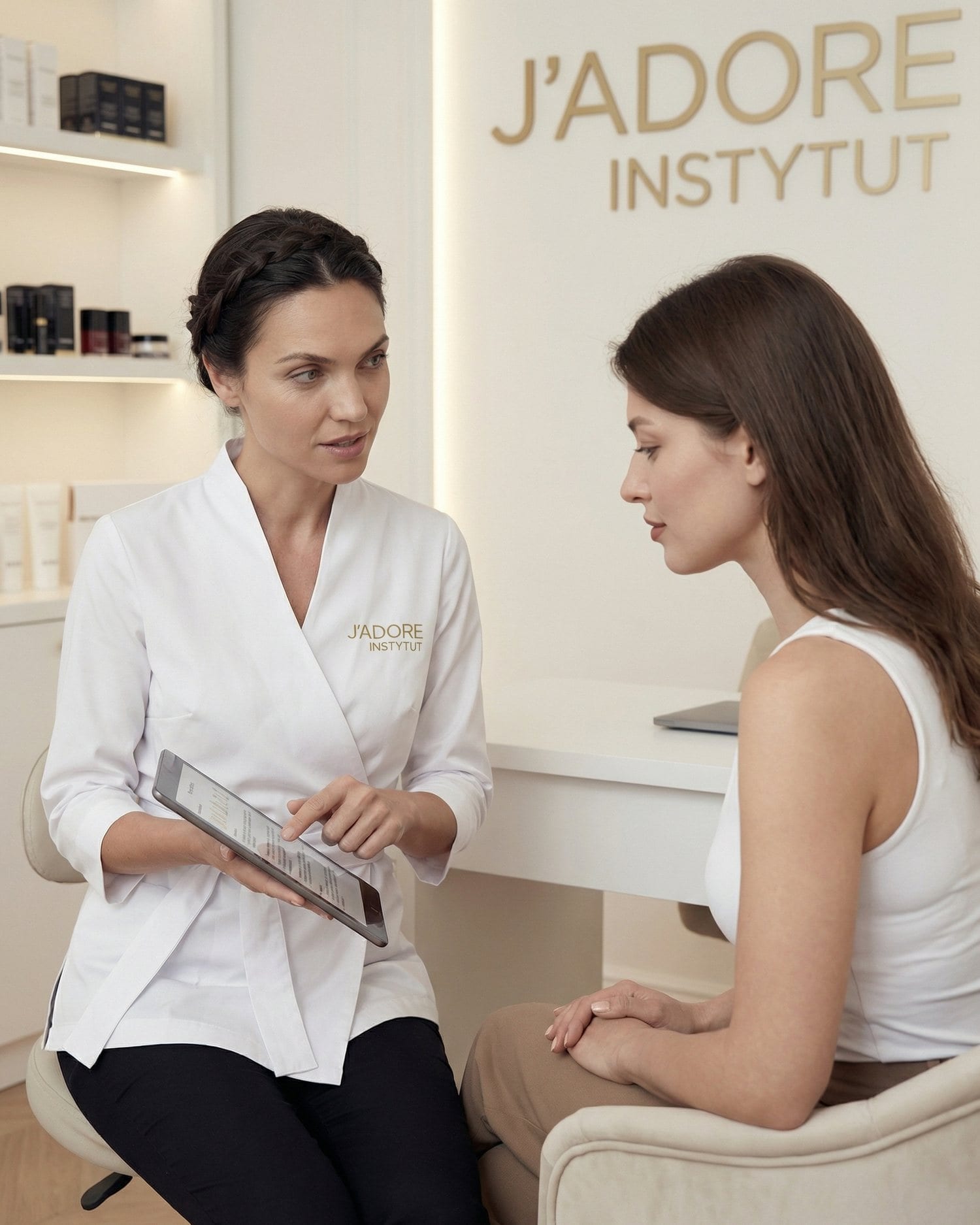
What the “bioregenerative effect” involves — what changes in the skin
The word “bioregeneration” appears frequently in the context of PRX-T33 — but what does this term actually mean? Biological skin regeneration is a return to higher cellular metabolic activity — cells produce more components of the extracellular matrix, including collagen, elastin and hyaluronic acid. They renew themselves more efficiently and respond better to repair signals.
- Skin density — the skin may become thicker and feel fuller; for many people, the thin, “paper-like” texture caused by age or chronic skin stress becomes less noticeable.
- Firmness and elasticity — rebuilt collagen and elastin fibres may improve the skin’s “bounce” after pressure; this can appear as a subtle lift and tightening of the facial contour.
- Quality of hydration — increased hyaluronic acid production in the dermis may improve hydration that does not depend on a cream. It comes from within, rather than from a layer applied to the surface.
- Even tone and radiance — stimulation of keratinocytes in the basement membrane may balance melanin production; some people notice a brighter grey, tired-looking complexion.
Who PRX-T33 is particularly suitable for
As PRX-T33 works mainly at the level of the basement membrane and dermis, it is particularly suitable where the concern does not lie in the epidermis, but deeper down — where the skin has lost density, firmness and the radiance that comes from healthy cellular metabolism, rather than from a layer of surface hyperpigmentation.
- Skin losing density and elasticity — age, chronic fatigue and stress: thin, slack, grey-looking skin.
- Skin after summer or winter — accumulated oxidative stress, loss of radiance and “dullness from within”.
- The eye and neck area — delicate areas where a traditional peel can be too aggressive, while PRX-T33 is — according to specialists — tolerated by the skin much better.
- People without time for recovery — the treatment can be performed before an important event, without a “peeling period”.
- Combination or sensitive skin — following a well-conducted consultation, PRX-T33 may be an option where a stronger exfoliating peel would be too risky.
This is, of course, a general guideline. Whether the treatment is appropriate depends on your skin condition, goals and history, rather than simply on belonging to a category. There are skin conditions for which PRX-T33 is not the optimal choice — for example, when removing deep epidermal hyperpigmentation is the priority and exfoliating the surface layer has key therapeutic importance.
Cocktail mesotherapy
A combination popularised in salons: PRX-T33 provides stimulation through acids, while mesotherapy supplements the dermis with nutrients. The logic is simple — you stimulate fibroblasts, then give them the materials to work with.
Biostimulators (polylactic acid, hydroxyapatite)
PRX-T33 may support the effects of biostimulators by increasing the activity of collagen-producing cells — when used at different intervals, they may enhance each other’s effects.
Home care with retinol or vitamin C
After the treatment, the skin is more receptive to active ingredients. Well-selected home care can prolong and deepen the bioregenerative effect between sessions.