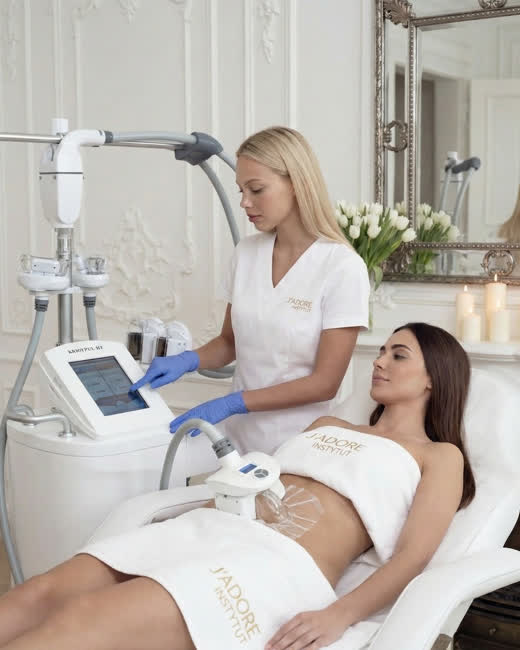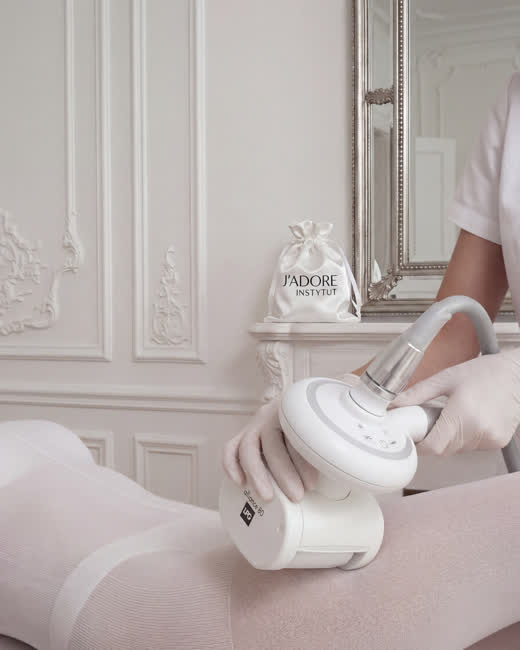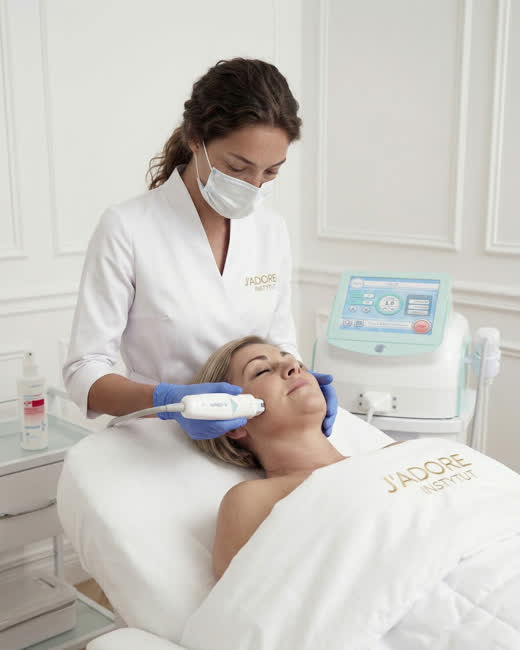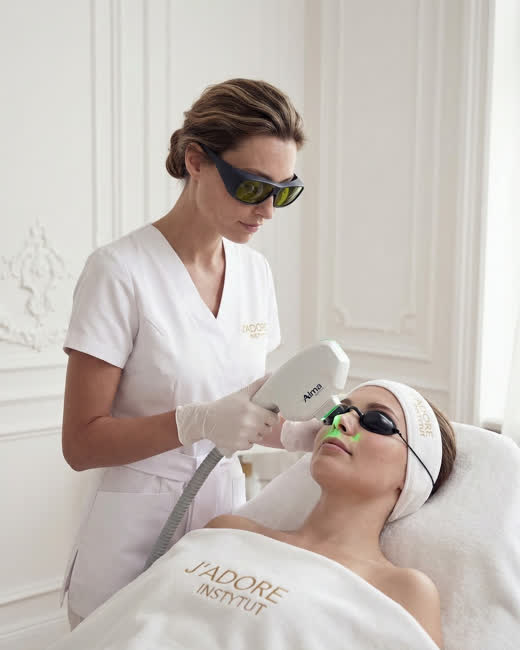
 A treatment room at J'adore
BODY CONTOURING & SLIMMING
A facial contour starting to "sink" around the jaw, a soft chin, a lax neck, looser skin on the abdomen or arms after weight loss — this isn't about weight. It's about weakened support structures in the skin.
With age, collagen declines and the SMAS layer — the same one a surgeon tightens during a face lift — loses tension. HIFU stands for high-intensity focused ultrasound: it precisely heats deep layers without disturbing the epidermis, and triggers natural neocollagenesis. People call it a "lift without a scalpel" — because it works at the same depth as surgery, but without cutting, without needles and without downtime. Below you'll find everything worth knowing before your first visit.
usually 1 session, with results building over the following weeks
How it works
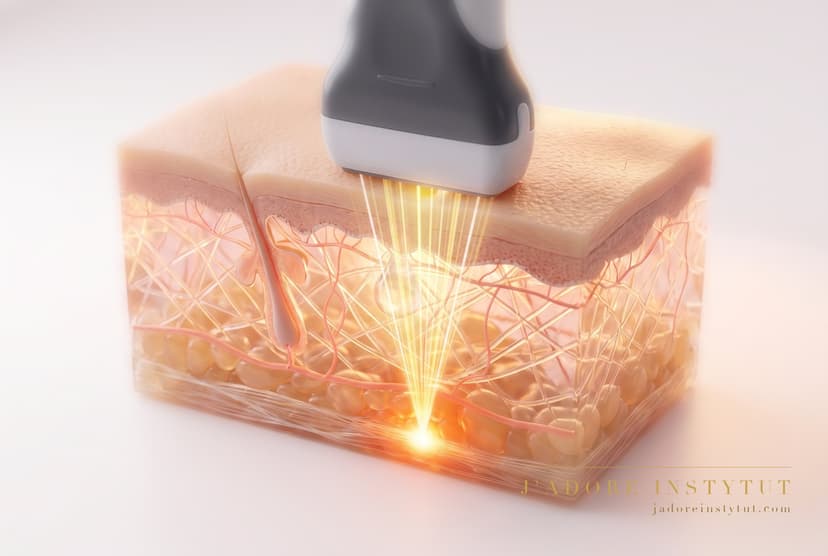
HIFU stands for High Intensity Focused Ultrasound. Picture a magnifying glass concentrating sunlight into a single point: the beam works exactly the same way, except instead of light it concentrates acoustic energy at a precisely defined depth beneath the skin, without disturbing the epidermis along the way.
At the focal point, a microscopic thermal coagulation point forms. Collagen fibres contract immediately — giving that "tightened" feeling straight away — and the tissue triggers a natural healing process: neocollagenesis, the production of new, resilient collagen. It's this new collagen that builds the real lift over the following weeks.
A key advantage: the cosmetologist selects heads that work at different depths, so the energy reaches exactly where it needs to — from the deep support layer down to the dermis — without overheating the surface.
Three depths
HIFU isn't "one beam for everything". Depending on the concern, the cosmetologist works at different depths, selecting the appropriate applicator:
From the cosmetologist's chair
The fact that HIFU reaches 4.5 mm, the SMAS layer, is why we call it a "lift without a scalpel". No cream or massage can get there — it's the level at which a surgeon works. The difference: we do it with energy, without cutting and without stitches.
Ideal for
What HIFU won't do: it won't remove excess fat tissue instead of diet, it won't fill sunken cheeks (that's a job for volume), and it won't "take off 10 years in one session". It's a tool for tightening and densifying the skin — it works best when the skin is lax but not yet excessively saggy.
Women's zones and men's zones
The most common goal is lifting the contour and sharpening the jawline, along with firming the neck and décolletage, while keeping a fully natural look. Classic HIFU for women is also used as "40+" prevention and to gently "open up" the gaze.
What we work with
Men's skin is thicker and more vascularised, and the goal is clear: a defined, masculine jawline without a "worked on" look. This is so-called HIFU for men — increasingly chosen instead of the scalpel.
What we work with
Fun fact: focused ultrasound technology originated in medicine — it was used to precisely heat tissue deep within the body, without affecting anything along the way. Aesthetic lifting is a later, "cosmetic" application of the same physics: energy concentrated at a point, like light through a lens.
Safety
With HIFU, results and comfort depend on a few things worth asking about at any salon:
This is a device-based treatment requiring knowledge of anatomy — at J'adore it's carried out by an experienced cosmetologist, who knows where to work and which areas to avoid, such as major blood vessels and nerves.
The HIFU result depends on the number of so-called lines/points applied to the skin. Too few lines means a barely visible effect. That's why a "full treatment" and a "cut-price mini-treatment" are two different things.
A good treatment uses the right depths for the specific concern (4.5 / 3 / 1.5 mm) — not one head "for everything".
Indications, intensity and the point map are set by the cosmetologist at consultation — this isn't an "automatic" treatment.
Red flag: suspiciously cheap HIFU and "one treatment, permanent lift" · A bargain price is the most common warning sign — it usually means a significantly reduced number of lines, or a worn, uncertified head, meaning an effect you simply won't see. Also steer clear of promises like "minus 10 years in one session" or "guaranteed lift without consultation". HIFU works, but honestly: gradually, in a tailored series, after a skin assessment. You have every right to ask about the number of lines, the type of heads used, and who performs the treatment — a good salon will answer without hesitation.
Contraindications
Some contraindications are permanent, others are temporary — in that case, we simply postpone the treatment until the situation passes.
From the cosmetologist's chair
The most commonly forgotten issue: fresh tanning. Clients come back from holiday and want to improve their contour "right away" — but heating freshly tanned skin risks irritation and discolouration. It's better to postpone by 1–2 weeks and treat calm skin.
This isn't a complete list — we'll go through your medications, health conditions, implants and previous treatments individually during consultation.
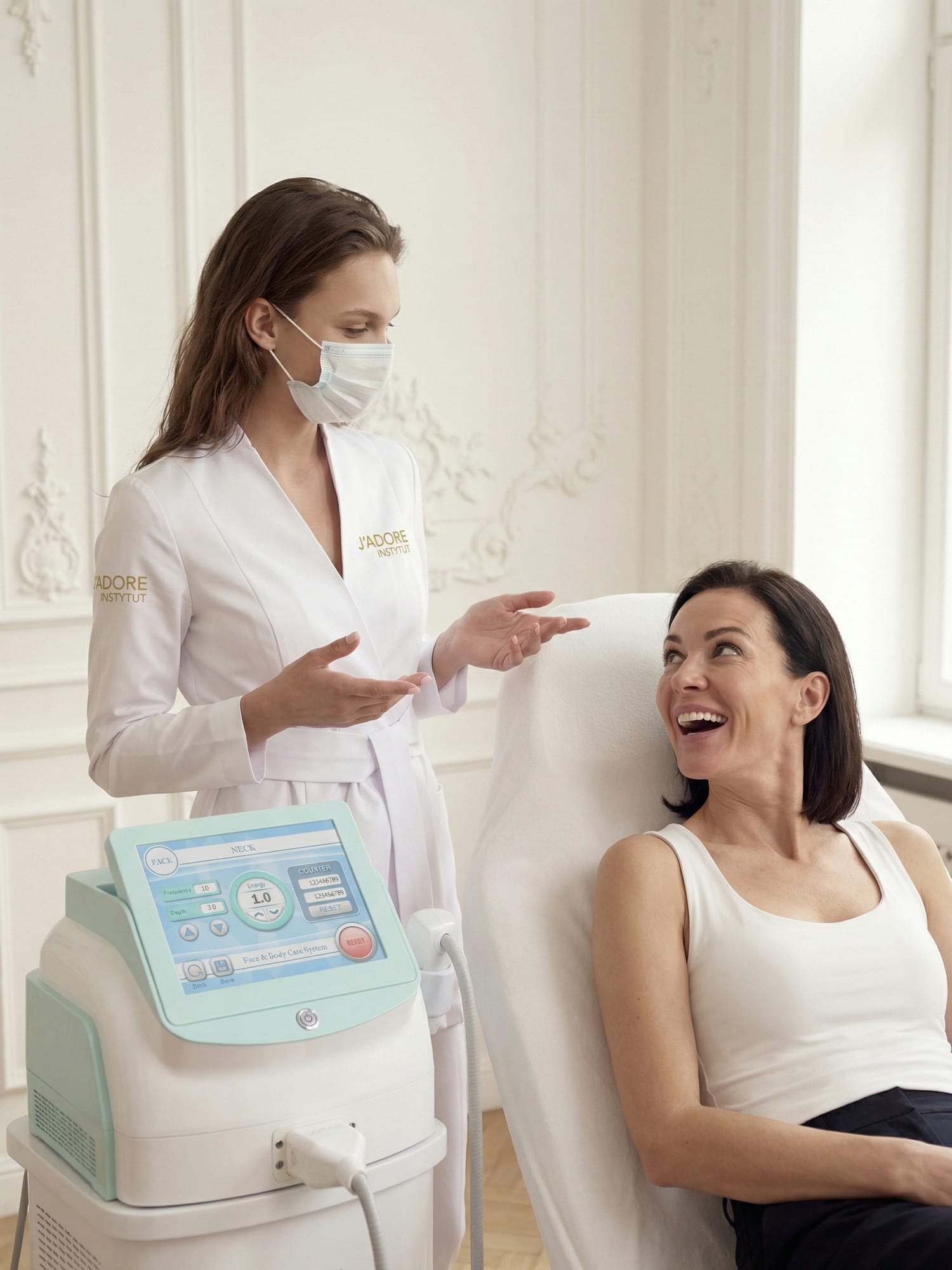
The visit
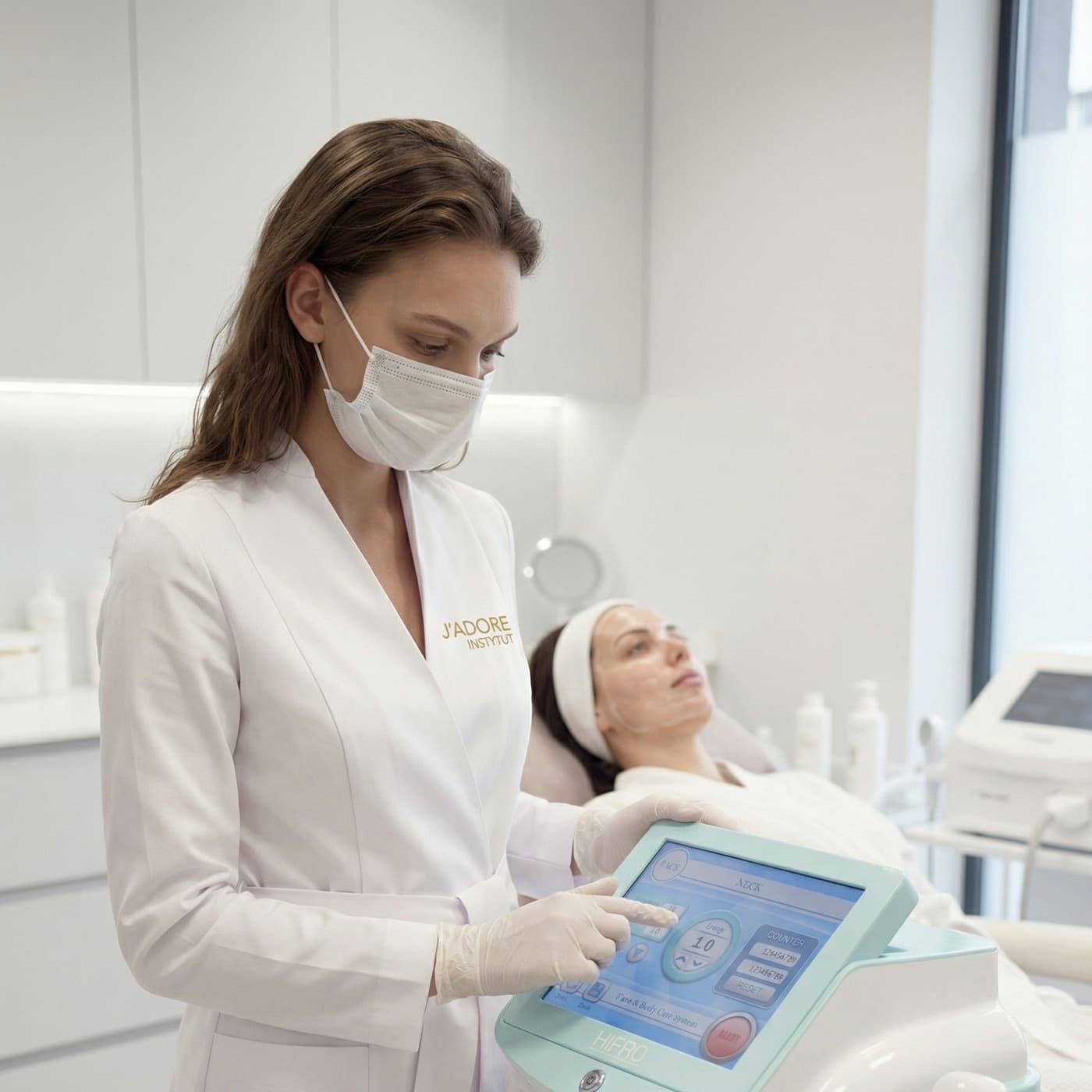
Consultation with a cosmetologist
assessing skin condition, thickness and degree of laxity, along with your expectations, and ruling out contraindications. A good cosmetologist is more likely to set realistic expectations than to promise miracles.
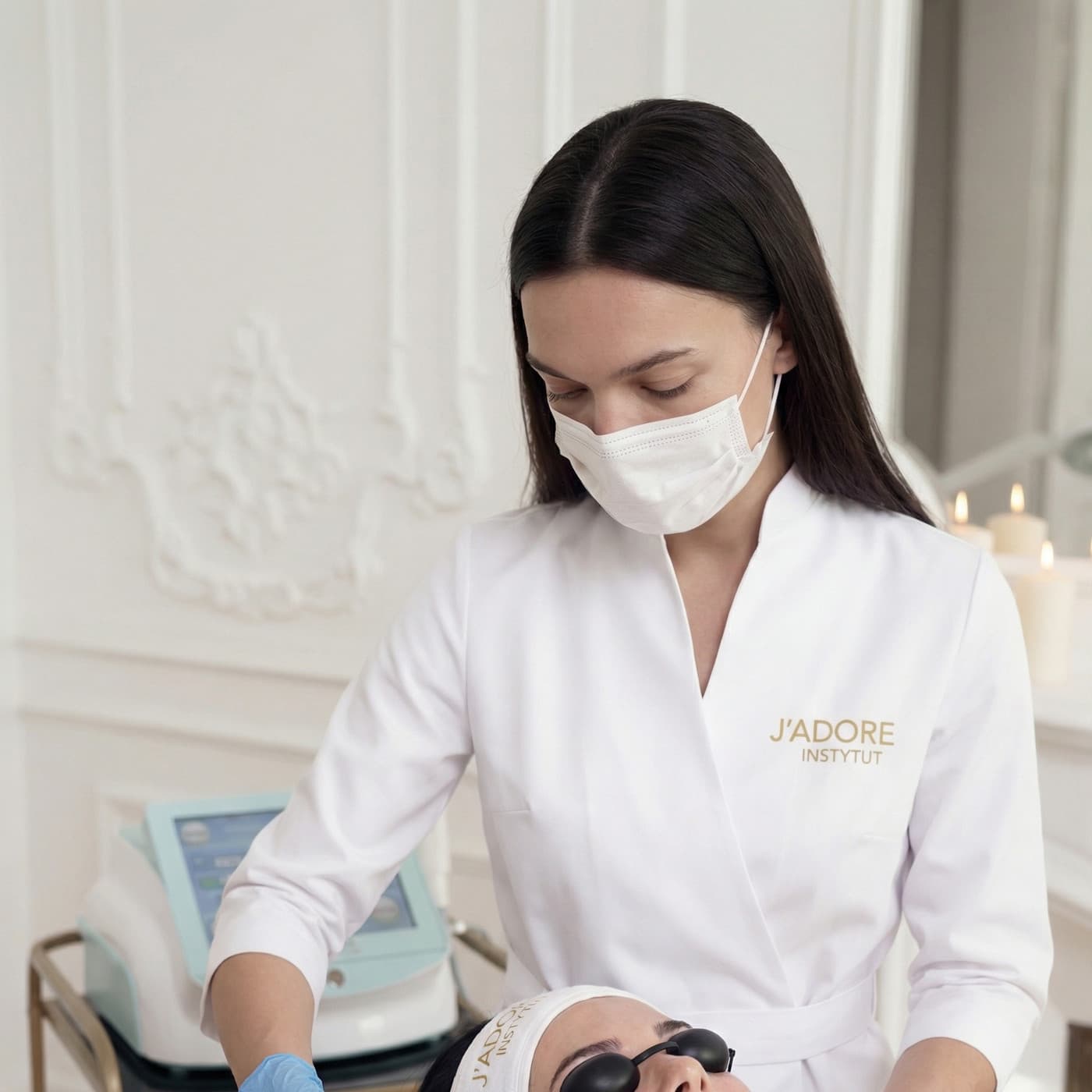
Preparation and anaesthesia
cleansing the skin and applying numbing cream (EMLA) around 30–45 minutes before the treatment, for comfort.
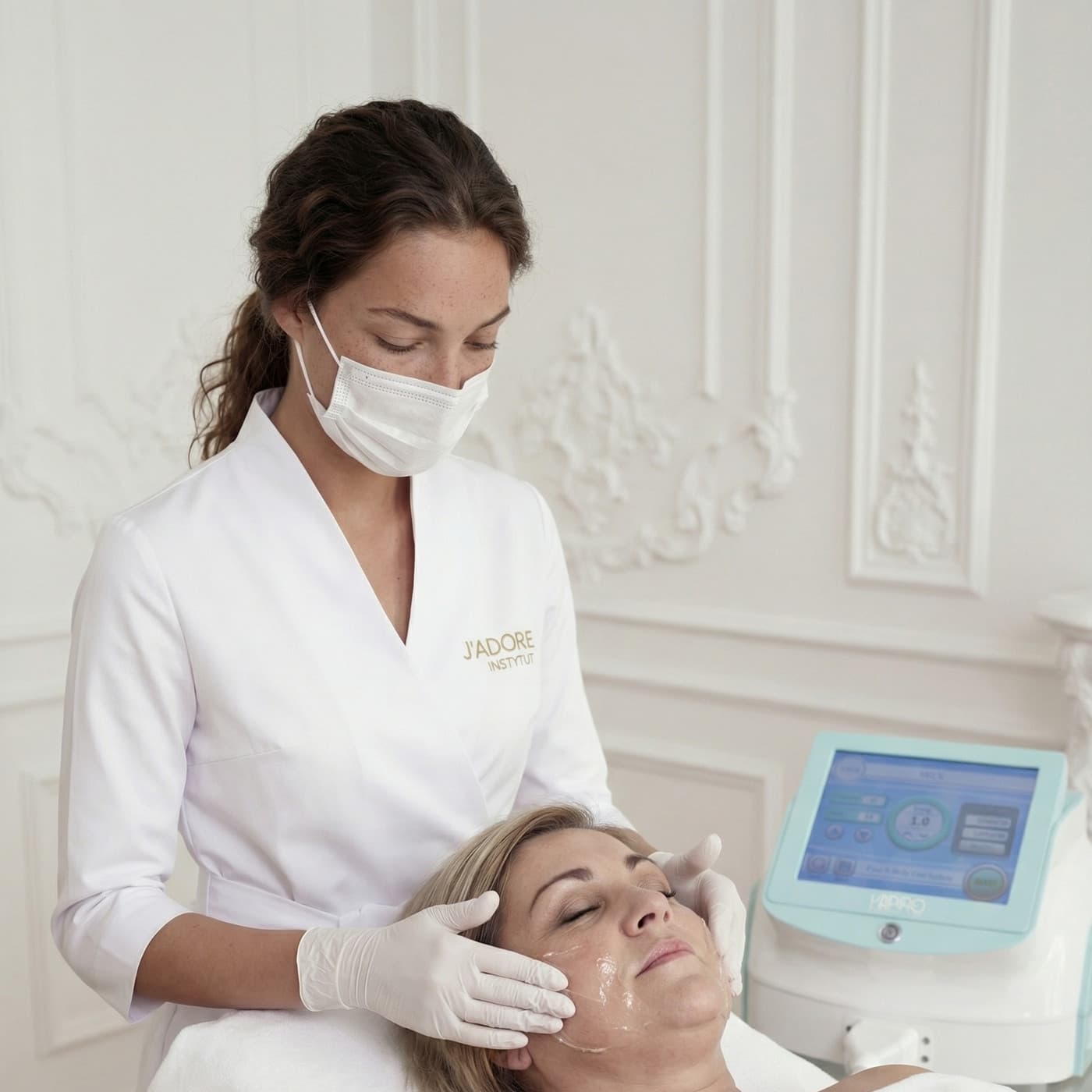
Mapping and gel application
marking out the treatment area and applying coupling gel, which conducts the ultrasound.
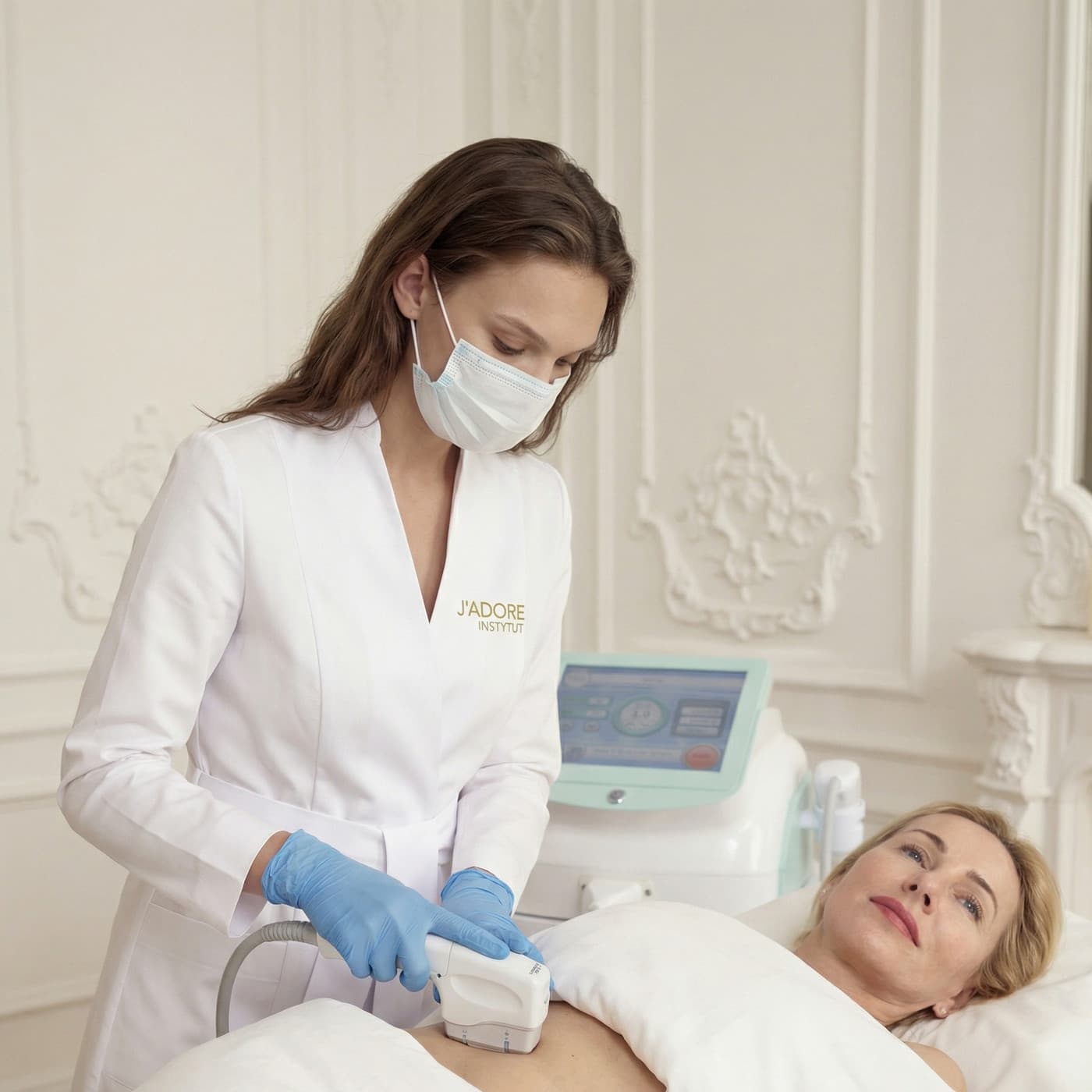
Energy application
the head is moved along lines on the skin; you'll feel warmth and "tingling" deep beneath the surface, sometimes brief pinpricks — a sign the energy is reaching the right layer.
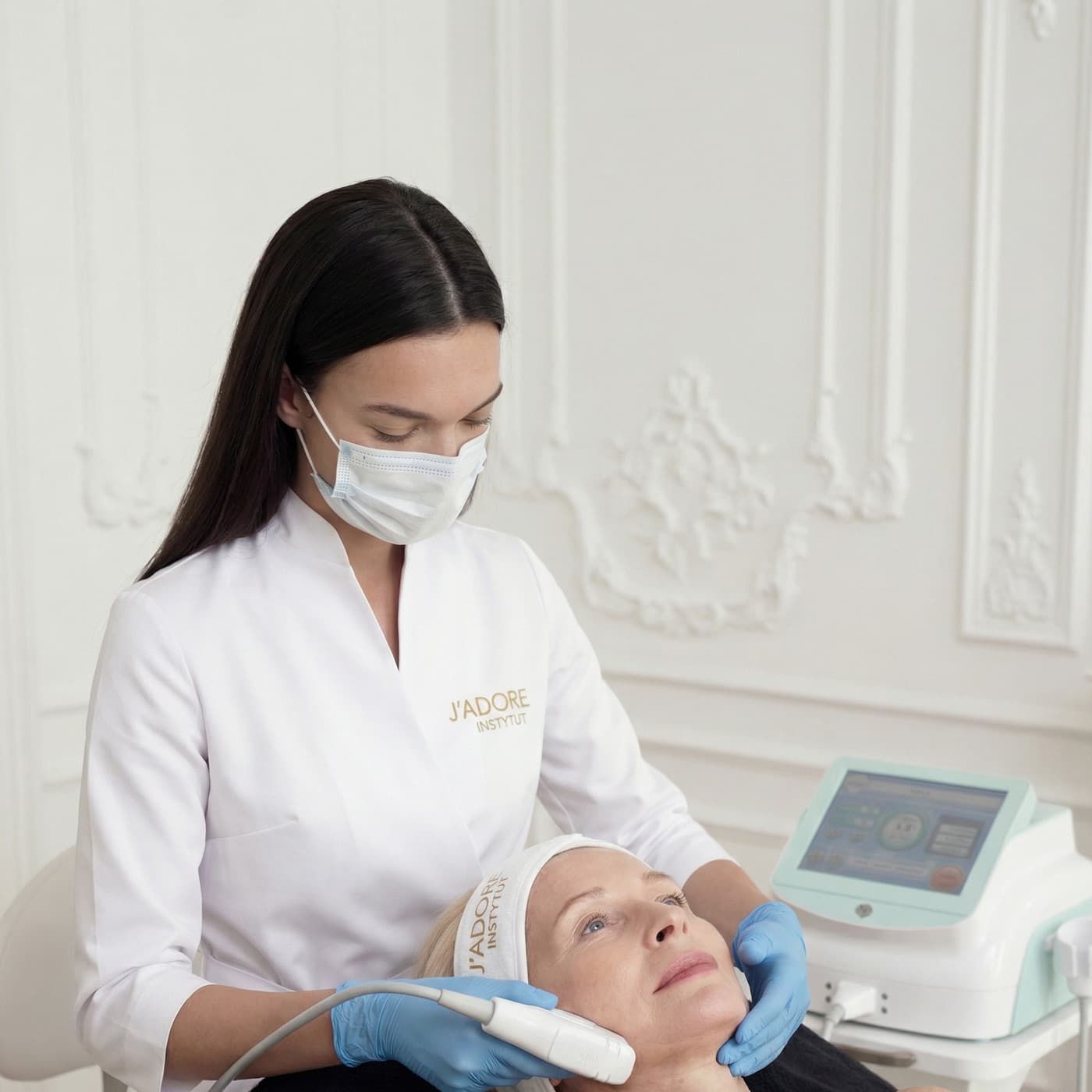
Finishing and advice
a soothing serum, SPF and aftercare instructions. No bandages, and usually no visible marks — you're back to your day the same day.
What to expect
Most importantly: you won't see the full result the next day. Right after the treatment, the skin may feel slightly tighter and refreshed, but the real lift builds over weeks as the body produces new collagen. That's an honest feature of this method, not a drawback.
Some clients write after a week: "nothing's changed". That's completely normal — collagen needs time to rebuild. That's why we assess results no earlier than around 3 months, not after a few days. Patience is part of the treatment here.
The numbing cream (EMLA, around 30–45 minutes) and the working time for each zone are tailored individually — a larger area (such as face + neck + décolletage) means a longer session than the chin alone.
Portfolio
A record of the work in our salons — the place where we publish treatment frames and, after photo sessions, results.
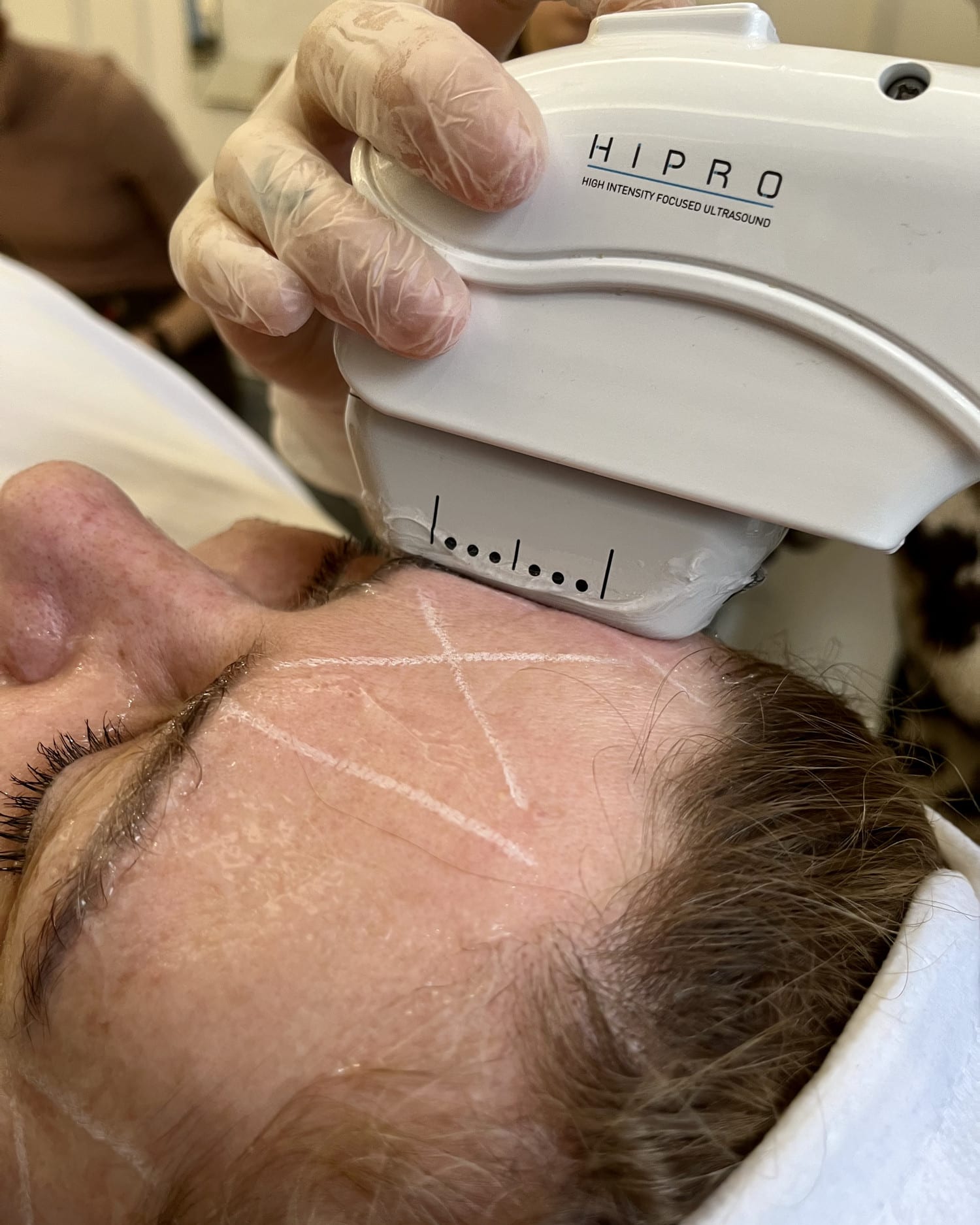
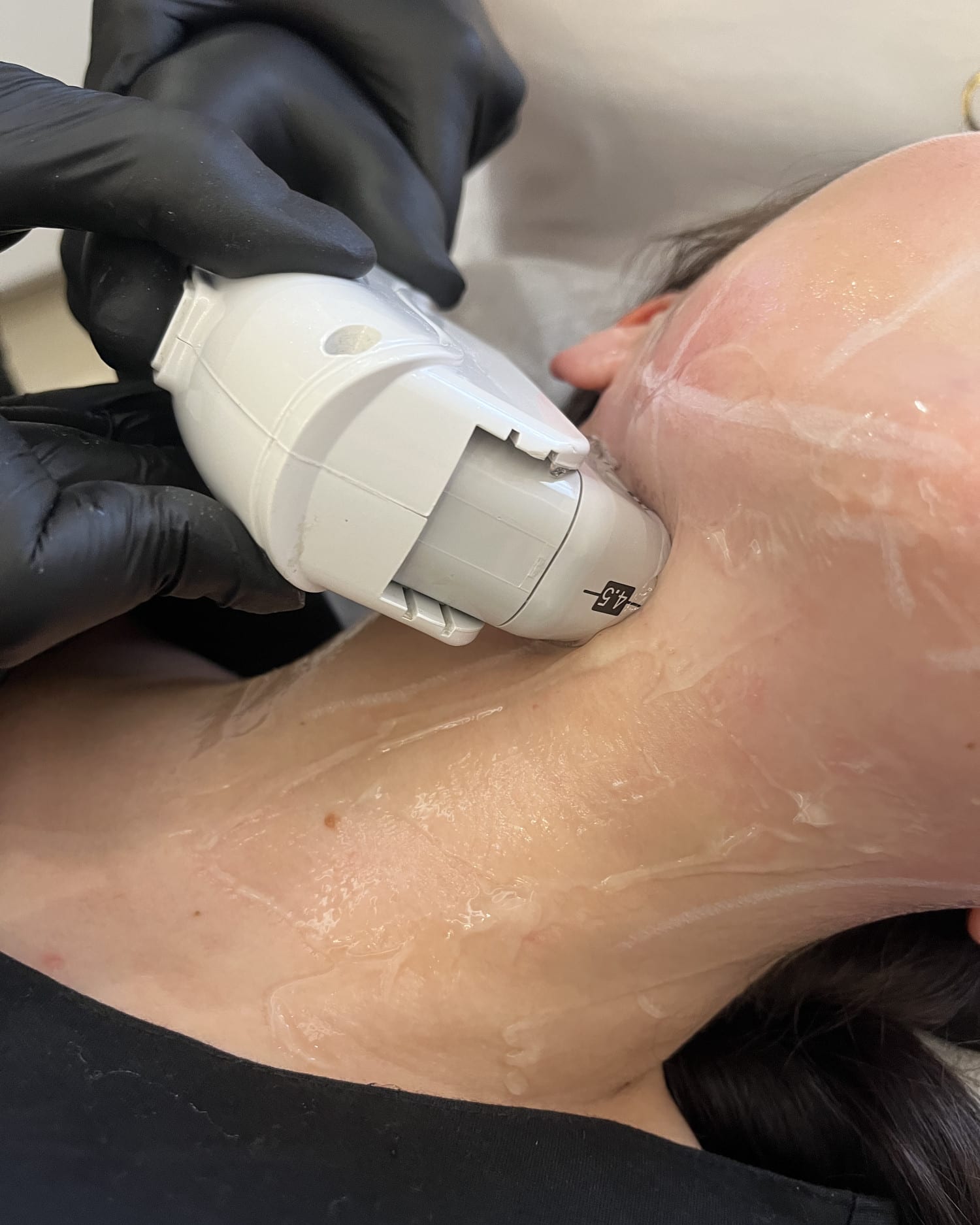
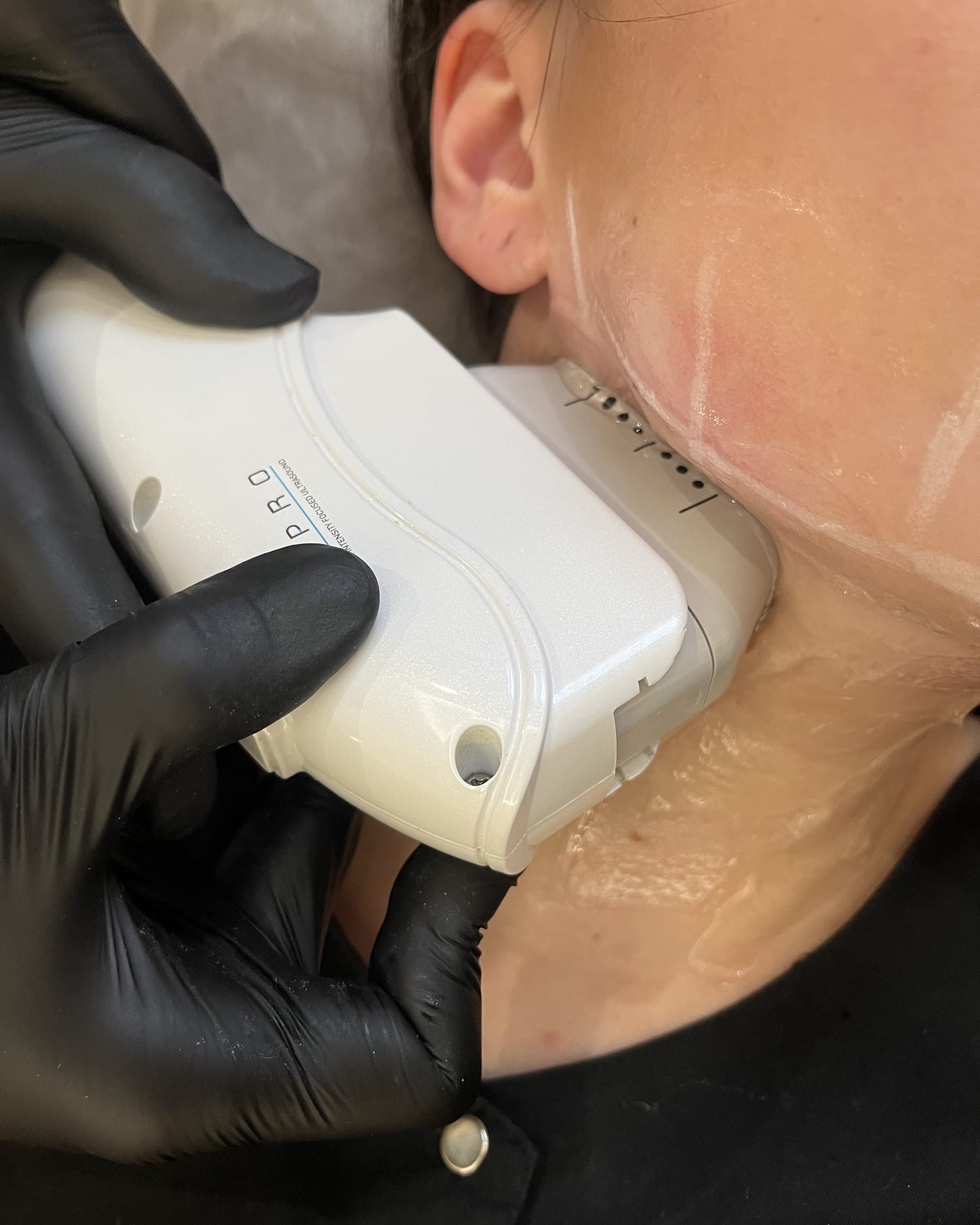
A record of results — in preparation. We publish photographs of our clients only with their consent.
Results typically last 12–18 months. The skin keeps ageing, so the contour gradually returns to its own rhythm — that's why the treatment is repeated roughly once every 1–1.5 years, to maintain firmness.
HIFU and your lifestyle
There's no recovery period after HIFU — you're back to your day straight away. Even so, it's worth not adding extra strain to the skin or irritating it while it's still warm, for the first few days. The rule is simple: treat your skin gently for a few days, and let the new collagen do its work undisturbed.
Intense exercise heats the body up and speeds up circulation — skip it for 1–2 days to avoid worsening swelling. A walk and normal activity the same day are fine.
High temperatures dilate blood vessels and intensify heat in already-warmed tissue. Sauna, hammam, hot baths — best left for a few days.
Intense sunbathing and sunbeds should wait. Fresh tanning is also a contraindication for the treatment itself. Afterwards, daily SPF 50+ is essential to protect the result.
Chlorinated water can irritate skin that's still sensitive after the treatment — wait 2–3 days until the tenderness passes.
Alcohol dilates blood vessels and can worsen swelling and redness — best avoided the day before and for 1–2 days after the treatment.
New collagen likes well-hydrated skin — drink more water, and add a product with hyaluronic acid and peptides to your skincare routine. This supports the effect from within.
HIFU (BTL HIPRO / Ultraformer)
There are several routes for a sagging oval, and they are often confused. Most simply: HIFU tightens from within with energy, while thermolifting/RF thickens the skin more warmly and gently; with a clearly sagging oval, the doctor decides on a medical procedure. They do not exclude each other — they can be stages of one plan.
lifting from within, the SMAS layer
doesn't mechanically lift heavily sagging skin, doesn't remove fat instead of diet
consultation and treatment with a doctor
a more invasive treatment than HIFU; doesn't improve overall skin quality the way energy-based treatments do
skin densifying and tightening
shallower than HIFU — doesn't reach the SMAS layer, so weaker lift for a deeply sagging contour
Combine with
HIFU pairs well with treatments that improve skin quality and volume. The order and spacing are decided by a cosmetologist at consultation, but the general logic stays the same: structure first (HIFU), then quality and finishing touches.
The simplest tip: the skin is not sagging yet, but is "giving up" → HIFU. The oval has clearly dropped → talk to a doctor at a consultation. The skin is rather thin and you are looking for gentle, regular firming → thermal lifting. We often combine: HIFU for structure, RF for quality.
Heads, zones and support
HIFU isn't one "attachment for everything". Results depend on matching heads of the right depth to the concern, plus aftercare that supports regeneration. You don't pick a head "off the shelf" — the cosmetologist selects it based on the zone, skin thickness and your goal.
The deepest work — the same layer a surgeon tightens. Gives a lift to the contour and jawline.
Dla kogoSagging contour, chin, submental area.
Remodelling and collagen rebuilding in the dermis — improved skin density and firmness.
Dla kogoCheeks, neck, general firming.
Gentle stimulation for finer areas and skin smoothness.
Dla kogoThe eye area, finer facial zones.
Special heads with a greater working reach — tighten lax skin over larger areas.
Dla kogoAbdomen, thighs, arms, knees.
A serum with hyaluronic acid and peptides, a barrier-repairing product, and SPF 50+.
Dla kogoDaily protection and support for the neocollagenesis effect.
Fact: Where do the differences in results between salons come from? Usually from the number of lines used, the quality and "freshness" of the heads, and how well the depth is matched to the specific concern. The same "HIFU" letters on a leaflet can mean a completely different treatment — what matters is the protocol and the cosmetologist's skill, not the technology's name alone.
Price list
Checking free hours…
From the magazine
Editorial pieces on how this treatment works in practice — what happens during the session, how to prepare, where the limits are and what the first days after look like.
See also
The result lasts12–18 monthsJ’adore Instytut
Information. HIFU (focused ultrasound lifting) is a device-based cosmetology treatment with a care and contouring purpose; it is not a medical treatment and does not replace medical treatment, surgical lifting, or diet and physical activity. The text above is for informational purposes only and does not constitute medical advice. Indications, choice of heads and settings, and contraindications are determined by an experienced cosmetologist during an individual consultation.
Home care
Cosmetics matched to what your skin needs after a treatment — so the clinic effect lasts longer.
 skin firmnessPeel MissionLIFT TONIC 200mlView in the shop(opens in a new tab)
 post-treatment regenerationCell Fusion CDermagenis pH Biome SerumView in the shop(opens in a new tab)
 sun protectionDermaQuestSunArmor SPF50 30 mlView in the shop(opens in a new tab)
 skin firmnessMedidermaSens-Age Lift Firming Cream 50mlView in the shop(opens in a new tab)
 post-treatment regenerationMedMelanoSkinbiotic Elixir Probiotic Repair Serum 50 mlView in the shop(opens in a new tab)
 sun protectionSesdermaREPASKIN Silk Touch Color SPF50View in the shop(opens in a new tab)
 skin firmnessDermoMedica0.1% Retinal Cream 15 mlView in the shop(opens in a new tab)
 post-treatment regenerationVagheggiEmozioni Plus — Anti-Stress Face Mask 75mlView in the shop(opens in a new tab)