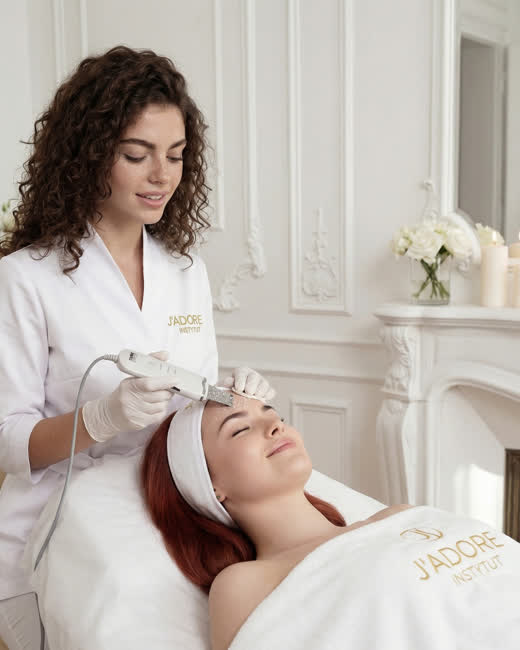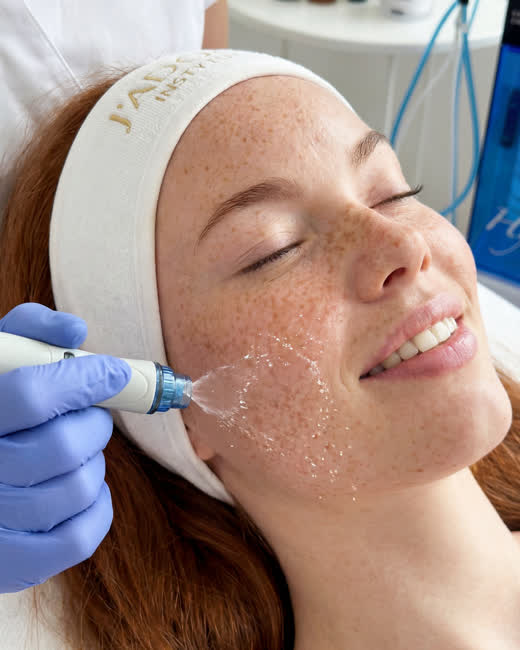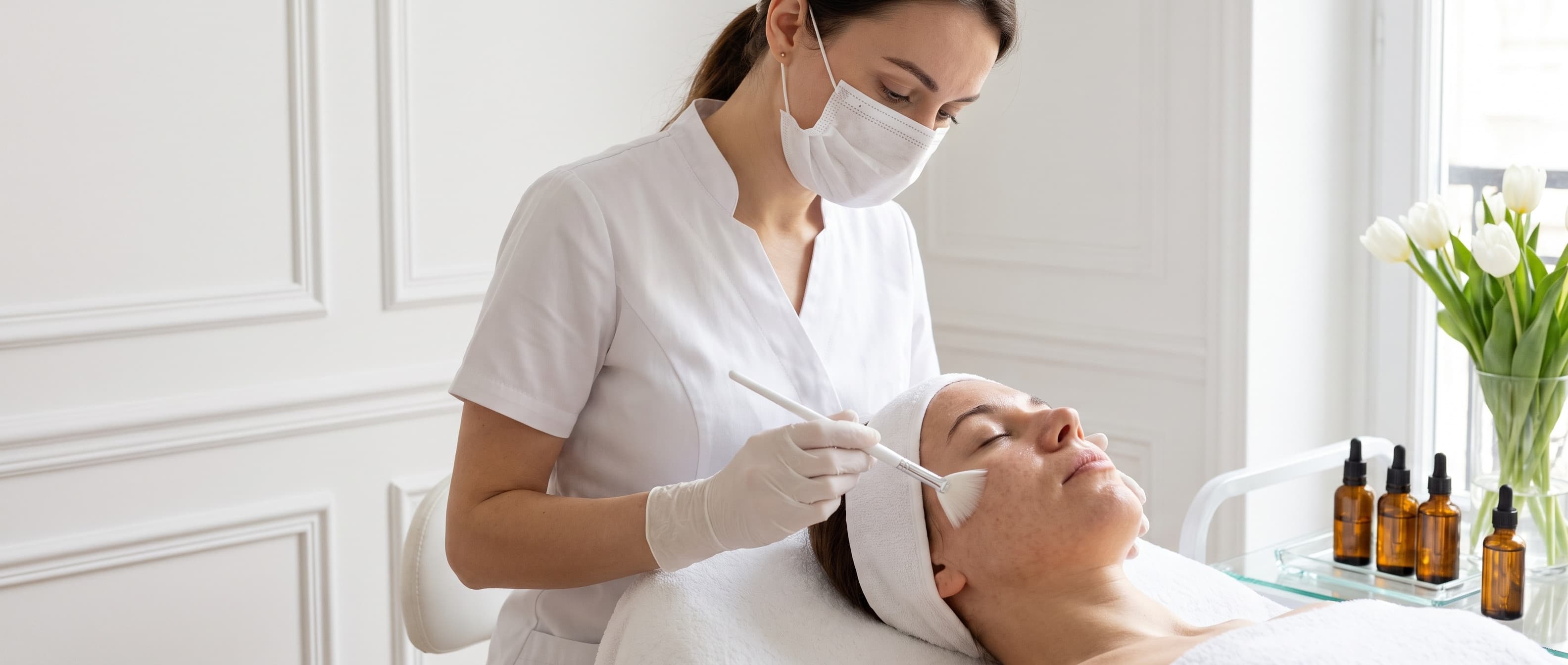
 A treatment room at J'adore
MEDICAL PEELS
Wrinkles that won't budge after a standard brightening peel. Acne scars and uneven texture.
Grey, "sun-tired" skin after years without SPF. Stretch marks that creams can't touch. This is usually the point where you reach for a medical peel with real skin remodelling — not just a "refresh". Retix.C is a Polish line combining TCA (trichloroacetic acid) with in vivo activated retinol — retinol that only activates on contact with the skin. This keeps it stable in the bottle, less irritating than classic retinols, and it works deeper: TCA exfoliates and opens the way, retinol stimulates fibroblasts to produce new collagen. At J'adore Instytut, the treatment is performed by an experienced cosmetologist. This treatment involves several days of peeling, so it's worth planning ahead. Below you'll find everything worth knowing before your first visit: whether it hurts, how many days the skin peels for, when you'll see results, and why we don't do it "just like that" in summer.
series of 2–3 sessions every 4–6 weeks
How it works
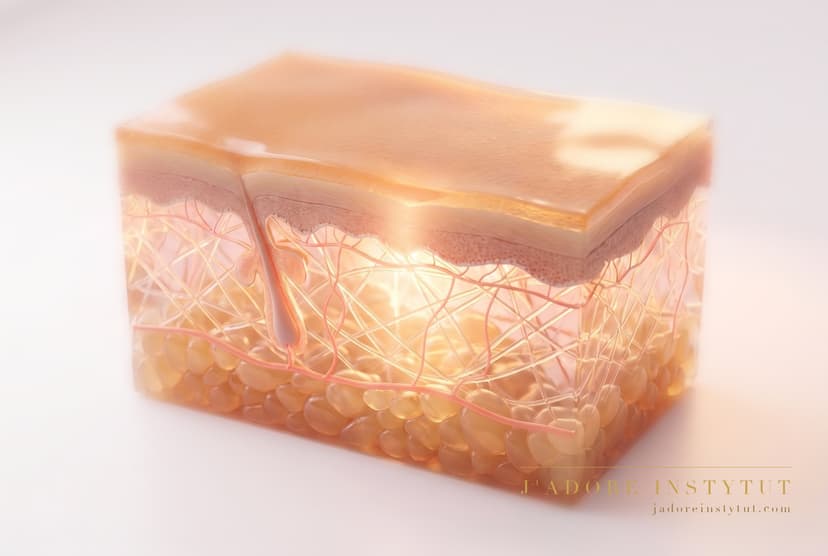
Retix.C combines two mechanisms that, on their own, work more slowly. TCA (trichloroacetic acid) exfoliates the epidermis in a controlled way and triggers remodelling in the dermis. Retinol activated in vivo penetrates deeper through this opened path and stimulates fibroblasts to produce new collagen. Together they achieve what a surface brightening peel cannot: real resurfacing — renewal and remodelling, not just a "refresh".
The most interesting part is retinol activated in vivo. Classic retinol can irritate even in the jar and oxidises on contact with air. In Retix.C, retinol stays stable in the bottle and only activates on the skin — hence stronger action than typical retinols, with a clearly lower risk of irritation. This is a medical peel: selected and performed by a cosmetologist, not an "off-the-shelf" cosmetic.
Ideal for
This isn't a peel "for everyone and everything". For melasma (stubborn hormonal patches), depigmentation (Cosmelan / Dermamelan) is often more precise — Retix.C can then serve as maintenance. We decide on the right tool during consultation.
Female zone and male zone
The most common goals are rejuvenation, radiance and evening out skin tone as well as scars and stretch marks (including after pregnancy). The skin can be thinner and more sensitive, so we choose the strength and number of layers more cautiously, and the eye area is treated with a separate formula. This is the classic Retix.C in women.
What we work with
Men's skin is more often thicker and oilier, and typical issues include acne scars, photoageing after years without protection, and irritation from shaving. There's also often a lack of SPF habit — and with TCA peels, protection after the treatment is absolutely essential. This is Retix.C for men.
What we work with
Good to know: "Frosting" — the whitish colour that appears on the skin during TCA application — isn't an error or a burn. It's an indicator of treatment depth. Your cosmetologist reads it like a map: it tells them how many layers to apply and when to neutralise. That's why this peel isn't done "by the book" — it's guided in real time by trained observation.
Safety
With a medical peel, the result and its safety depend on several things worth asking about at any salon:
Retix.C is selected and performed by an experienced cosmetologist — after assessing your skin, phototype and history. A TCA peel "with no consultation, on the spot" is a risk: the wrong strength for the wrong skin type ends in hyperpigmentation.
We use only genuine Retix.C products sourced through legitimate channels. A counterfeit or poorly stored peel means unpredictable concentration and real risk.
Your cosmetologist adjusts the number of layers and exposure time in real time, watching for frosting. Stronger doesn't mean better — an over-applied TCA peel is a risk, not a faster result.
Deep change comes from a series; if someone sells a single session as a "cure-all", it's worth asking about a real plan.
Red flags for TCA peels ·
Contraindications
Some contraindications are permanent, others temporary — in that case, we simply postpone the treatment until the situation resolves. We'll go through the full list individually during consultation.
From the cosmetologist's chair
Two things clients most often "overlook": cold sores and a fresh tan. "I've just got a small blister on my lip" or "I was in the sun for a week, but it's faded now" — these are real reasons to postpone a TCA peel by a few days or weeks. With recurring cold sores, we don't wait for a flare-up — we arrange antiviral prevention before the treatment. It's better to wait than risk a recurrence or hyperpigmentation.
This isn't a complete list — we'll review your medications, health conditions, phototype and previous treatments individually during consultation, before selecting the formula and strength.

The visit
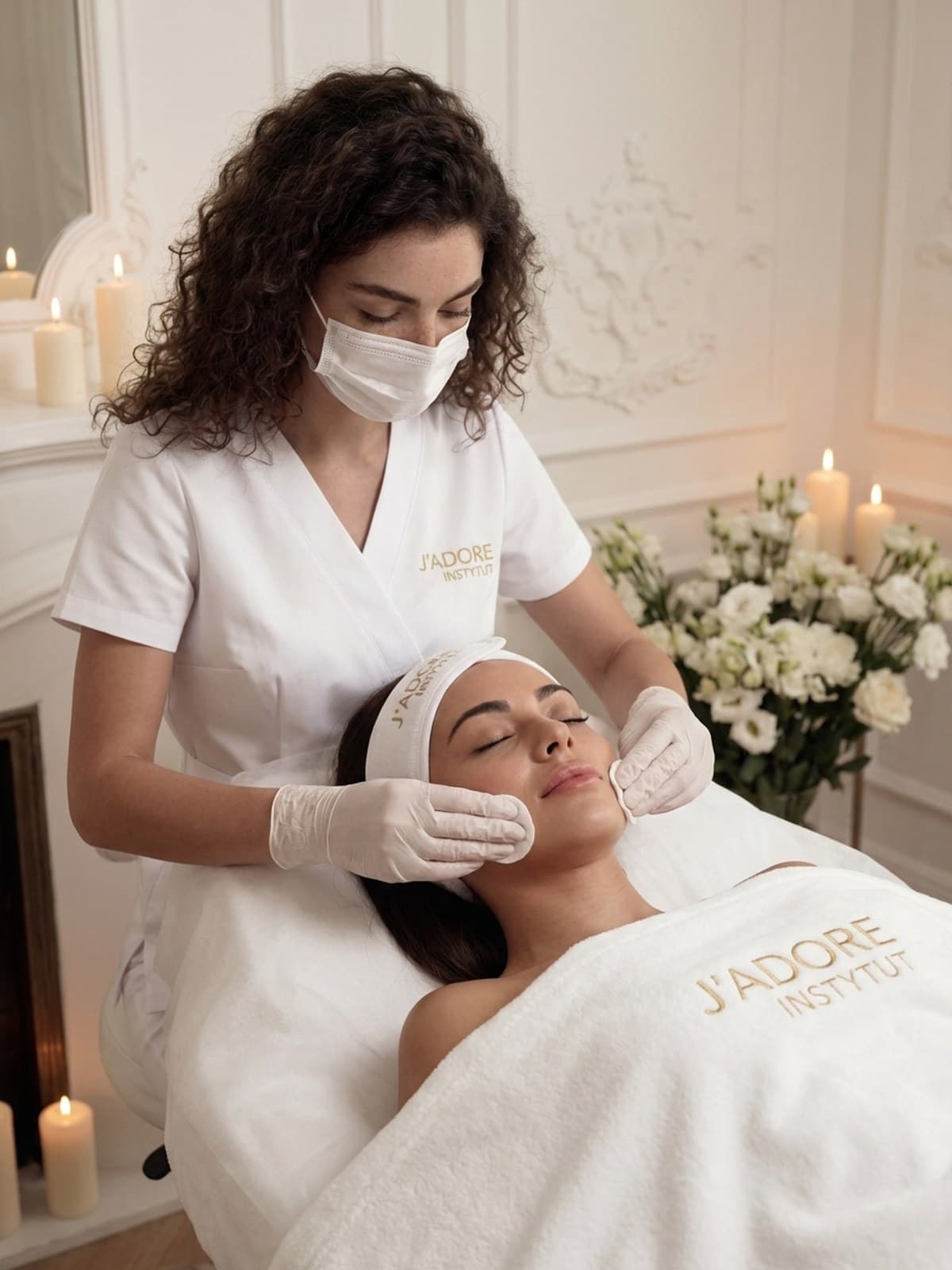
Consultation
your cosmetologist assesses your skin, phototype, concern and history (sun exposure, retinoids, cold sores), rules out contraindications, and selects the formula: REVIVE, Smart DNA or Eye Plus.
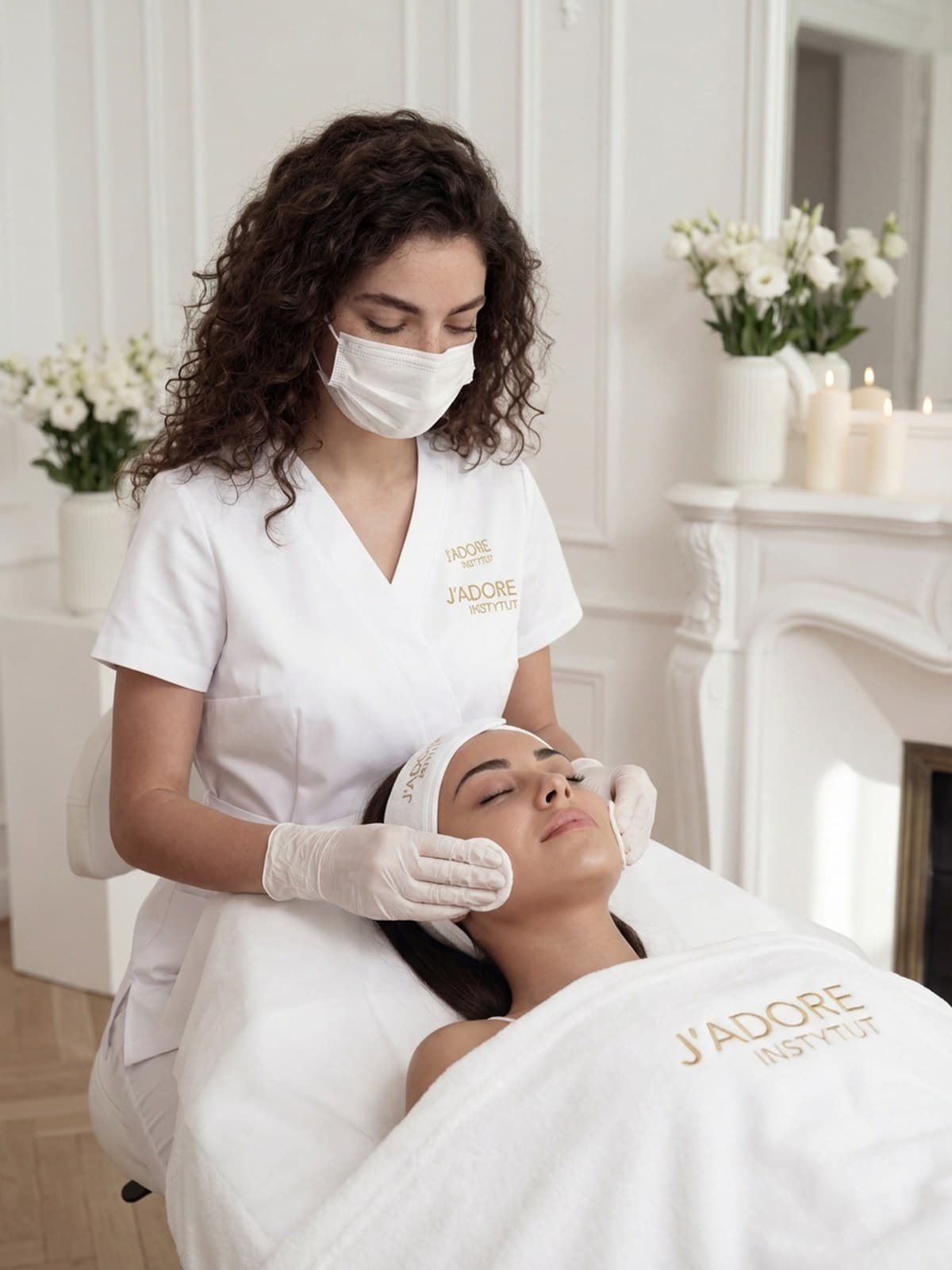
Cleansing and degreasing
thorough removal of sebum, makeup and cream residue; degreasing ensures even penetration of TCA (without it, the peel would work unevenly).
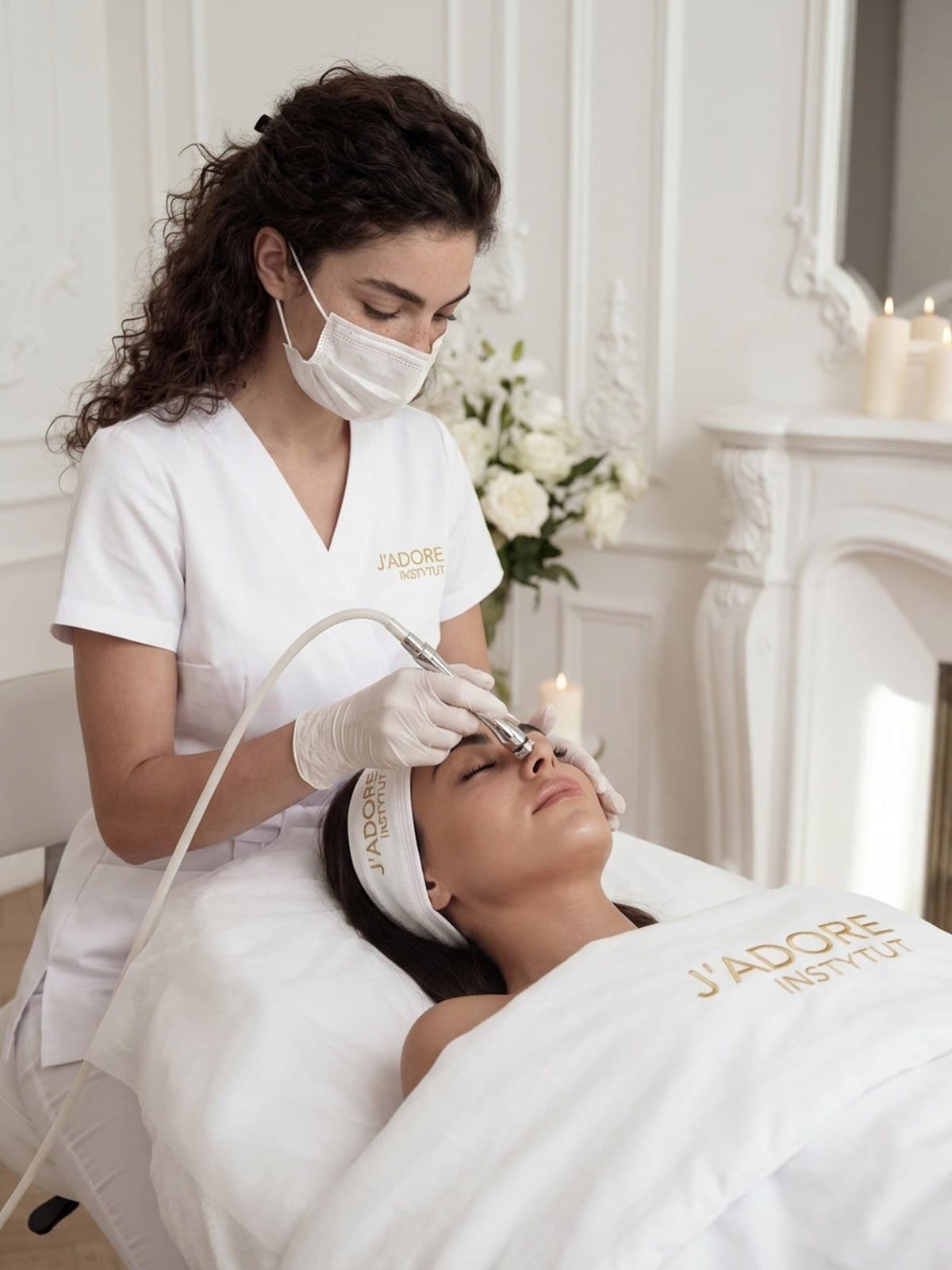
Layer-by-layer application
TCA is applied with a brush or gauze, each layer intensifying the effect; your cosmetologist watches for frosting as a sign of depth. Retinol only activates once on the skin.
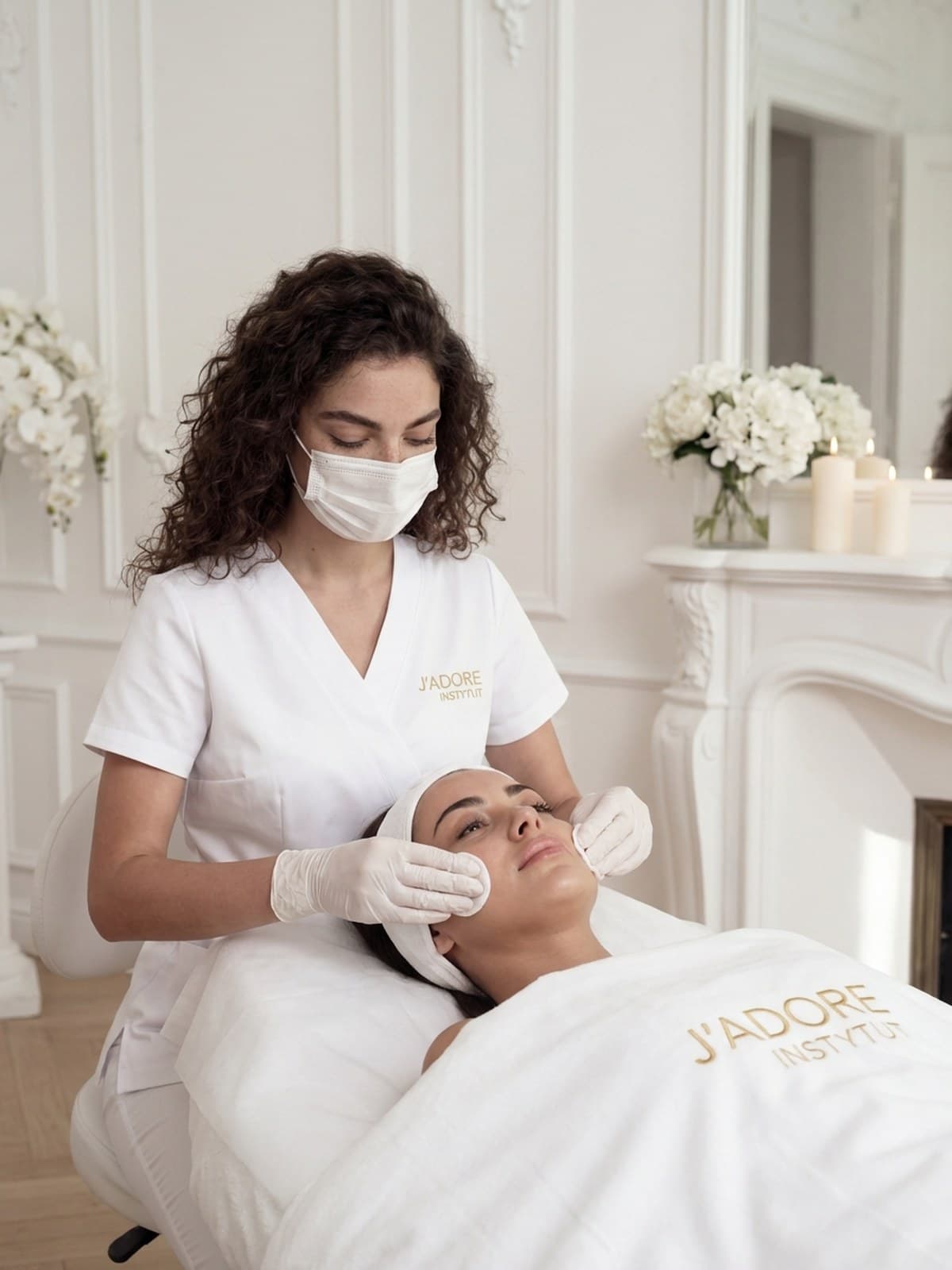
Controlled exposure time
set individually to the protocol and your tolerance; you'll feel warmth and tingling — a normal epidermal response, monitored throughout.
Neutralisation and a soothing mask
neutralisation stops the TCA action and stabilises pH; a regenerating mask with peptides reduces redness and speeds up healing.
SPF 50+ and written instructions
mandatory SPF plus detailed home care guidance; for Smart DNA on scars, local anaesthesia before the treatment may be used.
What to expect
Most importantly: this is a peel that involves peeling. Right after the treatment, skin is red, then for a few days thin, dry flakes shed — and only underneath does smoother, brighter skin appear. You won't see the full change "the next day": neocollagenesis builds over weeks.
The most common question in the chair: "will it sting?" Tingling and warmth during TCA exposure are part of the treatment — a sign that the peel is working. It usually lasts a few minutes per layer, and most people tolerate it well. If the reaction is stronger, we adjust the number of layers and timing — that's what your specialist is there for.
Portfolio
A record of the work in our salons — the place where we publish treatment frames and, after photo sessions, results.
A record of results — in preparation. We publish photographs of our clients only with their consent.
From the cosmetologist's chair
The second thing clients often "overlook": never pick at peeling skin. I know it's tempting — but interfering with the epidermis during regeneration risks hyperpigmentation, and in extreme cases, marks. Let it shed on its own. Your only job during these days is gentle cleansing, moisturising and SPF.
A single treatment gives you radiance and even tone. Deep remodelling is the job of a series — that's an advantage, not a drawback: instead of one intense "stripping" of the epidermis, skin gets several controlled impulses it tolerates comfortably, with results building over time.
Retix.C and your lifestyle
With a TCA peel, most questions concern what comes after: sun, makeup, saunas, training, holidays. One overriding rule: throughout peeling and for several weeks after, skin is sensitive to UV — so SPF isn't "optional", it's a condition of the result.
This is the most important point. After a TCA peel, skin is highly prone to hyperpigmentation. SPF 50+ daily for at least a few weeks, avoiding direct sun and sunbeds. Without this, you risk the opposite effect — dark spots instead of even tone.
For the first few days, only regenerating cream and SPF. Coloured cosmetics on peeling skin can irritate — they return once peeling has finished.
High temperature, chlorine and sweat intensify redness and discomfort during the regeneration phase. We put off the sauna and pool until peeling has finished.
No acids or home retinol for the first few days — only regeneration. They return gradually after peeling; home retinol afterwards is a great way to maintain results.
Intense training and sweating right after the treatment intensify redness and stinging. Give your skin a few quiet days, especially during the first, most sensitive phase.
We don't schedule TCA peels ahead of a "sun" trip or after sunbed use. The best season is autumn and winter. A fresh tan or planned intense sun exposure is a reason to postpone the treatment.
Retix.C
These three are often confused, but they do different things — and sometimes complement each other. Here's a simple map to match the tool to the problem:
radiance and refresh "right now"
won't remodel skin deeply, won't fill scars or stretch marks
resurfacing and remodelling
requires a few days of peeling; not the first choice for stubborn melasma
targeted at hormonal patches
not a peel "for wrinkles" or scars — it targets pigment narrowly
Combine with
Where deeper remodelling, hydration, or scar targeting is needed, we combine Retix.C with other treatments. Your cosmetologist decides on the order and intervals during consultation, but the general logic stays the same:
The most common misunderstanding: "I want Retix.C for my chloasma". For general even skin tone and photoageing — great. But for real melasma, we target depigmentation (Cosmelan / Dermamelan), and Retix.C can then serve as maintenance. Simple rule: wrinkles, scars, stretch marks, grey skin → Retix.C; stubborn hormonal patches → depigmentation.
Retix.C formulas
The name "Retix.C" covers several formulas within the same line, each chosen for a specific concern. They're not picked "off the shelf" — your cosmetologist selects the formula, strength and number of layers to match your skin, phototype and history. All share the same core idea: TCA + in vivo activated retinol.
A base revitalising and rejuvenating formula: TCA with retinol for skin renewal and remodelling.
Dla kogoWrinkles, photoageing, grey skin, "restoring" freshness and radiance.
A strengthening retinol component within the line — an extra "boost" to the stimulation protocol.
Dla kogoEnhancing the rejuvenating effect within a series, when skin tolerates retinol well.
A formula with a repairing component and peptides, aimed at deeper remodelling.
Dla kogoAcne scars, stretch marks, uneven "thick" skin texture.
A gentler formula for the delicate skin around the eyes; shorter exfoliation.
Dla kogoCrow's feet, dark circles and mild puffiness around the eyes.
Fact: Where do the differences between formulas come from? From their purpose: strength and composition differ for the eye area, for scars or stretch marks, and for general rejuvenation. That's why we don't ask "what percentage of TCA", but "what's the concern and what's the skin like" — your cosmetologist selects the strength and protocol during consultation. In summer and with a fresh tan, we don't perform any of these formulas "on the spot".
Price list
Checking free hours…
Gift voucher
Buy a voucher for this treatment in the J'ADORE online boutique — an elegant gift, redeemable at the salon of your choice.
Voucher pricePLN 399
Buy the voucher (opens in a new tab)Purchase and payment take place in the J'ADORE online store. The voucher is valid for 12 months from purchase and covers the selected treatment variant.
From the magazine
Editorial pieces on how this treatment works in practice — what happens during the session, how to prepare, where the limits are and what the first days after look like.
See also
The result lastsresults build over several weeks; maintained after the seriesJ’adore Instytut
Informational text. The description above is for information only and does not replace a consultation. Retix.C is a beauty treatment — a medical-grade peel performed by a cosmetologist/specialist; the term "medical" refers to the class and strength of the formula, not to the treatment being performed by a doctor. The choice of peel and formula, strength, number of layers, series length and contraindications is decided by a cosmetologist/specialist during an individual consultation.
Home care
Cosmetics matched to what your skin needs after a treatment — so the clinic effect lasts longer.
 wrinklesDSD de LuxeViper-Ake Anti-Aging Cream V001 50mlView in the shop(opens in a new tab)
 post-treatment regenerationCell Fusion CDermagenis pH Biome SerumView in the shop(opens in a new tab)
 sun protectionDermaQuestSunArmor SPF50 30 mlView in the shop(opens in a new tab)
 wrinklesMedidermaSens-Age Md Intensive-A PlusView in the shop(opens in a new tab)
 post-treatment regenerationSesdermaSERENITY mask 50 mlView in the shop(opens in a new tab)
 sun protectionSkeyndorProtective cream SPF 50+ – Age Photo DefenseView in the shop(opens in a new tab)
 wrinklesSelvert ThermalAdvanced Global Anti-Ageing Retinol EmulsionView in the shop(opens in a new tab)
 post-treatment regenerationVagheggiEmozioni Plus — Anti-Stress Face Mask 75mlView in the shop(opens in a new tab)