
Why acne scars don't fade on their own
Acne leaves a mark not because skin is "weak" — but because the inflammation behind it damages collagen fibres in the dermis. Once inflammation settles, skin heals through fibrosis: a scar forms. It can be atrophic (a sunken "pit"), hypertrophic (raised), or simply uneven texture with no clear pattern. Cream won't fix this — it works on the surface, and the problem sits deeper.
Men have thicker skin than women — an advantage in some ways (it ages more slowly), but a drawback in others: scars can sit deeper and are harder to smooth with surface-level methods. That's why treatments that only work on the epidermis often give men poor results. Fractional microneedling RF reaches exactly where the scar takes root.
What fractional microneedling RF is and how it works
Fractional microneedling RF combines two mechanisms in one treatment: microneedles, which create controlled micro-injuries in the skin, and radiofrequency (RF), which generates heat exactly where the needles reach. Together, these two stimuli trigger an intense regenerative response — the skin "believes" it's been damaged and ramps up collagen and elastin production.
Microneedling alone
how it works without RF
- micro-injuries stimulate regeneration
- works mainly in the epidermis and superficial dermis
- less intensive remodelling of deeper scars
Fractional microneedling RF
combines mechanics and heat
- needles and RF energy reach deeper layers
- heat remodels existing collagen fibres
- dual stimulus = a stronger, longer-lasting skin response
Importantly, the needles don't "scrape" the skin from outside — they enter perpendicularly, so the epidermis stays largely intact. This is the key difference versus laser resurfacing: healing time is shorter, and the risk of post-treatment discolouration is lower. For men with darker skin tones, or who simply don't want a week of a "red face", this matters.
What to expect — from consultation to results
- 01
Consultation
Your specialist assesses the type and depth of your scars, your skin type and any contraindications. Together you'll agree a plan: number of sessions, intervals between them, and any complementary treatments.
- 02
Skin preparation
Numbing cream is applied to your face. You'll wait ten to several dozen minutes — this is what makes the treatment well tolerated even for people with a low pain threshold.
- 03
The treatment
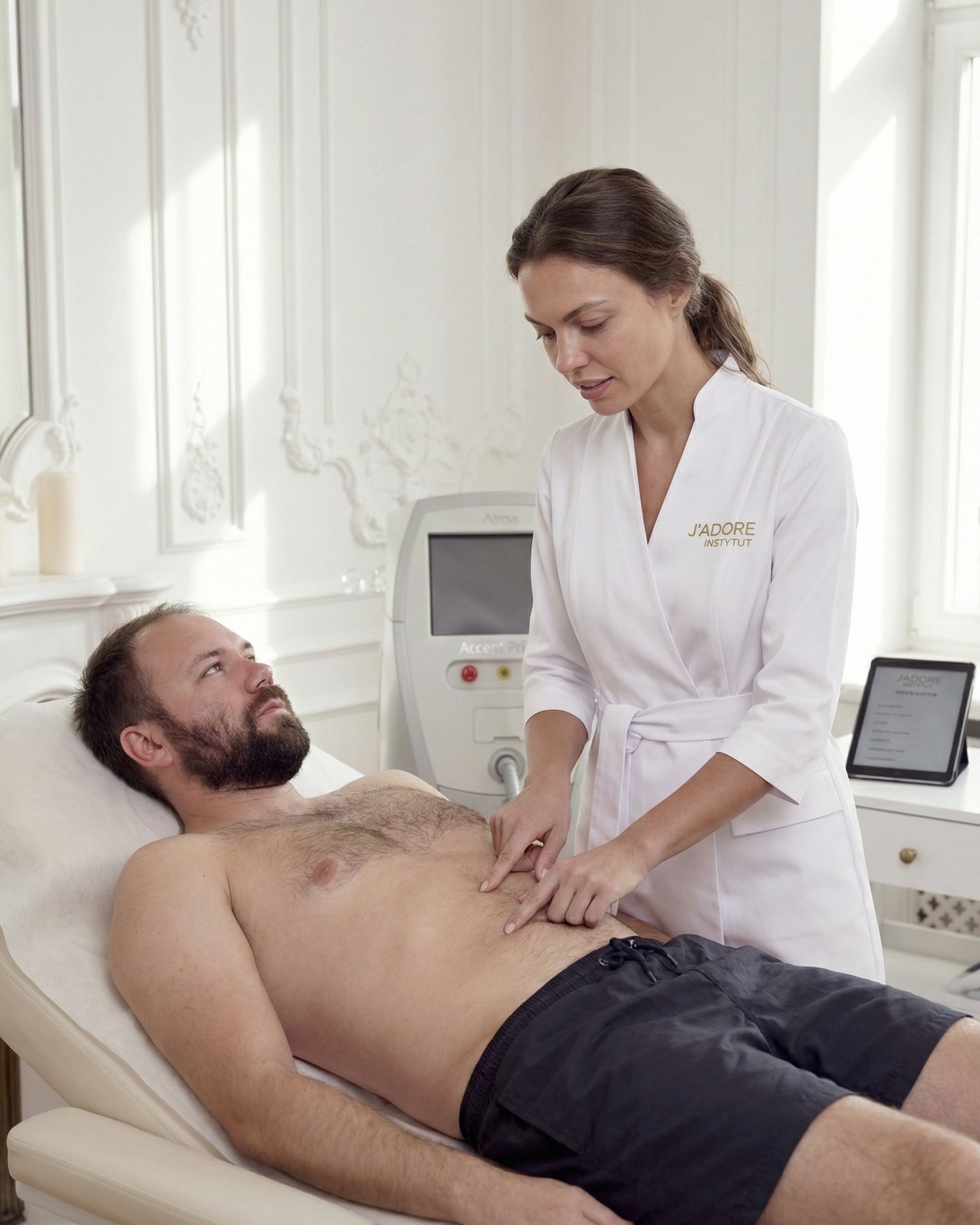
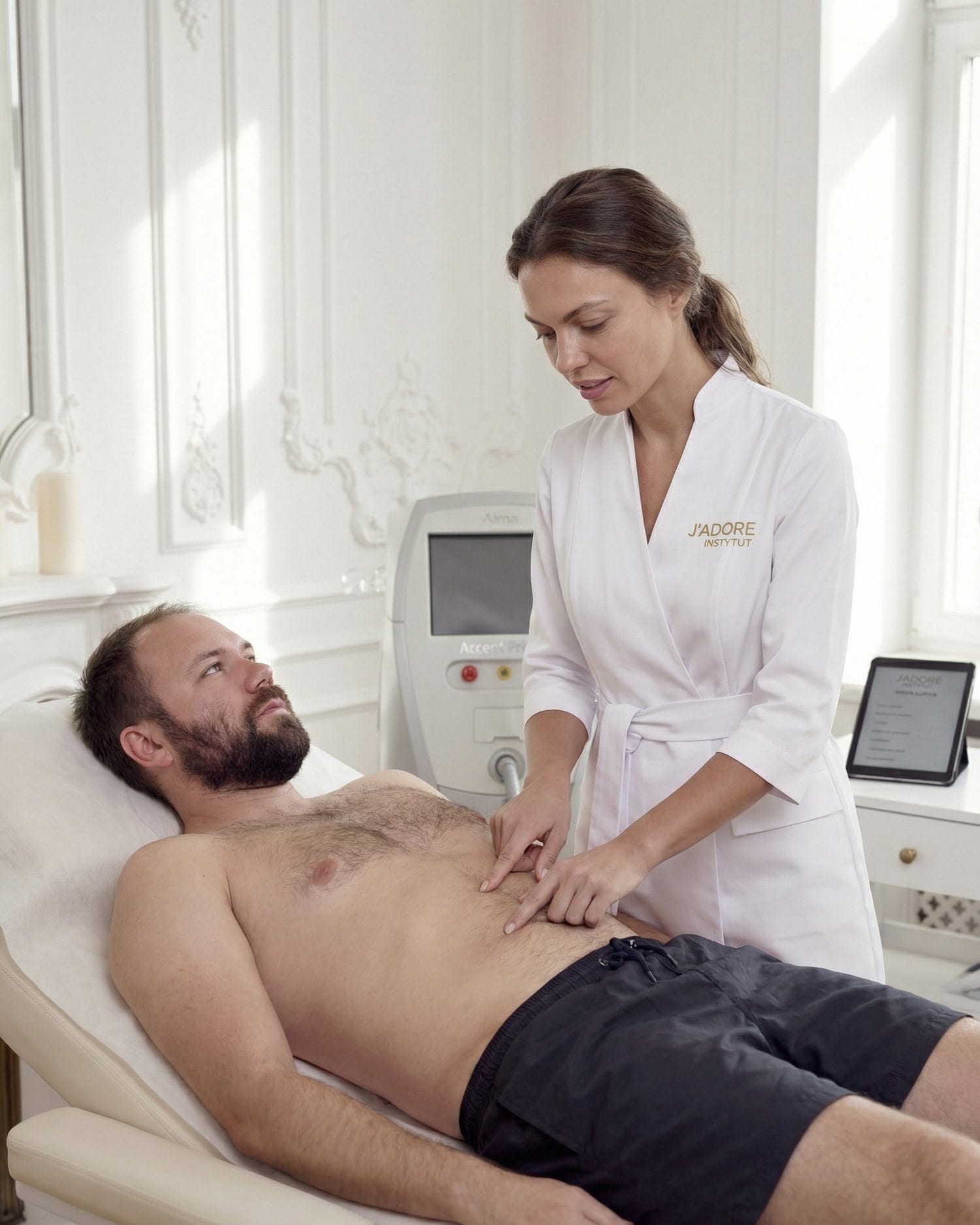
A needle-tipped handpiece moves across your skin section by section. You'll feel warmth and light pricking — for most men, that's on the level of "unpleasant but manageable". Duration depends on the treatment area.
- 04
Immediately after
Your face will be red and slightly swollen — like after an intense workout or sun exposure. This settles within one to two days. Skin may flake for a few days — that's normal regeneration, not a rash.
- 05
Results — when you'll see them
First texture improvements are often visible 4–6 weeks after the first session. Full scar results unfold over several months — collagen needs time to remodel. A series of 3–6 sessions often gives optimal results.
Fractional microneedling RF versus other methods — an honest comparison
The market is full of promises. To avoid wasting time on something that won't touch scars, it's worth knowing what does what:
Peels and creams
surface-level action
- improve tone and light texture
- zero downtime, easy to use
- a good complementary step in a routine
Fractional microneedling RF
deep remodelling
- works on atrophic scars and uneven texture
- stimulates lasting collagen remodelling
- shorter healing time than ablative laser
Ablative laser (such as CO2) often gives stronger results in a single session, but healing time is longer, and the risk of discolouration in darker skin tones is higher. Fractional microneedling RF is a compromise between effectiveness, safety and the convenience of returning to normal life quickly. That's why, for men who can't afford a week "off the grid", it's the first choice for acne scarring.
Is this the right treatment for you
Fractional microneedling RF works best once scars are stable — acne is no longer active (or is under control), and you're dealing with the marks left behind by past breakouts. If you have active inflammation, we address that first — treating "live" acne defeats the purpose.
- Atrophic scars (ice pick, rolling, boxcar) — sunken depressions left by deeper acne inflammation
- Uneven texture — porous, rough surface, visible "dips" without defined scars
- Pores — enlarged, clogged with sebum, especially visible in the T-zone
- General loss of skin structure — reduced firmness, grey complexion after years of stress or poor sleep
- Combination — scars plus ageing — RF addresses both problems at once
Combining treatments — when fractional microneedling RF is just the start
Fractional microneedling RF can be a starting point for more comprehensive skin work. Your specialist may suggest a combination that speeds up results or targets several concerns at once:
Chemical peel
Enhances the texture-smoothing effect — a peel usually precedes an RF series, preparing the epidermis and reducing surface irregularities before deeper treatment.
Needle mesotherapy
Supports collagen remodelling from within — active ingredients (peptides, hyaluronic acid, vitamins) delivered directly into the dermis strengthen the regenerative effect after RF.
Manual extraction / cavitation
Preparation before a series: cleaning pores and removing dead skin cells means the RF needles enter clean, well-hydrated skin — with no barriers slowing penetration.