Rosacea isn't "just a bit of redness". It's a chronic inflammatory disease
Let's start with what rosacea is NOT. It isn't an allergic reaction to a cream. It isn't "sensitive skin". It isn't caused by drinking alcohol (though alcohol can make it worse). It isn't acne, even though it's commonly called "acne rosacea".
Rosacea is a chronic, relapsing inflammatory skin disease that affects the blood vessels of the face and, in advanced stages, the sebaceous glands and connective tissue. According to the National Rosacea Society, it affects around 415 million people worldwide. In Poland, an estimated 2–5% of the population is affected — but many patients never receive a diagnosis, because "it's just redness, surely".
The condition has genetic, immunological and vascular roots. In the skin of people with rosacea, we see impaired epidermal barrier function, excessive activity of antimicrobial peptides (cathelicidin LL-37), vascular dysfunction and chronic inflammation. This isn't about "the wrong cream" — it's a disease that requires treatment.
4 subtypes — you probably know one, but the rest will surprise you
Dermatology recognises four subtypes of rosacea, and many people experience more than one at the same time:
Subtype 1: Erythematotelangiectatic (ETR)
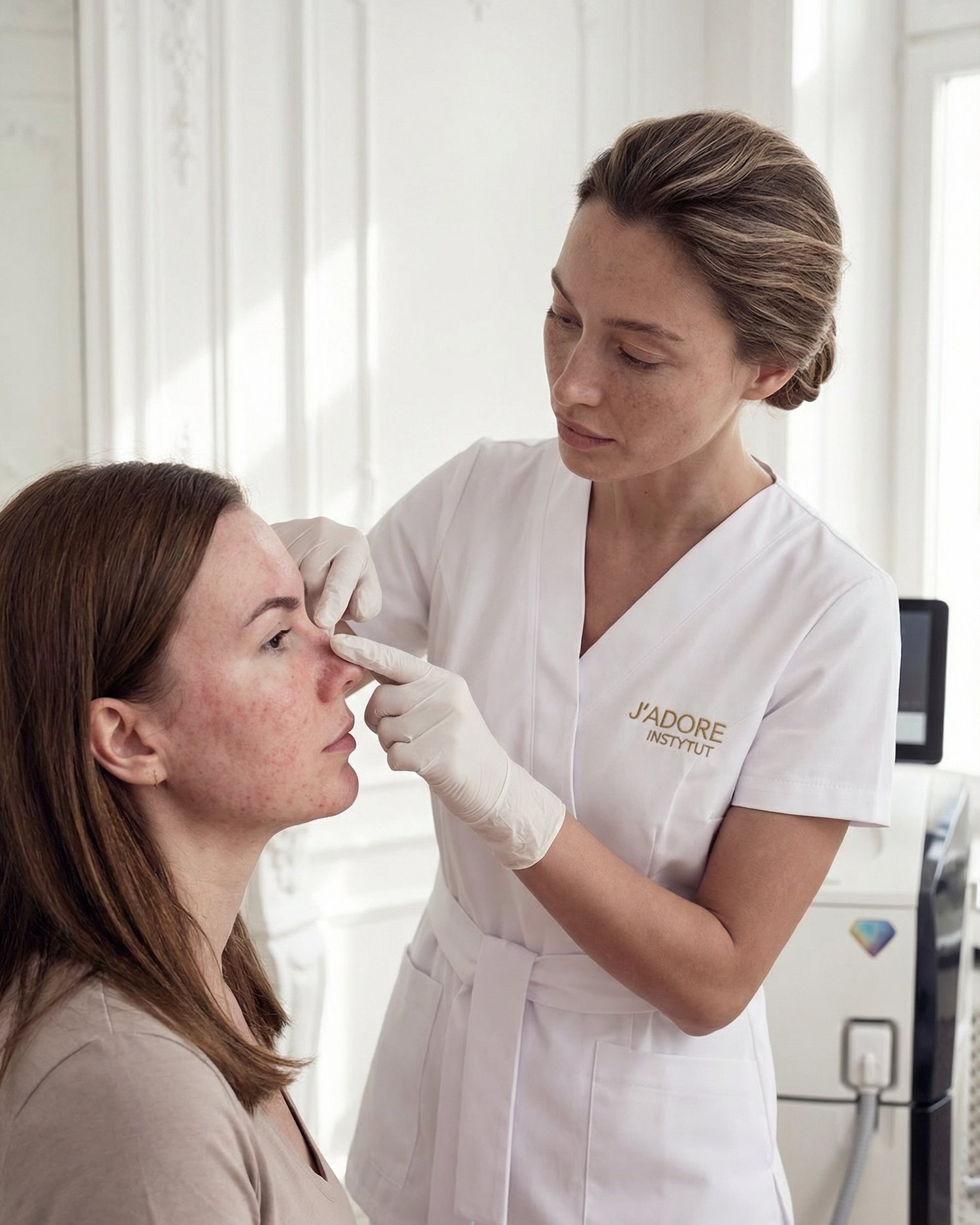
The most common — and the most commonly dismissed. Persistent redness on the cheeks, nose and chin. Visible blood vessels (telangiectasia). Skin flushes in response to heat, spicy food, alcohol and stress. A burning, dry sensation. At this stage, most women assume they simply "have sensitive skin" — and treat it with creams instead of seeing a dermatologist.
Subtype 2: Papulopustular
This is where bumps and pustules appear, resembling acne — but WITHOUT blackheads. That's the key diagnostic difference. Pustules in rosacea result from inflammation, not clogged pores. Acne treatments (salicylic acid, benzoyl peroxide) can actually make the skin worse.
Subtype 3: Phymatous
This is the one Google loves to show you — thickened skin, particularly on the nose (rhinophyma). It's far more common in men and represents an advanced stage that develops after years of untreated disease. If this photo scared you on Google — know that early treatment prevents it from ever getting there.
Subtype 4: Ocular
Under-recognised and under-diagnosed. Burning, dryness, redness of the eyes, recurring eyelid inflammation, a gritty feeling under the eyelids. Many patients end up at the ophthalmologist without realising it's the same condition as the redness on their cheeks.
Why Google is lying to you
Search algorithms favour visual content that generates clicks. And which gets more clicks — mild redness on a thirty-five-year-old's cheeks, or advanced rhinophyma? The second one, obviously.
The result is doubly harmful:
- You scare yourself unnecessarily — you see advanced stages and spiral into panic or low mood
- You dismiss your own symptoms — you look at those photos, compare them to your "barely visible redness" and decide you're "nowhere near" rosacea
Yet that "barely visible redness" — the kind that appears after a glass of wine, after hot tea, after walking into a warm room — and won't go away — could well be subtype 1. Early. Treatable. Manageable.
Triggers: what sets your face on fire
One of the most important parts of managing rosacea is identifying your personal triggers. Researchers have identified more than a dozen factors that dilate blood vessels and worsen inflammation:
- UV exposure — the number one trigger in 81% of patients (NRS study)
- Emotional stress — 79% of patients report flare-ups
- Hot drinks — coffee, tea, soup
- Alcohol — particularly red wine and beer (histamine!)
- Spicy food — capsaicin dilates blood vessels
- Extreme heat or cold
- Intense physical exertion (though moderate exercise is actually recommended!)
- Skincare containing denatured alcohol, menthol, eucalyptus or witch hazel
- Hot baths and sauna
- Certain medications — such as niacin, vasodilators
Keeping a trigger diary for 2–3 months is one of the most effective diagnostic tools. It sounds simple — but it works.
Treatment: a dermatologist, not Instagram
Let's be direct: rosacea requires a visit to a dermatologist. Not a cosmetologist (though a cosmetologist plays an important supporting role), not a pharmacy, not an internet forum.
Pharmacological treatment (prescribed by a dermatologist):
- Metronidazole (cream/gel 0.75–1%) — a classic, anti-inflammatory
- Ivermectin (1% cream) — a newer generation, particularly effective for papules and Demodex mites
- Azelaic acid (15–20%) — soothes redness and papules, safe in pregnancy
- Brimonidine/oxymetazoline (gels) — short-term relief for redness (constrict blood vessels)
- Doxycycline (40mg modified release) — oral, anti-inflammatory dose (not an antibiotic dose)
- Isotretinoin (low dose) — for resistant cases
Supporting in-salon treatments:
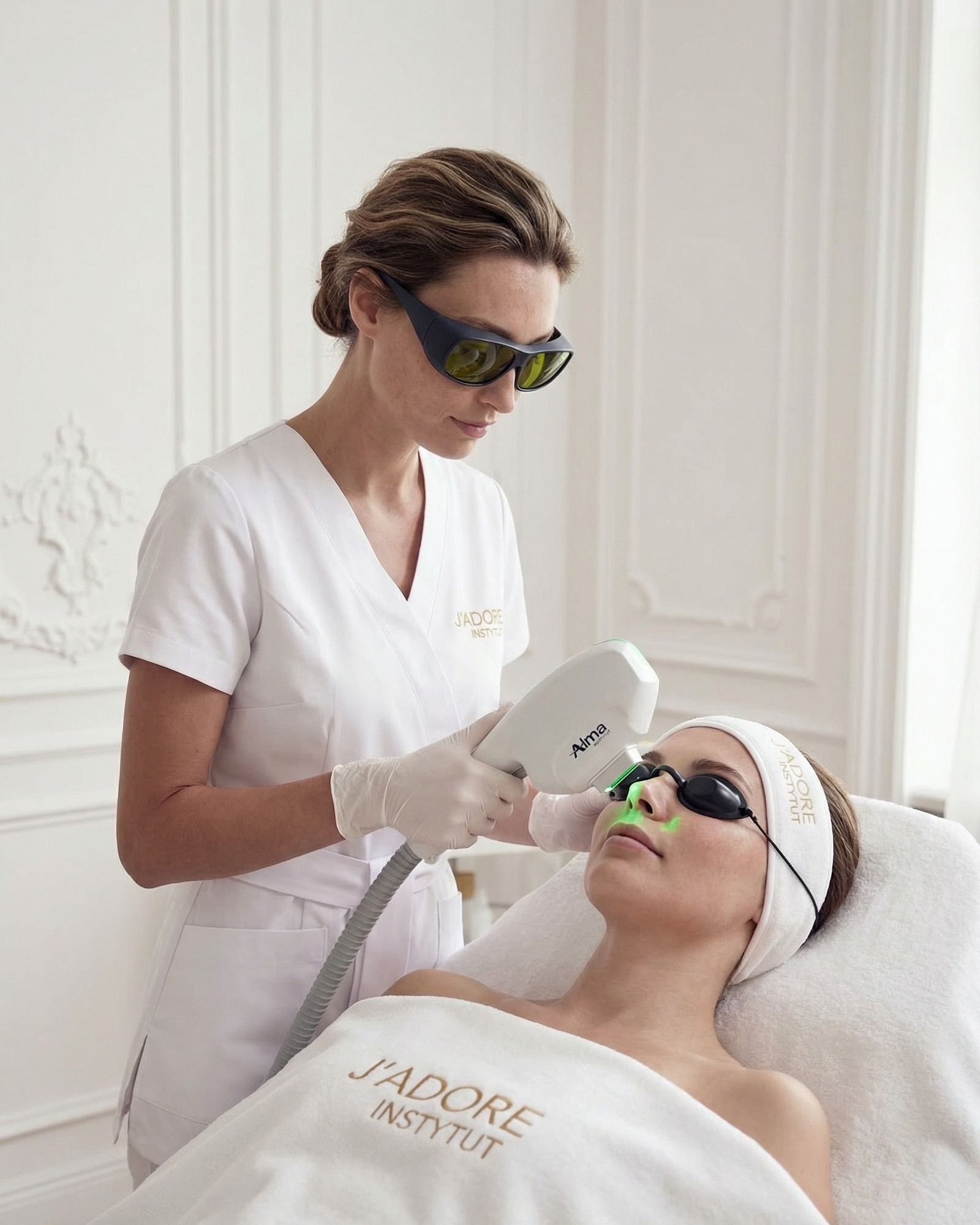
- Vascular laser (DYE-VL, KTP, IPL) — closes visible blood vessels and reduces persistent redness. The gold standard for subtype 1
- Red LED therapy (633nm) — anti-inflammatory, speeds up skin barrier regeneration, pain-free, zero downtime
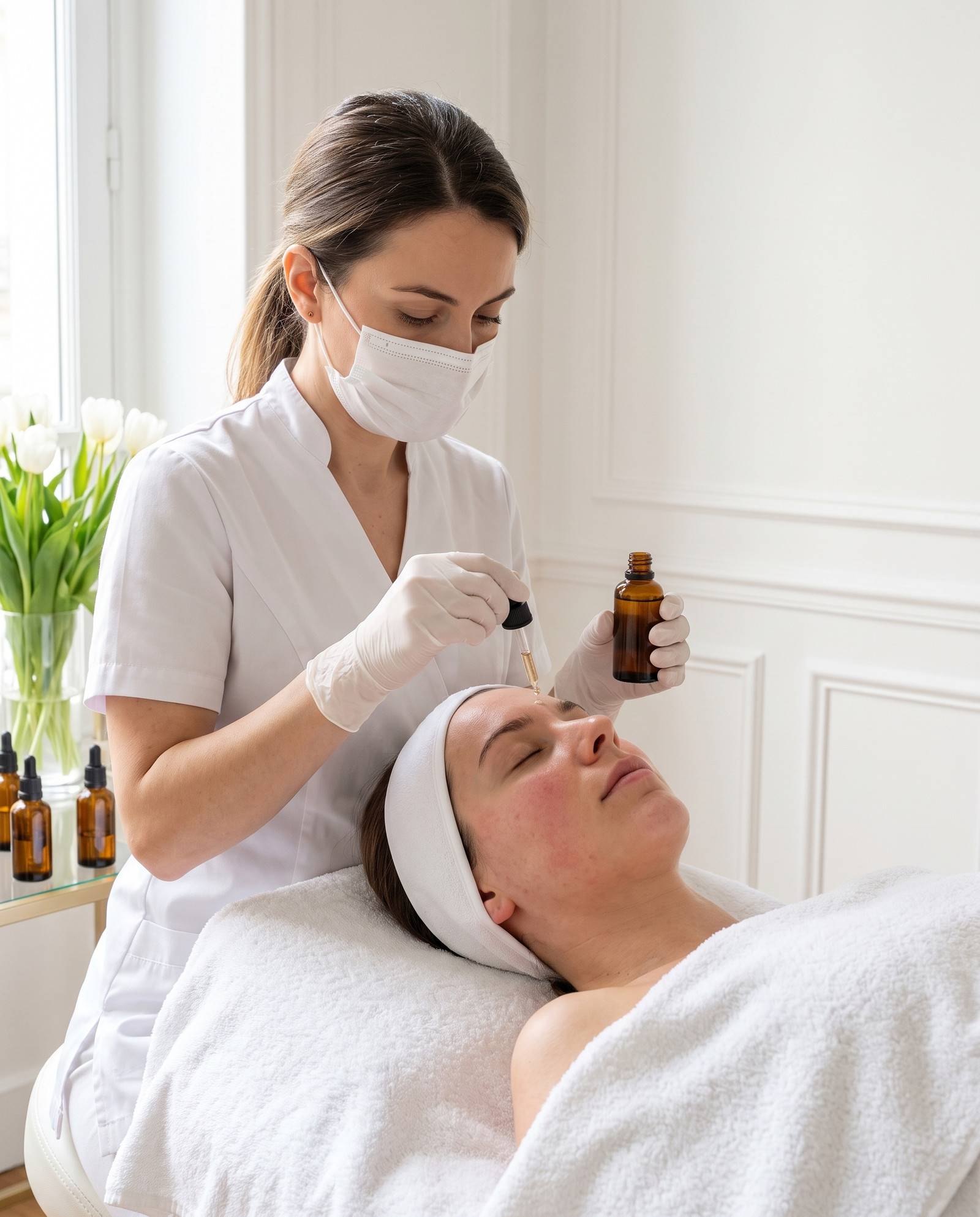
- Gentle in-salon cleansing — using products designed for vascular skin, without aggressive action
What to absolutely AVOID
The "don't do this" list matters just as much as the recommendations:
- ❌ High-strength acid peels — can worsen inflammation
- ❌ Retinol — use with caution! It can help at low concentrations once the condition has stabilised, but early on it's too irritating
- ❌ Scrubs (mechanical exfoliants) — micro-abrasion of already irritated skin is a recipe for disaster
- ❌ Sauna and hot baths — strong vasodilation
- ❌ Alcohol-based toners
- ❌ Essential oils — lavender, peppermint, eucalyptus
- ❌ Acne treatments — benzoyl peroxide, high-strength salicylic acid
Rosacea ≠ acne. This is a FUNDAMENTAL difference
It's worth repeating, because this is the most common diagnostic mistake: papulopustular rosacea (subtype 2) looks like acne, but it is NOT acne. The differences:
- Comedones — NO — YES
- Background erythema — YES — Rarely
- Telangiectasia — YES — NO
- Age — 30+ — Usually teens–20s
- BPO — Worsens — Helps
- Retinoid — Use with caution — Core treatment
Using acne treatments on rosacea is one of the most common mistakes in online self-diagnosis. The result? A damaged skin barrier, worse burning, more redness, more frustration.
Living with rosacea: a marathon, not a sprint
Rosacea is a chronic condition. You won't "cure" it with a single treatment or a single cream. But — and this is the good news — you can CONTROL it. Thousands of people live with rosacea and keep their skin in great condition, because they:
- Know their triggers and avoid them
- Follow a consistent, gentle skincare routine
- Use SPF 50 every day (mineral, with zinc oxide)
- Stay under the care of a dermatologist
- Have in-salon treatments that strengthen blood vessels and reduce inflammation
Remission is possible. But it requires knowledge, patience and — above all — the right diagnosis.
When to book a dermatologist appointment? Now
If you recognise yourself in any of the subtypes described above — don't wait. The earlier you start treatment, the better the outlook. Untreated, rosacea progresses. Treated, it stabilises — and can even improve.
And if a dermatologist confirms the diagnosis and recommends in-salon treatments — look for a place that specialises in vascular skin. At J'ADORE INSTYTUT in Warsaw and Krakow, we work with DYE-VL vascular laser, LED therapy and skincare protocols designed for rosacea. We don't promise miracles — we promise sound knowledge, experience and a personalised approach to your skin.
Because your face deserves a better diagnosis than the first page of Google.