
Three names, three completely different changes
The simplest way to remember it: a cherry angioma is a blood vessel, a wart is a virus, a skin tag is tissue. Each of these changes has a different origin — which is why the approach to removing it differs too.
Cherry angioma (angioma)
a dilated blood vessel near the skin's surface
- intense red — from pink to cherry
- shape: a round spot or a small dome
- under pressure — it can blanch and return to colour
- usually appears after the age of 30
- doesn't itch, doesn't hurt, doesn't grow rapidly
Wart (verruca / papilloma)
a change caused by the HPV virus
- colour: skin-toned, beige or greyish-brown
- texture: rough, uneven surface
- can grow and change shape over time
- sometimes slightly raised above the skin
- can appear around the neck, armpits, under the bust
Skin tag (fibroma molluscum)
a soft growth of connective tissue on a stalk
- colour: close to skin tone or slightly darker
- texture: soft, flexible, mobile
- hanging from a thin stalk — a visibly "dangling" growth
- typical locations: neck, armpits, groin, eyelids
- doesn't hurt, but can be irritated by jewellery or clothing
How to identify the change — a simple mirror test
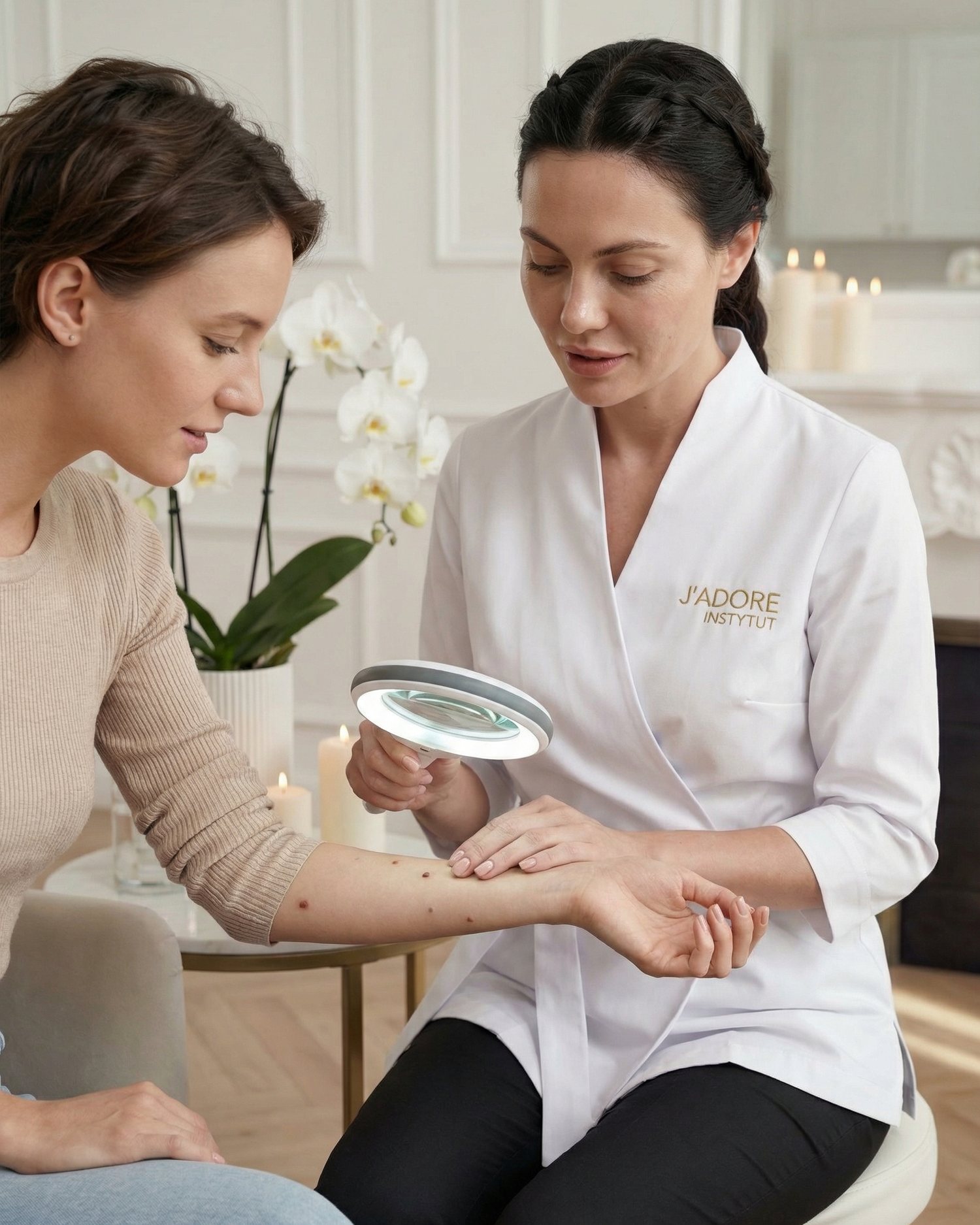
Before you book a consultation, you can do a short observation at home. It won't replace a specialist's assessment, but it will help you describe the change precisely — which shortens the visit and sets the conversation on the right track:
- 01
Look at the colour
Intense red or cherry → think "cherry angioma". Skin-toned or beige-brown → wart or skin tag. Colour is the first and quickest clue.
- 02
Check the texture and shape
A smooth, dome-shaped spot → cherry angioma. A rough, uneven surface → wart. A soft, mobile growth on a stalk → skin tag.
- 03
Press gently
A red change that blanches under pressure and returns to colour → this is a typical cherry angioma (a blood-filled vessel). If the colour doesn't respond to pressure → a wart or skin tag is more likely.
- 04
Assess mobility
A change that "hangs" and can be moved side to side → this is a skin tag on a stalk. A change that's "embedded" in the skin, immobile → a wart or cherry angioma.
How each one is removed
The nature of the change directly determines the choice of method. This isn't a matter of salon preference — it's a matter of effectiveness and safety.
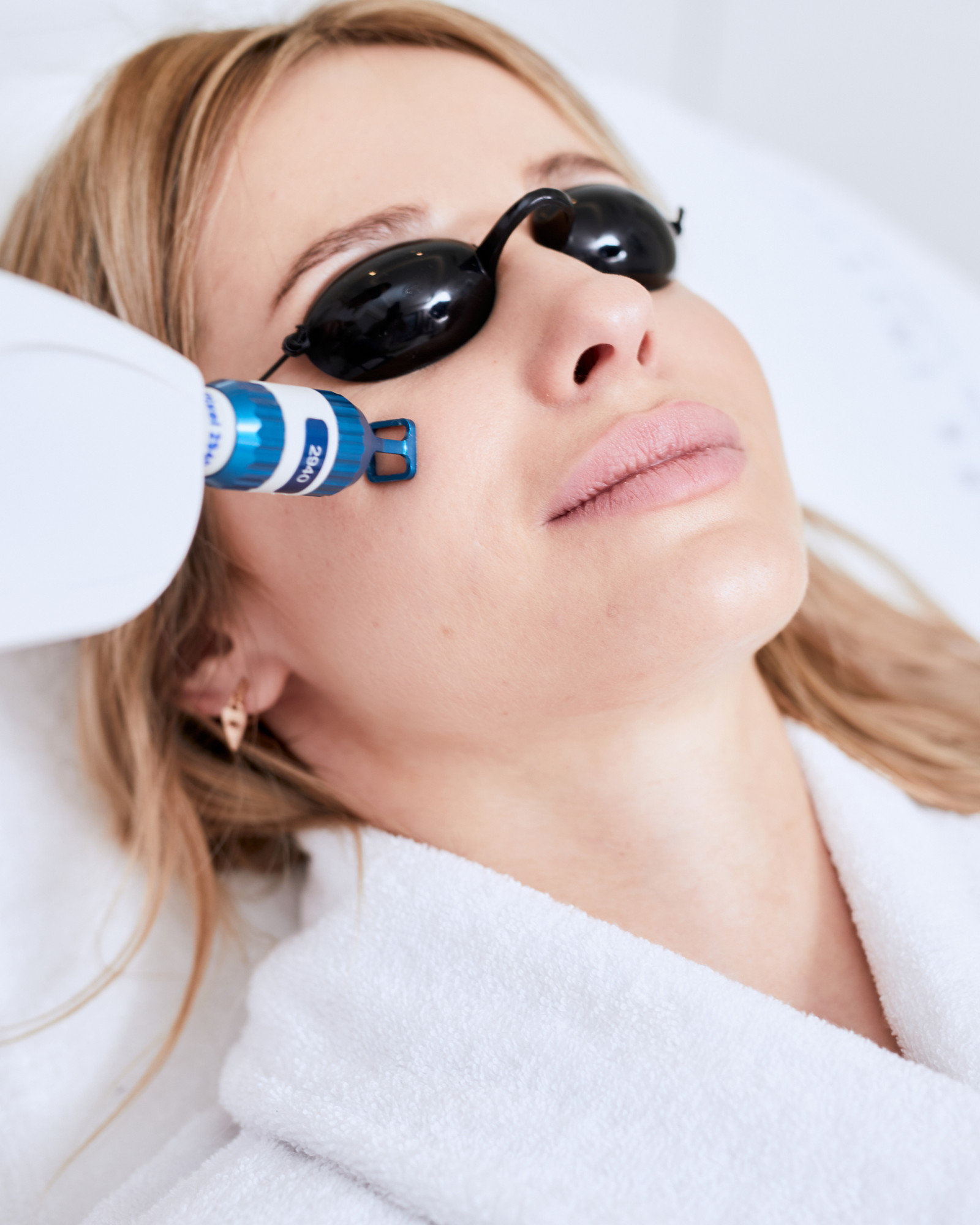
- Cherry angiomas are usually removed with a vascular laser or coagulation: the laser targets the vessel precisely, seals it with heat, and the skin evens out within a few days. Often, one session is enough.
- Warts need a method that destroys the affected tissue without leaving marks — cryotherapy, ablative laser or electrocoagulation are used. Harder, deeper-seated warts may need several sessions.
- Skin tags, due to their structure (a stalk of connective tissue), respond well to electrocoagulation or CO₂ laser — the stalk is precisely cut off or vaporised. The result: no mark left on the skin.
An important rule: one method rarely works well on all three types of change. That's why salons with several devices at their disposal often get better results — the specialist can match the tool to the specific structure, rather than applying one approach to everything.
What to do when you have several different changes at once
Cherry angiomas + other vascular changes (spider veins, telangiectasia)
A vascular laser can address several types of change in one session — cherry angiomas, spider veins and redness are treated with a single approach.
Skin tags + warts on the neck
These are often removed together in one visit with electrocoagulation or an ablative laser. Skin on the neck usually heals quickly and discreetly.
Cherry angiomas + vascular care (mesotherapy)
After vascular changes are removed, many people benefit from strengthening the vessel walls and evening out skin tone — mesotherapy or an acid treatment for skin tone complements the laser result.
When you must see a dermatologist, not a laser salon
A beauty and laser salon deals with benign changes — small, stable, typical in appearance. There are situations when the right address is different:
- a dark brown, black or multicoloured change — don't remove it without a dermatologist's assessment
- a change that has grown quickly over weeks or months
- a change that bleeds or oozes spontaneously
- a change with irregular, jagged edges
- a change you can't identify — you simply have doubts
If you have doubts — see a dermatologist first, then the salon. This is the order every skin specialist recommends and respects.