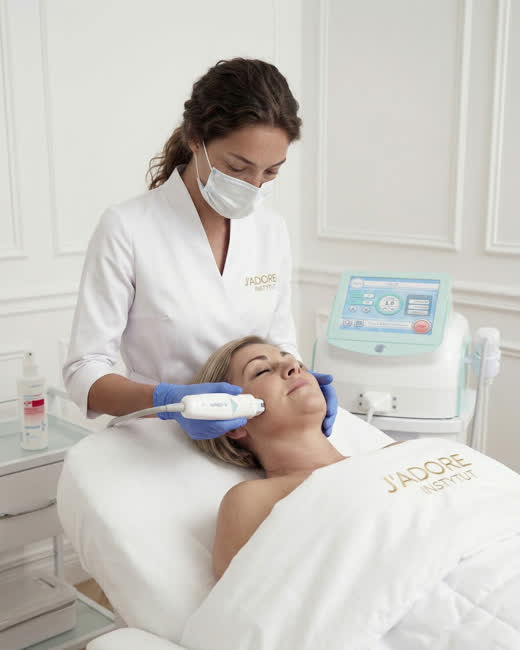
One heat source, two mechanisms
Both thermolifting and HIFU rely on thermal energy — but how that energy is delivered, and where it lands, is completely different. It's like the difference between heating a room with a radiator (heat spreads from the surface) and locally warming one specific wall from the inside. The results look similar from the outside, but the mechanisms differ.
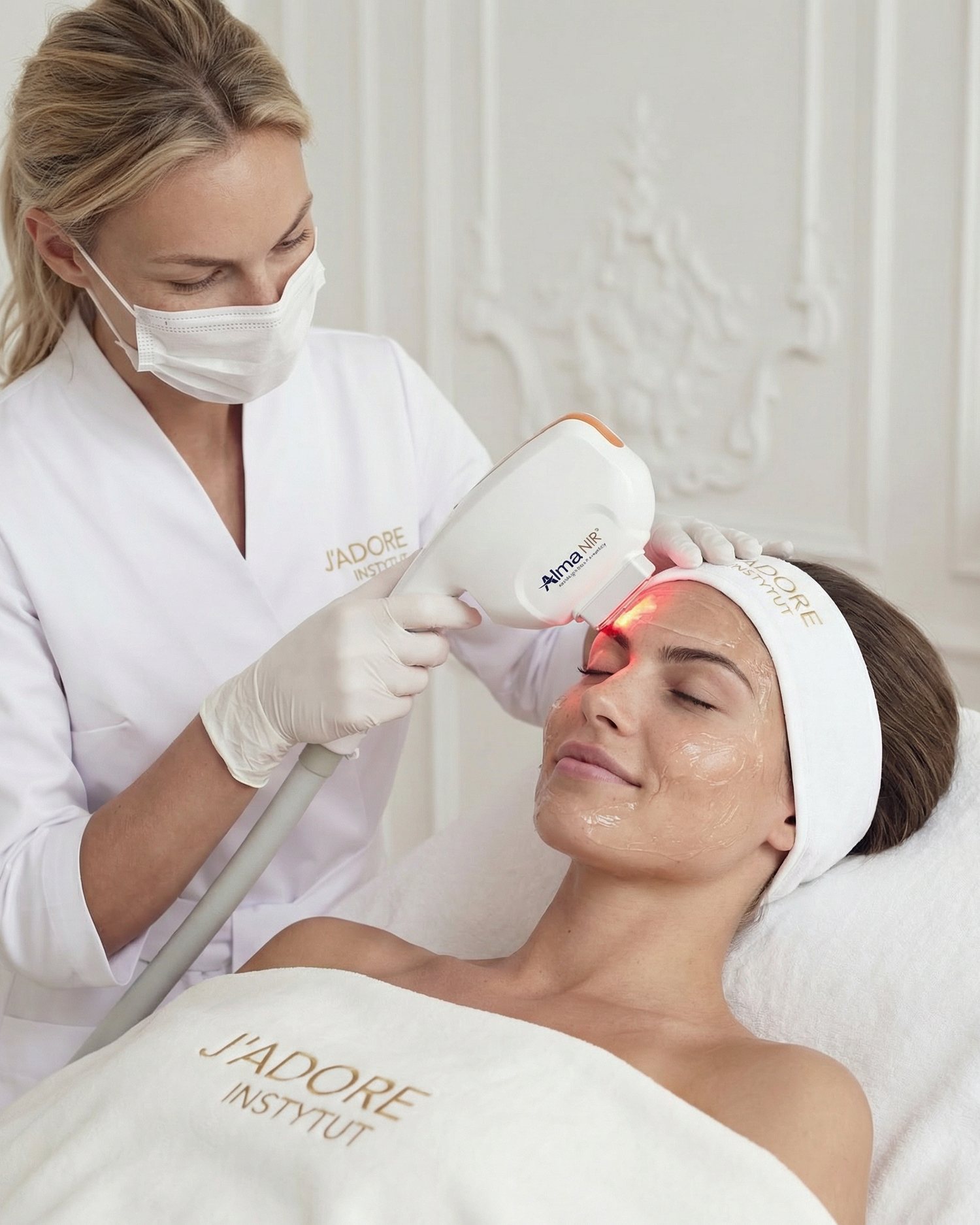
Thermolifting
warms the skin from the outside — targets the upper and middle layers
- works on superficial and mid-level layers of the dermis
- stimulates collagen production through controlled heat
- improves skin firmness and elasticity for many people
- may smooth fine lines and improve skin texture
- usually needs a series of sessions for visible results
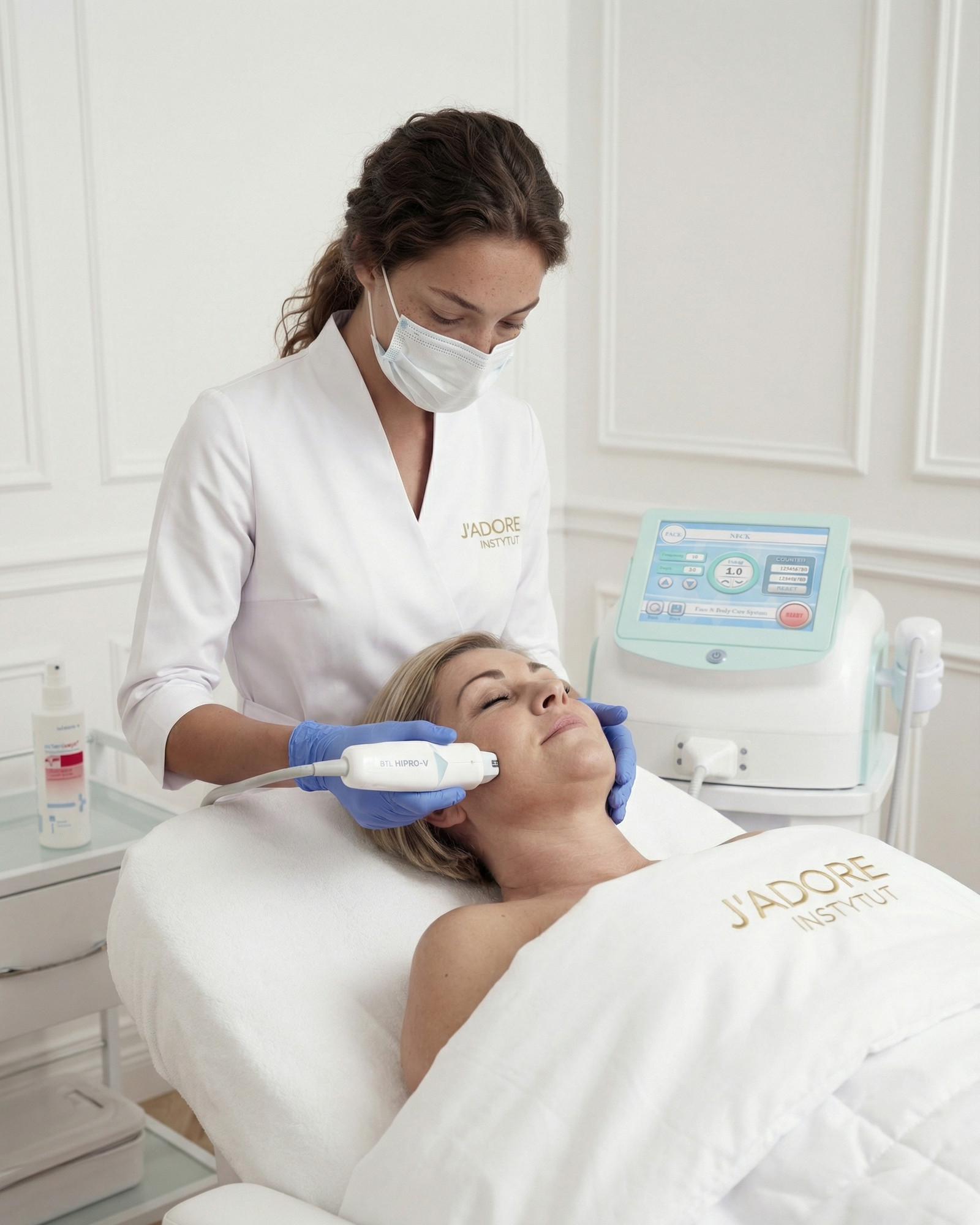
HIFU
focuses energy deep down — targets the SMAS layer and deep tissue
- energy converges at a single point in deep tissue layers
- reaches the musculoaponeurotic layer (SMAS) — the same layer a surgeon works on during a facelift
- may lift the facial contour and cheeks
- the result often builds over several weeks after the treatment
- sometimes recommended for more pronounced loss of facial contour
How to identify your concern — before you book a consultation
Before your consultation, it's worth standing in front of a mirror and naming what bothers you most. This isn't a diagnosis — a specialist will assess and decide — but a good initial observation means the conversation in the salon starts from something concrete:
- Skin is thin, dry, dull, with fine lines and uneven texture — this points to a surface-quality concern. Thermolifting has more to offer here.
- Cheeks have "dropped", the facial contour looks blurred, the corners of the mouth turn down, a "hamster" jowl has appeared — this is a loss of support in deeper layers. HIFU may be the right direction.
- Both at once — a common picture for people in their forties. In that case, it's usually not about choosing one, but about sequence or combination.
Thermolifting — when it works best
Thermolifting is often chosen by people who want to improve overall skin quality and firmness — not just on the face, but also on the neck, décolletage or body. Thermal energy stimulates fibroblasts to produce new collagen, which can gradually improve skin density and elasticity.
- 01
Warming the tissue
Thermal energy penetrates the dermis, raising tissue temperature to a level that stimulates collagen production.
- 02
Immediate tightening
Some people see a result right after the treatment — skin looks tighter and smoother, thanks to partial denaturation of existing collagen fibres.
- 03
Building collagen
Over the following weeks, the body produces new fibres. The optimal result of a series usually shows up a few weeks after the final session.
- 04
Maintaining the result
Skin quality can be maintained with follow-up sessions — frequency depends on your skin's individual response and your specialist's recommendations.
Thermolifting works well as a preparatory or complementary treatment — it can improve skin condition before more advanced procedures, or maintain the results of other methods. It also suits areas where HIFU isn't used, such as the skin of the décolletage or the inner arms.
HIFU — when we reach for a bigger calibre
HIFU is a treatment that features more often in a plan when signs of tissue laxity are more pronounced. Focused ultrasound energy can reach structures that surface-level heat simply can't — and those are exactly the structures responsible for facial contour.
- may lift the brow and temple area
- improves jawline and facial contour for many people
- often used on the neck and chin area where firmness has been lost
- the result can be more pronounced than thermolifting in cases of advanced contour loss
- usually performed in one or two sessions, not as a long series
When it's worth combining them
In practice, these two treatments rarely compete with each other — more often they complement each other, because they work at different levels. The logic is simple: HIFU tightens deeper structures, thermolifting improves skin quality from the surface. Combined, they can give a more complete result than either one alone.
HIFU + thermolifting (separate sessions)
The first session reorganises tissue at depth; the following ones improve surface quality. Often recommended a few weeks apart.
Thermolifting + biostimulators
Heat prepares the skin and stimulates collagen; biostimulators supply building blocks. A popular combination for thin, dull skin.
HIFU + needle mesotherapy
Deep lifting + intensive hydration and nourishment of the epidermis. Addresses two different concerns at once.
Thermolifting as a follow-on to HIFU
After HIFU lifts deeper structures, thermolifting can maintain and reinforce the result in the following months.
A good plan isn't about finding one "best treatment" — it's about identifying what needs work, and at which layer, then matching methods to each layer separately. That's exactly what sets a clinical approach apart from a "product" approach, where a single procedure gets sold as the answer to everything.