Three tools, three levels of action
Before we compare results, it helps to understand one key fact: each of these methods works at a different tissue level. Fractional microneedling RF reaches the dermis. HIFU targets the deeper fascia — the same layer a surgeon works on during a facelift. Fractional laser works from the surface, rebuilding density and texture. There isn't one "best" method — there's the one that matches your specific concern.
Fractional microneedling RF
Tightens and thickens the dermis
- Laxity of the face, neck and décolletage
- Fine lines and loss of density
- Acne scars and stretch marks
- Results build gradually, over several weeks
HIFU
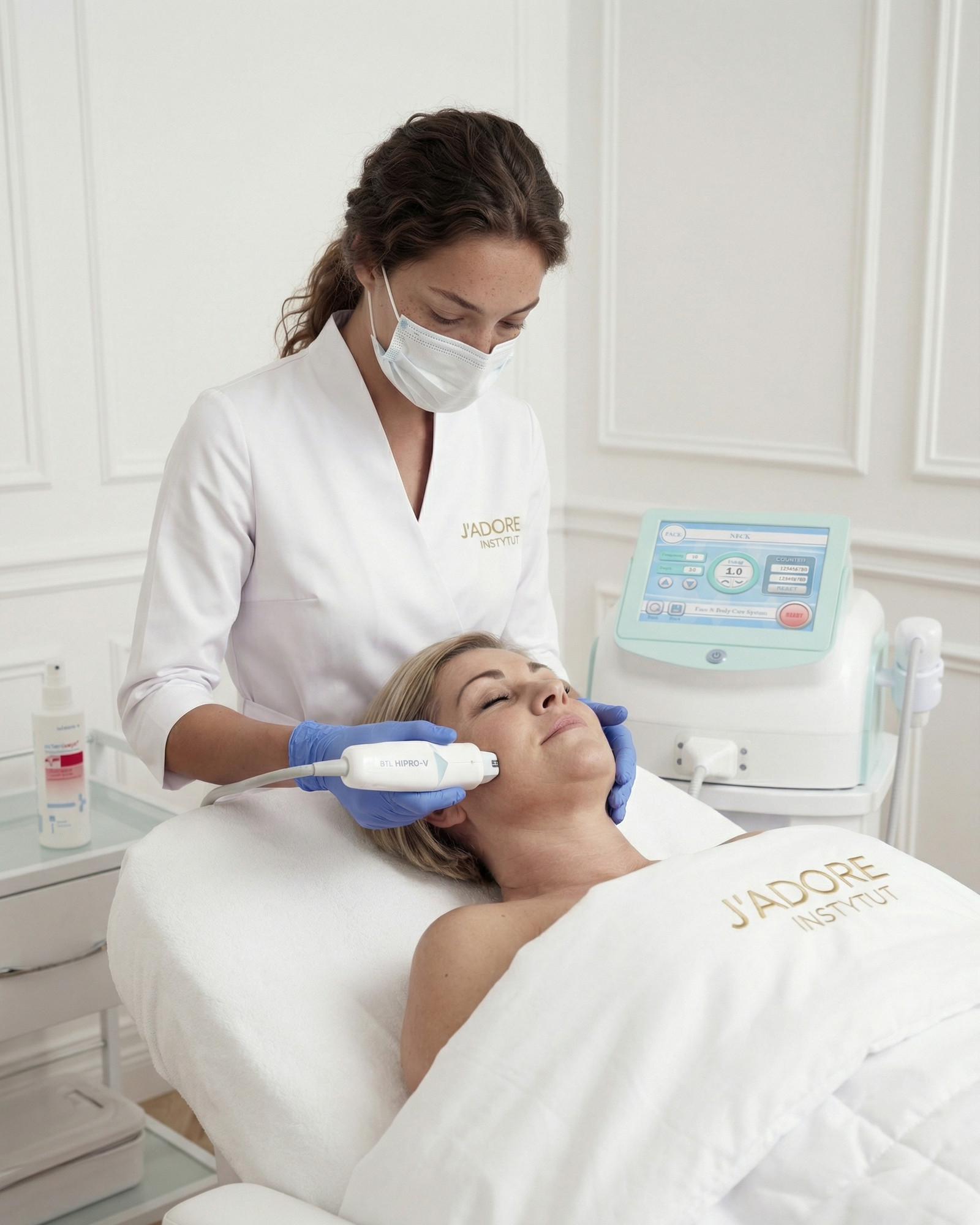
Lifts and tightens deep tissue
- Sagging facial contour and cheeks
- Laxity of the neck and chin
- A lifting effect without needles or incisions
- Results visible after 2–3 months, as tissue remodels
Fractional laser
Rebuilds surface and density
- Grey, fatigued skin lacking radiance
- Uneven texture, pores, fine scars
- Early lines and general loss of elasticity
- Results visible sooner — skin looks "renewed" once healed
How to identify what you need — three checks in the mirror
Before anyone suggests a specific method, you can narrow things down yourself with a few simple observations:
- 01
Check whether it's about the contour
Take the skin on your cheek or jawline between two fingers and gently pull upward. If your face looks noticeably "better" this way, the problem lies deeper, in the support tissue. That points to: HIFU.
- 02
Check skin quality in side light
Stand by a window and look at your skin from the side. Dullness, a fine network of lines, lack of radiance, visible pores — these signal a loss of density. That points to: fractional laser or fractional microneedling RF.
- 03
Check whether the skin "floats"
Touch your cheek and gently move the skin. If it feels thinner, less "anchored", without tension, that's a loss of dermal thickness. That points to: fractional microneedling RF.
In practice, most people over 30 have a bit of each category — which is why an experienced specialist often recommends a sequence of methods, not a single device.
How sensation and downtime differ
This is the question we hear most often — and rightly so, since the differences matter when planning your week.
- Fractional microneedling RF — a mild warming or stinging sensation during the treatment. Skin may be red for a day or two. Many people return to normal activity the next day.
- HIFU — sensation varies by area and is highly individual: from mild warmth to noticeable discomfort near bony areas. Skin usually needs no recovery time — any redness, if it appears, fades quickly.
- Fractional laser — the more intensive the setting, the longer the healing time. An ablative (deeper) treatment causes several days of flaking and redness; a non-ablative one often means only a day or two of mild irritation.
When it's worth combining them
The best results often come not from choosing one method, but from a sequential approach that works on several levels at once. The logic behind the choice and order is for your specialist to decide, but it helps to understand how the methods complement each other:
HIFU + fractional microneedling RF
HIFU lifts the deeper tissue, while fractional microneedling RF improves tension and density in the skin above it. A classic combination for sagging contour alongside loss of skin elasticity.
Fractional microneedling RF + fractional laser
RF works below the surface, laser rebuilds it. Together they can improve both tension and texture — often across separate sessions, to give the skin time to recover.
HIFU + fractional laser
Tissue lifting combined with surface renewal — the result covers the full depth of the skin. A good option when the face needs work on both contour and skin quality.
A three-method series within an annual plan
For a comprehensive approach, a specialist may plan treatments in sequence over a year: first tissue lifting, then dermal regeneration, then surface renewal.
A short summary: who reaches for what
If you're after a quick answer, here's a shortcut to help you walk into your consultation with a specific question:
- Sagging contour, loose chin, cheeks losing support → ask about HIFU
- Thin skin, no tension, "floating" under your fingers → ask about fractional microneedling RF
- Grey, dull, uneven texture, tired features → ask about fractional laser
- A bit of everything, face over 40 → ask about a sequential plan — this is usually a combination