
Three tools, three different problems
Put simply: RF firms the skin, HIFU works deeper and can lift tissue, cryolipolysis destroys fat cells. Each of these actions targets a different layer of the body. That's exactly why it's so important to name the problem first, and only then choose the method.
RF (radiofrequency)
Firms and improves skin quality
- Lax, sagging skin after weight loss or with age
- Surface-level cellulite "orange peel" texture
- Improves skin tone and texture
- Many people notice visible firmness after just a few sessions
HIFU (focused ultrasound)
Works on deeper tissue layers
- Sagging tissue that needs deeper lifting
- Lower abdomen, inner thighs, arms
- May stimulate connective tissue remodelling in deeper layers
- Results often develop gradually over several months
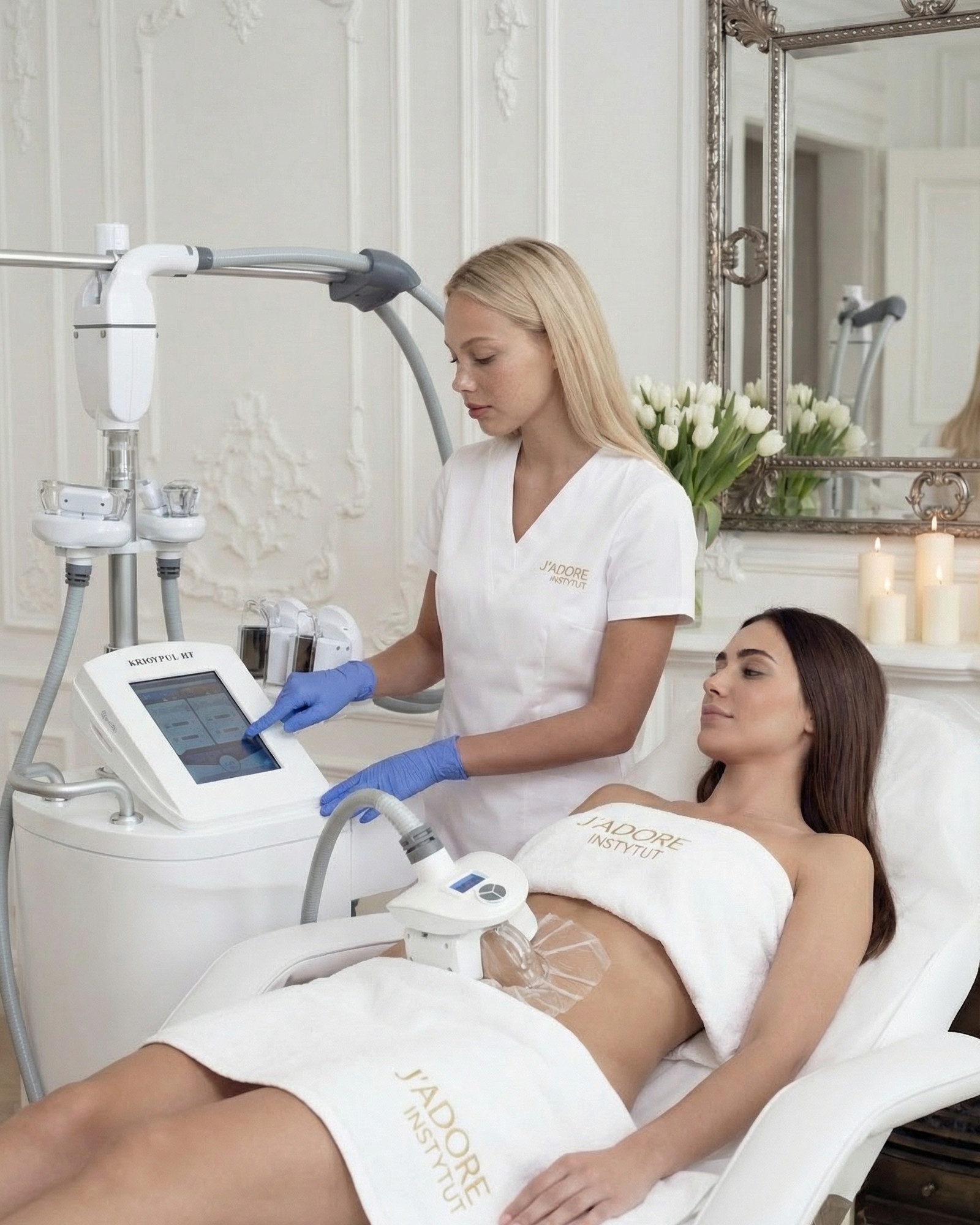
Cryolipolysis
Reduces localised fat
- Localised fat deposits (abdomen, love handles, thighs, arms)
- Fat resistant to diet and exercise
- Many people see visible reduction after 8–12 weeks
- Doesn't require breaking the skin
How to identify what you actually need
Before booking a consultation, try a simple test in front of the mirror. You don't need any equipment — just a moment of attention and two simple checks:
- 01
Check skin firmness
Gently pinch the skin in the area you're considering (abdomen, thigh, for example). Is it elastic and firm, or loose and "empty"? Loose, lax skin with little fat underneath → direction: RF or HIFU.
- 02
Check the amount of fat
Do you have a clear, pinchable fold in the same spot — tissue that won't go away regardless of activity? A visible fold of fat → direction: cryolipolysis.
- 03
Check the depth of the problem
Does the tissue sag under gravity — visible drooping around the arms, thighs or lower abdomen? Deeper tissue sagging → direction: HIFU (possibly combined with RF).
- 04
Assess the combination
The most common scenario: you have some fat AND lax skin at the same time. In that case, one tool isn't enough — you plan a series combining two methods. Our specialist determines the order and intervals during consultation.
It's also worth remembering that results from all three methods develop over time — the body needs weeks, sometimes months, to remodel tissue. Changes visible "immediately" after a session are usually temporary (such as increased blood flow or mild swelling); the real result appears gradually and varies from person to person.
RF versus HIFU — what's the difference?
Both RF and HIFU work through heat — and that's where the similarity ends. The mechanism, depth of action and typical applications differ, which means these two treatments complement each other more often than they replace one another.
- RF heats tissue from the skin's surface, stimulating collagen production in the outer layers. Results are often described as "the skin feels denser and more elastic".
- HIFU focuses ultrasound energy at a chosen point deeper beneath the skin — it can reach layers RF doesn't. It's used for more pronounced tissue sagging.
- RF tends to be gentler on the skin and usually needs more sessions for the effect to build. HIFU can give a more noticeable lifting effect, but — depending on the indication — it requires precise qualification.
- Neither works on fat cells the way cryolipolysis does — that's the fundamental difference between firming and fat reduction.
When it's worth combining them
The best results in body contouring rarely come from a single method — more often from a well-planned combination, where each treatment addresses a different layer of the problem. Below are the most common pairings our specialists put together during a salon visit:
Cryolipolysis + RF
A classic pairing: cryolipolysis reduces fat volume, RF works on skin firmness and quality. Often planned in alternating stages — reduction first, then firming, or the other way round — depending on our specialist's assessment.
HIFU + RF
Deeper action from HIFU on connective tissue and lifting, with RF working on the surface layer. For more significant laxity, this gives a comprehensive effect across several levels at once.
Cryolipolysis + HIFU + RF
The most comprehensive protocol — fat reduction, tissue lifting and improved skin quality. This kind of plan is built in stages, spread over several weeks or months, following a thorough consultation and assessment of interim results.
RF as a standalone series
For laxity without significant excess fat — RF works as regular "maintenance" for body skin: a series of several sessions every few weeks, followed by occasional maintenance sessions.
What matters most here is the order and spacing between sessions — the body needs time to respond. A well-planned protocol takes into account what happens in the skin between visits, not just what happens in the treatment chair. That's why a treatment plan should always be set out in stages, rather than booking "everything at once".
When none of these treatments is enough
Honesty matters more here than marketing enthusiasm. There are situations where RF, HIFU and cryolipolysis won't give a satisfying result — and it's worth knowing them before you're disappointed.
- Significant excess weight: contouring treatments work more effectively once body weight is already stable and close to the target. They're not an alternative to weight loss and won't speed it up.
- Very significant excess skin: after extreme weight loss or pregnancy with a large abdomen, excess loose skin may need a surgical consultation — non-surgical treatments have limited scope here.
- Unrealistic expectations: no salon treatment will match the result of plastic surgery. Improvement for many people is clear, but it falls within the range of "healthier, firmer skin" — not "dramatic transformation".
- Health contraindications: pregnancy, pacemakers, certain autoimmune conditions, metal implants — these are just some of the exclusions. Always discussed individually before the treatment.