Skin cycling, Polish-stylewhy your retinol isn't working
Skin cycling isn't another trend — it's an approach based on how skin actually regenerates in cycles.
7 min read
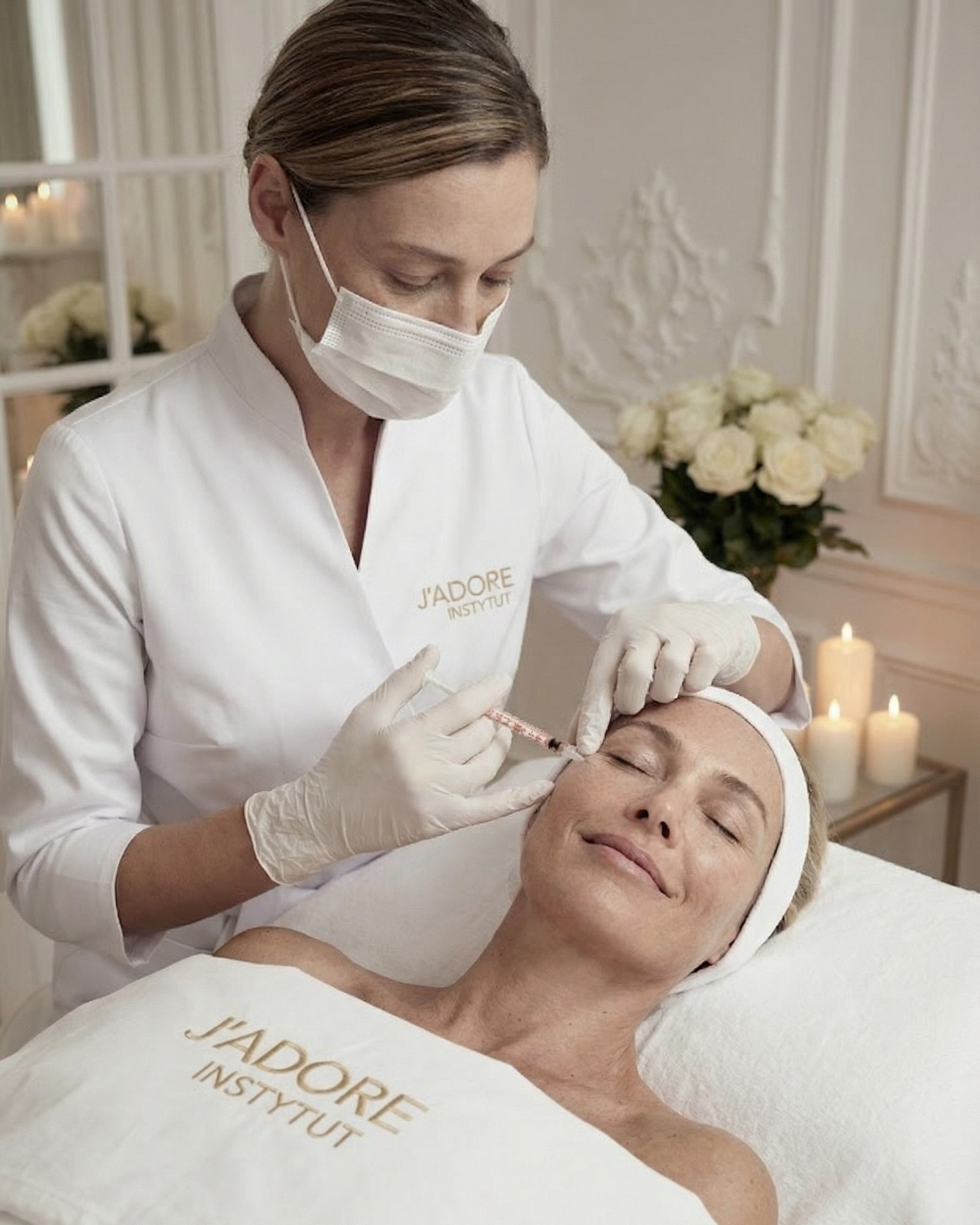
Illustrative photo. It shows an example of how the treatment is performed.
7 min read10 March 2026
Skin cycling has changed the rules of skincare — and no, it's not another fashionable hashtag that will vanish in six months. It's an approach grounded in the science of how skin genuinely regenerates in cycles. And you're probably breaking those cycles every single night.
01
What is skin cycling (and where did it come from)
Skin cycling is a rotation of active ingredients in your evening routine, following a set schedule — instead of piling retinol, acids and vitamin C onto your face all at once, every night.
The term was coined by Dr Whitney Bowe, a dermatologist from New York, in 2022. Her TikTok video went viral. By March 2026, the hashtag #skincycling had over 5 billion views. But behind the viral trend lies something dermatologists have known for years — skin isn't a machine that processes everything you put on it. It's a living organ with its own regeneration cycles.
02
Why your retinol "isn't working"
Get comfortable — a few of your beliefs are about to be challenged.
03
The correct skin cycling schedule
Here's Dr Bowe's classic 4-night cycle, repeated on a loop:
And from Night 1, you start again.
04
The K-beauty twist: the 7-day supercycle
If the 4-night cycle is a saloon car, the Korean approach is an SUV — more room for recovery.
Day 1: Retinol
Day 2: AHA/BHA acid
Day 3: Sheet mask + intensive regeneration
Day 4: Rest (light moisturiser)
Day 5: Vitamin C (morning — antioxidant, evening — niacinamide)
Day 6: Sheet mask + regeneration
Day 7: Total rest — just oil and moisturiser
05
Skin cycling, Polish-style — what you need to change
Here's the key point. What works in New York or Seoul needs adjusting for a Polish March.
06
When skin cycling isn't enough — the role of a salon treatment
A home retinol is an effective ingredient. But a professional medical peel performed in a salon works on a completely different level.
07
The most common skin cycling mistakes
08
Who skin cycling ISN'T for
Let's be honest — not everyone needs this system.
Sensitive, rosacea-prone or atopic skin — before starting any active ingredients, it's worth consulting a dermatologist. Retinol can worsen rosacea symptoms.
Pregnancy and breastfeeding — retinol is contraindicated. Azelaic acid can be a safe alternative, but the schedule needs modifying under a specialist's guidance.
If your routine already works — don't fix what isn't broken. Skin cycling is a tool, not a religion.
09
Cheat sheet — your cycle at a glance
Night 1 — Retinol: retinol 0.3–1% or retinal 0.05–0.1%, applied using the sandwich method
Night 2 — Acid: AHA 5–10% / BHA 1–2% / PHA (for sensitive skin)
Night 3 — Regeneration: ceramides, panthenol, centella asiatica, hyaluronic acid
Night 4 — Rest: moisturiser only, nothing else
Night 5* — Extra regeneration: optional in the Polish climate (March–April)
The specialists at J'ADORE INSTYTUT can help you build a personalised skin cycling schedule during a cosmetology consultation — because what works for dry skin can damage vascular skin. And a single professional peel every 4–6 weeks can achieve more than a month of home acids.