
Two tools, two mechanisms
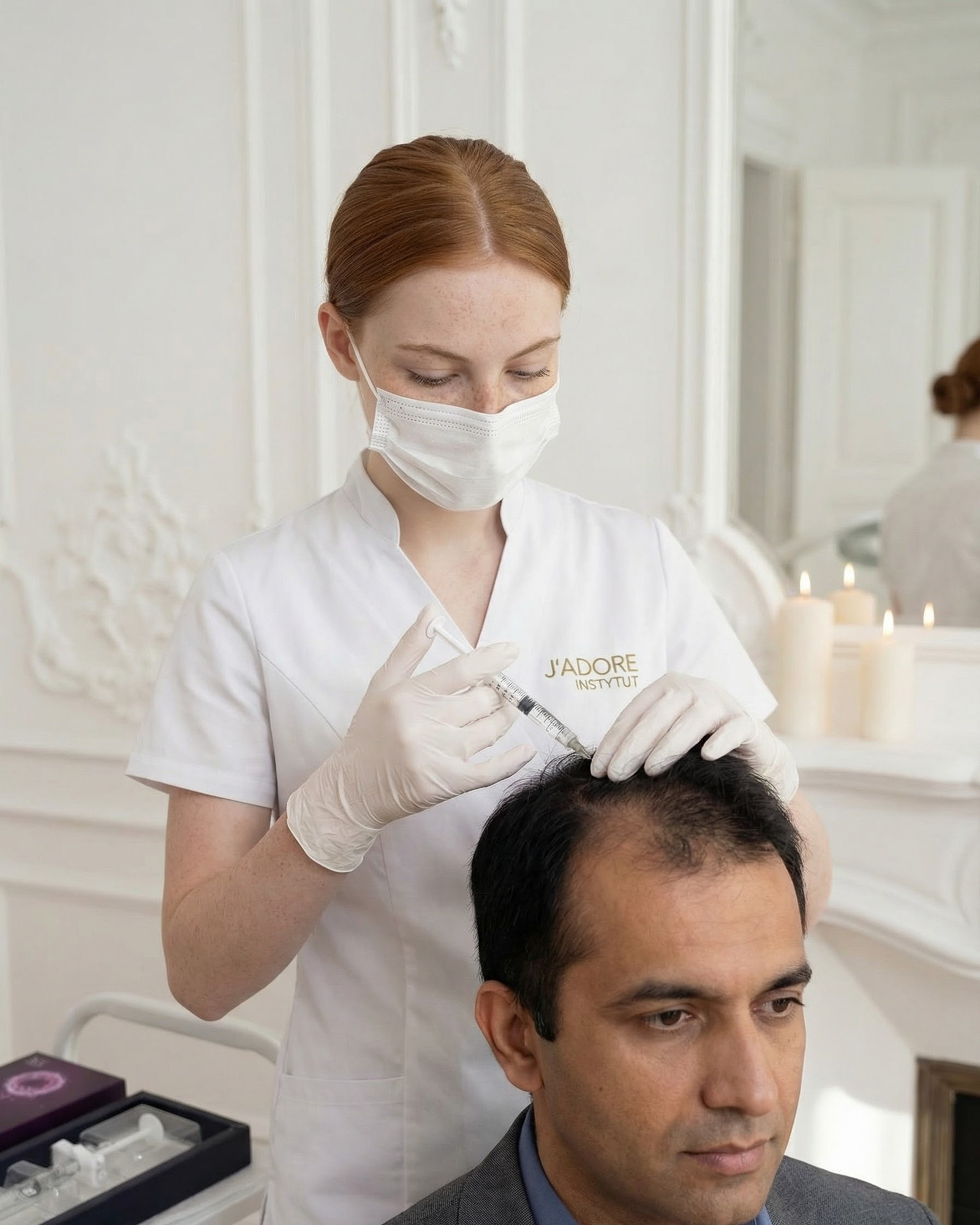
For the comparison to make sense, it helps to understand what each method actually is. SMP (scalp micropigmentation) is an advanced scalp pigmentation technique. Precise application of pigment recreates the optical effect of closely cropped, dense hair. There's no new hair growth here — instead, there's an illusion of density, and it can be very convincing. Hair transplant (usually FUE or FUT) moves your own follicles from areas resistant to hair loss — typically the back and sides of the head — into thinning areas. The result is real hair that grows and lives in its new location.
SMP
optical density without new hair growth
- results visible almost immediately after the series of sessions
- works at any stage of hair loss, including advanced cases
- possible even with very few remaining follicles
- precise recreation of the hairline and hair pattern
- needs regular top-up sessions over the years
Hair transplant
biological regrowth from your own follicles
- transplanted hair grows naturally and permanently
- full results often visible only after many months
- requires a sufficient number of donor follicles (from resistant zones)
- works best for moderate hair loss with a healthy donor area
- natural look afterwards — hair can be cut and styled like any other
How to work out which solution is right for you
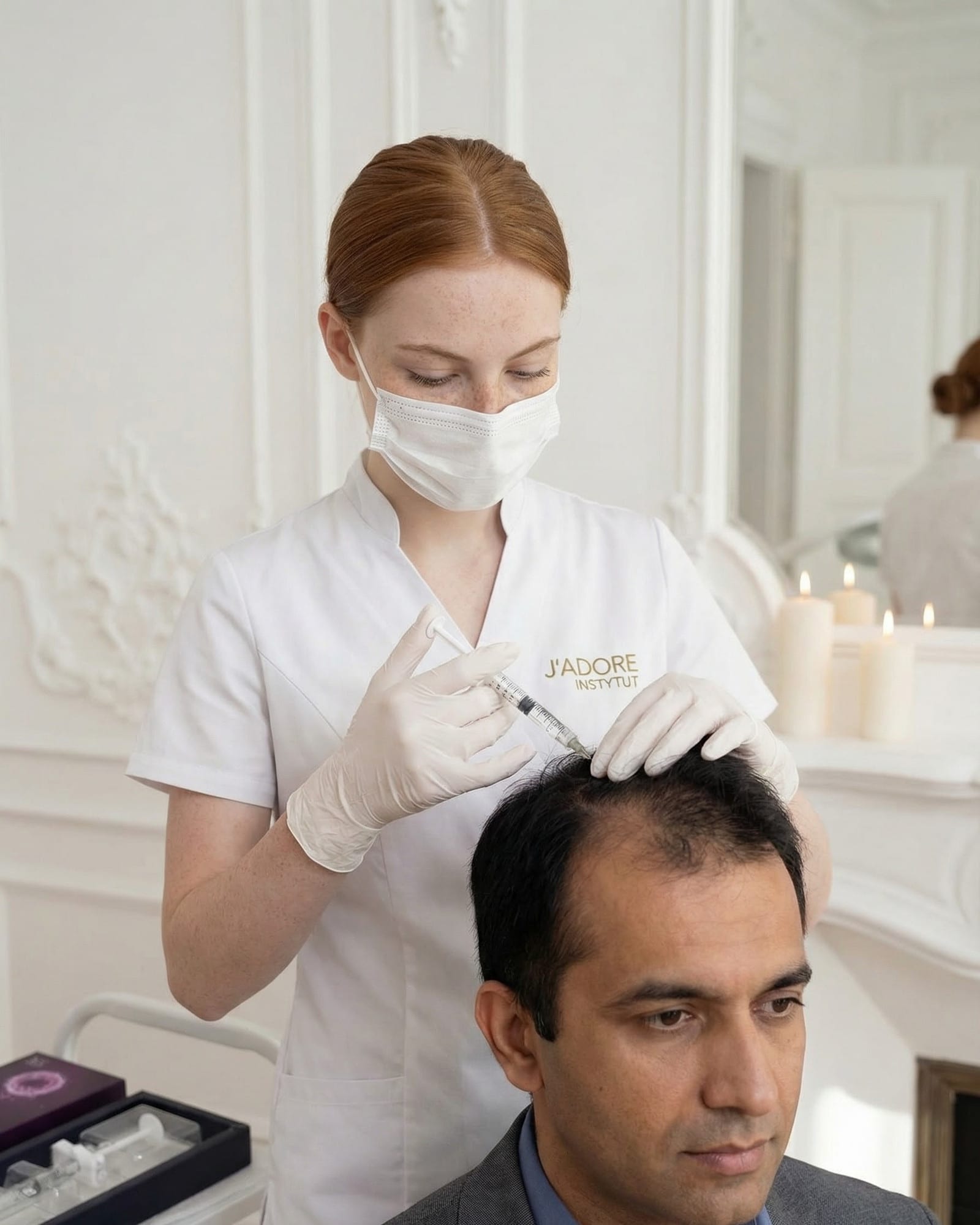
The key question isn't "which is better" — it's "what stage of hair loss am I at, and what do I expect?" The pointers below can help you get a sense of direction before your consultation:
- Advanced hair loss, small donor area — a transplant may be limited by the number of available follicles. SMP often gives a very good optical result here.
- Moderate hair loss, healthy donor area — a transplant can regrow hair in thinning areas. SMP can fill in the hairline or add density.
- Expectation: "I want real hair, not an illusion" → a transplant, if resources allow. SMP cannot replace this biologically.
- Expectation: "I want a fast, clear density effect" → SMP works faster, with results after a few sessions.
- Scarring from a previous FUT transplant → SMP can often mask the scar effectively enough to make it invisible with short hair.
When SMP and a transplant complement each other
The two methods don't have to compete — increasingly, they're used together as part of a plan, in the right sequence. The logic is simple: a transplant rebuilds hair biologically wherever there are enough follicles. SMP fills in optically wherever follicles were lacking, or where the density effect needs strengthening.
- 01
Consultation & assessment
The specialist assesses the donor area, the degree and stability of hair loss, and your expectations. Based on this, the specialist determines whether the methods can be combined, and in what order.
- 02
Transplant (if indicated)
Follicles from resistant areas are moved into thinning areas. The first hairs appear after a few months; full results build up gradually.
- 03
Assessment of transplant results
Once results have stabilised — often after a year — it becomes clear which areas need extra density or a refined hairline.
- 04
SMP as a finishing touch
Scalp pigmentation visually fills in areas of lower density, masks any scarring, and strengthens the overall density effect.
SMP + scalp mesotherapy
SMP focuses on aesthetics — mesotherapy works on scalp condition and follicle health in zones with active hair growth. A good combination if you want to strengthen your existing hair.
Transplant + SMP (hairline finishing)
The transplant rebuilds hair biologically, while SMP finishes the aesthetics and optical density in areas the transplant didn't fully cover.
SMP + pharmacological hair loss treatment
SMP delivers a cosmetic effect straight away. Pharmacological treatment, managed by a dermatologist, slows or halts progression. The two don't conflict — they're often carried out in parallel.
Common pitfalls when choosing
The choice of method is often made under the influence of emotion or incomplete information. A few scenarios worth knowing about:
- "SMP instead of a transplant, because it's faster" — SMP is a different method, not a biological substitute. If real hair is the priority and follicle resources allow for it, there's no reason to delay a transplant.
- "A transplant, because SMP looks unnatural" — poorly done SMP does look unnatural. Well done, it can be indistinguishable from real hair for many people. The quality of the work makes all the difference here.
- Deciding before hair loss has stabilised — a transplant performed too early, during active hair loss, can give an unflattering result, since the hair around the transplanted follicles keeps falling out. It's worth waiting for stabilisation.
- Skipping the treatment stage — SMP and transplants are cosmetic and surgical methods. They don't replace trichological or dermatological treatment where it's indicated.