Where did the idea of treating hair with light even come from?
The story is older than TikTok. The first observations of lasers affecting hair growth date back to the 1960s — and they were accidental. A scientist studying the effects of radiation on mouse skin noticed that hair regrew faster at the treated site than in the control group. Since then, research has continued systematically, focusing mainly on people with androgenetic hair loss — the most common cause of balding in both women and men.
What we now call "red light therapy" or "LLLT" (low-level light therapy) involves exposing the scalp to light of a specific colour — in the red or near-infrared range. The key factor here is low intensity: therapeutic devices don't heat the tissue and don't produce any sensation of warmth. Their purpose is to penetrate deeper into biological structures — specifically, to reach the cells of the hair follicles.
How it works — the mechanism in brief
Photonic energy absorbed by cells triggers a cascade of biochemical processes. The best-studied effect is mitochondrial stimulation — mitochondria being the cell structures responsible for energy production. In simple terms, the cell gets more "fuel" and can carry out its functions more efficiently, including those linked to the hair growth cycle.
Hair follicles move through three cycle phases: growth (anagen), transition (catagen) and rest (telogen). With androgenetic hair loss, the growth phase shortens over time — hair doesn't get the chance to reach its full length before falling out. Red light can — in some people — extend the anagen phase and increase the number of follicles actively producing hair.
What red light does — and doesn't — do
Before comparing light therapy with other popular methods, it's worth establishing one starting point: none of them stimulates hair growth from a dead follicle. Follicles that have died off completely don't respond to any external stimulation. Therapy works on follicles that are active or dormant — and the earlier you start, the greater your chance of a real result.
Red light therapy
stimulates hair follicle activity
- may extend the hair growth phase
- often improves hair density and texture
- non-invasive, no medication, no downtime
- works synergistically with other therapies
- used by both women and men
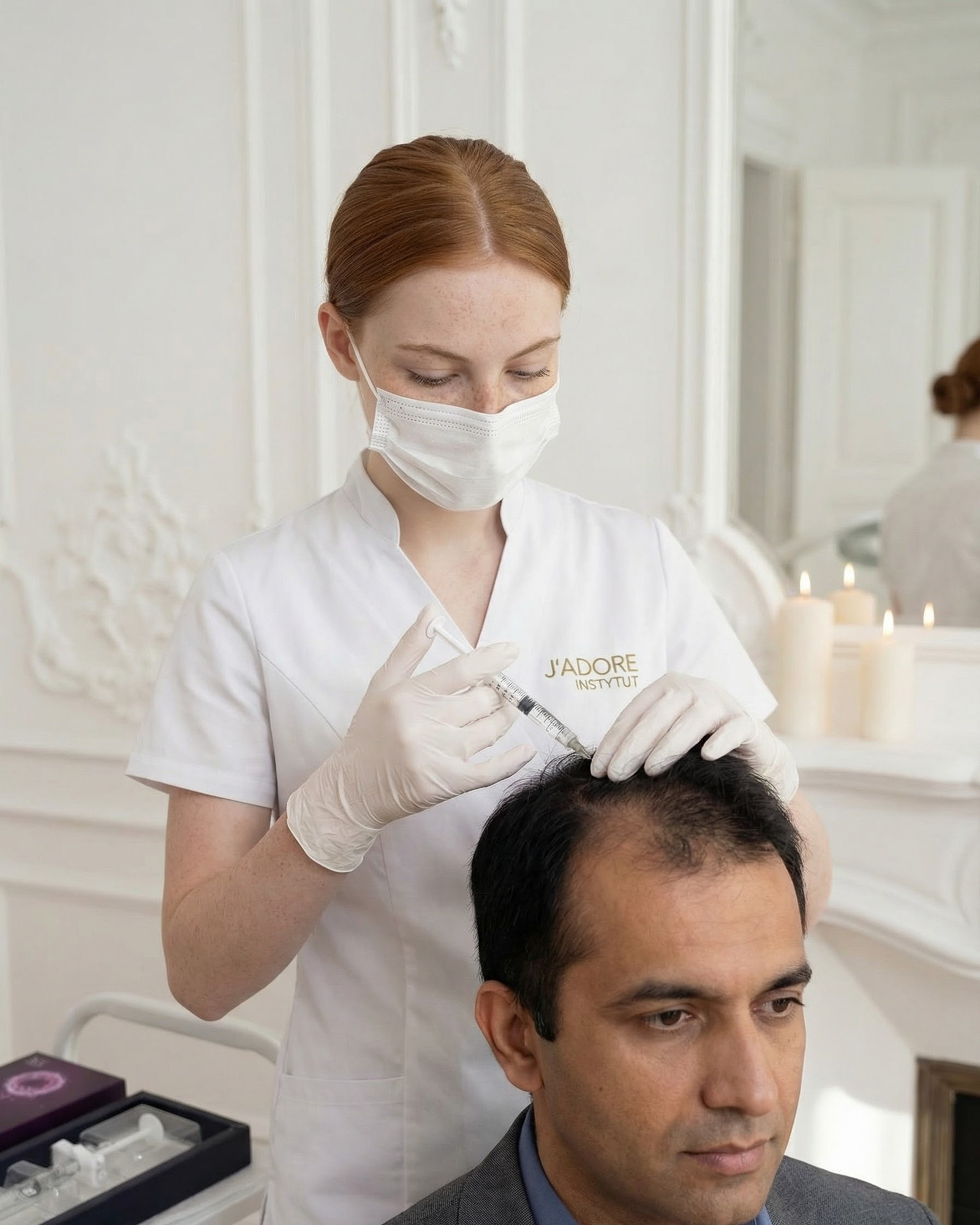
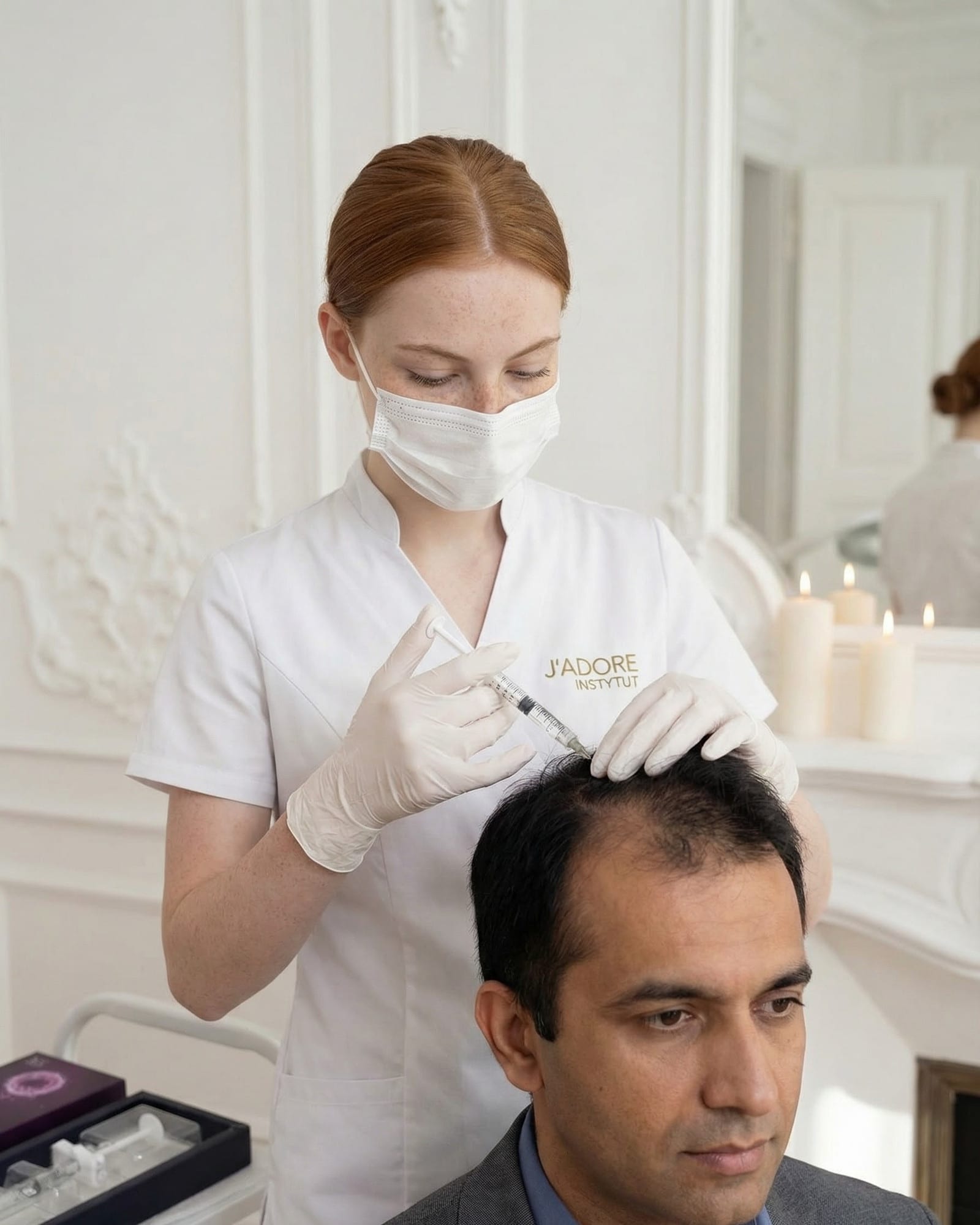
Scalp mesotherapy
nourishes follicles with active ingredients
- delivers vitamins, amino acids and trace elements directly to the scalp
- may improve microcirculation and hydration
- visible results often after a series of several sessions
- combines well with phototherapy
This comparison isn't a "battle" between methods — many salons and clinics combine them precisely because they work on different levels. Light therapy boosts cellular energy; mesotherapy delivers building blocks. Together, they can achieve more than either method alone.
Salon or home device — which makes more sense?
The market offers both home-use devices (caps, brushes, LED bands) and professional equipment used in salons. Asking "which one should I choose" is a fair question — and the answer depends on a few factors.
Professional treatment at the salon
precise application under a specialist's supervision
- settings selected appropriately by a specialist
- can be combined with mesotherapy or other therapies in a single session
- consultation and scalp assessment before the series
- progress monitored over time
Home device
consistency from the comfort of home
- can be used more frequently (e.g. several times a week)
- convenience and flexible timing
- a complement to professional sessions
When light therapy WON'T be enough
Red light therapy is a tool, not a cure-all. There are situations where even a perfectly delivered series won't produce results — because the problem lies elsewhere.
- Nutritional deficiencies: Low iron, zinc, biotin or vitamin D are among the most common causes of hair loss in women. A blood count and thyroid panel should be the first step, not the last resort.
- Hormonal deficiencies: Hypothyroidism and imbalances in oestrogen or androgen levels require pharmacological treatment — light therapy won't replace it.
- Stress-related hair loss (telogen effluvium): Time and removing the source of stress are often enough here. Therapy can support recovery, but it won't speed it up by months.
- Alopecia areata: An autoimmune condition requires dermatological treatment — a doctor makes the call here.
- Advanced androgenetic alopecia: Once follicles have died off, no external therapy can bring them back.
What a series of treatments looks like — and what to expect
Light therapy is an investment of time and consistency — results don't appear after one session. It helps to understand how the cycle unfolds, so you don't give up too soon.
- 01
Consultation and scalp assessment
A specialist assesses the type and severity of hair loss, any skin changes, and the history of methods you've tried. This stage determines whether the therapy makes sense and how to plan it.
- 02
First few weeks — no visible results yet
This is normal and doesn't mean the therapy isn't working. Hair follicles need time to shift their growth cycle. Most people see no difference in the first 4–6 weeks.
- 03
Reduced shedding — the first sign
For many people, the first noticeable effect is less hair falling out during washing and brushing. This is a good sign — it means the telogen phase has shortened.
- 04
Improved density and condition
With regular sessions and a well-chosen therapy, many people see noticeably thicker hair, improved shine and better hair texture after a few months.
- 05
Maintaining results
Results need ongoing support — after finishing the series, maintenance visits or regular use of a home device are usually recommended.
One sentence is worth remembering: the hair growth cycle takes months, not weeks. Judging the therapy's results before three months have passed is too early — and that's where a lot of unfair disappointment comes from.
Red light combined with other hair treatments
Red light therapy usually gives its best results not in isolation, but as part of a comprehensive approach to hair. Combinations specialists often recommend:
Scalp mesotherapy
A classic synergy: mesotherapy delivers nutrients to the follicles, while light therapy stimulates their energy activity. Combining the two methods can give better results than either one alone.
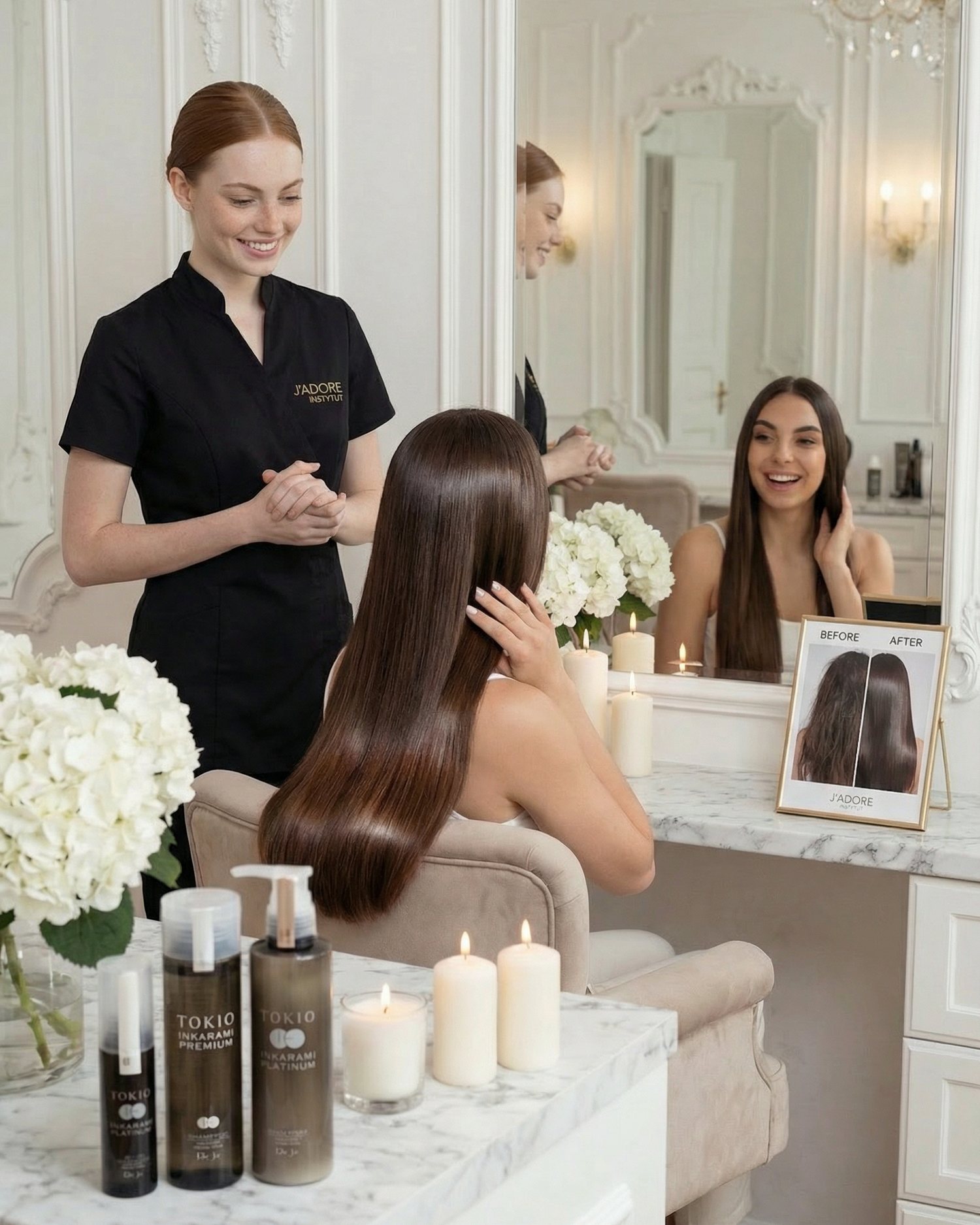
Hair care treatments (keratin, reconstruction)
Light therapy improves scalp condition, which underpins healthy growth — hair-care treatments focused on the length complement the work happening at the source.
Home care tailored to the problem
A series of salon treatments works much better when supported by suitable home care — scalp serum, hydration, and avoiding harsh styling and heat tools.
These combinations are best planned with a specialist rather than put together on your own all at once. A good plan responds to a specific problem in a specific person — not a generic "bestsellers" list from every category.