Two ways to the same task
Both methods rest on the same logic: the scalp needs nourishing, stimulating and hydrating substances, and its natural barrier makes these hard to deliver with a cream or shampoo. Mesotherapy solves this problem differently in each case — needle mesotherapy does it physically, non-needle mesotherapy does it physically too, but without puncturing the skin.
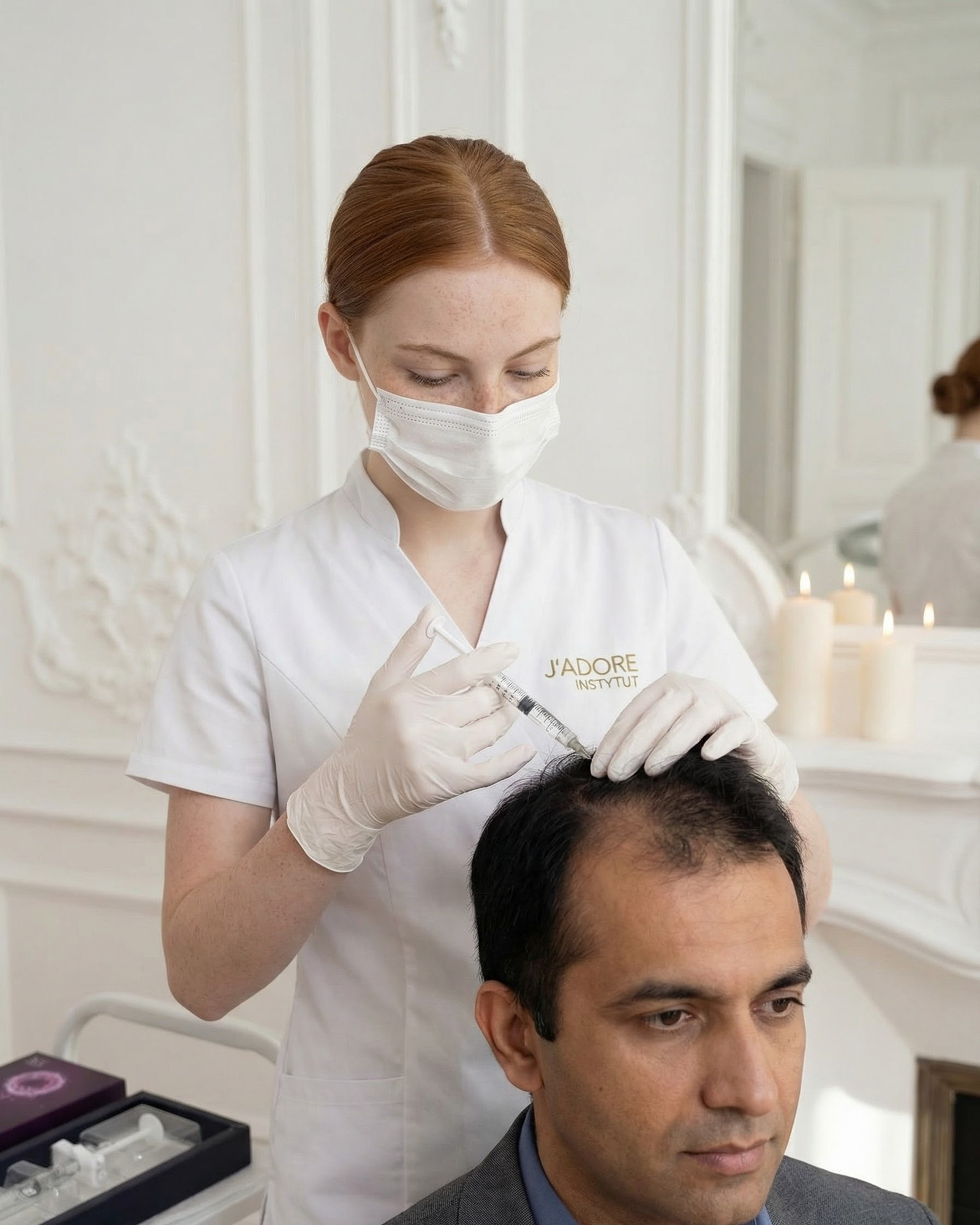
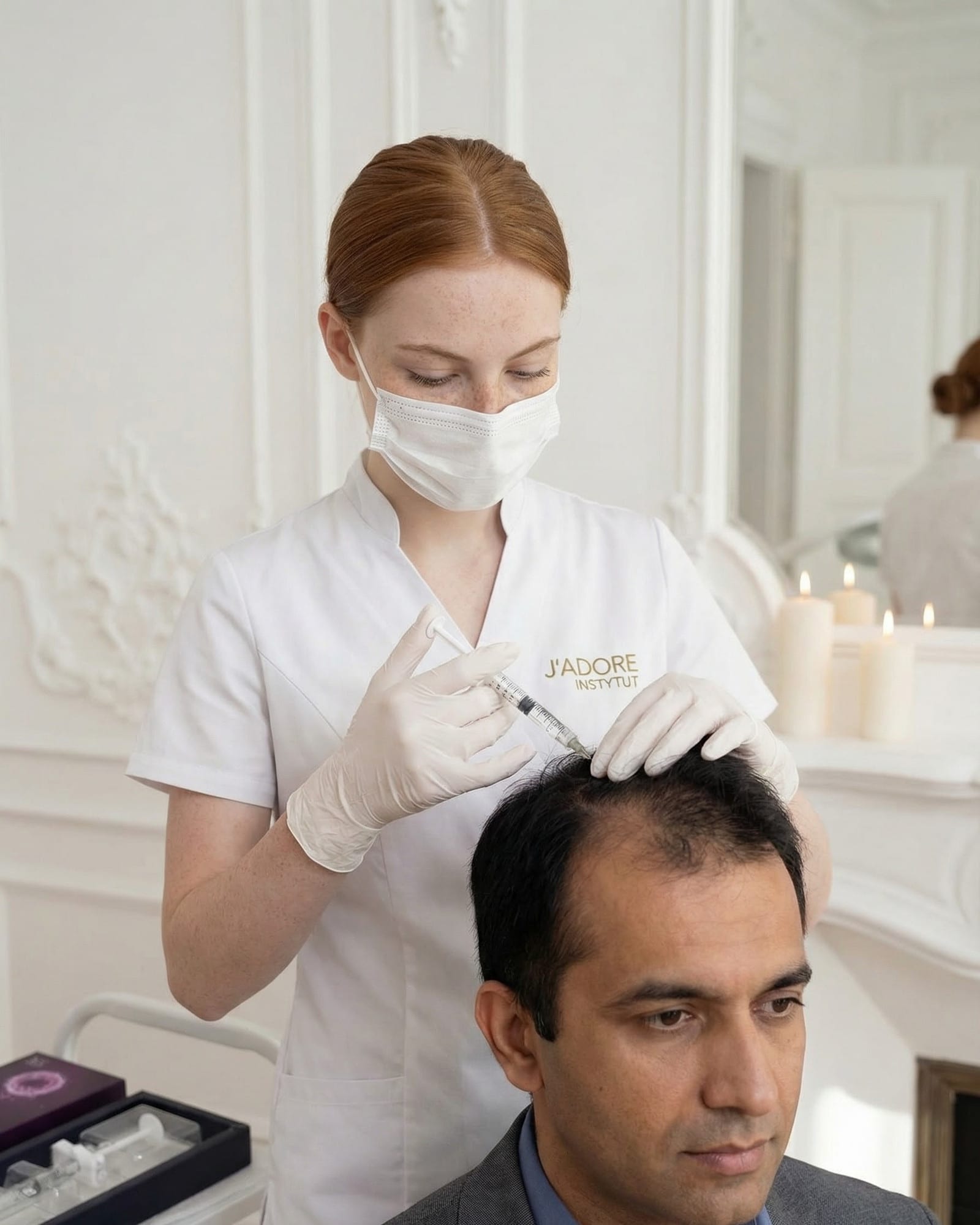
Needle mesotherapy
micro-injections directly into the scalp
- active substances reach precisely the depth of the follicles
- micro-injuries stimulate the skin's natural repair processes
- recommended for advanced hair loss and male pattern baldness
- results are often noticeable after just a few sessions
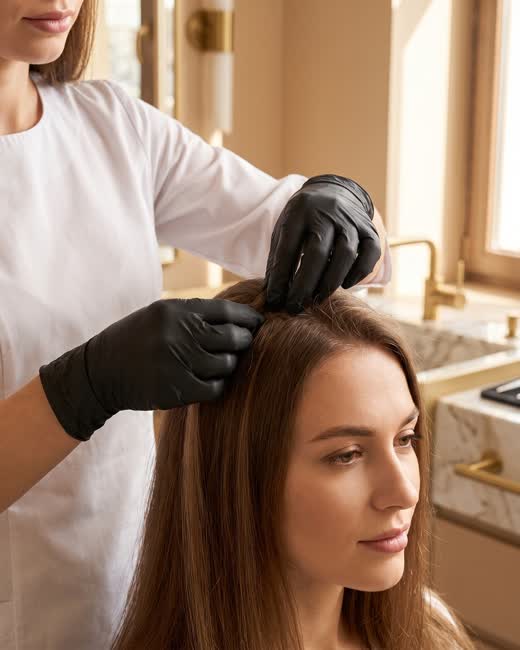
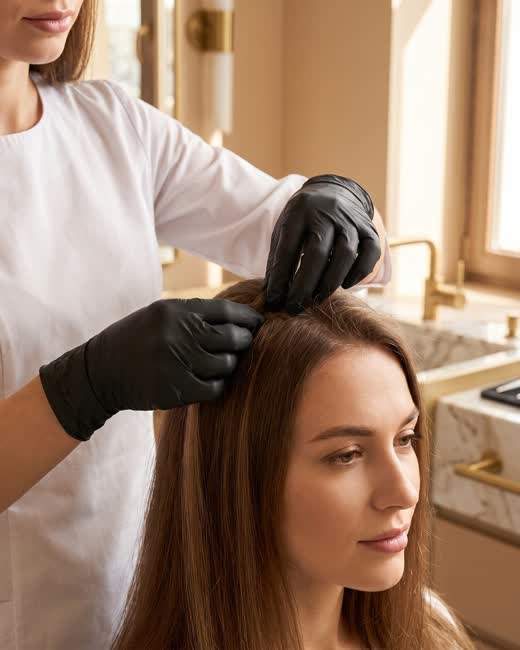
Non-needle mesotherapy
ingredients delivered by wave or current, without puncturing the skin
- pain-free and non-invasive — no needles, no marks on the skin
- suitable for the first signs of weakened hair
- comfortable even on sensitive or irritated scalps
- can be used as a regular maintenance treatment
When to choose needle, when non-needle — a practical guide
The choice of method shouldn't come down to chance or price. Ideally, it depends on what's happening with the scalp and how advanced the problem is. Here's a rough guide:
- Needle mesotherapy often works well for: intense hair loss, male pattern baldness (in women and men), noticeable thinning, and cases where previous treatments have brought limited results.
- Non-needle mesotherapy can be a good choice for: the first signs of weakened hair, dry or irritated scalp, prevention and maintaining results, and when full comfort during the treatment matters.
- Both together — for many people, the specialist combines the methods within one course: needle mesotherapy stimulates the follicles more deeply, while non-needle mesotherapy tops up active substances and improves the condition of the surface layer.
Important: hair loss can have various causes — nutritional deficiencies, hormonal changes, stress, scalp conditions. Mesotherapy (in either form) works locally, but it doesn't replace diagnostics. If hair loss is sudden and intense, it's worth checking blood count, ferritin levels and thyroid function first — the specialist at the salon will advise whether results are needed before the treatment.
How it works — the difference in how ingredients penetrate
The biggest difference between the two methods is the route active substances take to reach the hair follicles. In needle mesotherapy, a micro-injection places the formula directly at a specific point in the scalp — precisely, at a set depth. In non-needle mesotherapy, ingredients are carried by energy (current, sound waves or other physical mechanisms, depending on the device), which temporarily increases skin permeability and helps substances penetrate.
- 01
Consultation & scalp assessment
The specialist assesses the condition of the scalp, the type and severity of the problem, and asks about your history of hair loss and products used. Based on this, she selects the method and cocktail composition.
- 02
Preparation
The scalp is cleansed. For needle mesotherapy, a mild anaesthetic can be applied for those with a sensitive scalp, though most people tolerate the treatment well without it.
- 03
The treatment itself
With the needle method, the specialist performs a series of micro-injections in the areas that need support. With the non-needle method, she applies the formula and guides a device over the scalp, intensifying how the ingredients penetrate.
- 04
Aftercare
For 24–48 hours, avoid washing your hair, intense exercise, and hair products containing alcohol. The specialist provides detailed aftercare advice after the treatment — it varies depending on the method used.
When it's best to combine both methods
Needle and non-needle scalp mesotherapy don't have to compete with each other. For advanced hair loss, the specialist may plan a course in which needle mesotherapy forms the "core" of the series (deep follicle stimulation), while non-needle mesotherapy fills in between sessions, maintaining scalp condition and hydration. For many people, this combined approach brings better results than either method alone.
Needle + non-needle mesotherapy
Needle mesotherapy stimulates deeply, non-needle mesotherapy tops up active substances and improves scalp condition between sessions — together they form a fuller course of treatment.
Scalp mesotherapy + hair care treatments
Treatments that strengthen hair structure (such as keratin treatments or reconstruction) work on a different level from mesotherapy — they don't conflict and often complement a comprehensive hair care routine.
Scalp mesotherapy + general diagnostics
For intense hair loss, it's worth combining the treatment with systemic testing (blood count, ferritin, thyroid) — local stimulation works better once a systemic cause has been ruled out or is being treated alongside it.