Why men's scalps clog faster
Your scalp produces sebum — a natural oil that protects and hydrates. In men, sebaceous glands are often more active than in women, which directly translates into faster greasiness. Add sweat, shedding skin cells and — if you use gel, wax, paste or spray — product residue that stays behind even after washing.
With short hair, things get more complicated. Long hair partly "stretches" sebum along the hair shaft, carrying it away from the scalp. With short hair or a shaved head, sebum stays on the skin's surface. It mixes with dead skin cells and literally blocks the follicle openings. The result: itching, greasiness soon after washing, and sometimes irritation or small bumps along the hairline.
Add regular haircuts to the mix: clippers and scissors every few weeks, contact with plastic combs and capes, summer sweat under a cap. A man's scalp is an environment that deserves more attention than a single weekly shampoo.
What a peel does — and what it doesn't
Scalp peeling works in two ways, which often go hand in hand:
Mechanical peel
physical exfoliation
- fine abrasive particles or a brush remove dead skin cells
- improves scalp microcirculation
- a good shampoo add-on for home use
Chemical / enzymatic peel
deeper cleansing
- acids (such as salicylic or lactic acid) or enzymes dissolve clogged sebum and dead skin
- work inside the follicle, not just on the surface
- reduce excess keratinisation and dandruff
A peel is not a treatment for hair loss and does not stop shedding on its own. It can, however, create better conditions for your follicles to work in — a clear, unclogged opening is a better environment for hair growth. If hair loss concerns you, a scalp peel is a good starting point for a conversation with a trichologist — not a stand-alone solution.
When your scalp is telling you it needs a peeling reset
This isn't about following a fixed ritual. It's about specific signs with specific causes:
- Itching with no visible inflammation. Often caused by a build-up of sebum and dead skin irritating the scalp.
- Hair looks greasy just a few hours after washing. Clogged pores and excess sebum may not rinse away with water — they stay on the skin.
- A white or grey-yellow residue along the hairline and at the crown. Not always dandruff — often it's sebum mixed with leftover styling products.
- Scalp feels tight or stings after sun exposure. Short hair offers almost no UV protection on the crown of the head — the skin reacts like any other exposed part of the body.
- Small bumps or redness at the hair root (especially at the back of the head). These can indicate clogged follicles — scalp folliculitis is a real issue, especially with sweating and wearing hats.
Salon peel vs home peel — what to choose and when
At home, a mechanical peel — a scalp scrub or a soft massage brush — makes a good weekly or twice-monthly habit. Use it before shampooing. That way, the shampoo rinses away what the peel has loosened, rather than pushing through a fresh layer of dead skin cells.
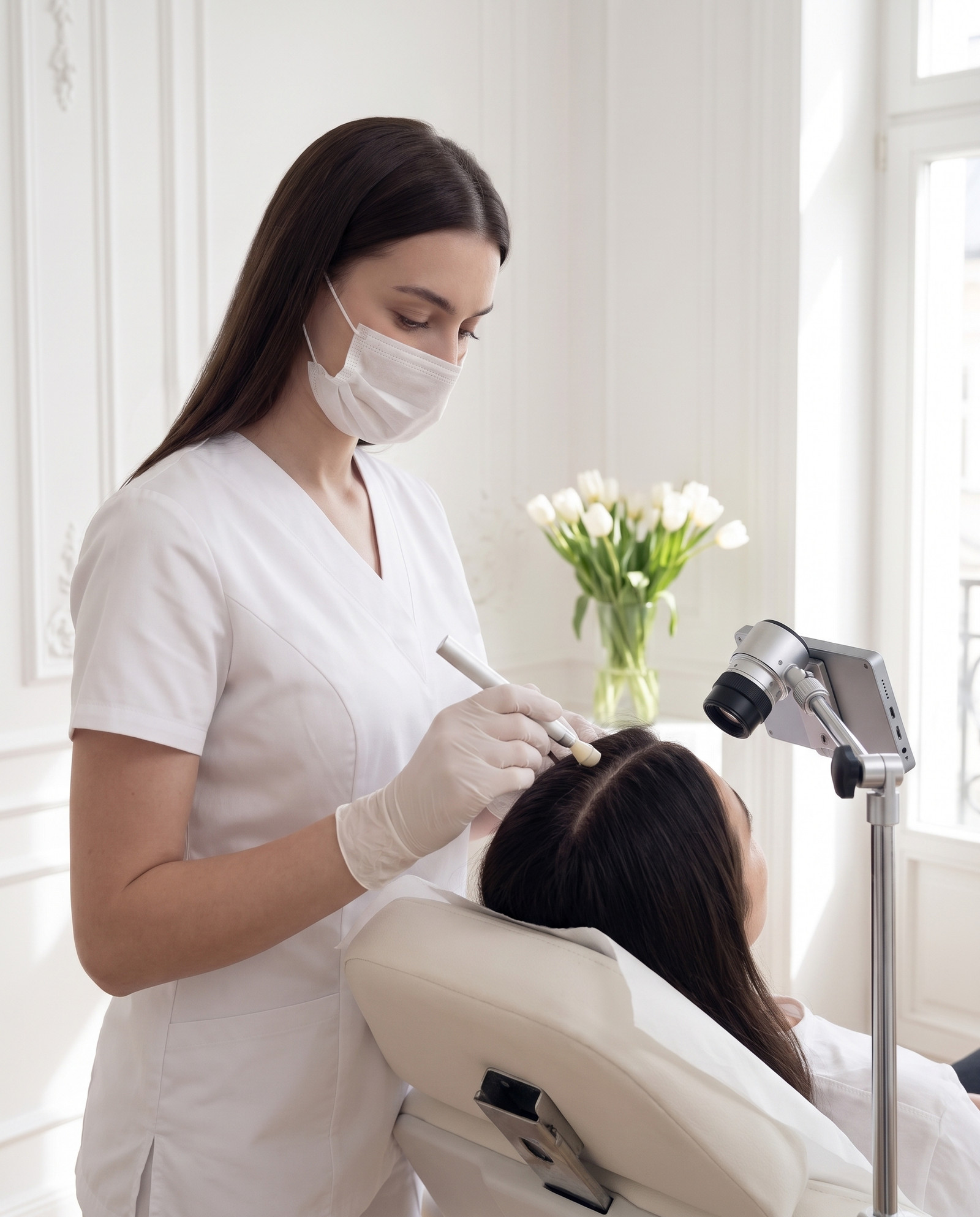
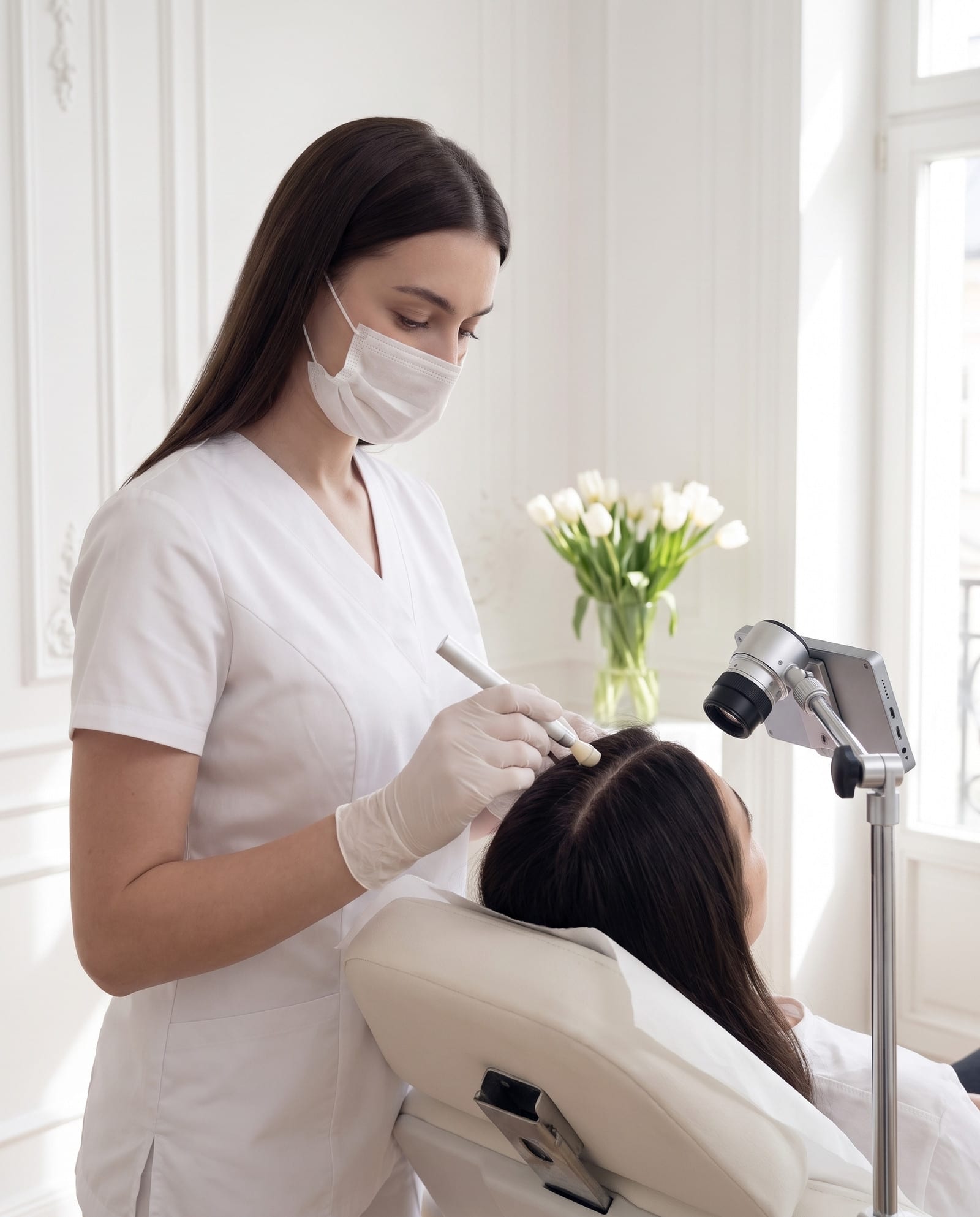
A salon peel goes further. Your cosmetologist assesses your scalp condition — type, oiliness, any changes — and selects the concentration and type of active ingredient. This is often combined with mechanical massage or follicle-strengthening preparations. For many men, the first session brings noticeable relief: the scalp stops itching, hair stays fresh for longer, and overall the head just feels "lighter".
- 01
Scalp assessment
Your cosmetologist checks your skin type, oiliness level and any visible changes. This includes a discussion about the products you use daily.
- 02
Applying the peeling formula
The active substance is applied to the scalp. Depending on the formula, it stays on for a few to several minutes.
- 03
Massage and active ingredient application
Massage improves absorption and stimulates microcirculation. A serum or ampoule is often used at this stage.
- 04
Thorough rinsing
All substances and loosened skin cells are rinsed away. Hair and scalp are cleansed without over-drying.
- 05
Hydration and a plan going forward
A finishing product is applied. You'll get recommendations on how often to repeat the treatment, what to avoid, and what to use at home.
Scalp peeling and hair loss — what to expect
This question comes up often — and rightly so. Men typically start noticing changes to their hairline several years earlier than women, so anything happening to the scalp carries extra weight.
A peel won't stop androgenetic alopecia (AGA) once it's under way — that comes down to genetics and hormones, not skin condition. It can, however, improve the conditions for working follicles: a clear opening, free of clogged sebum and keratin, is an environment where the hair root can function without extra strain. For many men whose hair loss was partly caused or worsened by scalp inflammation — an itchy, flaky, irritated scalp — regular peeling is often the first step that delivers measurable improvement.
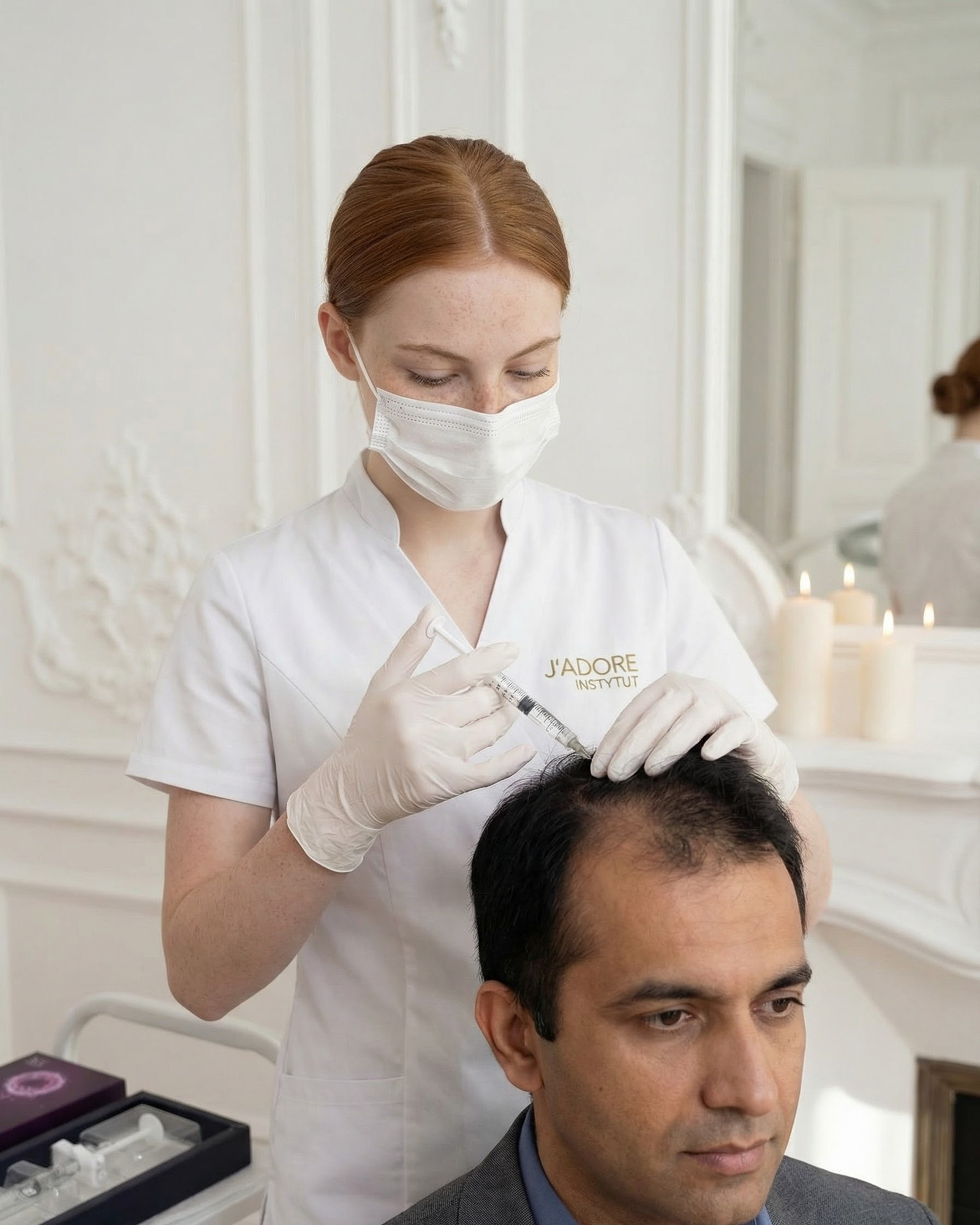
Scalp mesotherapy
Peeling clears the follicle openings; mesotherapy delivers active substances directly into the skin. These treatments complement each other well — a clear pore means better product absorption.
Trichologist consultation
Before starting a series of treatments, it's worth knowing what you're dealing with: androgenetic alopecia, telogen effluvium, dandruff, or simply excess sebum. Different problems call for different solutions.
How to add scalp peeling to your routine — step by step
You don't need to overhaul your entire routine. Scalp peeling is one extra step, and it can look like this:
- Once a week or every two weeks — scrub before washing your hair. Apply to damp scalp, massage gently with your fingertips (not your nails), leave for a moment, rinse, then shampoo.
- Every 4–6 weeks — a salon peel, especially if you have significant oiliness, itching, or use a lot of styling products.
- Avoid peels right after a clipper cut — freshly cut skin is more sensitive, and micro-abrasions increase the risk of irritation.
- After sun exposure or intense exercise — your scalp collects UV exposure and sweat with no protection, and a peel helps reset its condition.
One fact that's rarely mentioned: men who start peeling their scalp regularly often notice that their shampoo works better — because it has less to cut through. The skin gets less greasy because the pores aren't clogged day after day. And overall, they think about their scalp less throughout the day.