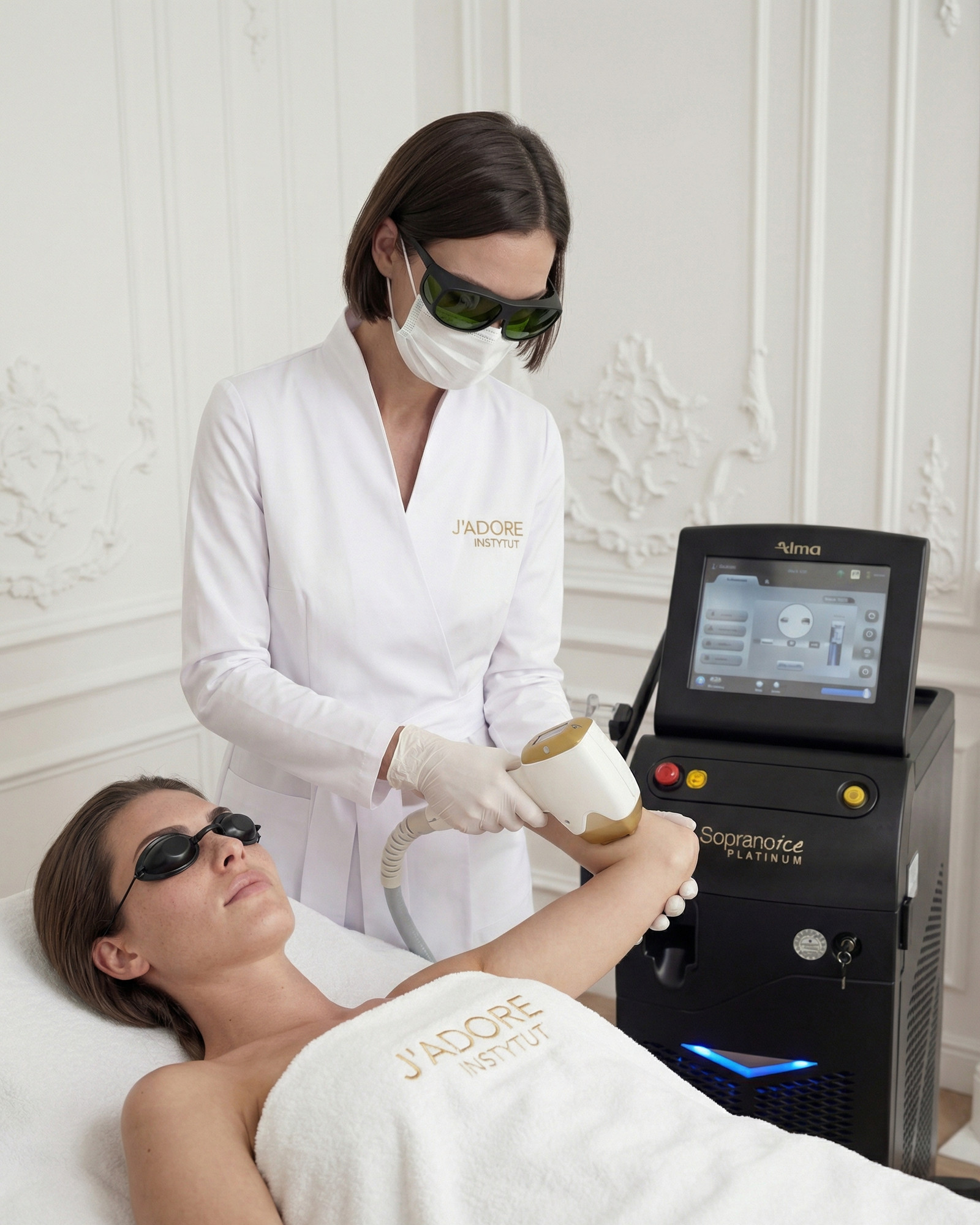

Two methods, two mechanisms — how it works
Before comparing results, it helps to understand the mechanism. Wax works mechanically. Hot or cold, it pulls the hair out along with the bulb from the follicle. Your skin is smooth afterwards, but the follicles themselves stay intact. Hair grows back — for most people within a few to several weeks, finer and softer than after shaving.
Laser works through energy. A light pulse penetrates the skin and is absorbed by the melanin in the hair shaft, damaging the structure of the follicle responsible for growth. Hair in its active growth phase (anagen) can be permanently weakened or fail to regrow — but because not all hairs are in the same phase at the same time, the treatment needs several to a dozen or so sessions spread over time.
Wax
instant smoothness, repeated regularly
- Result visible immediately after the treatment
- Works regardless of hair colour or skin tone
- Hair needs a minimum length before the treatment
- Regularity: every few weeks, all year round
- Possible irritation and ingrown hairs with frequent use
Laser
gradual hair reduction, more lasting over time
- Result builds over a series of several to a dozen or so sessions
- Best results for dark hair on fair skin
- Skin must be shaved shortly before the treatment (not waxed)
- After completing the series, many people only need occasional touch-ups
- Fewer ingrown hairs than with regular waxing
Wax or laser — questions worth asking yourself
There's no single answer for everyone — but a few questions will quickly point you towards the right decision. Answer them honestly. They — not adverts — determine what will actually suit you.
- 01
How much does time matter to you?
Wax: you book before an important trip, a wedding weekend, summer — and it's done. Laser: you plan a series months in advance and limit spontaneous holidays during the course.
- 02
What's your hair colour?
Laser works through melanin. Dark, coarse hair on fair skin responds best. Light, red, grey or very light blonde hair — laser results may be limited. Wax works regardless of pigment.
- 03
How does your skin react to regular irritation?
Sensitive skin, a tendency to ingrown hairs or keratosis pilaris — laser is often gentler in the long run. Regular waxing can make these issues worse.
- 04
What level of everyday smoothness are you looking for?
Wax: for a while, you'll need to wait for hair to grow to the required length — you can't shave between sessions. Laser: you can shave between sessions, and over time you'll need to less and less often.
- 05
Do you have the patience for a series?
Laser is a commitment spanning several months. The most common disappointments come from an interrupted series — results only become visible after a certain number of sessions, not after one.
Can you combine them — and when does it make sense
Wax and laser aren't entirely mutually exclusive — but combining them on the same body area during an active laser series is a mistake. Waxing before a laser session removes the very follicle the laser was meant to damage — the treatment becomes pointless.
However, before starting a series or after completing one, several practical strategies work well for many clients:
Wax seasonally, laser as the long-term plan
You've been waxing for years but are considering laser. You can start a laser series at any point — just remember that 4–6 weeks before your first session in a given area, you'll need to switch from waxing to shaving.
Laser for legs, wax for the face
A popular combination — laser for larger areas, where a series pays off in convenience; wax for areas where hair is lighter or where you want precision (brows, face).
Laser series + wax touch-ups
Once a laser series is complete, occasional, less frequent waxing visits can maintain the result — for many people, hair growth is so sparse by then that waxing once every few months is more than enough.
What about sensitive skin, keratosis and ingrown hairs
Hair removal is a particularly important topic for people with sensitive skin, a tendency to ingrown hairs, or keratosis pilaris (rough bumps on the arms, thighs). It's worth knowing how both methods affect these issues.
- Ingrown hairs after waxing — often result from the epidermis healing too quickly over a follicle that's just been emptied. Regular exfoliation and proper hydration between sessions usually help. For those prone to ingrown hairs — laser tends to be gentler in the long run, since it reduces the number of active follicles.
- Keratosis pilaris — waxing can sometimes make it worse (constant follicle inflammation). Laser may bring improvement by reducing the hair itself and the number of blocked follicles.
- Sun-exposed and tanned skin — both treatments call for caution. Waxing on sunburnt or sun-irritated skin risks damaging the epidermis. Laser on tanned skin — risk of hyperpigmentation. Before summer: wax sensibly, and plan laser for spring or autumn.
- Pregnancy — waxing is usually safe, provided skin isn't overly sensitive to heat. Laser during pregnancy — as standard, we don't perform it, due to insufficient safety data.
How to prepare for each treatment
Preparation isn't a formality — especially with laser, mistakes at the preparation stage can reduce the effectiveness of the whole session or increase the risk of irritation.
Before waxing
simple and quick
- Hair must be the right length — no shaving for the required period beforehand
- Exfoliate the day before the treatment (not on the day itself)
- Avoid cosmetics on the skin on the day of the treatment
- Tell your specialist about any retinoids or antibiotics you're taking
Before laser
a strict protocol throughout the series
- Shave the area shortly before the session (do not wax or epilate)
- Protect the treatment area from the sun (SPF) throughout the series
- Avoid tanning and sunbeds — tanned areas increase the risk of hyperpigmentation
- Tell your specialist about any medication you're taking (especially photosensitising ones)
- Don't apply self-tanning products