First, stay calm: this is usually normal, not an illness
To understand what is happening, let’s go back to pregnancy. High oestrogen levels mean hair stays in the growth phase for longer and barely sheds. This creates the characteristic “best hair ever” during pregnancy: thicker, stronger and fuller. Put simply, your body pauses normal daily shedding. It holds on to hairs that would otherwise have fallen out long ago.
After giving birth, hormone levels drop rapidly. The whole “held back” group of hairs moves into the resting phase at once, then after a few weeks falls out over a condensed period. That is why it looks so dramatic. It is not “more shedding than normal throughout your life”, but simply several months of normal shedding compressed into a short period. That is why you see handfuls rather than individual hairs.
When it passes — and what it depends on
This is the question asked most often, so let’s answer honestly: for most women, postpartum hair loss settles on its own, and hair returns to its normal condition within several to a dozen months after giving birth. There is no single date on the calendar. The pace depends on several factors at once.
What supports recovery
Works in your favour
- Balanced iron stores (ferritin) and good results from basic blood tests
- Sleep, where possible — I know it is a luxury with a newborn
- A varied diet with a good amount of protein
What can prolong it
Worth keeping an eye on
- Deficiencies, especially iron deficiency — very common after pregnancy and during breastfeeding
- Chronic sleep deprivation and high, ongoing stress
- Postpartum hypothyroidism — it can be overlooked
What may indicate something else
A sign to seek assessment
- Shedding that clearly lasts longer than a year
- A widening parting and visible scalp
- Patches, localised bald areas, itching, pain or increased sebum production
The most important point in this section is that postpartum hair loss is temporary by definition. If shedding continues much longer than a year, intensifies rather than settles, or is accompanied by other symptoms, do not wait any longer. It is worth checking whether another mechanism is underlying it, most often a deficiency or thyroid issue. Pregnancy does not explain everything indefinitely.
Where to start — step by step
This is the heart of the article. With a newborn in your arms, you do not have the headspace for twenty steps. So we will do this sensibly: from the simplest and least expensive measures to more advanced options. Most mothers skip the basics and wonder why expensive ampoules “do not work” — when the issue often lies in a routine blood test.
- 01
Step 1 — Name it and give yourself time
If shedding started a few weeks after giving birth and is not accompanied by other symptoms, it is most likely postpartum hair loss. Simply knowing that “this is a recognised, temporary stage” removes half the stress. The first weeks often call for patient waiting rather than intervention.
- 02
Step 2 — The basics: sleep, food and being gentle with yourself
Hair is a luxury for the body — when it lacks fuel and rest, this is where it saves resources. Focus on varied meals with protein, hydration and as much sleep as possible. This is not a cliché: an exhausted, undernourished body after pregnancy simply does not prioritise hair.
- 03
Step 3 — Tests: ferritin, full blood count, thyroid
This is where the practical part begins. Before spending money on treatments, it is worth checking the basics with your doctor — including iron stores (ferritin), a full blood count and thyroid function. Deficiencies are common after pregnancy and during breastfeeding. Postpartum hypothyroidism can also be overlooked. Very often, this is where the answer lies.
- 04
Step 4 — Gentle care, no radical changes
This is not the time for intensive treatments on your own. Wash gently, choose products without unnecessary chemicals, and take care when pulling your hair tightly into a bun or close hairstyles. These can further weaken the hairline. The aim is not to cause harm or add stress to your scalp while the process settles on its own.
- 05
Step 5 — Diagnosis and a plan if it continues
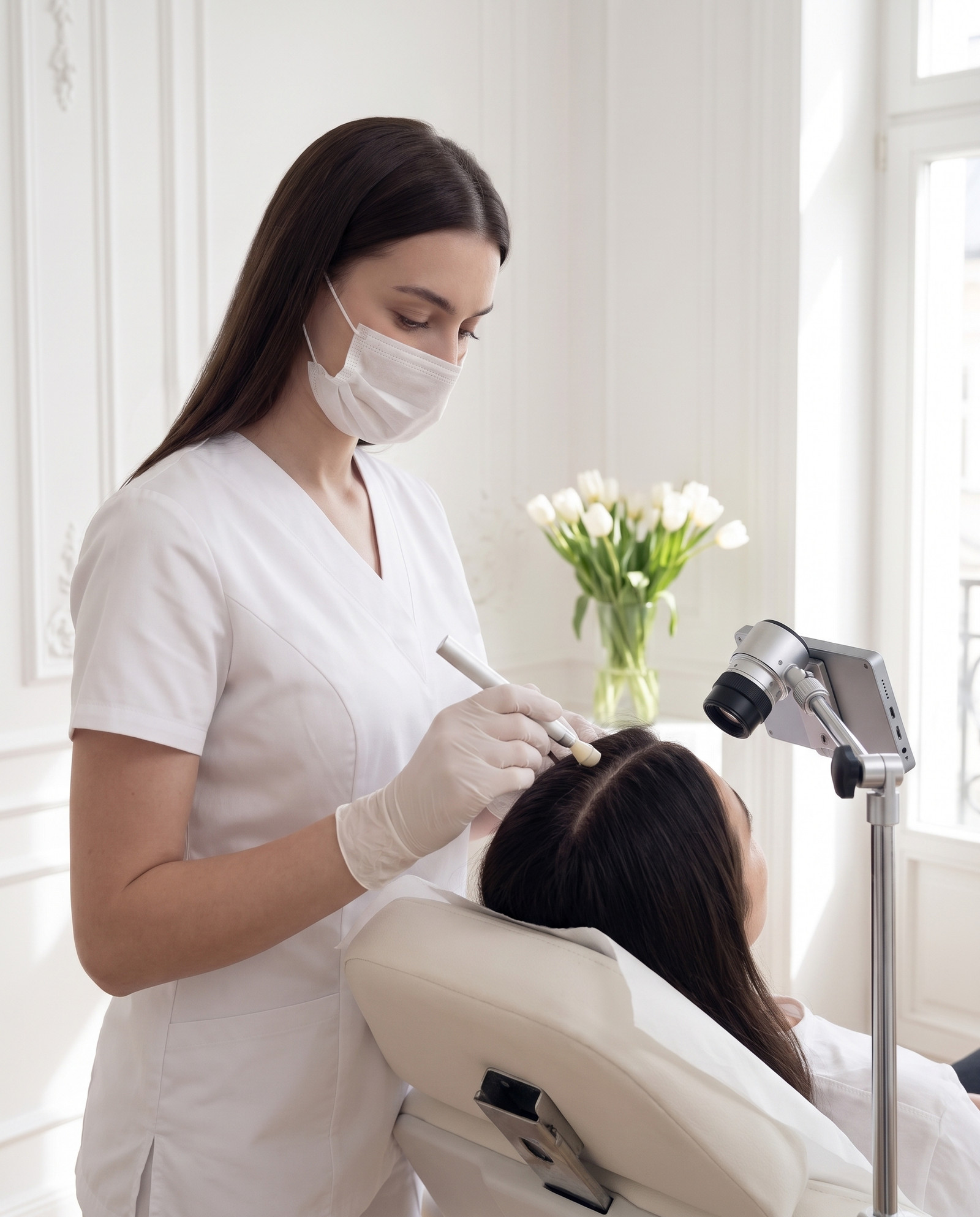
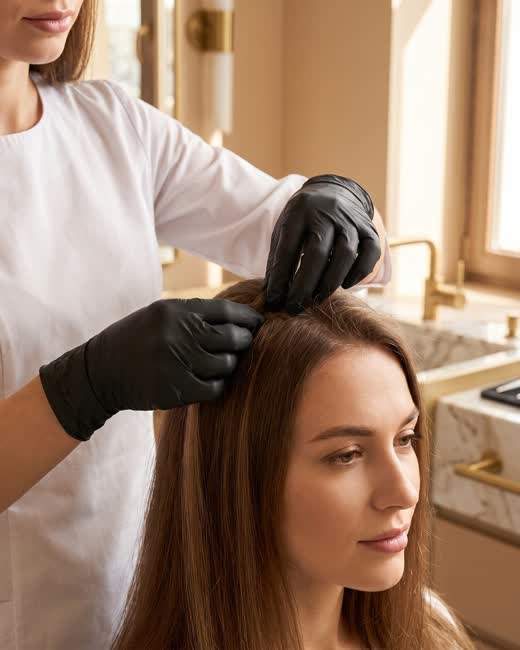
If a considerable amount of time has passed, you have covered the basics, and the shedding does not ease, it is time to look where it all begins: the scalp. A trichology consultation with trichoscopy helps distinguish whether this is still the “tail end” of postpartum hair loss or something else. It also allows you to create a sensible plan instead of guessing.
Pay attention to the order. First, stay calm and cover the basics, then have tests, with diagnosis and treatments only if the problem continues. With recent postpartum hair loss, the wisest strategy can simply be not to interfere with nature and to correct what is easy to correct — rather than rushing into the most expensive treatment from the first advert you see.
What NOT to do
With postpartum hair loss, chaotic action can cause as much harm as panic. Before you spend your first zloty or radically change your hair care, read this short list of pitfalls — it will save you frustration, money and unnecessary stress.
In short: understand first, then act — and be gentle with yourself. After childbirth, your time and energy are limited. Focus them on the basics and, if needed, diagnosis rather than random products that ‘helped someone’.
When to see a specialist (trichologist)
Most cases of postpartum hair loss do not require a salon visit — they settle on their own. But there are situations when it is worth stopping the wait and simply booking an appointment. Treat this as a simple checklist — so you do not carry unnecessary worry for longer than needed.
- The shedding continues and does not ease clearly longer than a year after childbirth.
- You notice a widening parting, visible scalp or genuine thinning that is progressing rather than improving.
- You have developed patches, localised bald areas, itching, pain, increased sebum production or dandruff.
- The shedding is accompanied by other symptoms, such as severe fatigue, heart palpitations, changes in weight, skin or nails — this may point to a thyroid issue or deficiency.
- You have been doing everything ‘properly’ for many months, yet your concern is growing rather than easing. This is also a sufficient reason.
Your appointment begins with a consultation and trichoscopy — a painless examination of the scalp under magnification. It helps determine whether this is still postpartum hair loss or something else, and allows us to create a realistic plan. Sometimes the trichologist refers you to a doctor for further diagnostics, such as hormonal or thyroid tests. At other times, it is enough to organise your hair care and — where safe, including during breastfeeding — introduce a supportive course of treatment. Either way, you leave with clear answers rather than assumptions.