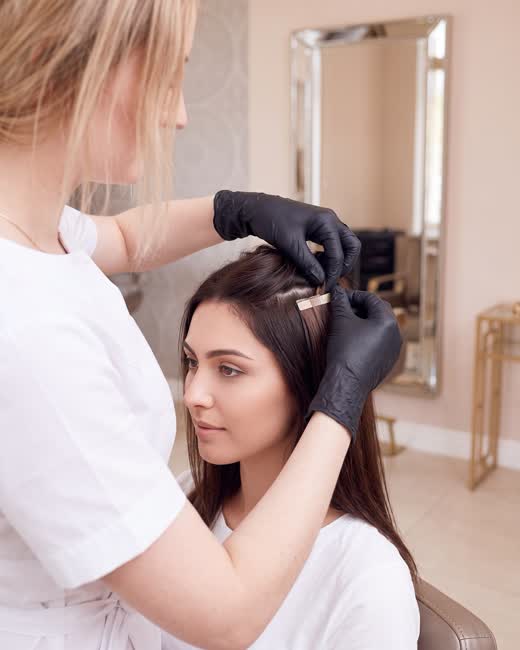
Why hair falls out — before you look for a solution
Before doing anything, it helps to understand what you're dealing with. Most men assume hair loss is purely genetic and that nothing can be done. Genetics does play a key role — but it isn't the only factor. Hair loss can worsen or speed up because of:
- Seborrhoea and scalp inflammation — excess sebum blocks follicle openings and limits nutrient supply to the hair bulb
- Poor scalp circulation — the skin at the crown gets less blood flow than other areas of the body, so follicles don't get what they need
- Nutrient deficiencies — zinc, biotin, amino acids and B vitamins directly affect hair quality and growth rate
- Stress — elevated cortisol disrupts the hair growth cycle and can shorten the anagen (growth) phase
- Neglected scalp care — literally the same skin as on your face, but treated completely differently
Mesotherapy can't reverse genetic changes in follicles that have already stopped functioning. But where follicles are still active or weakened, it can genuinely improve their condition. That's why timing matters — the earlier you start, the more you can achieve.
How scalp mesotherapy works — the mechanism, without embellishment
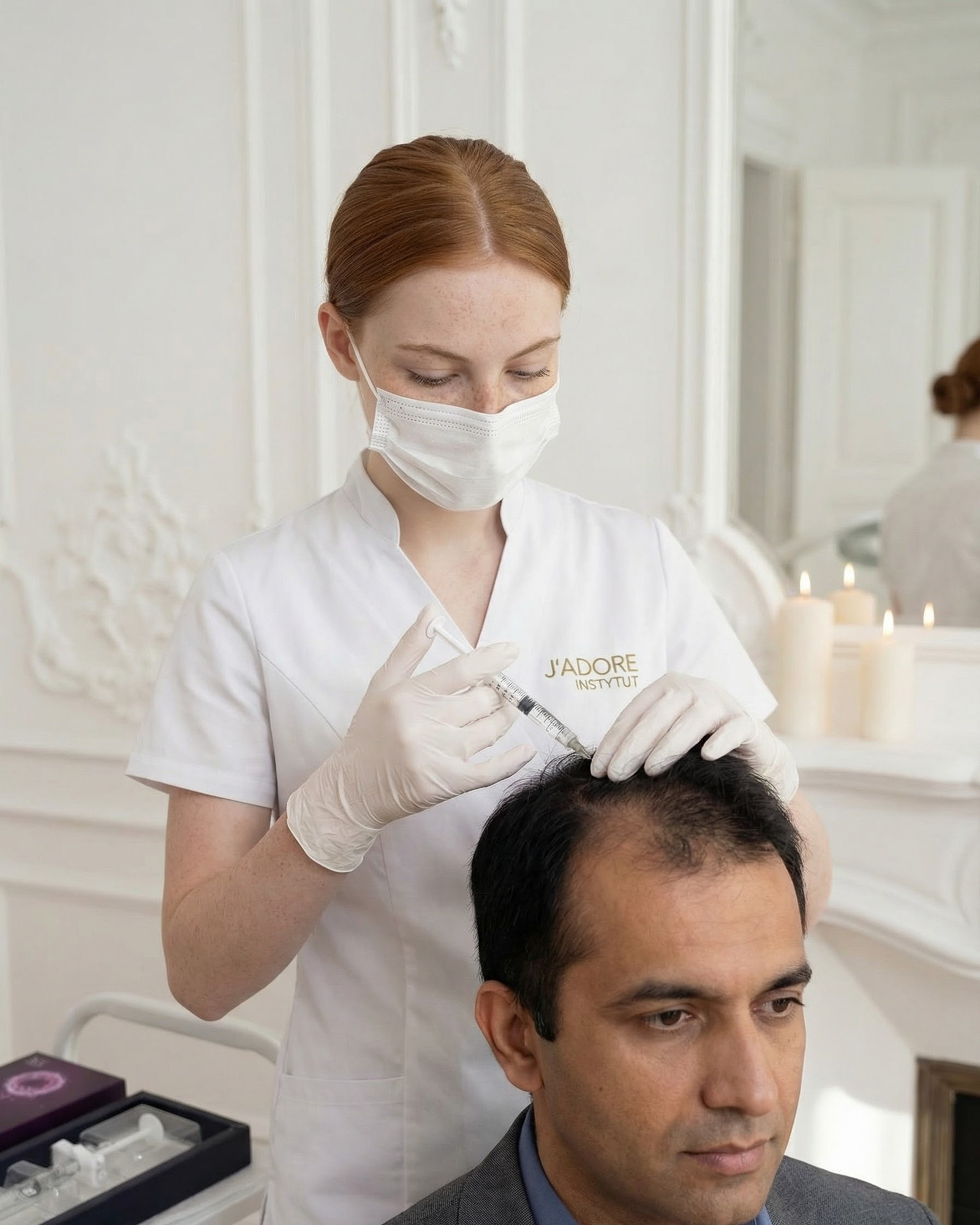
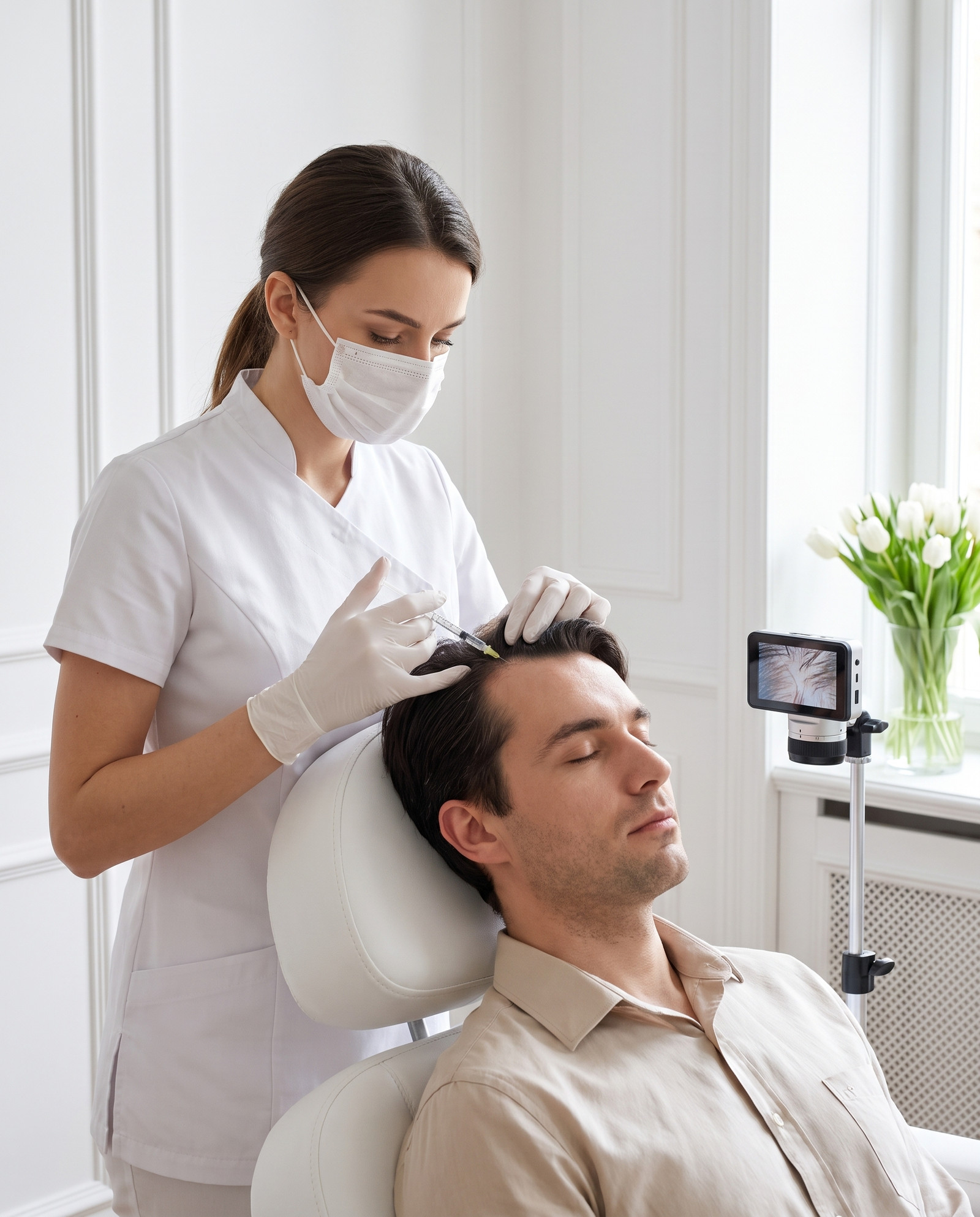
Mesotherapy delivers active substances directly into the dermis — in this case, the scalp, exactly at the level where the hair follicle lives. The cocktail is chosen for the specific problem: hair loss, weakened hair, excess oil, or dryness.
The effect works two ways. First, active substances reach exactly where they're needed — they don't pass through the digestive system like supplements; they act locally. Second, the needle puncture itself triggers a local repair response — increased blood flow and stimulated local metabolism. This isn't magic. It's a well-established principle in aesthetic medicine: controlled micro-injuries activate regenerative mechanisms.
The treatment takes as long as it takes — there are no shortcuts here. It's performed by a cosmetologist or doctor, depending on the cocktail composition and local regulations. The salon uses a fine needle or a microneedling head; the discomfort is comparable to a light scratch. Afterwards, the scalp may be slightly red for a few hours — and that's it.
When mesotherapy makes sense — and when it doesn't
This is a question worth asking before booking, not after. Mesotherapy makes sense when:
- Hair loss is ongoing, but follicles are still active — early-stage male pattern baldness, telogen effluvium, stress-related hair loss
- The scalp is in poor condition — seborrhoea, itching, inflammation, excess oil or dryness that hinders growth
- Hair has become thinner and weaker — without obvious balding, but each follicle produces progressively weaker hair
- You want to slow the process — not reverse it, but gain time and improve what's still possible
When it makes sense
genuine indications
- early-stage hair loss
- weak, thin hair without balding
- poor scalp condition
- stress-related hair loss / after illness
When it's not enough
limitations of the method
- advanced balding (skin already smooth)
- hair loss from deficiencies — blood tests first
- active scalp condition without a diagnosis
What a series looks like — what to expect and when
One session won't achieve much. That may sound like a disclaimer, but it's simply true — results from scalp mesotherapy build up over a series. Typically, several sessions are done within a monthly window, followed by a break and an assessment.
- 01
Consultation & scalp assessment
Trichoanalysis or visual assessment — establishing the cause and the follicles' condition. This determines the cocktail composition and the series plan.
- 02
First sessions — intensive phase
Sessions are performed more frequently — the scalp is "stimulated", blood flow increases, and follicles get extra support. For many people, first results appear after 3–4 sessions.
- 03
Assessment after the series
Comparing photos, assessing hair loss (combing + shower), a subjective assessment of density and condition. Decision: maintenance sessions or a break.
- 04
Maintenance sessions
Less frequent, to maintain the effect — especially with androgenic hair loss, where the underlying cause doesn't go away.
Results from scalp mesotherapy rarely appear dramatic — this isn't a treatment after which you wake up with a full head of hair. Men describe it more often as: "less hair on the pillow", "hair looks thicker", "scalp stopped itching". For many, hair loss clearly slows down; for others, new hairs in the growth phase produce a visible change in density. Results depend on individual condition and the stage at which you start.
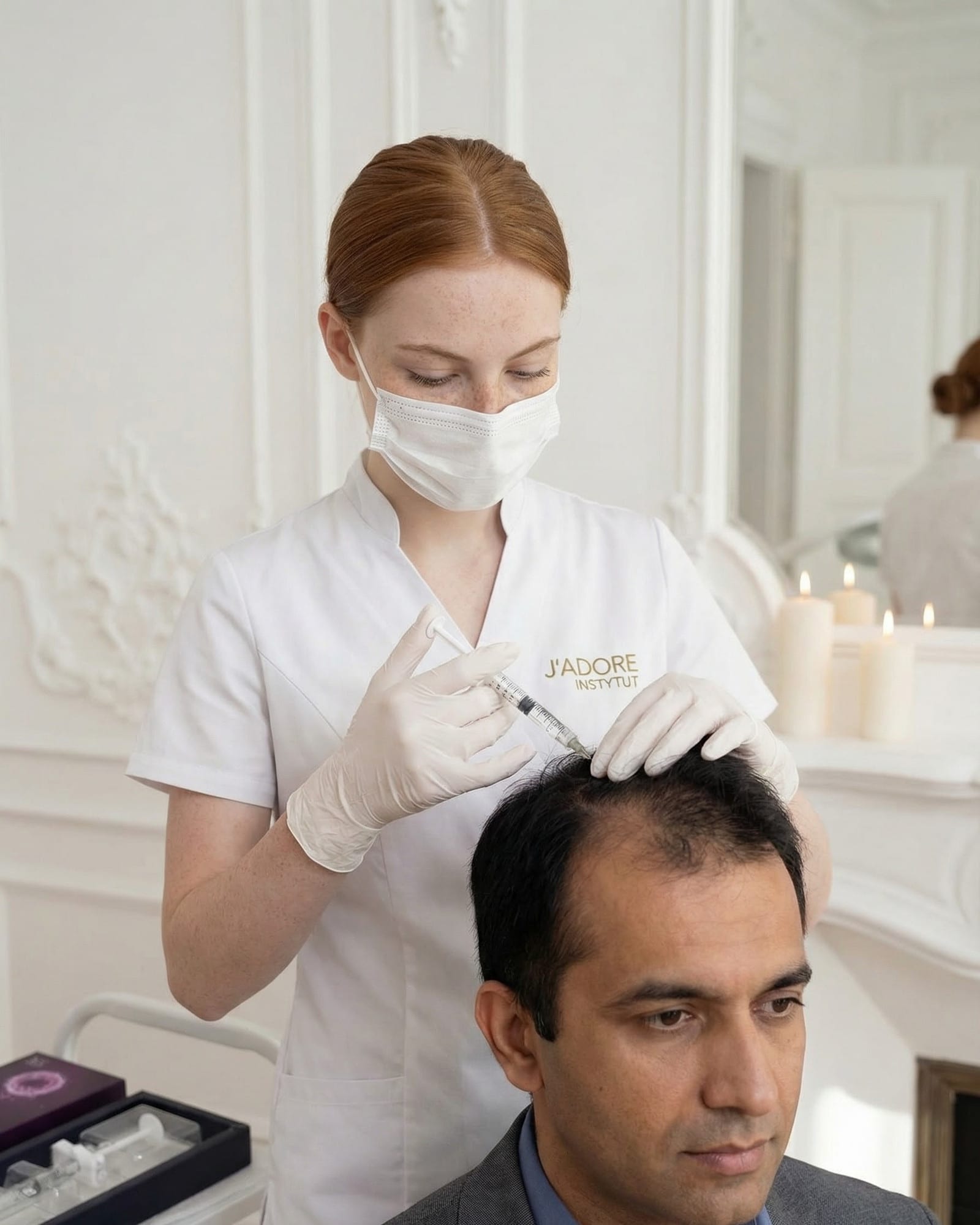
Zero downtime — the day after the treatment
Scalp mesotherapy doesn't require taking time off. After the treatment, you can head to a meeting, go back to work, and wash your hair that evening or the next day. Any redness on the scalp fades within a few hours. Under your hair, it's practically invisible.
- First 24 hours: no sauna, no intense gym sessions, no swimming pool
- Avoid harsh anti-dandruff shampoos immediately after the treatment — for a day or two
- Don't scratch the scalp or rub it hard with a towel
- Otherwise — normal life straight away
Mesotherapy as part of a plan — combine with
Scalp mesotherapy works best as part of a broader approach, not as a standalone measure. Especially with androgenic (genetic) hair loss — this delays the process rather than stopping it. What can strengthen the effect:
Platelet-rich plasma (PRP)
Autologous growth factors from your own blood — delivered into the scalp instead of, or alongside, the mesotherapy cocktail. Often seen as a more intensive version of mesotherapy.
Scalp carboxytherapy
Carbon dioxide delivered under the scalp triggers a strong vasodilation effect — significantly increasing blood flow and oxygenation to the follicle. A great addition to the series.
Scalp peels and cleansing
Removing excess sebum and dead skin unblocks the follicle openings — after a peel, mesotherapy ingredients penetrate more effectively.
If seborrhoea or inflammation accompanies the hair loss, it's worth addressing that too. A clean, well-perfused scalp is a better foundation for the follicle than a neglected, blocked one — regardless of what's being injected.