What exosomes actually are — before you start believing in miracles
Exosomes are nanoparticles secreted by cells — a kind of biological courier that cells use to exchange information. They carry proteins, lipids and fragments of RNA that instruct target cells how to behave: whether to regenerate, produce new collagen, or release growth factors. They aren't a nutrient in the classic sense — they're a messenger. This is exactly why regenerative medicine finds them so interesting: instead of "feeding" tissue, they try to reset its own repair mechanisms.
In the context of the scalp and hair, this mainly means exosomes derived from stem cells — most often plant-based or cultured from human fibroblasts. They work by stimulating hair follicles, improving microcirculation in the scalp, and calming inflammation, which often underlies hair loss. It sounds promising — and it is promising. But "promising" isn't the same as "proven in every case".
What exosomes can do — and quite realistically
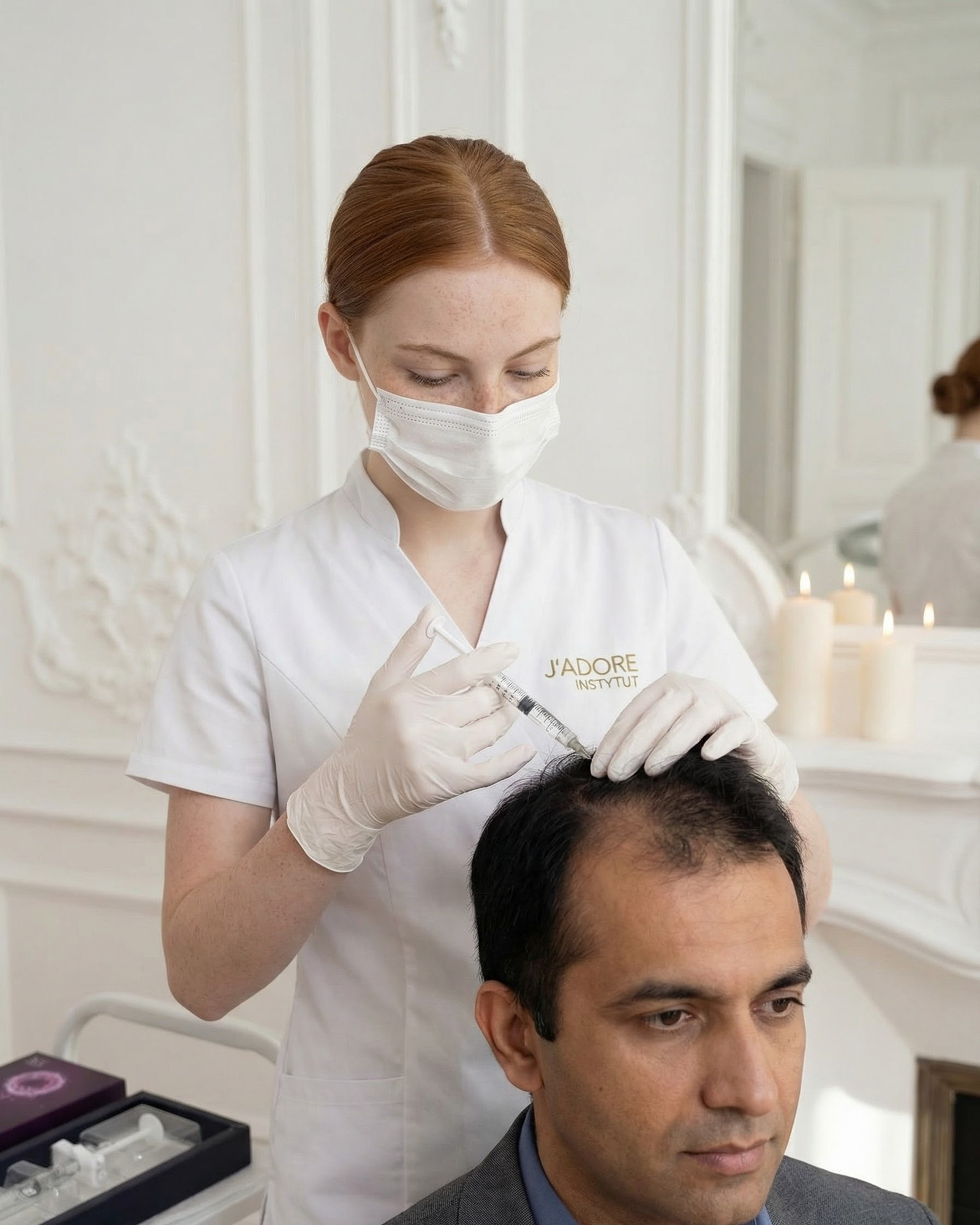
Let's start with the side the market doesn't like to emphasise — what's actually realistic. Exosomes, used as a trichological treatment (delivered via mesotherapy injections or combined with microneedling), can support scalp regeneration and improve the condition of active hair follicles. In many people with telogen effluvium (for example after stress, illness or pregnancy), density improves after a series of sessions. Some of these effects are probably linked to calming inflammation and stimulating microcirculation — factors that block proper nourishment of the follicle.
- Calming scalp inflammation — probably the best-documented effect; exosomes have immunomodulatory properties
- Improved hair quality — thickness, shine and elasticity can improve in active follicles
- Supporting the growth phase (anagen) — exosomes may extend this phase in a follicle that's still active
- Improving the follicle environment — better microcirculation, better access to nutrients
- Synergy with other methods — exosomes as a booster to treatment, not the sole pillar
Five myths circulating online — and what's true in them
Myth 1: "Exosomes will wake up dead follicles." This is one of the most repeated lines in trichology marketing — and also one of the most misleading. A follicle that has died and been replaced by scar tissue (for example in scarring alopecia) doesn't come back to life under any treatment — not exosomes, not PRP, not carboxytherapy. Exosomes work on follicles that are dormant but still structurally present — that's a different situation from irreversible loss. This distinction matters when deciding who's a good candidate for the treatment.
Myth 2: "One session gives spectacular results." Trichologists and dermatologists who work with exosomes conscientiously agree: results need a series of sessions and time. A hair's life cycle spans months — regrowth isn't instant. A reliable assessment of results needs at least a few months of observation, and usually a series of several sessions. If someone promises a dramatic change after a single visit, that's an overstatement.
Myth 3: "Exosomes will replace medication for androgenetic alopecia." Androgenetic alopecia (AGA — the most common cause of hair loss in men and in women after menopause) has hormonal and genetic roots. Exosomes don't block DHT and don't change a follicle's sensitivity to androgens — that requires pharmacological treatment. Exosomes can support the quality of the scalp environment and improve the condition of weakened but still active follicles. As a complementary element of therapy, they make sense; as a standalone answer to AGA, that's promising too much.
Myth 4: "The more expensive the exosome product, the better." The market for exosome products is still poorly standardised. There's no single regulation setting a minimum effective concentration, sourcing method or storage requirements. Price is often a function of the brand, not the concentration of active nanoparticles. What matters more than price is who assesses the indications and how, which product is used, and by what method it's delivered. Asking about the source and composition of exosomes is entirely reasonable — and a good salon will answer without hesitation.
Myth 5: "Exosomes work the same way for everyone." The response to exosomes depends on many factors: the cause of hair loss, scalp condition, the stage of hair loss, and general health (iron deficiency, thyroid hormones, oxidative stress). In someone with acute telogen effluvium after a viral infection, results can be significant and relatively fast. In someone with long-standing, advanced AGA, results are far more modest, because the problem has different roots. Matching the treatment well to the specific situation matters more than the product itself.
Who exosomes make the most sense for — and who they don't
Good candidate
Exosomes can deliver real results
- Telogen effluvium (after stress, illness, pregnancy, diet)
- Early or moderate hair thinning without deep follicle loss
- Scalp inflammation (seborrhoea, irritation)
- As support for AGA therapy — alongside pharmacological treatment
- People who want to improve the quality and density of active follicles
Poor candidate
Exosomes are unlikely to help
- Scarring alopecia (follicle loss in scar tissue)
- Advanced, long-standing AGA with no follicle activity at all
- Deficiencies (iron, ferritin, thyroid) left untreated alongside
- Expecting a spectacular result after one session
- Conditions requiring dermatological or hormonal treatment
What the treatment involves, and what to expect after a series
- 01
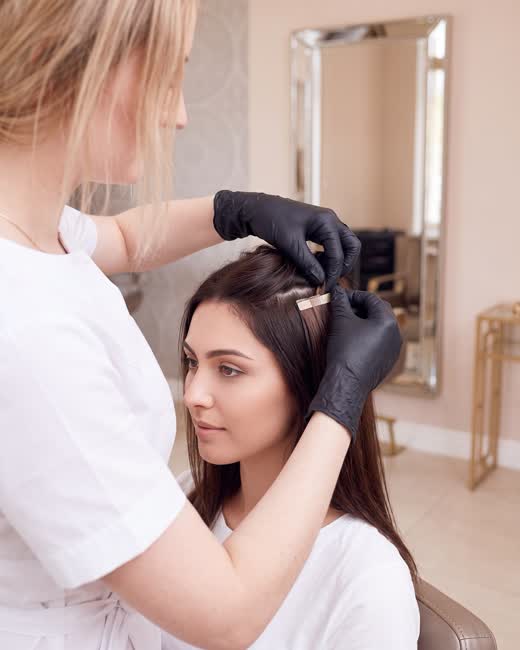
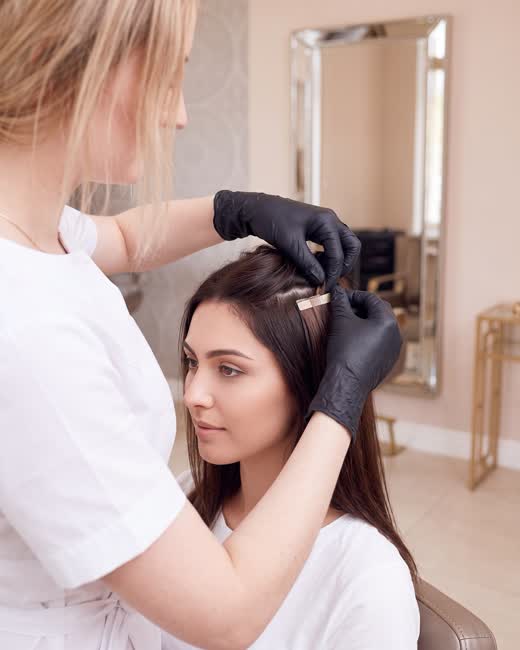
Trichological diagnostics
Scalp assessment, trichoscopy, and a review of lifestyle, diet and general health. Without this, choosing a method is guesswork.
- 02
Scalp preparation
Cleansing and — depending on the protocol — a gentle enzymatic or mechanical peel. Better absorption means better contact between the product and the tissue.
- 03
Delivering the exosomes
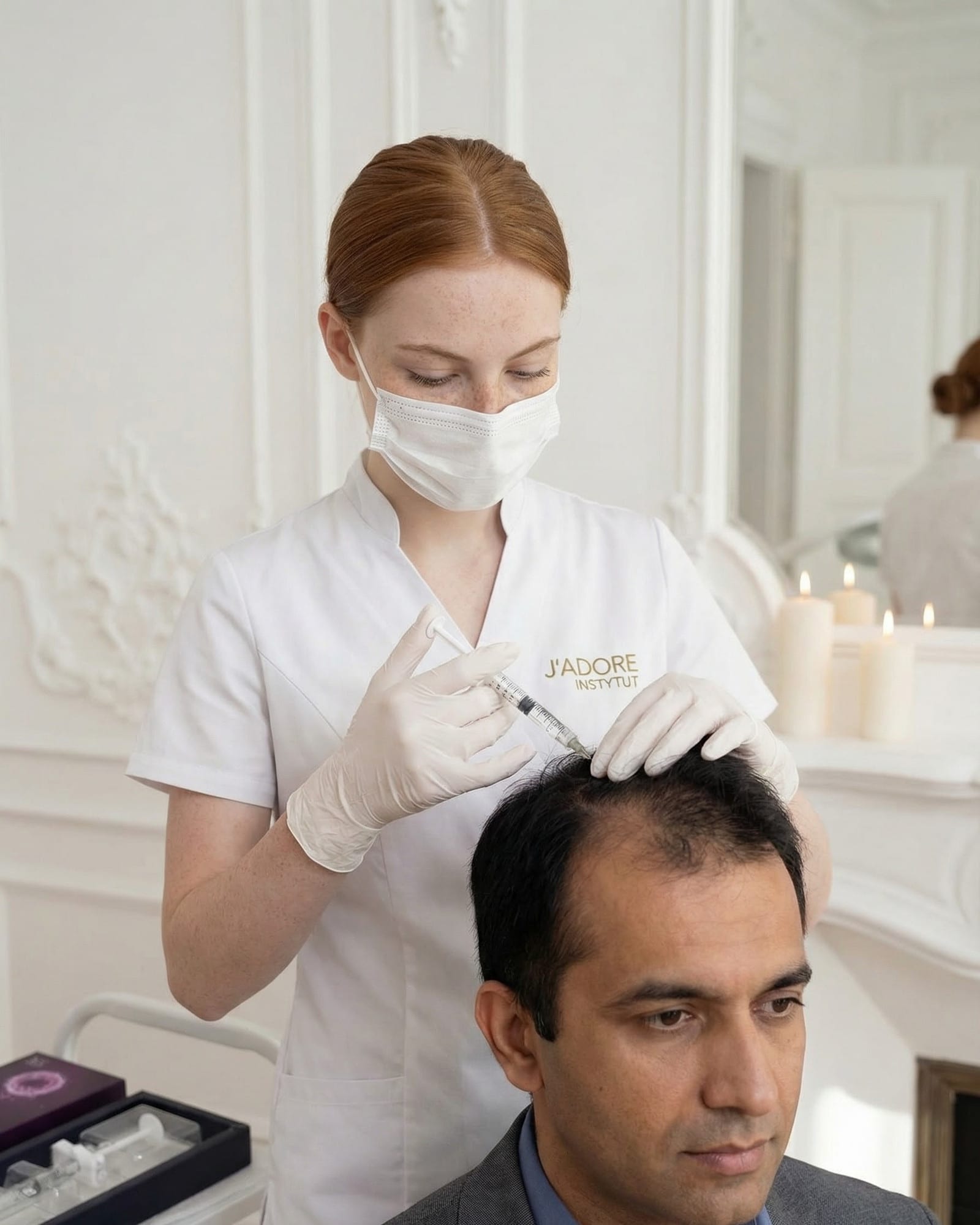
Most often needle mesotherapy (intradermal delivery directly around the follicles) or delivery assisted by microneedling. Surface application is a complement, rarely the sole method.
- 04
Series and monitoring
The standard protocol usually involves several sessions at set intervals, followed by a break to assess results. A realistic assessment of hair condition comes after a few months — that's how the hair growth cycle works.
- 05
Maintenance therapy
For many people, it's worth maintaining results with maintenance sessions or supportive home care after the series. Trichology is usually a marathon, not a sprint.
After the treatment, the scalp may feel slightly sensitive for a day or two — a normal reaction to the injections. It's worth avoiding strong shampoos, hair dye and chemical treatments for a few days. Results — if they appear — tend to show gradually: first less hair loss, then better regrowth quality, and finally density. The order and scale are individual.
Exosomes for women and men — is there a difference?
In women, hair loss is most often linked to hormonal fluctuations (pregnancy, postpartum, menopause, PCOS), iron deficiency with ferritin below optimal levels, and stress. In this context, exosomes can act as support for regeneration after telogen effluvium and improve the environment for regrowth. However, addressing the underlying cause in parallel is essential — iron supplementation or hormone correction is a requirement, not an option.
In men, the dominant issue is AGA — androgenetic alopecia, in which hair follicles gradually miniaturise under the influence of DHT. Exosomes won't reverse this process, but in men with early or moderate AGA, they may slow the progression of thinning and improve the condition of the follicles that remain, especially alongside proven methods (such as minoxidil or finasteride — a medical decision). For men dealing with hair loss, exosomes make sense as part of a broader strategy, not as a standalone answer to genetics.
Before you decide — what's worth establishing
If you're considering the treatment after reading this, start with one question: do I know why I'm losing hair? If not — diagnostics come first. Without them, exosomes are a shot in the dark, even with a top-shelf product. A blood count with iron and ferritin, TSH, hormones — that's the starting point.
A good trichological treatment starts with diagnostics, not with a product. Exosomes are a valuable tool for the right candidates — and disappointing for those who try them without first identifying the cause of hair loss. An honest conversation before the treatment is worth more than the best product delivered at the wrong moment.