Hair lives in cycles — longer ones than you might think
Let's start with the basics, because nothing else makes sense without them. Every hair on your head lives independently and goes through its own cycle — not all at once, but each at its own pace. This cycle has three main phases, and which phase a hair is in determines whether it's growing, waiting, or shedding.
- 01
Anagen — active growth
The longest phase, lasting anywhere from several to over a dozen years. The follicle actively produces hair, which keeps growing. The longer your anagen phase, the greater your hairstyle's potential. Under normal conditions, the vast majority of hair on your head is in this phase.
- 02
Catagen — transition and pause
A short transitional phase, lasting a few weeks. The follicle detaches from its blood supply, stops producing hair, and the hair stays in place. This is the preparation stage before shedding. Only a small percentage of hair is in this phase at any one time.
- 03
Telogen — rest and shedding
A resting phase, during which the hair waits to be pushed out by newly growing hair. Telogen hairs are the ones that end up on your brush and in the shower drain. In a healthy person, a small percentage of hair — typically a few to a dozen or so percent — sits in telogen at any given time. That means losing a certain number of hairs every day is entirely normal.
Why autumn and spring specifically — what photoperiodism tells us
This is a question many people ask: why these two particular times of year? The answer lies in evolutionary biology, and it has a name worth remembering: photoperiodism — the body's sensitivity to the length of daylight.
In many mammal species — and, research suggests, in humans to some extent too — the hair growth cycle is synchronised with changes in light levels. In autumn, as days shorten and melatonin levels start to rise, a portion of follicles enter telogen at the same time. The effect: a few weeks later — in September and October — these hairs begin shedding en masse. In spring, the mechanism can repeat, this time triggered by the sudden increase in light exposure after winter.
This isn't a disease. It isn't iron deficiency or a poor diet, though either can make the problem worse. It's a biological rhythm that made sense for thousands of years: in winter, hair was needed for thermoregulation, and the autumn "shake-out" of follicles prepared the ground for a new cycle. The fact that we now live in heated homes hasn't changed our biology — which is why we still feel it.
When seasonal shedding becomes a problem
Here's a key distinction we routinely blur: seasonal shedding and pathological hair loss are two different things. The first is temporary and physiological. The second requires diagnosis and treatment. Telling them apart isn't always easy, especially since they often overlap.
Seasonal hair shedding
physiological, temporary
- Appears regularly at the same time each year (autumn/spring)
- Usually lasts 4–8 weeks and resolves on its own
- Even shedding across the whole scalp
- Scalp unaffected — no itching, no flaking
- Hairline stays unchanged
Shedding that needs diagnosis
may have a deeper cause
- Lasts longer than 2–3 months with no improvement
- Noticeable thinning at the crown or temples
- Receding hairline (in both women and men)
- Accompanying symptoms: fatigue, brittle nails, brow hair loss
- Scalp is red, flaking or itchy
Cortisol, stress and the delayed-bomb effect
Seasonal rhythm is one factor — but there's a second, often underestimated culprit that hits hair follicles with a delay similar to photoperiodic changes. That's cortisol, the stress hormone.
When the body goes through intense stress — a demanding lifestyle, lack of sleep, a low-calorie diet, a serious illness, surgery, pregnancy — the follicle responds by entering telogen earlier than it should. But the shedding doesn't start immediately — it starts 2–4 months later. That's why summer overload shows up on your brush in September. An intense spring diet shows up in July. A bout of flu or COVID shows up a few weeks after recovery.
This delay also explains why "anti-shedding" treatments rarely show immediate results. New anagen growth — the kind that becomes visibly thicker hair — doesn't appear after a week. It takes months of consistent action. Hair treatment needs a season's perspective, not a week's.
When to start treatment — the logic of cycle phases
Since the shedding you're seeing began months ago — and new growth will take several more months — the question of "when to start" has a clear answer: ideally, before what you're seeing has a chance to intensify. In other words, before the peak of the shedding season, not after it.
In practice, this means two windows:
- August–September — just before the peak of autumn shedding. Treatment started at this point can "strengthen" follicles entering telogen and support a faster return to anagen. Visible thickening can appear as early as December.
- March–April — the same logic applies before spring shedding, which for many people appears between March and May. Starting treatment at the turn of winter and spring makes this episode easier to get through.
Treatment started during the peak of shedding still makes sense — it just needs a more patient perspective. Follicles that have just entered telogen won't be pushed back into anagen by any active ingredient. But the ones on the verge of transitioning can still be supported. That's exactly what a well-chosen treatment does: it doesn't stop shedding instantly, but it shortens the telogen episode and stimulates a faster start to anagen.
What genuinely supports hair follicles — and what makes less sense
Now that we know when and why, the question becomes: what should you actually do? The market for hair-loss supplements, treatments and procedures is overwhelming, and marketing does everything it can to make every product seem essential. Let's try to make sense of it.
A solid foundation
makes sense for most people
- Correcting a confirmed deficiency (ferritin, vitamin D, zinc)
- Adequate protein intake in your diet — keratin is a protein
- Sleep and reducing chronic cortisol (not "less stress" in the abstract — concrete steps)
- Scalp massage — improves microcirculation; a few minutes, daily
- Specialist treatments that stimulate follicles from both outside and within
Less certain effectiveness
often overhyped
- "Anti-shedding" shampoos without active ingredients that penetrate deeper than the scalp surface
- Multivitamin supplements without a diagnosis — you may miss the actual deficiency
- Oils applied without massage — simply applying oil doesn't stimulate the follicle
- Treatments based solely on scalp masks — effective, but only for a certain type of hair loss
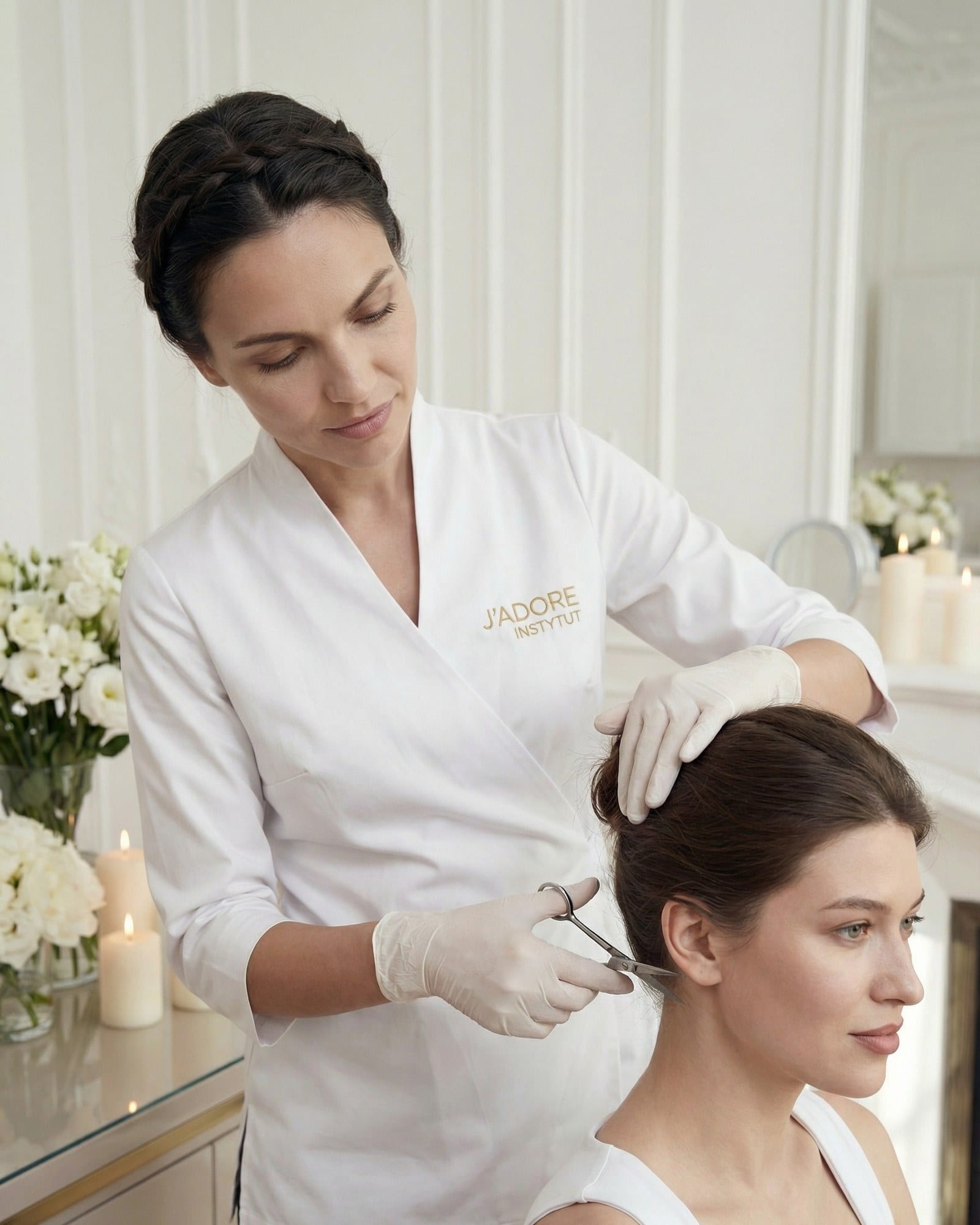
Clinic-based treatments tend to give more predictable results than home care, because they act directly on the follicles and scalp, bypassing a barrier that no shampoo or supplement can cross. Scalp mesotherapy, platelet-rich plasma and phototherapy are methods that can, for many people, speed up recovery from a telogen episode and strengthen new anagen growth. But — and this matters — none of them replace treating the underlying cause if the shedding has a hormonal, deficiency-related or autoimmune origin.
Scalp mesotherapy
Delivers active ingredients directly to the scalp — stimulating follicles from the outside. Works well as support during a telogen episode and as prevention ahead of shedding season.
Platelet-rich plasma (PRP) for hair
A concentrate of growth factors from your own blood, used to encourage follicles to return to anagen faster. For many people, this can give more noticeable results than supplementation alone.
Trichology consultation
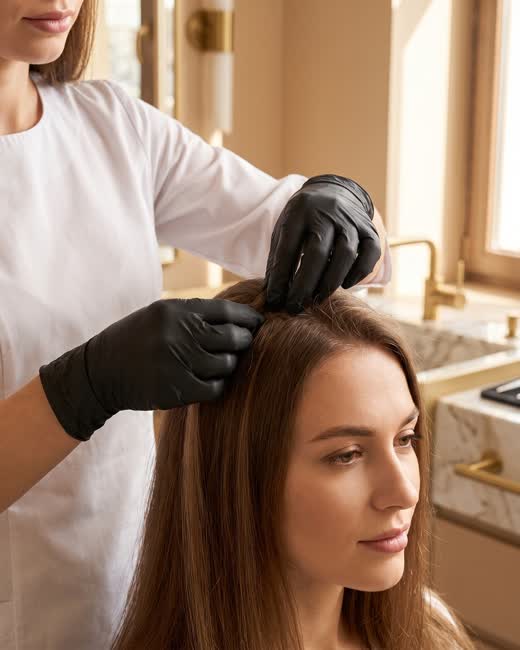
A starting point for anyone unsure whether they're dealing with seasonal shedding or a problem that needs diagnosis. A trichologist assesses your scalp and history, then directs you to testing — or straight to treatment.
Summary: a plan of action for every season
Seasonal hair shedding has its own rhythm — and fighting it, reacting in a panic after the fact, rarely brings relief. Working with it — acting ahead of time, calmly, with understanding — gives far better results.
- Summer
Prevention and diagnostics
The best time for testing: ferritin, TSH, vitamin D. Results give you a clear picture of what you're heading into autumn with. Scalp massage — a few minutes daily, all year round.
- August–September
Start treatment before the peak
If autumn shedding has been heavy for you in previous years, this is the ideal time for treatments and intensive support. Follicles can be strengthened before they enter telogen.
- September–October
Peak shedding — don't panic
If you're seeing more hair on your brush, it may simply be a biological rhythm, not a catastrophe. Continue your treatment rather than restarting it or stopping altogether.
- November–February
Patient continuation
New anagen growth needs time. Results from treatment started in September may only become visible now — as new, short hairs along the hairline.
- March–April
Start before spring
The same logic applies here: if spring shedding is a problem for you, start support beforehand, not during it. Same logic as with autumn.