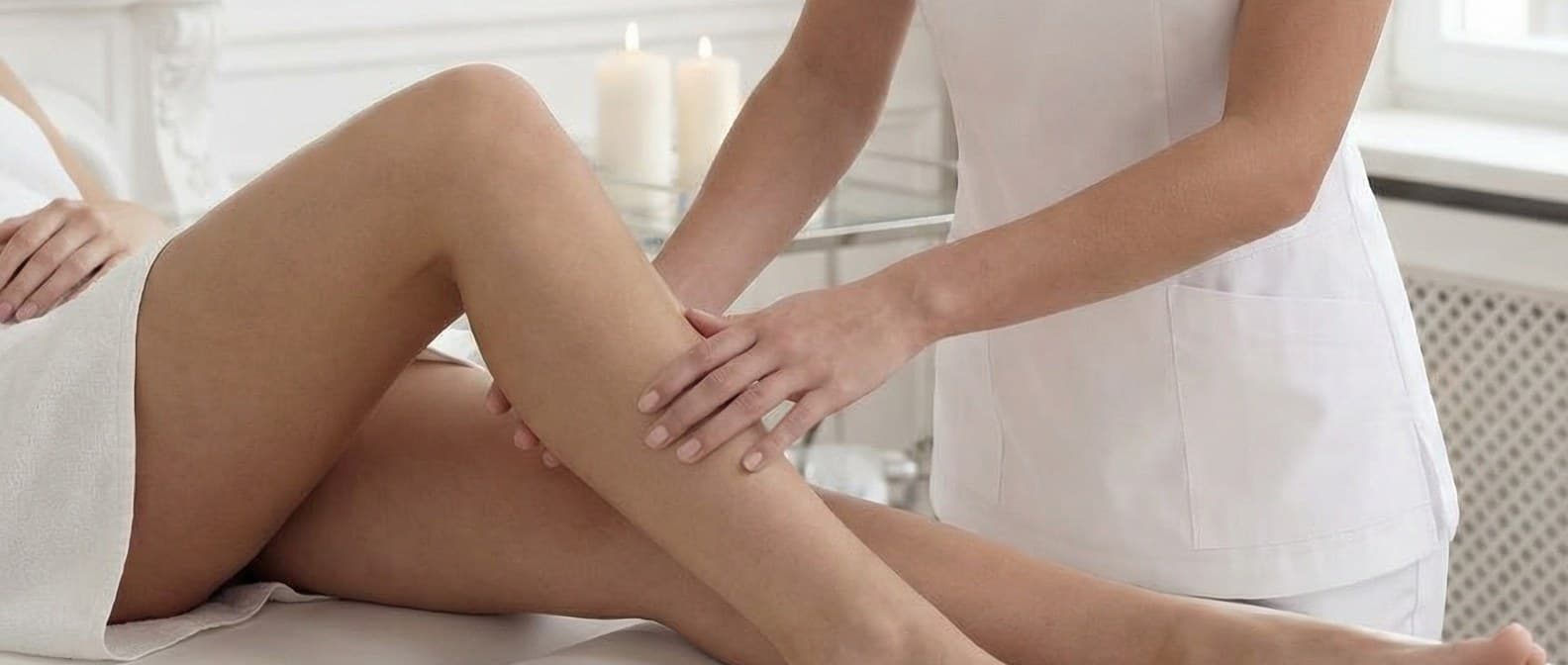
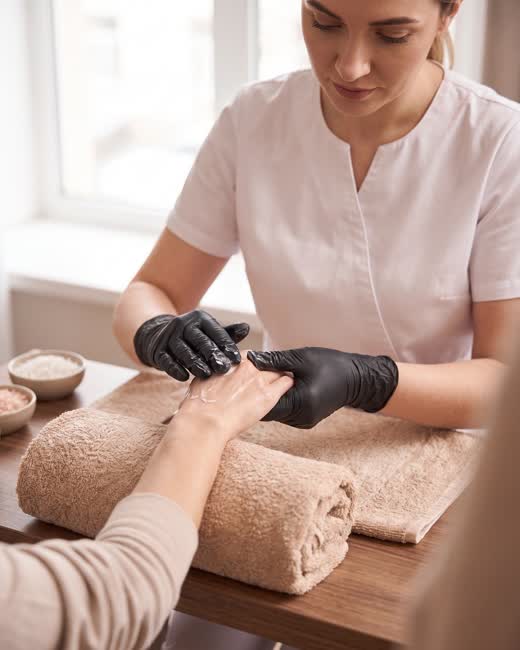
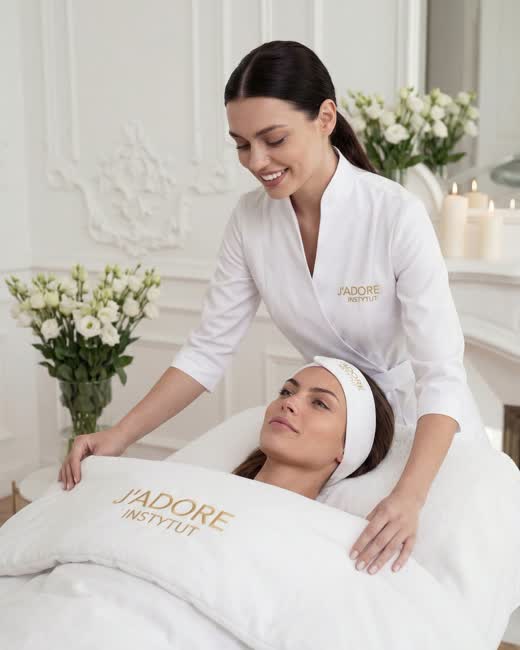
A treatment room at J'adore
MASSAGE & SPA (~30)
Muscle soreness that won't go away, a "locked" neck after overload, tight calves after running, stiff hips from sitting and the gym — this isn't always a matter of "overtraining". Often it's muscles bound in tension and trigger points that limit range of motion and keep the pain going.
Sports massage is deep, deliberate work with the muscle — petrissage (kneading), cross-fibre pressure, trigger point release and stretching. This isn't relaxation "under a blanket": it can be intense, and brief discomfort while tension is released is normal — but real relief follows, with lighter, "unlocked" muscles and greater freedom of movement. It works well for active people — at the gym, running, and in sport — both for recovery after exertion and for injury prevention. At J'adore Instytut, the treatment is performed by a massage therapist / physiotherapist. Below you'll find everything worth knowing before your first visit.
as a one-off or regularly, in line with your training rhythm
How it works
Sports massage means deep work with muscle tissue (deep tissue) — the therapist reaches beneath the surface layers to muscles that are typically bound and overly tense in everyday life. It uses petrissage (kneading and rolling the muscle), cross-fibre pressure, and work on trigger points — those painful "knots" that can restrict movement and refer pain further than you'd expect.
The goal is specific: to release overload tension, restore range of motion and speed up recovery after exertion. The session often ends with stretching, which locks in the result. It's a massage "with a task", not just relaxation — though once the tension is released, the relief can feel just as good.
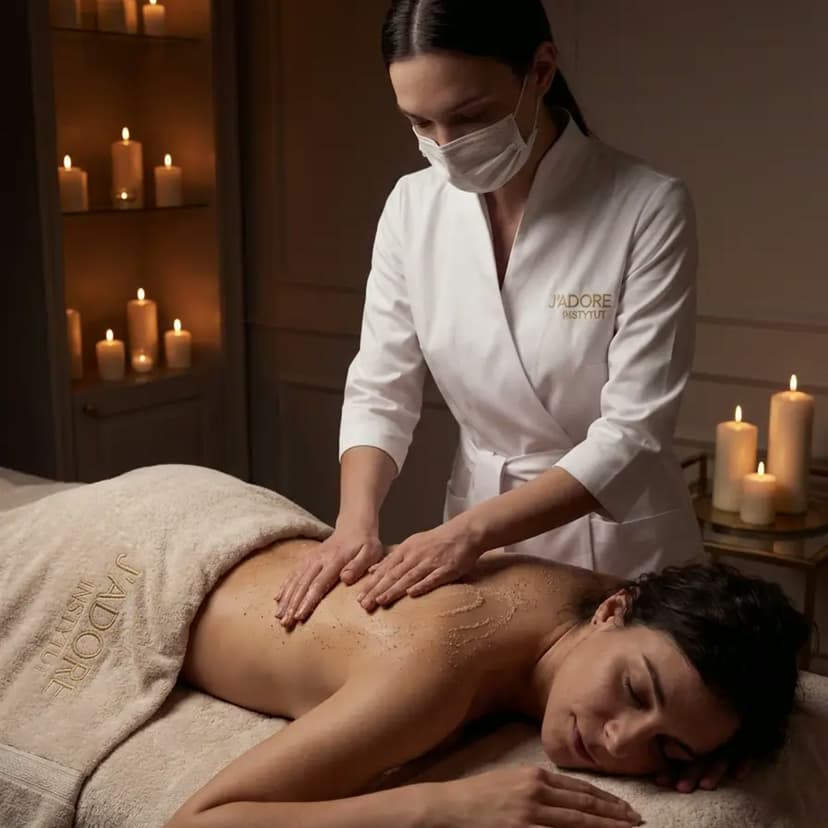
Did you know? A trigger point can "lie" about where it hurts — a compressed knot in the neck muscle can refer pain all the way to the temple or between the shoulder blades. That's why the therapist sometimes works in a completely different spot from the one that's bothering you — and that's exactly where the problem gets solved.
Ideal for
Women's zone and men's zone
Contrary to popular belief, sports massage for women isn't a niche service — runners, and women doing strength training, CrossFit or yoga face exactly the same overload issues. The work is just as deep, and pressure is always matched to you and your threshold, never forced.
What we work with
Sports massage for men follows the most common pattern: strength training, greater muscle mass and desk work create heavily bound, overloaded areas. The work can be more intense simply because the tension is greater — but always with communication, never "full force without asking".
What we work with
Did you know? In sports massage, "harder" doesn't always mean "better". Overly aggressive pressure makes a muscle tense up reflexively instead of releasing — the opposite of the intended effect. The skill lies in the right pressure, not the maximum pressure.
Contraindications
Some contraindications are permanent, others temporary — in that case, we simply postpone the session until the situation passes. These are the standard contraindications to massage:
If you have a recent injury, worsening acute pain, swelling, redness and heat, or suspect a blood clot, this isn't the moment for a sports massage. See a doctor or physiotherapist first. Deep work on a recent injury can do harm — massage supports recovery, but it doesn't treat acute injuries.
This isn't a complete list — we'll go through your injuries, conditions and medications individually at the start of your visit. If in doubt, always see a doctor or physiotherapist first.
The visit
The session is tailored to you — shorter and targeted (one area) or longer and fuller (larger parts of the body). Here's how it usually goes:
Conversation
how you train, what's bothering you, what to avoid — and what pressure suits you
Warm-up
gentler techniques prepare the muscle for deeper work
Deep work
deep tissue, cross-fibre pressure, trigger point release
Stretching
stretching and "closing off" the released muscles
After the session
guidance: hydration, rest, when to return to training
Portfolio
A record of the work in our salons — the place where we publish treatment frames and, after photo sessions, results.
A record of results — in preparation. We publish photographs of our clients only with their consent.
What to expect
Most importantly, you'll feel relief straight away, though the muscles may "remember" the work for a while. How you look after yourself right afterwards genuinely affects how quickly you recover.
From the therapist
I often hear the next day, "I think you massaged me too hard, it hurts." If it's tenderness like after a training session, easing within a day or two, that's a normal response to deep work, not a complication. Warning signs are sharp, worsening pain, swelling or bruising — if that happens, get in touch and skip your next training session.
After the session, the muscle is released and better perfused — that's why hydration and rest matter. With regular work, bound areas recur less often, and range of motion and training comfort gradually improve.
Sports massage and your training
The most common questions aren't about the session itself but about what happens around it: training, sauna, hydration, your next run. The rule is simple — after deep work, the muscle needs recovery, not another load straight away.
After a massage, muscles are better perfused — drink water and top up electrolytes. Hydration supports recovery and reduces post-treatment tenderness.
The best thing you can do after deep work is let your muscles rest — a calm evening, sleep, less strain. Recovery happens during rest, not at your next training session.
After a strong deep tissue session, skip intense, heavy training for a day or two. A released muscle needs a little time to return to full readiness — overloading it too soon increases the risk of injury.
Heat dilates blood vessels and intensifies the muscles' response. Plan a sauna or a very hot bath for later in the day or the next day, rather than straight after an intense session.
Gentle movement — a walk, light stretching, easy movement — helps, as it "spreads" the effect and reduces stiffness. The idea is lightness, not another intense workout.
Schedule a strong recovery massage a few days before the event, not the day before. A short, activating pre-competition session works better right before exertion.
Sports / therapeutic massage (deep tissue)
These are three different kinds of bodywork, and they don't replace each other — in fact, they often work well together. Here's a quick guide to help you find what you actually need:
deep work with a tense muscle
not a gentle relaxation massage "under a blanket", nor lymphatic drainage for swelling
relaxation and general release
doesn't target deep, bound overload the way deep tissue does
working with lymph and swelling
isn't deep muscle work — it won't release a bound, overloaded area
Sports massage pairs well with other forms of bodywork — depending on whether the goal is recovery, relaxation, or persistent overload. The therapist decides the rhythm and sequence, but the logic stays consistent:
For persistent, recurring overload, it's worth adding **shockwave therapy (Storz ESWT) — device-based support where manual work alone isn't enough. After exhausting competitions, drainage (manual lymphatic drainage)** helps with "heavy" legs.
The most common thing I hear is "I want a strong massage to relax." If relaxation is the goal, classic massage tends to be a better fit. Sports massage has a job to do: releasing specific, bound tension. Simple rule: a specific area hurts and restricts movement → sports massage. You just want to unwind → classic. Heavy, swollen legs → drainage.
Variants
"Sports massage" is an umbrella term covering several types of work. The variant is chosen to match where you are in your training cycle and what your muscles need — your therapist decides this with you at the start of the visit.
The most intense form — petrissage, cross-fibre pressure, reaching deep, bound layers.
Dla kogoPersistent tension, stiffness, "locked" areas that need real work to release.
Helps muscles bounce back faster, releases them after exertion and brings relief.
Dla kogoThe day(s) after a big training session, a long run or a competition.
A shorter, more activating session — it prepares muscles for work rather than releasing them too deeply.
Dla kogoRight before a competition, event or important training session.
Targeted pressure on painful "knots" that limit movement and refer pain.
Dla kogoA specific, persistent pain point and limited mobility in one area.
Fact: Variants often overlap within a single session — for example, deep tissue on a bound neck plus trigger point work between the shoulder blades. You don't need to choose in advance — just tell us what's bothering you and how you train, and your therapist will take care of the rest.
Price list
Checking free hours…
From the magazine
Editorial pieces on how this treatment works in practice — what happens during the session, how to prepare, where the limits are and what the first days after look like.
See also
The result lastsrelief straight after the session; for training, it works best as a seriesJ’adore Instytut
Information. Sports massage is a wellness / recovery service; it does not replace diagnosis or medical treatment. If you have a recent injury, acute inflammation, a chronic condition, are pregnant, or have any doubts, consult a doctor or physiotherapist first. The above text is for information only. Details and the choice of variant are decided by the massage therapist / physiotherapist during your visit.
Home care
Cosmetics matched to what your skin needs after a treatment — so the clinic effect lasts longer.
 body careSkeyndorCannabis Massage Cream – Spa SensesView in the shop(opens in a new tab)
 soothing body skinDiego Dalla PalmaSENSITIVE Lipid-Balancing Body Cream 350 mlView in the shop(opens in a new tab)
 body careMesoesteticBodyshock Essential CreamView in the shop(opens in a new tab)
 soothing body skinestGenLive Balancing BalmView in the shop(opens in a new tab)
 body careDermalogicaBody Hydrating Cream 295 mlView in the shop(opens in a new tab)
 body careDermoMedicaActive Antioxidant Body Lotion 200 mlView in the shop(opens in a new tab)
 body careDiego Dalla PalmaSENSITIVE Delicate Cleansing Oil for Body 350 mlView in the shop(opens in a new tab)
 body careSkeyndorOrchid and Wild Roses body lotion – Spa SensesView in the shop(opens in a new tab)