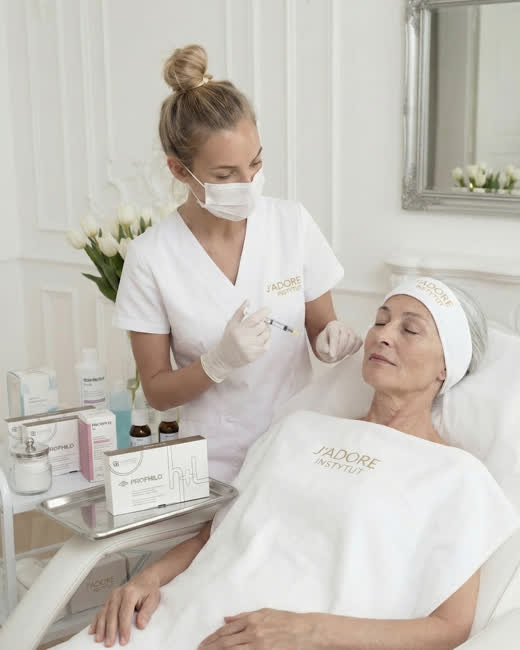
What happens to skin after thirty — and why the gym won't fix it
Collagen and elastin are the proteins that give skin its elasticity — its ability to "bounce back" after being stretched. Production of both declines steadily after thirty. No diet or training reverses this, because it's a biological process, not a lifestyle outcome. On top of that, the dermis loses its natural moisturising factors. The result? Skin starts to look tired, grey, less "alive" — and loses the firmness that once held the contour. This isn't about wrinkles. It's about the quality of the tissue itself.
In men, this process runs differently to women. Thicker skin and higher baseline collagen mean the changes are less visible at first. But once they become visible, they progress faster. That's why men often say the change from one year to the next was bigger than expected.
Skin biostimulator — what it actually is, and how it differs from fillers
Here's the key difference many people miss at first. The skin biostimulator isn't a filler. Classic hyaluronic acid in aesthetic medicine is used for filling — injected into a specific spot, it adds volume and pushes a wrinkle out from within. The skin biostimulator works completely differently. Instead of staying at the injection site, it spreads through the tissue and stimulates it to produce its own collagen and elastin. It's a regenerative treatment, not a volumetric one.
Classic filler (hyaluronic acid)
what it is and what it does
- fills a specific area (a wrinkle, lips, cheek)
- gives immediate volume
- stays at the injection site for many months
Skin biostimulator
what it is and what it does
- spreads through the subcutaneous tissue
- stimulates collagen and elastin production
- improves skin firmness, hydration and elasticity
This means that after skin biostimulator, your face doesn't change shape — it just looks healthier. Skin is more hydrated, firmer, more elastic. The contour holds better. The effect is subtle and natural, because it comes from strengthened tissue, not from filling. That's what makes it practically invisible as a treatment. You see the result, not the intervention.
Who benefits — specific situations
The skin biostimulator isn't for everyone, and it doesn't solve every problem. It's specifically for those whose skin has lost quality, not shape. It works well when:
- Skin looks grey and tired — no radiance, a sallow tone, no life even after enough sleep and exercise.
- The contour starts to soften — no deep folds yet, but the jawline has lost its former sharpness and firmness.
- Skin has become dry and less elastic — pinch it and it doesn't spring back instantly; it feels "thinner" than a few years ago.
- You want to improve overall skin condition without changing your features — you want to look healthy and rested, not "done".
The skin biostimulator isn't, however, a solution for deep wrinkles, nasolabial folds or volume loss, such as sunken cheeks. In those cases, the doctor may suggest a combination of treatments — but skin biostimulator itself isn't a volumetric correction.
What the treatment involves and what to expect
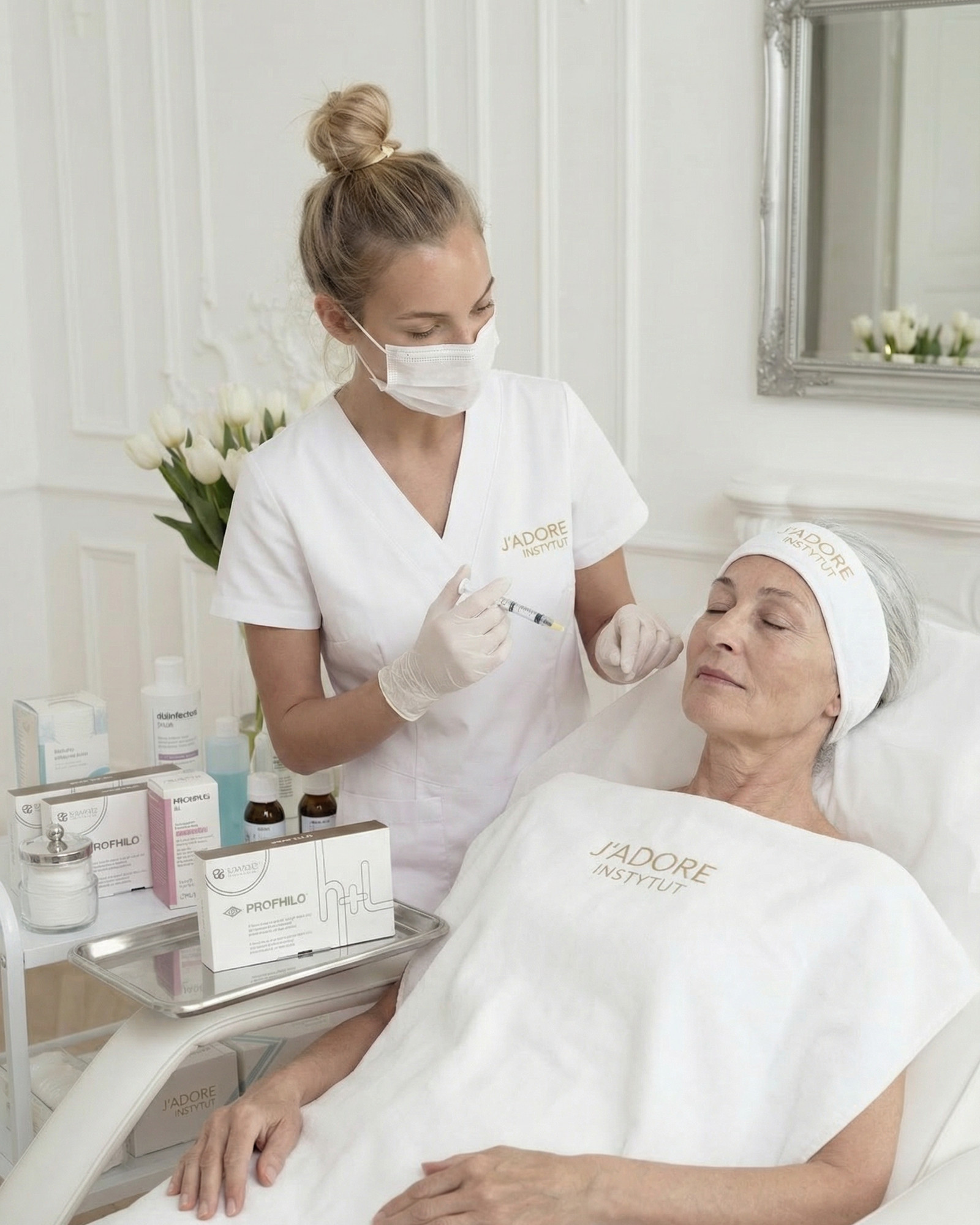
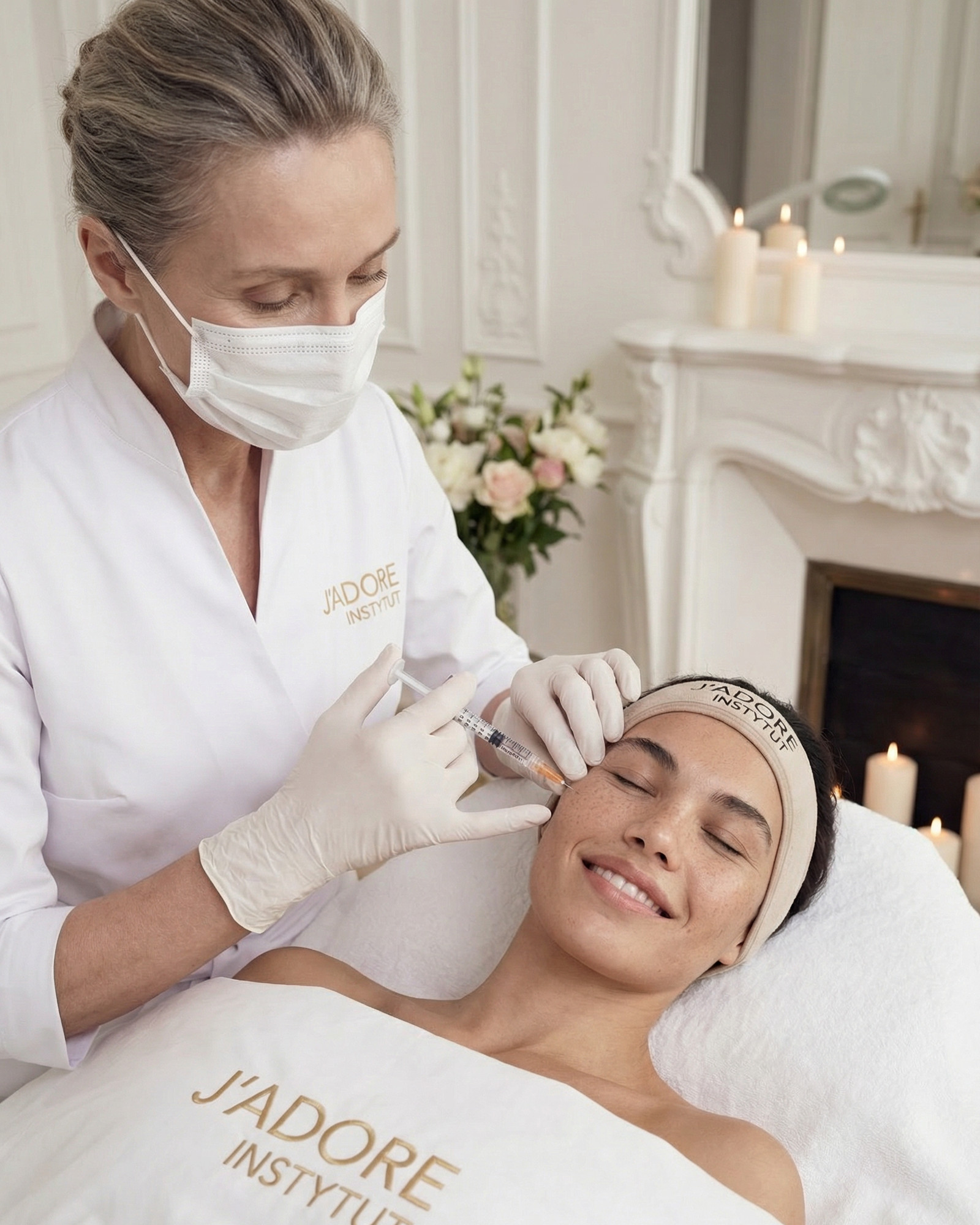
A skin biostimulator is administered at points selected according to anatomy and the specific product instructions. The number and depth of injections and use of a needle or cannula are not the same for the whole category. The doctor should explain the proposed technique and its limitations beforehand.
- 01
Step
Medical consultation — we assess your skin condition, tissue thickness, indications and any contraindications. No treatment without a consultation.
- 02
Step
First session — a few precise injections, with or without local anaesthesia (the product is well tolerated). The whole session takes just a few minutes.
- 03
Step
Wait 4 weeks — the product works within the tissue, stimulating collagen production. The effect builds gradually; it isn't instant.
- 04
Step
Second session — one month later. Full results are only assessed after both sessions — that's how the protocol is designed.
- 05
Step
Maintenance — usually once a year or every six months, depending on skin condition and preference. Results don't fade abruptly.
You may notice slight swelling or redness at the injection sites — this is a normal reaction that settles within a day or two. Skip intense exercise, the sauna and alcohol for a few hours after the treatment. Otherwise, there's no downtime — you can return to your normal day straight away.
Skin biostimulator and other treatments — what to combine, what not to mix
Skin biostimulator combines well with other treatments, because it doesn't change facial shape or conflict with most aesthetic procedures. It's often paired with Botox — for frown lines or bruxism, for example. Botox relaxes a specific muscle, the skin biostimulator improves the surrounding skin's condition, and the two effects complement each other. The same goes for biostimulators and polynucleotides — different mechanisms, similar regenerative goal.
There's one rule: don't schedule skin biostimulator immediately before or after laser treatment or an intensive peel in the same area — skin needs time to recover. Your doctor will work out the right order during consultation if you're planning more than one treatment.