Where did the shared name even come from?
Let's start at the root. Medical Botox is the brand name of a product containing botulinum toxin — a substance produced by the bacterium Clostridium botulinum. In very small, precisely calculated doses, administered by a doctor, this toxin blocks neuromuscular transmission. The muscle it's injected into temporarily stops contracting — and this mechanism is exactly what its use in aesthetic medicine relies on: expression lines soften because the muscle can no longer create them. This is a purely medical, invasive (needle-based) procedure, performed only by a doctor.
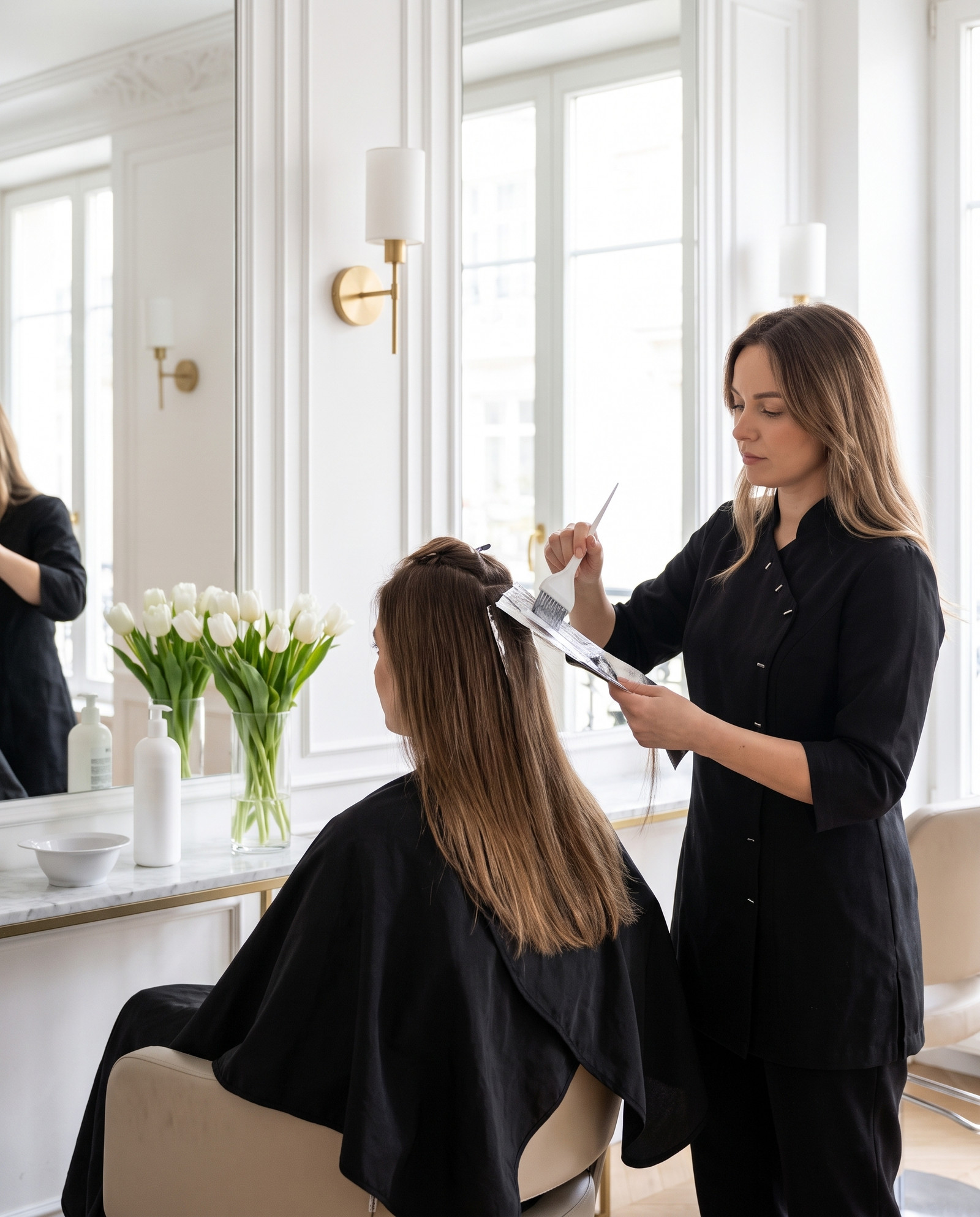
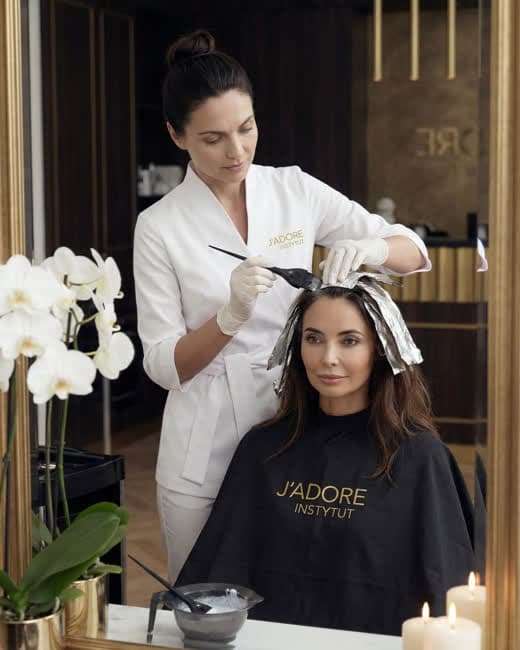
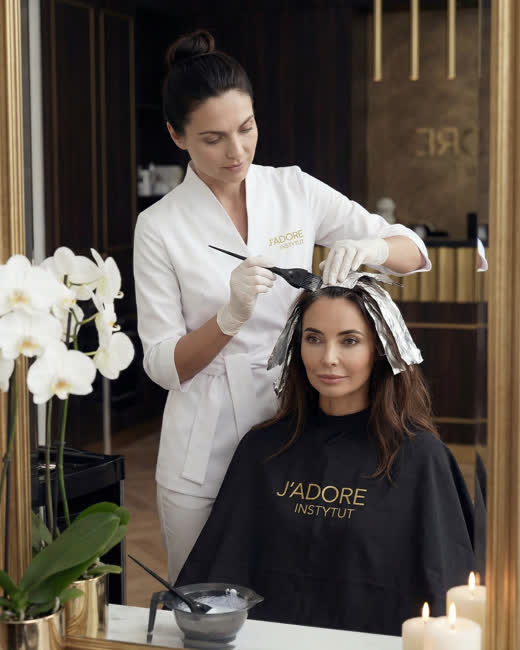
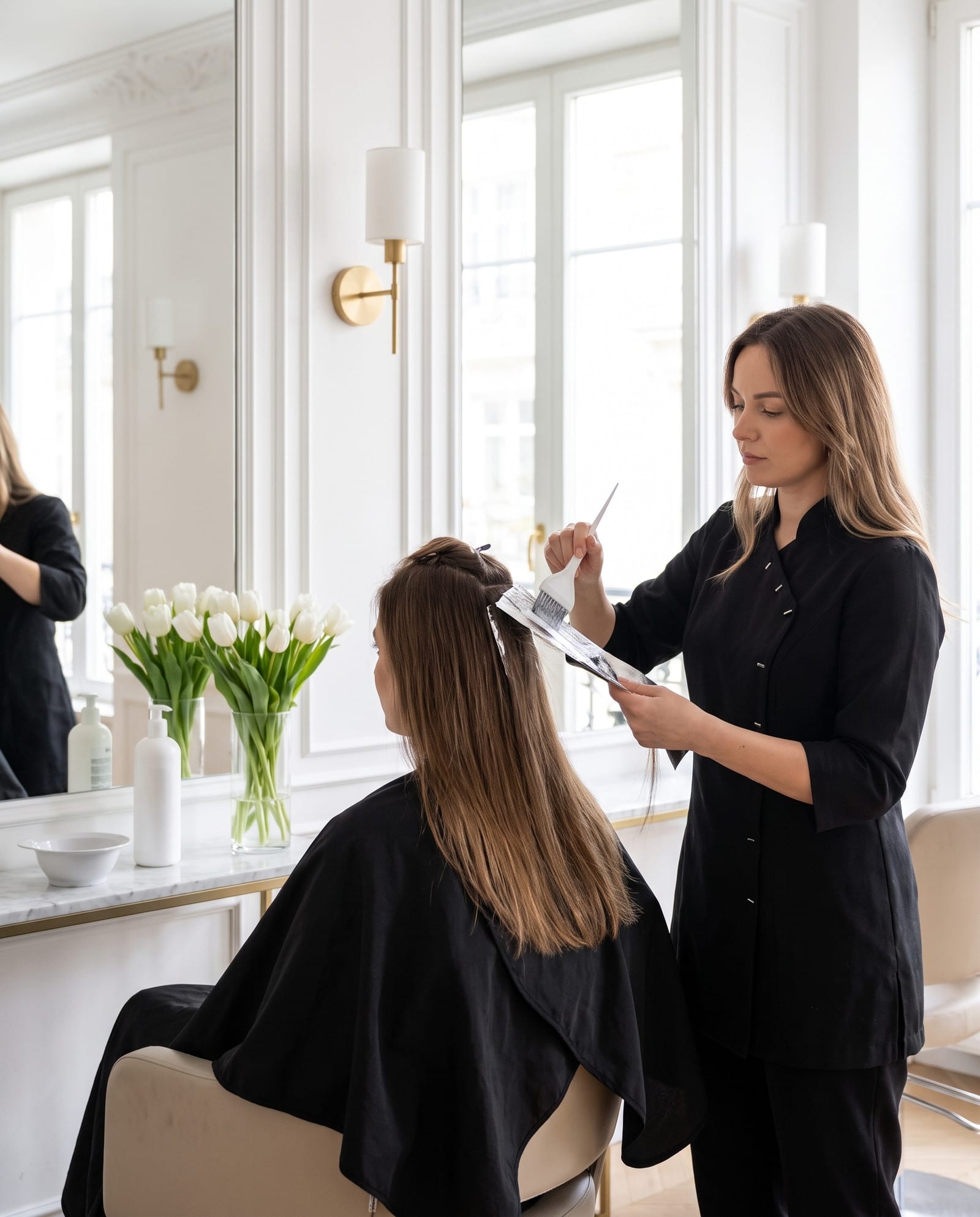
Hair botox, on the other hand, is a hairdressing treatment focused on hair care. It contains no botulinum toxin — the name is a marketing device that emerged in the hairdressing industry roughly a decade ago. Manufacturers noticed that the word "botox" carries associations with intensive regeneration, reversing signs of ageing and instant results — and they carried that association over to hair. The result? A catchy name for a treatment that works in a completely different way, but sells well.
Medical Botox — how does it actually work?
To understand medical Botox, we need to look briefly at how a muscle works. In a healthy nervous system, an electrical impulse reaches the neuromuscular junction and triggers the release of acetylcholine — a neurotransmitter that tells the muscle to contract. Botulinum toxin blocks exactly this step: it enters the nerve ending and prevents the release of acetylcholine. The muscle still exists, it's still healthy, but it doesn't receive the signal to work. Temporarily.
- 01
Administration
The doctor injects a very small amount of botulinum toxin into a precisely chosen site (an expression muscle, a sweat gland, and so on) using a fine needle.
- 02
Receptor binding
Over the following days to about two weeks, the toxin binds to receptors at the nerve ending. The blocking of transmission becomes visible gradually — full results usually appear after around two weeks.
- 03
Effect
The muscle stops contracting — and stops creating expression lines. The skin in that area smooths out, because there's no force left to crease it with every facial movement.
- 04
Recovery
The body gradually rebuilds the neuromuscular connections. The effect is temporary — for many people it lasts several months, after which the treatment needs to be repeated.
Hair botox — what is it really?
Hair botox is a treatment for deep regeneration and reconstruction of hair structure. Its active ingredient isn't any kind of toxin — usually it's a blend of keratin, collagen, amino acids, hyaluronic acid and ceramides, complemented with vitamins and hydrolysed proteins. The exact composition varies by brand and product, but the goal is always similar: to fill in the gaps in damaged hair structure and restore elasticity, hydration and smoothness.
Hair that's been repeatedly dyed, lightened, blow-dried at high heat or simply exposed to harsh weather has a weakened or damaged cortex and cuticle — essentially, "holes" in its structure. Hair botox works like molecular-level filler: the nourishing ingredients penetrate these gaps, bond with keratin, fill in the damaged areas and — under the heat applied by the stylist — partially bind to the hair's structure.
- Keratin — a protein that builds hair; fills in gaps in the cortex and smooths the cuticle
- Hydrolysed collagen — attracts and retains moisture inside the hair, restores elasticity
- Ceramides — seal the cuticle, reduce swelling and frizz in humid air
- Amino acids — the building blocks of proteins; support the rebuilding of natural structure
- Hyaluronic acid — intensive hydration and added shine; visible for many people after just one treatment
Side by side — two views in the same mirror
Since the mechanisms are so different, it's worth placing them side by side to see the full picture. This isn't about ranking one above the other — neither treatment is "better". Each does something different, for a different area, with a different rationale. The difference is so significant that comparing them by effectiveness wouldn't make sense — it's like asking whether a cardiologist or an orthopaedist is better.
Hair botox
hairdressing treatment — restoring hair structure
- Ingredients: keratin, collagen, ceramides, amino acids
- Mechanism: filling gaps in hair structure
- Application: applied to hair + heat (straightener)
- Result: smoothness, hydration, shine, reduced frizz
- Performed by: a hairdresser
- Duration: temporary (several weeks to a few months)
- Ideal for: damaged, over-dried, frizzy or dull hair
Medical Botox
medical procedure — blocking expression muscles
- Ingredient: botulinum toxin (a biological protein)
- Mechanism: blocking neuromuscular transmission
- Application: needle injection at precise facial points
- Result: smoother expression lines, refined facial contour
- Performed by: an aesthetic medicine doctor
- Duration: temporary (several months)
- Ideal for: forehead lines, frown lines, crow's feet
Why the same name — and what does it mean for you?
Given how different these two treatments are, why did the hairdressing industry pick up the word "botox"? The answer is simple, and a little cynical: the marketing power of the word. Botox has become synonymous with fast, intensive transformation — something that "rejuvenates" and delivers an instant result. That association was too tempting not to use. And it worked: hair botox quickly climbed into the top tier of restorative treatments.
For someone looking for a treatment, this creates one specific problem: confusion at the booking stage. There are cases where a client walks into a hairdressing salon for "botox" with an injection and a medical result in mind — or where, when booking a visit at a medical clinic, someone asks about "hair botox". So it's worth building a simple habit: before you book, ask not about the name but about what the treatment actually involves and what you can realistically expect. A good salon or clinic will always answer that question directly.
When is each one worth considering?
This isn't a question of "which one to choose" — these treatments address completely different needs and don't conflict with each other. You can do both, in different places, for different purposes. The question worth asking is really: what's bothering me most right now? If it's the condition of your hair — the logic points towards a hairdresser. If it's expression lines or facial contour — towards a medical clinic.
- Consider hair botox if: your hair is dry, dull, frizzes in humidity, or has lost elasticity and shine after dyeing or lightening — and you're looking for intensive nourishment in a single visit
- Consider medical Botox if: you're bothered by expression lines (forehead, around the eyes, between the brows), you want to gently soften your facial expression or lift the corners of your mouth — and you want a result in the skin and muscles, not the hair
- Both make sense at the same time — if you care about both the condition of your hair and the appearance of your face, you can book both treatments, just in different places and with different specialists
Results — what can you realistically expect from each?
Both treatments are temporary — worth keeping in mind when managing your expectations. Medical Botox lasts several months for many people, after which the muscles gradually regain function and the treatment needs repeating. Hair botox typically lasts a few weeks to a few months, depending on hair structure, washing frequency and the products used. Neither one "fixes" anything permanently — both require regularity if you want the effect to last.
- After hair botox, many people notice: smoother, more manageable hair, less frizz in humidity, intense shine, easier combing and styling; hair often looks thicker in cross-section
- After medical Botox, many people see: visibly smoother expression lines, a less "tired" look at rest, a softer facial expression; the effect usually develops gradually over about two weeks after the treatment
- What neither one does: hair botox doesn't change hair colour, doesn't reduce styling time with a perm, and doesn't replace reconstruction for severely damaged structure; medical Botox doesn't fill hollows in the skin, doesn't lift the cheeks, and doesn't improve skin quality itself
One word — two realities
It's rare for a single word to become so firmly rooted in two different fields, and to cause so much confusion in the process. Today, "botox" is a word that carries a promise — an almost magical transformation, an instant result, something luxurious and intensive. And that promise is delivered — just by someone different, in a different way, in a different place, every time.
Understanding this difference won't put you off either treatment — both make sense, both work. But it gives you something more important: the confidence that you'll book exactly what you're looking for — and that the result won't come as a surprise. Because in skincare and aesthetic medicine, disappointment usually doesn't come from a flawed treatment, but from mismatched expectations. Knowledge is the simplest way to avoid that.
Hair botox + scalp treatment
Restoring hair structure and caring for the scalp are two different goals — but they complement each other well for dryness or hair loss. A hairdresser and a trichologist can work in parallel.
Medical Botox + skin biostimulators
Botox smooths expression lines, while biostimulators improve the density and quality of the skin itself — together they address both muscle movement and the condition of the skin underneath. Often combined in the same visit to the doctor.
Hair botox + regular keratin care
The in-salon treatment and daily home care reinforce each other — keratin products extend the results of hair botox, and the treatment itself keeps the structure intact between visits.