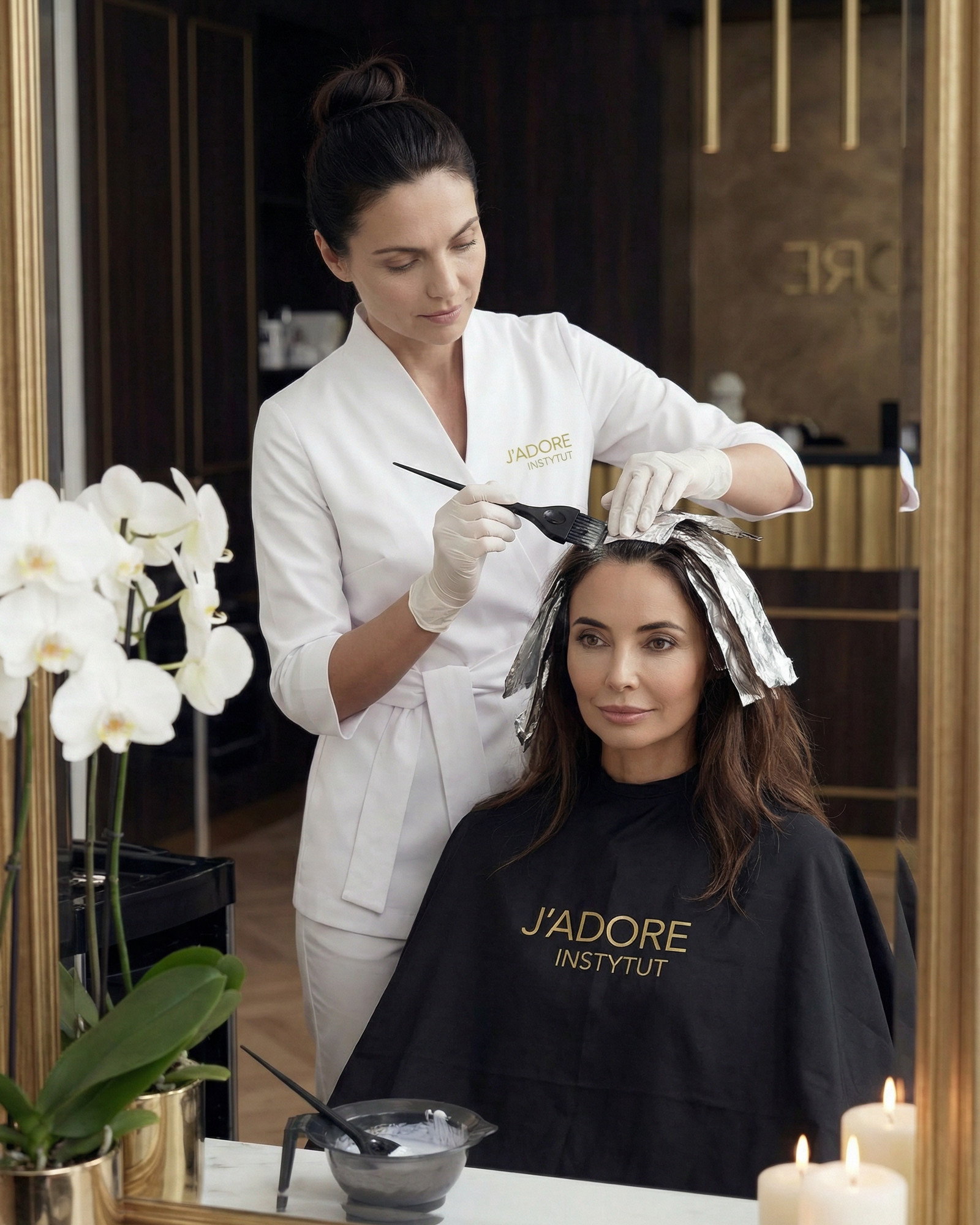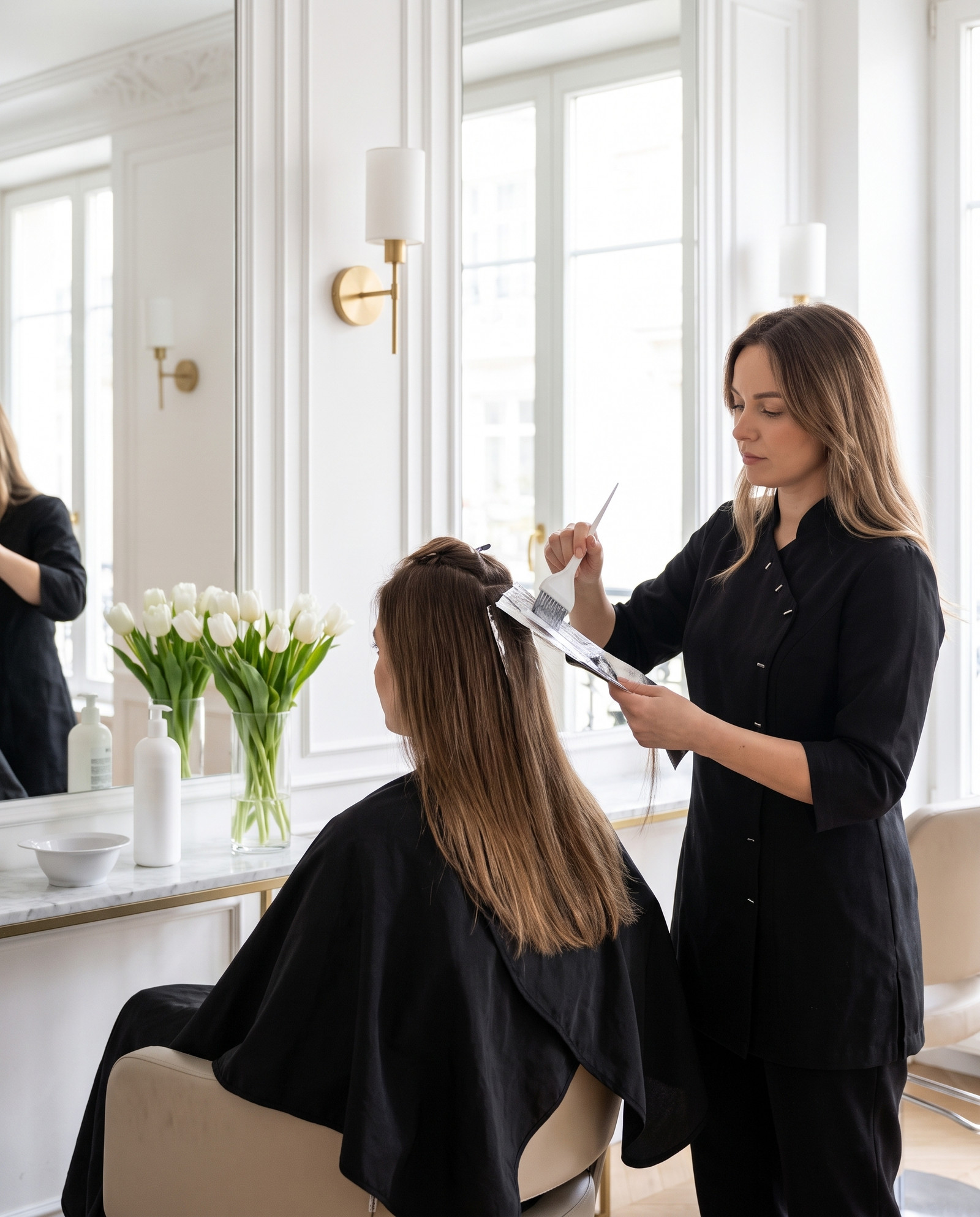
Colour temperature — what does it actually mean?
Every colour has a temperature — warm or cool. In hair colour, warm shades include gold, copper, caramel, honey and red. Cool shades include ash, platinum, coffee-with-milk with a greyish reflection, and chocolate with a violet undertone. This isn't about lightness — a dark chestnut can be warm (with a red reflection) or cool (with an ash one). Platinum blonde is cool, but straw blonde is warm. The temperature of your hair colour should match the temperature of your skin — this is one of the few rules in hair colouring that holds true regardless of trends.
Skin undertone is the subsurface hue of your skin — a subtle filter that decides whether your skin has a warm, pinkish or yellowish character. It has nothing to do with a tan or with redness (both of which change) — it's a fixed, inborn undertone. It's what decides whether golden highlights will "warm" and brighten your face, or make your skin look sallow.
Warm or cool — two worlds of hair colour
The comparison below shows how these two worlds differ — not in terms of "which is prettier", but what works with which beauty type. A hairdresser chooses a shade to suit your skin, eyes and natural hair colour — not the latest trend.
Warm colouring
gold, copper, caramel, honey, red
- Suits skin with a yellowish or golden undertone
- Brightens the face and gives it a "healthy glow"
- Ideal for hazel, brown or green eyes
- Softens greyness and fatigue in sallow skin
- Fashionable variants: honey blonde, caramel balayage, copper
Cool colouring
ash, platinum, chocolate, burgundy, coffee
- Suits skin with a pinkish or bluish undertone
- Optically smooths and "refines" facial features
- Ideal for blue, grey or deep brown eyes
- Neutralises yellowness in warm-toned skin (if contrast is the goal)
- Fashionable variants: ash blonde, platinum, cool brown
How to identify your undertone — a home test
You don't need to see a colour analysis specialist to work out which side of the colour temperature spectrum you're on. A few minutes and good natural light are enough — ideally by a window, without makeup and away from any colourful clothing near your face.
- 01
Check your wrist
Turn your hand over and look at your veins in natural light. Greenish veins → warm undertone. Blue-violet → cool. A mix of both → neutral.
- 02
The jewellery test
Gold versus silver. If gold jewellery suits you better and "lifts" your face → warm undertone. If silver looks more flattering → cool.
- 03
The white paper test
Hold a sheet of white paper against your face (without makeup). If your skin looks yellowish or golden against the white → warm. If it looks pinkish, blue-pink or greyish → cool.
- 04
The eye colour and natural hair test
Brown or hazel eyes plus natural hair with a reddish reflection → warm. Grey, blue or deep dark brown eyes plus hair with an ash tone → cool.
When the temperature rule can… be broken
Colour temperature is a tool, not a dogma. An experienced colourist often deliberately plays with contrast — and that's where real magic happens. Cool platinum on warm skin can look spectacular, if the colourist knows the technique and applies it with the right brows, lashes and stronger makeup in mind. The key question isn't "is it allowed?" — it's "will it be practical to maintain day to day?"
- Contrast as a deliberate choice — on women with strong features, cool colouring on warm skin can create a "femme fatale" effect. It does, however, require precision and more frequent salon visits.
- Ombre and balayage as a bridge — transitional techniques let you keep warm roots (close to your natural shade) with cooler ends. Your face reads the colour at the roots — so the undertone is respected there.
- Highlights instead of full colouring — if you're not sure, highlights in one well-chosen shade let you test how a colour behaves on your skin without full commitment.
When to combine colouring with hair care
Colouring changes hair chemically — lightening especially. If you're planning a significant change in temperature or lightness, hair condition becomes a precondition for good results: colour doesn't hold evenly in damaged hair, and it often shifts towards unexpected warm shades where the hair is most porous. That's why a good colouring plan often includes a hair care stage — especially if the hair has been coloured, lightened, or regularly exposed to sun and heat.
Colouring + keratin smoothing
After colouring, keratin can slightly warm the shade — worth factoring in when planning both treatments in one visit or close together.
Colouring + hair Botox
A nourishing treatment that rebuilds hair structure — for many people, it improves colour absorption and evenness of results, especially at the ends.
Colouring + colour consultation
Analysing your beauty type before your first colouring or before changing direction (for example, from warm to cool) can save several corrective sessions.