Hair from the inside — what you're actually colouring
Before we get to the damage, it helps to understand what's being damaged. Hair looks simple from the outside — thin, smooth, not especially interesting chemically. But its structure is best described as three concentric layers, each with a different role and a different resistance to chemical treatment.
- The cuticle — the outer armour. This is what we see as "shine" or "matte". The cuticle scales sit like roof tiles, overlapping each other, protecting the inside of the hair. In healthy hair, they lie flat. The alkaline agents and oxidisers used in colouring and lightening lift these scales so the treatment can reach the inside. After the treatment, the scales often don't return fully to their original position — one reason hair can feel rough after colouring.
- The cortex — the heart of the structure. This is where pigment lives, and above all, keratin — the protein that builds the hair. The cortex is made of long protein chains held together by several types of bonds. The most important for our story are the disulphide bonds (S–S bridges) — strong, cross-linking connections between keratin chains that give hair its elasticity and strength. Without them, hair loses its spring and breaks easily.
- The medulla — an optional centre. Not every hair has one — fine hair often doesn't. Its role isn't fully understood, and it isn't central to the colouring process.
What happens to hair during lightening — step by step
A lightener works in two stages, and both put stress on the hair. It's worth understanding them separately, because each damages something different.
- 01
Alkalisation — lifting the cuticle
An alkaline agent (usually ammonia or a substitute) causes the cuticle scales to lift. Hair loses its first line of defence. The lightening agent can now enter the cortex. This step is necessary — the process can't happen without it — but from this point on, the hair's mechanical structure is exposed.
- 02
Oxidation — breaking down pigment and bonds
The oxidiser (hydrogen peroxide) reacts with melanin in the cortex, breaking it down — this is the lightening effect itself. The problem is that the oxidiser doesn't discriminate: it reacts with melanin, but it also reacts with keratin's disulphide bonds (S–S). Some of these bridges are broken or converted into weaker, single-bonded forms (sulphonic). Hair loses part of its internal scaffolding — it becomes more porous, less elastic, more prone to mechanical damage.
- 03
Rinsing — but the damage is already done
Rinsing out the lightener stops the reaction. But bonds that have been broken or converted don't repair themselves. The hair is now built differently than before the treatment — and this is a state that aftercare can only partly compensate for, not reverse.
How Olaplex technology works — mechanism, not magic
Olaplex is built around an active ingredient called bis-aminopropyl diglycol dimaleate — a long name for a simple mechanism. This molecule has two active ends, each able to bond with a free thiol — the loose end of a broken disulphide bond. Picture it this way: an S–S bond has snapped, leaving two loose ends (–SH). Olaplex's active ingredient acts as a bridge — it attaches to one end, then the other, forming a new, stable connection.
This is an important distinction: Olaplex doesn't add something from outside the hair, the way a silicone coating or conditioning oil does. It works inside the cortex, at the level of the protein structure. It repairs bonds that would otherwise be lost or converted into weaker forms. The result is hair with a more complete internal structure after the treatment — and that's often why it feels different: softer, easier to comb through, less prone to static.
Traditional colouring without support
after the chemical treatment
- Some disulphide bonds are lost or converted
- Hair becomes more porous — absorbs and releases water faster
- Reduced elasticity — more prone to breakage
- Conditioners and masks work externally (occlusion, hydration)
Colouring with Olaplex (steps 1 and 2)
during and immediately after the treatment
- The active ingredient enters the cortex and links free thiols
- New bonds form in place of the broken scaffolding
- Hair is often noticeably springier and softer afterwards
- Step 0 (pretreatment) can add extra strength before the treatment
When Olaplex makes the most sense — and when less so
Olaplex comes in different forms — a professional step (added directly to dye or lightener and applied afterwards) and at-home products. They differ in the concentration of the active ingredient and their role in the process. For a salon treatment, the professional protocol is what matters most — because it works during the chemical process, while the bonds are still reactive and accessible.
- Lightening by several shades, or going platinum. This is where bond damage is greatest — and where Olaplex can make the biggest difference. For hair that's been lightened multiple times, the difference in elasticity and breakage resistance with the Olaplex protocol is often noticeable.
- Repeated colouring within a short period. Every chemical treatment adds to cumulative damage. With each colouring session, Olaplex limits what that session "takes" from the structure.
- Hair that's already been chemically treated. Hair with a history of colouring, keratin treatments or perming already has compromised structure — and here, Olaplex can genuinely help during the next treatment.
- Colouring healthy, untreated hair in a subtle shade. Here the treatment's impact is smaller, and the difference between using Olaplex and not is likely less noticeable. That doesn't mean it's pointless — just that the cost-benefit balance is different.
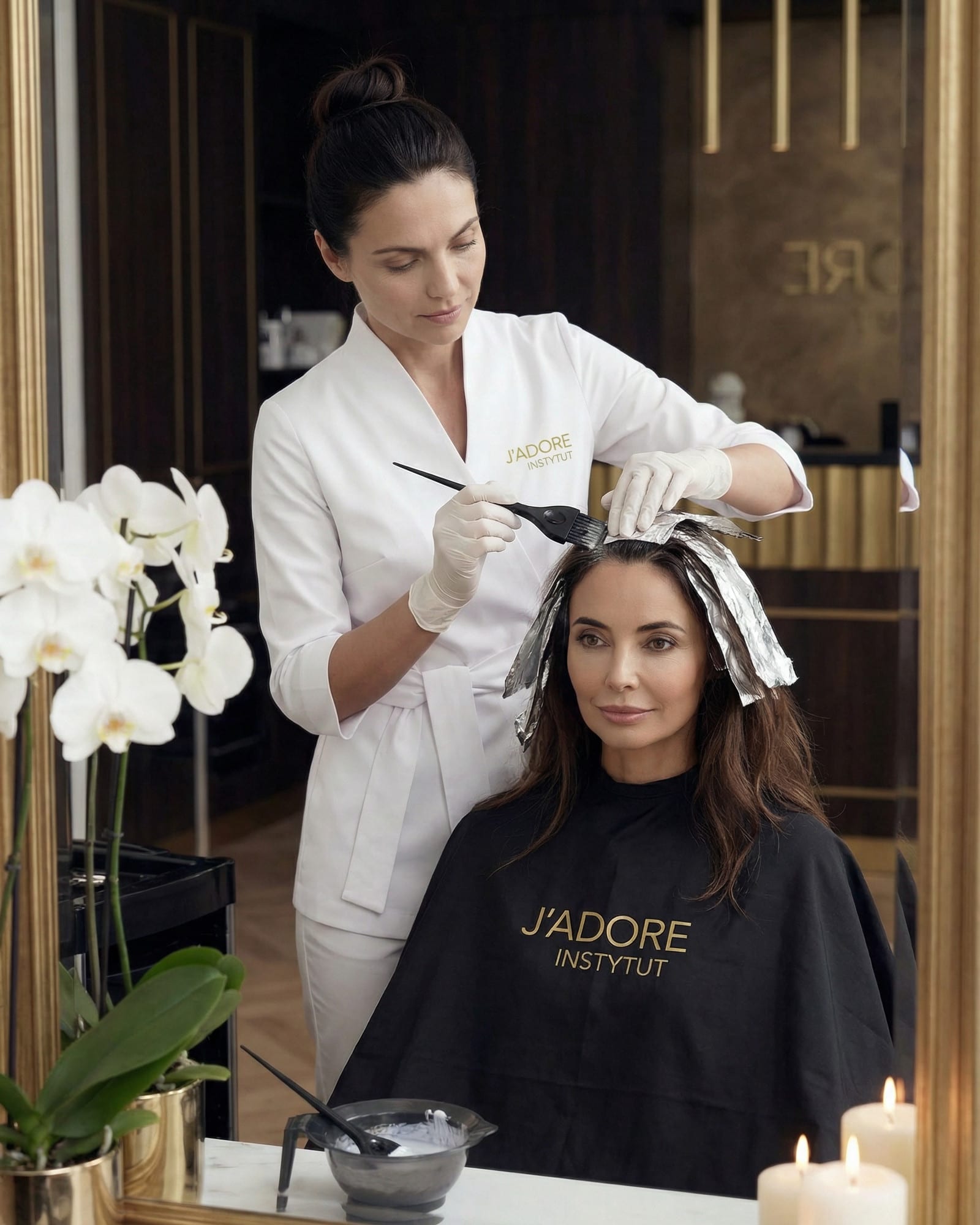
What Olaplex can and can't do — an honest line
It's important not to go into the treatment with the wrong expectations. Olaplex won't undo years of colouring or hair that's already seriously damaged. It won't stop lightening from being an intervention in the structure — because by definition, it is one. And it won't replace a sensible decision about how much a particular head of hair can take at a particular time.
Olaplex works best when you think of it as a tool for limiting damage during the treatment — not as a repair cure after the damage has already fully happened. Think of it like surgery, after which you need to take care for a while. Anaesthesia and sterile conditions don't stop surgery from being an intervention — but they clearly reduce the risk and shorten recovery. Olaplex plays a similar role.
Lightening as a process, not a one-off event
What's worth taking from this isn't just about Olaplex. It's about a way of thinking about hair as a material structure with its own capabilities and limits. Lightening is one of the more demanding processes, because it reaches deep — and the effects build up with each further treatment.
Olaplex during colouring is a tool for a hairdresser who understands what's happening to hair structure — and wants to keep the losses as small as possible. It's not a cure-all. It won't make lightening seven shades up consequence-free. But it can make those consequences smaller than they'd be without it. And for hair that's already been through a lot of chemistry, that can be a meaningful difference.
Hair Botox / keratin treatment
After lightening, hair is more porous and absorbs product intensively. A keratin treatment or hair Botox straight after the chemical treatment can seal the structure and improve texture — the two complement each other.
Colour correction / toner application
A toner is applied over lightened hair to achieve the desired shade (for example, cooling down yellow tones). Olaplex within the lightening protocol leaves hair in better condition when the toner is applied — which can lead to a more even result.
Regular home maintenance care
Olaplex step 3 (the at-home product), used every few days, helps maintain results between salon visits. It's not the same as the professional protocol, but it can support hair condition between treatments.