85–98% of women. Read that again.
Cellulite affects 85 to 98% of women after puberty. It isn't a disease. It isn't a flaw. It's an anatomical norm of the female body. Studies published in the Journal of Cosmetic and Laser Therapy confirm this: cellulite occurs in women regardless of BMI, activity level or eating habits.
So why do we still treat it as a problem to be solved? Because the beauty industry has profited from our guilt for decades. Creams, ointments, patches, "miracle" massage brushes — the anti-cellulite market is worth billions of dollars a year. And none of these products change what actually causes cellulite.
The anatomy of cellulite — why training isn't enough
To understand why the gym doesn't eliminate cellulite, you first need to understand what cellulite actually is. It isn't about "toxins" (that's marketing nonsense). It isn't about "lymphatic congestion" (another oversimplification). And it isn't about excess fat.
Cellulite is a result of the structure of the subcutaneous tissue — specifically, how the connective tissue partitions, known as septae, are arranged.
In women, the septae run perpendicular to the skin's surface — like columns. Between them sit fat cells (lipocytes), which can enlarge under various influences. As lipocytes grow, they push the skin upward, while the septae pull it downward — hence the characteristic "orange peel" effect.
In men, the septae run in a criss-cross pattern, at an angle — forming a mesh that holds fatty tissue in place more effectively. That's why cellulite is rare in men (affecting around 10%).
That's why someone with 15% body fat can have cellulite, while someone with 30% might not. The architecture of the septae is largely determined by genetics.
Genetics — how much really matters
Studies on identical twins, published in journals including Dermatologic Surgery, found that genetics accounts for around 50–70% of cellulite predisposition.
- Skin thickness — thinner skin makes cellulite more visible
- Septae distribution — perpendicular versus more networked arrangement
- Fat tissue distribution — gynoid (thighs, buttocks) versus android
- Oestrogen receptor reactivity — oestrogen promotes fat storage in areas typical for cellulite
- Connective tissue elasticity — type I collagen versus type III
This doesn't mean lifestyle has no effect. It does — but less than we're led to believe. Regular exercise, a balanced diet, adequate hydration and avoiding smoking can reduce cellulite severity by 1–2 grades on a four-grade scale. They won't eliminate it entirely in someone with a strong genetic predisposition.
What actually changes the structure — and what's just marketing
If cellulite is a structural problem, the solution needs to work at the structural level. This is where the real conversation begins — because most products on the market work only on the surface.
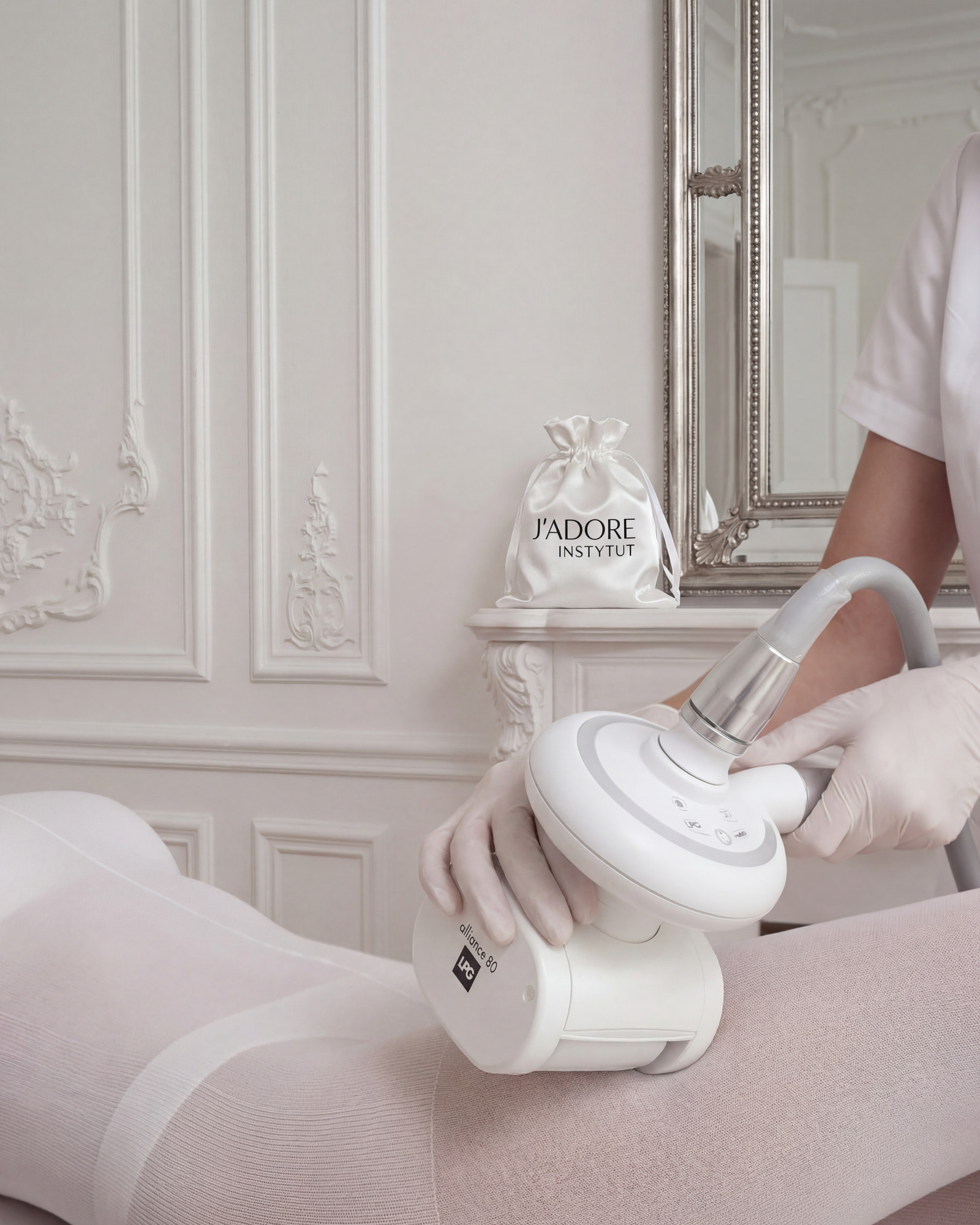
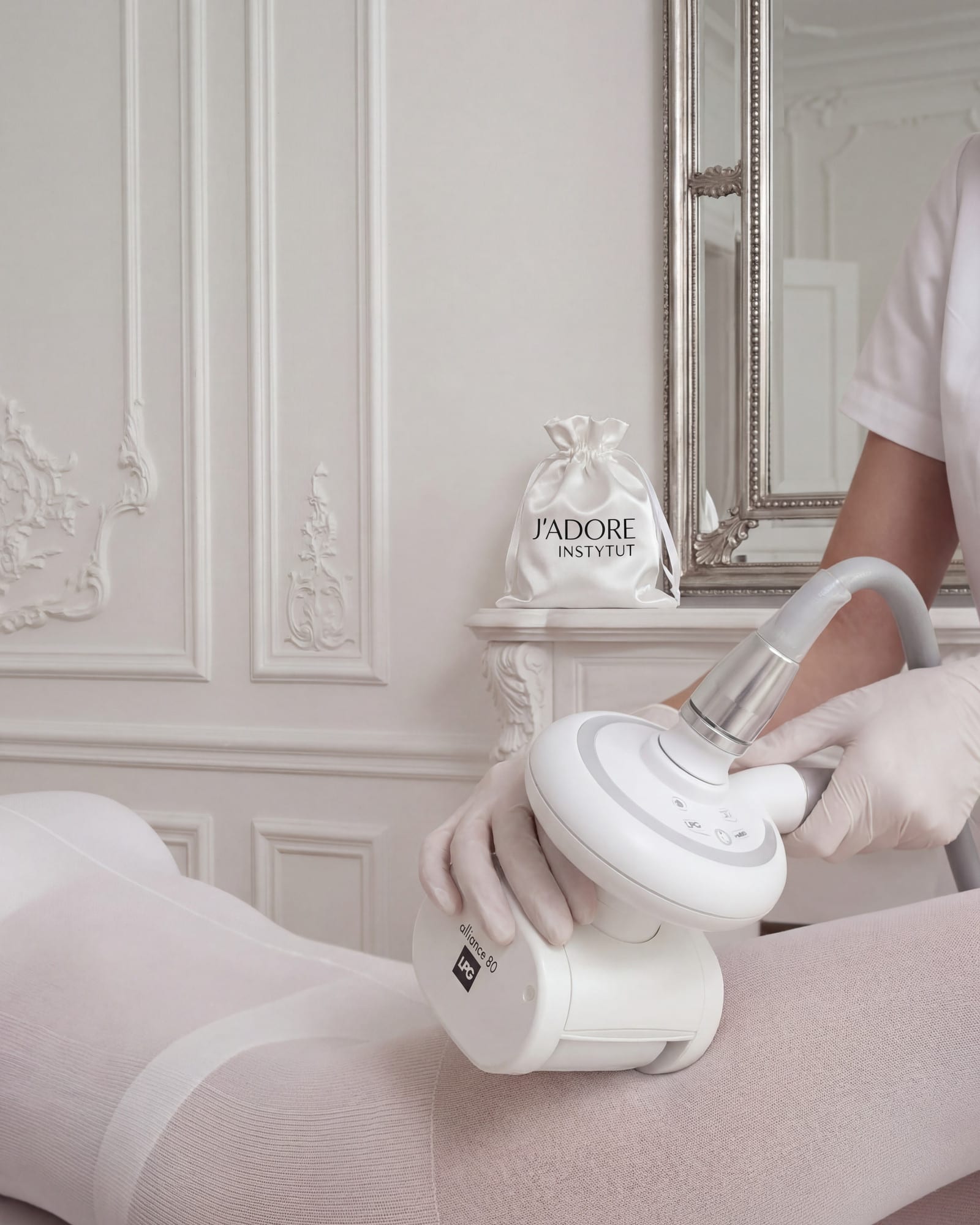
Endermologia LPG. A technology developed in France, based on mechanical stimulation of subcutaneous tissue using a handpiece with motorised rollers and suction. Mechanism of action: mechanostimulation activates fibroblasts, which produce new collagen and elastin. Systematic sessions lead to connective tissue remodelling — the septae become more elastic, and their tension decreases.
Acoustic wave (Storz Medical). Extracorporeal shockwave therapy (ESWT) was originally developed to break up kidney stones. In aesthetic medicine, it's used to loosen the septae — the acoustic wave passes through the tissue and causes micro-damage to the connective tissue fibres, which stimulates their remodelling.
Carboxytherapy. Subcutaneous injection of carbon dioxide causes local blood vessel dilation and improves microcirculation. In the context of cellulite, better blood supply means better-nourished tissue, reduced water retention and less swelling between the septae. It's a supportive method, not a standalone one — it delivers the best results combined with endermologia or acoustic wave therapy.
Water retention — an underrated amplifier
Cellulite looks worse when excess water accumulates in the subcutaneous tissue. Fluid retention enlarges the lipocytes and increases tension on the septae — the "orange peel" effect becomes more visible.
- Potassium — bananas, avocado, sweet potatoes, spinach — balances sodium
- Movement — the best natural drainage
- Hydration — 2–2.5 litres of water daily (more with training)
- Magnesium — regulates fluid balance
Body neutrality — a third way
In the cellulite debate, there are two loud camps. One says: "love your body, cellulite is beautiful." The other: "fight cellulite, buy this cream." Both oversimplify.
Body neutrality proposes something different: your body doesn't have to be beautiful or ugly. It simply is. Cellulite doesn't define your worth — but if it bothers you, you have every right to do something about it. Without guilt in either direction.
Why doesn't your friend have cellulite
Because she won the genetic lottery. She has thicker skin, a different septae arrangement, less reactive oestrogen receptors. Just as some people never get cavities despite eating sweets — it's not a matter of morality, just biology.
A protocol that makes sense
If you want to genuinely reduce the visibility of cellulite, here's an evidence-based approach:
- Strength training — builds muscle beneath the fat tissue, visually smooths the surface (it doesn't eliminate cellulite, but it often improves proportions)
- Anti-inflammatory diet — less sugar, processed food and alcohol; more omega-3 fatty acids, vegetables and protein
- Hydration and potassium — reduces water retention
- Technology — endermologia LPG or acoustic wave therapy for connective tissue remodelling
- Patience — structural results require 8–14 sessions at regular intervals