Two completely different approaches to the same problem
Before comparing the two, it's worth naming what each solution actually is — because they work on different levels and solve different things. Extensions and a trichologist aren't competing with each other: one is an aesthetic tool, the other a diagnostic path.
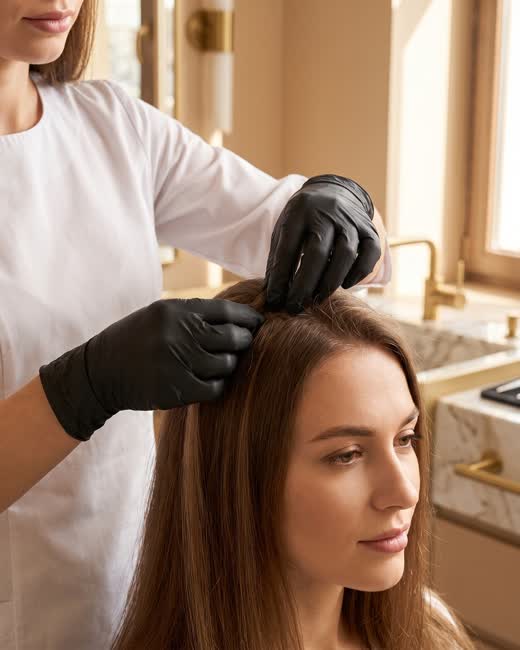
Hair extensions
Immediate visual effect
- Add volume and length straight away — results after one visit
- Mask sparse areas and thin strands without touching the follicles
- No diagnosis required — they work regardless of what's causing the hair loss
- With the right method and care, your natural hair stays safe
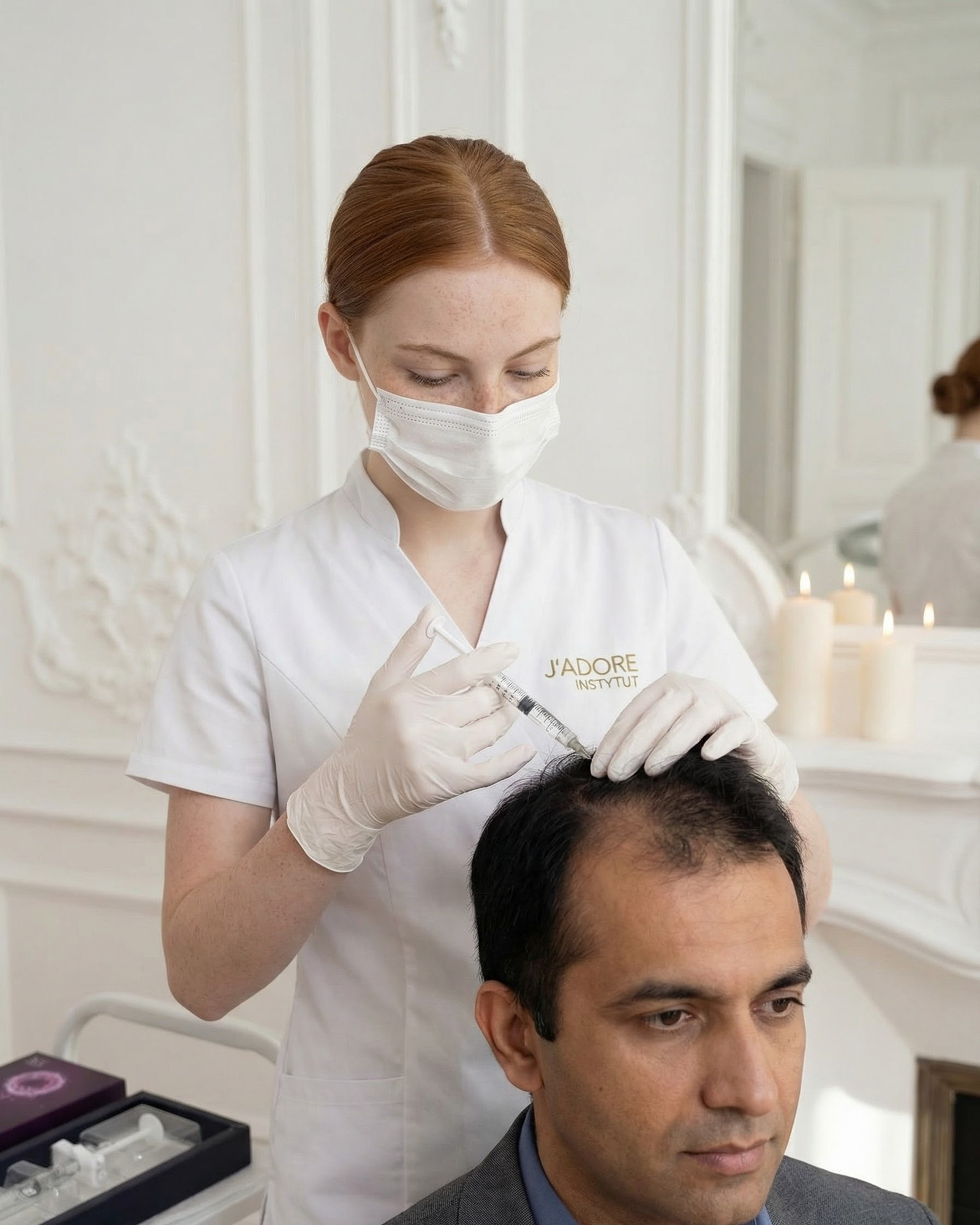
Trichology consultation
Diagnosis and treatment of the cause
- Identifies the cause: hormonal, deficiencies, stress, scalp inflammation
- Guides treatment: supplementation, follicle-strengthening treatments, a change in hair care
- Assesses whether hair loss is progressing, and how fast — important when deciding on extensions
- Gives you a basis for effective action instead of just masking symptoms
When a trichologist should absolutely come first
In some situations, fitting extensions without a prior diagnosis can be not just ineffective but actually harmful — not because of the method itself, but because thin, weakened hair varies in condition, and that condition decides whether extensions are safe.
- Hair has recently started falling out, and increasingly so — this signals an active process that needs to be stopped before you add extra load on top of it
- Visible thinning at the crown or hairline — this may indicate androgenetic alopecia, which can worsen faster with the wrong decisions
- Itching, dandruff, scalp inflammation — fitting extensions on inflamed skin can make the problem worse and delay healing
- Previous chemical treatments (bleaching, perming) — hair may be too brittle to hold extensions without risking breakage
- Severe, sudden stress or childbirth in the last 3–6 months — hair loss may be temporary; it's worth waiting before committing to a permanent solution
When extensions are a sensible choice straight away
Extensions aren't reserved only for people with "no problems." There are situations where you can — and should — reach for them without waiting a long time for treatment results. The key question is: is your hair strong enough to safely hold the chosen method?
- Naturally thin hair (genetic), with no active hair loss — extensions here are an aesthetic choice, not a response to a health issue
- Hair loss has been stopped after treatment — once a trichologist confirms stabilisation, extensions won't threaten regrowth
- Thin strands after colouring — with the right method and lightweight extensions, you can safely improve volume
- An important event coming up soon — a wedding, a photo shoot, returning to work; short-term extensions can be a sensible bridging solution
Where to start — a simple decision framework
If you still don't know where to start, this framework helps you take the first step. It isn't a diagnosis, but it's often enough to stop you putting off the decision:
- 01
Assess whether hair loss is active
Count the hairs on your pillow and after washing. More than around 100 a day over an extended period, or noticeable progression of thinning over recent months → start with a trichologist.
- 02
Check your scalp
Itching, psoriasis, oily dandruff, red patches — diagnose the inflammation first, then decide on extensions.
- 03
Assess the condition of the hair fibre
Is your hair breaking, dull, with split ends? With significant structural damage, a trichologist or stylist will assess whether your hair is ready for extensions.
- 04
If everything is stable — consult a stylist
With a healthy, stable scalp and no active hair loss: go straight to an extension specialist and tell them exactly about your hair.
Long-term plan: how they work together
The best results — the ones that really last — come from combining both paths. Not at once, and not haphazardly, but in a considered order, where each step supports the one before it.
Trichology + scalp mesotherapy
Mesotherapy nourishes the follicles from within — with active hair loss, it can help stop the loss and strengthen existing hair before extensions go in.
Extensions + a strengthening treatment programme
Parallel supplementation and hair-hydrating treatments (such as keratin treatments) protect both the extension material and your natural hair from breakage.
Trichology + salon care
Regular salon visits (scalp massages, ampoules, structure-repairing treatments) extend the results of trichology treatment and delay the need for extension touch-ups.