Two protocols, two mechanisms
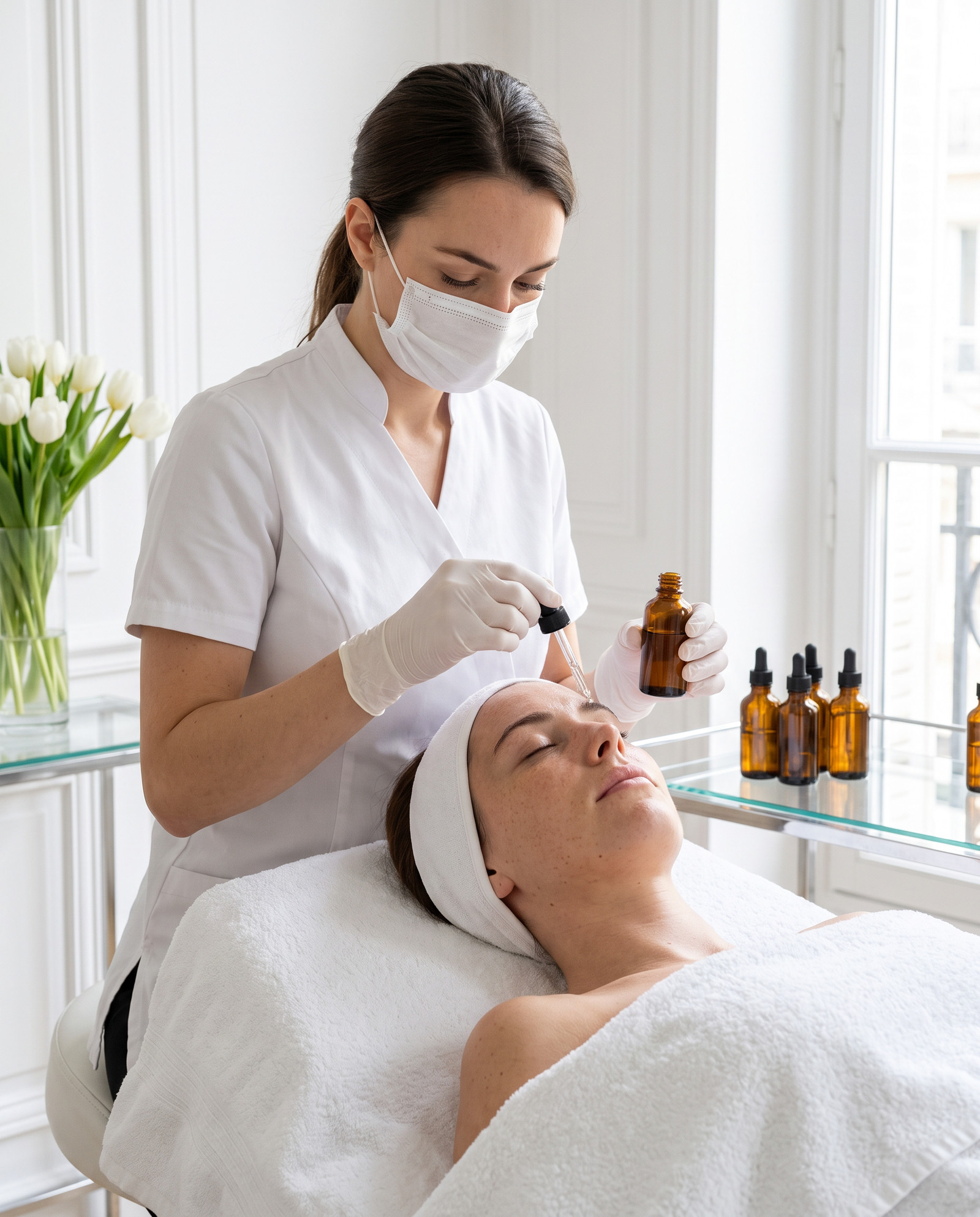
Both protocols are built on acids and active ingredients, but their underlying logic differs. The stem cell peel focuses on the surface and the renewal process. It helps skin replace old cells with new ones faster, and gives it the resources to do that work. The peptide peel targets the supporting layer. It stimulates collagen and elastin production through specific protein signals. One tool works "through exfoliation and cellular renewal". The other works "through signals sent deep into the skin".
Stem Cell Peel
renews and regenerates the surface
- dull skin, lacking radiance, with uneven texture
- sun-related and post-inflammatory hyperpigmentation
- tired, urban-exposed skin with a build-up of dead cells
- skin that "stops responding" to your usual care routine
- a brightening, smoothing effect that's often visible quickly
Peptide Peel
rebuilds skin structure and density
- skin losing firmness and density — that "loosening" feeling
- a network of fine lines and static wrinkles
- thin, fragile skin that reacts to cold and wind
- skin going through ageing changes or recovering from intense stress
- results build gradually — the full picture emerges after a series of sessions
How to recognise what your skin needs right now
Before you book a treatment, you can run a simple check yourself. It takes only a moment in good light — and it turns your conversation with a specialist into something specific, rather than a vague "I'd like to improve something":
- 01
Check the radiance
Look at your skin in daylight, without makeup. Does it look dull, grey, uneven — almost "dusty"? Is the texture uneven, are pores visible, is the colour patchy? That's a signal for stem cell — the surface needs renewal and brightening.
- 02
Check the firmness
Gently lift the skin on your cheek. Does it spring back slowly? Do your cheeks feel like they've "dropped" compared with a few years ago? Does the skin feel thin to the touch? That's a signal for peptides — the structure needs rebuilding.
- 03
Check the lines
Look at your forehead and the area around your mouth at rest, not while making an expression. Do you see a network of fine lines that remain even when your face is relaxed? With peptides, many people notice these lines gradually becoming shallower after a series of sessions.
- 04
Check for hyperpigmentation
Do you have sun spots, acne marks, or an uneven skin tone? If this is the main concern, stem cell is often the first choice — it works directly on pigmentation and epidermal renewal.
Important: both protocols require proper skin preparation and a set interval between sessions. This isn't about "which one I like better" — it's about what your skin can take right now, and what it actually needs.
Who tends to choose which protocol
There's no rule without exceptions — every skin is different. But in the salon, certain patterns tend to repeat:
- People who more often choose stem cell lead an active outdoor lifestyle, have combination or oily skin prone to hyperpigmentation, or come in after summer or winter when their skin looks "overloaded" and dull.
- People who more often choose peptides are aged 40+, with dry or sensitive skin, and notice their skin starting to lose volume and firmness — without wanting or being ready for medical procedures.
- Both options work well for skin under significant stress — illness, a change in climate, or intense exposure to external conditions — when it's important to renew the surface and strengthen the structure at the same time.
When it's worth combining both protocols
Stem cell and peptide aren't competitors — their greatest value often comes from combining them, spaced out at the right intervals. The logic of the sequence is intuitive: first cleanse and renew the surface, then nourish and rebuild the structure below.
Stem Cell → Peptide (seasonal series)
A classic sequence for the autumn-winter season: one or two stem cell sessions to start (evening out skin tone, renewing the epidermis), followed by a peptide cycle (rebuilding collagen through the winter months). Skin enters spring noticeably denser and brighter.
Peptide + needle mesotherapy
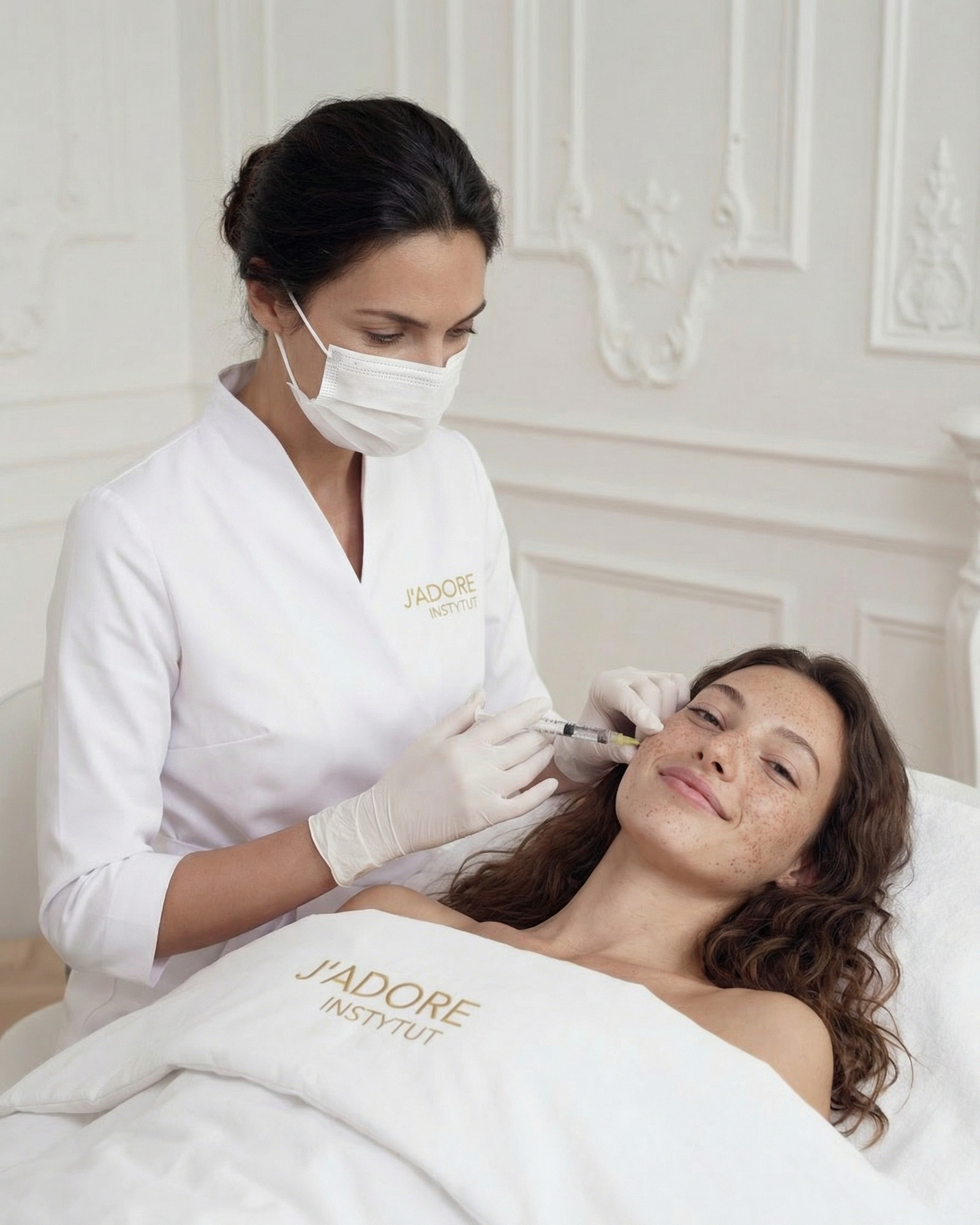
The peptide peel works well as preparation for, or a complement to, needle mesotherapy — especially when the goal is comprehensive skin strengthening. Both work at a structural level, so they work together rather than against each other.
Stem Cell + hyperpigmentation treatments
With intense pigmentation, the stem cell peel often precedes or complements laser or light-based depigmentation treatments. Many people see a clearer, more even result this way.
DermaQuest as an entry point into a rebuilding treatment cycle
DermaQuest peels work well as skin preparation before more intensive procedures, such as CO2 laser or microneedling. Strengthened, renewed skin tolerates the next stage better and responds to it more effectively.
One question that clarifies the choice
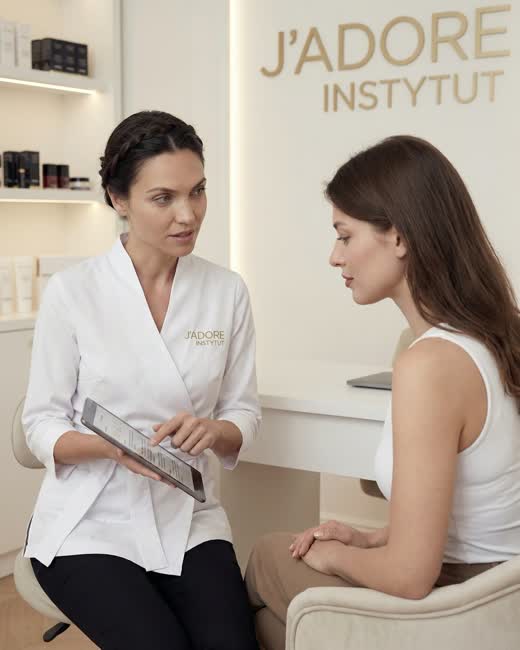
DermaQuest is a brand built on the principle that every ingredient has a specific job. That's why choosing a protocol is never random — it's a conversation about what your skin is telling you now and where you want to get to. Stem cell and peptides are two highly effective tools. The key is knowing what each one is for.