Why a peel — and why amber specifically
Men's skin renews itself differently to women's. It's thicker and oilier — an advantage in one sense, since it ages more slowly. But it also means dead skin cells linger longer. Daily shaving with a razor or electric shaver mechanically exfoliates some of them, but only in the beard area, and only the top layer. The rest of the face — forehead, nose, cheeks — accumulates a simple epidermal "plug", leaving skin grey, oily to the touch, with congested pores.
An amber peel uses organic acids — mainly succinic acid and its derivatives — that work within the epidermis, not deeper. It's not a chemical burn, and not an aggressive retinol treatment that leaves you peeling for a week. It's a precise loosening of the bonds between cells, allowing the ones that have already run their course to shed. Underneath is skin with better circulation, a more even tone, and visibly smaller pores.
Men's skin — a different set of rules
To understand why an amber peel can produce more visible results in men than in women, it helps to look at a few basic differences. This isn't about men having "better" or "worse" skin — it's about different properties and different needs.
Men's skin
why it reacts differently
- a thicker epidermis — a stronger "plug" of dead cells
- higher sebaceous gland activity — pores clog more easily
- daily shaving — micro-injuries, a tendency towards irritation and ingrown hairs
- less frequent skincare use — the epidermis is stimulated to renew itself less often
What an amber peel changes
concrete results for men's skin
- removes built-up dead skin — tone evens out, greyness fades
- cleanses and reduces the visibility of pores — skin looks less oily
- improves the skin's condition after shaving — fewer ingrown hairs, less redness
- stimulates cell renewal — a rested look without the holiday
What the treatment involves — no embellishment
Men rarely ask about results — they usually ask how long it takes, whether it will show, and what happens afterwards. Here's the straightforward answer:
- 01
Consultation & skin assessment
Your specialist assesses your skin type and condition to choose the right acid concentration. If you have active irritation from shaving, inflammation or active acne, this is taken into account when selecting the protocol.
- 02
Cleansing and preparation
Your face is thoroughly cleansed — sebum, skincare residue and impurities are removed. This step is essential: the acids need even contact with the skin, not with a layer of oil.
- 03
Acid application
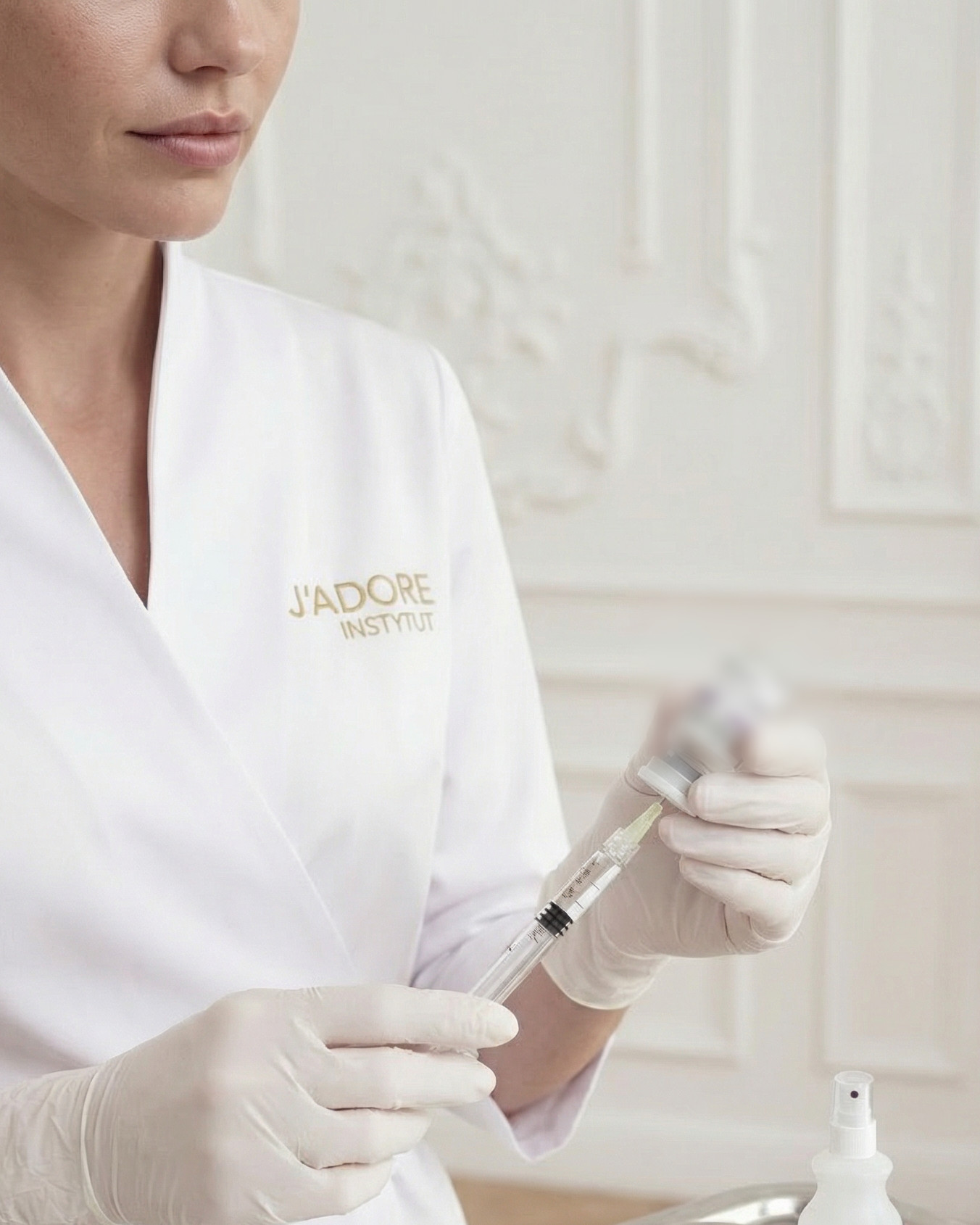
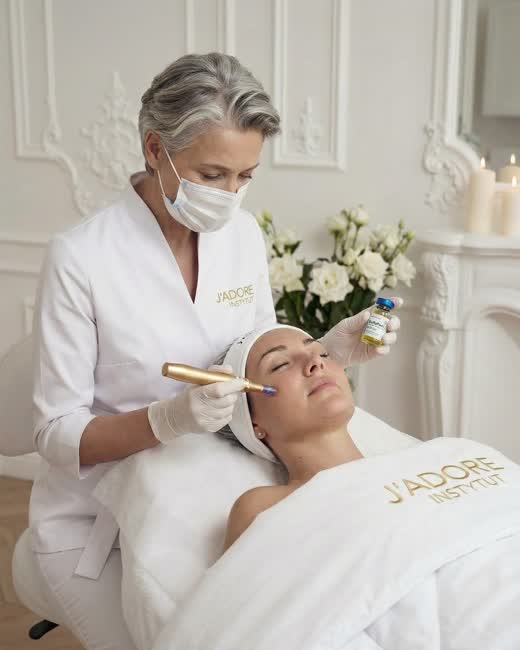
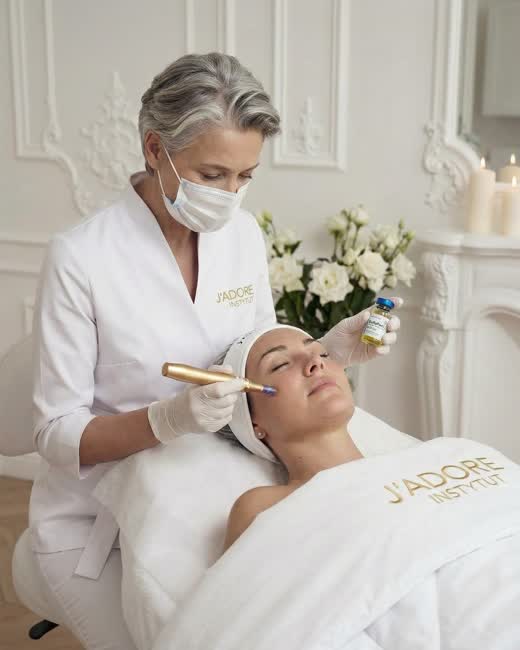
The product is applied to the face and left on for a set time, while your specialist monitors your skin's reaction. You might feel a slight tingling or warmth. It doesn't burn, and any stinging doesn't last long. After the set time, the acid is neutralised.
- 04
Masks and active ingredients
After the acid, your skin receives hydrating and soothing ingredients — freshly exfoliated skin absorbs them more effectively than before the treatment. This is when active skincare does its work.
- 05
Finish and SPF
The treatment ends with UV filter application. After an acid treatment, skin can be slightly more sun-sensitive for a few days — SPF is compulsory, not optional.
When you leave, your face may be slightly red — for an hour or two. There's no peeling in visible patches, no period stepping out of your life. You go straight back to your day. Results are visible from the next day: skin feels smooth to the touch, and tone looks more even. The full effect builds over a few days.
How many sessions, and how often — for it to make a difference
A single peel is a reset. But skin is a living organism — after a few weeks it returns to its own renewal rhythm, which for many men is simply slower than optimal. That's why results are longer-lasting and more visible after a series of treatments.
- Initial series — usually 3–5 sessions, 2–3 weeks apart. This is the stage where skin returns to a healthy renewal rhythm, and improvement builds visibly.
- Maintenance — one session every 4–6 weeks. This is enough to keep results from reversing. It fits around your schedule — there's no rigid regime.
- Season — autumn and winter are the best time for more intensive acid peels. Less sun means less risk of pigmentation. It's possible in summer too, but with a higher SPF.
Not just the face — where else it works
Men often think of peels as a purely facial treatment. In reality, acid peels work anywhere skin becomes thicker, uneven, or shows changes linked to a build-up of dead skin.
- Neck and nape — especially for men who shave their necklines, where ingrown hairs and redness are common.
- Back — back acne and clogged pores often respond better to acid peels than to at-home exfoliation.
- Hands — men's hand skin is often thicker and ages faster due to exposure and manual work. A peel evens out tone and improves texture.
Amber peel vs. other options — what works when
There are over a dozen types of acid peels on the market, and every one claims to be "the best" in its own advert. The real difference lies in depth of action, indications and skin tolerance. Without the philosophy:
Amber peel
when it's worth it
- oily or combination skin, with visible pores
- grey tone, tired texture with no distinct concerns
- post-shave skin — gentle enough for sensitivity
- for anyone new to peels — a good starting point
Stronger peels (TCA, lactobionic, mandelic)
when it's worth it
- deeper post-inflammatory hyperpigmentation (PIH)
- acne scars (shallow)
- pronounced texture irregularities, enlarged pores
- after an amber peel series — as the next stage
Choosing between them isn't about strength — it's about matching the treatment to your skin's condition. A gentle series of amber peels does more good for healthy but neglected skin than an aggressive peel that leaves you peeling for two weeks. Strength isn't a value in itself. This is one of the first things we cover during consultation — which is why it's worth coming in before anything is applied.
Post-shave skin — can peels and shaving coexist?
A question that comes up often: can a man who shaves every day get peels regularly? Yes — but with a few rules.
- Don't shave the morning of your treatment — it's best to come in with one or two days' stubble. Freshly shaved skin has micro-injuries that increase sensitivity.
- After the treatment, shave no earlier than the next day, using gentle equipment. Avoid alcohol-based foam and harsh aftershave for 48 hours.
- If you struggle with ingrown hairs, regular peels can significantly reduce the problem, since they improve exfoliation around the hair follicles.
- An electric shaver is usually gentler on post-treatment skin than a wet razor in the first few days.