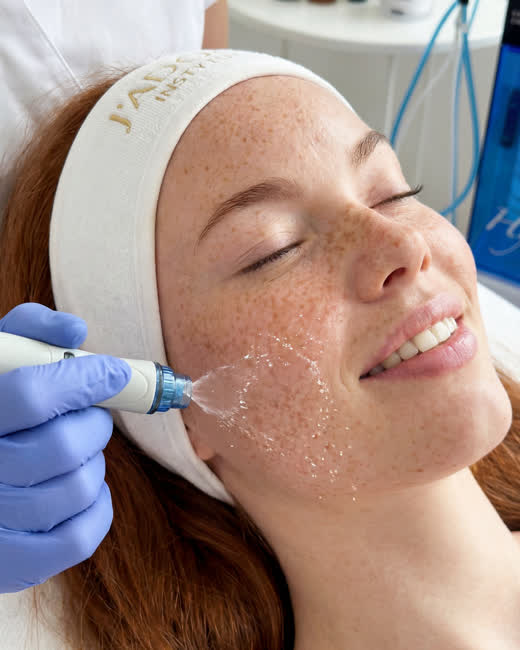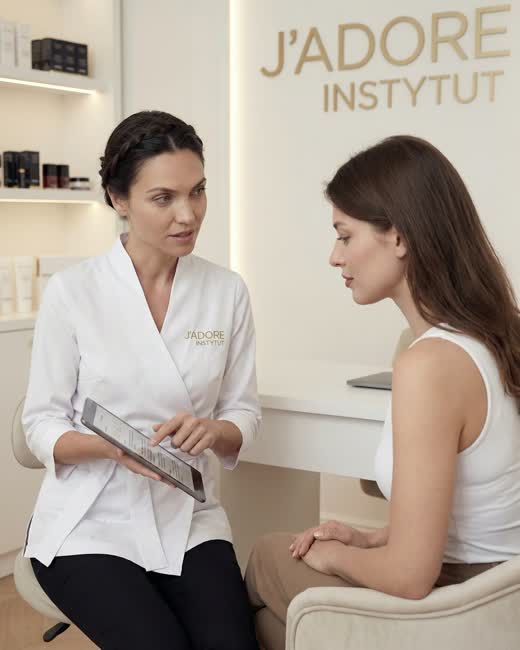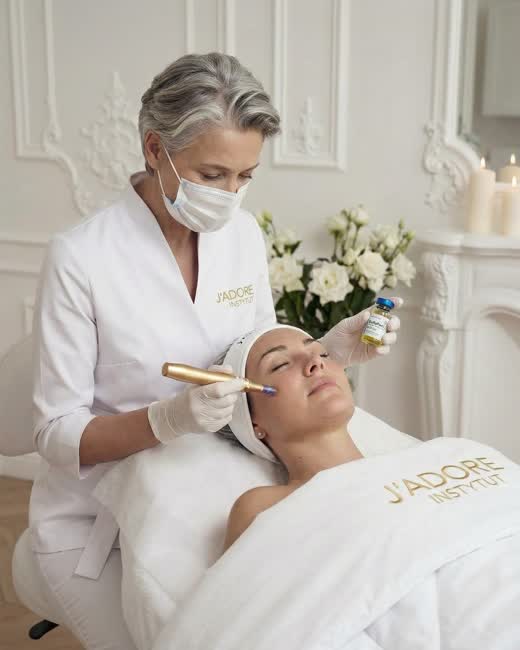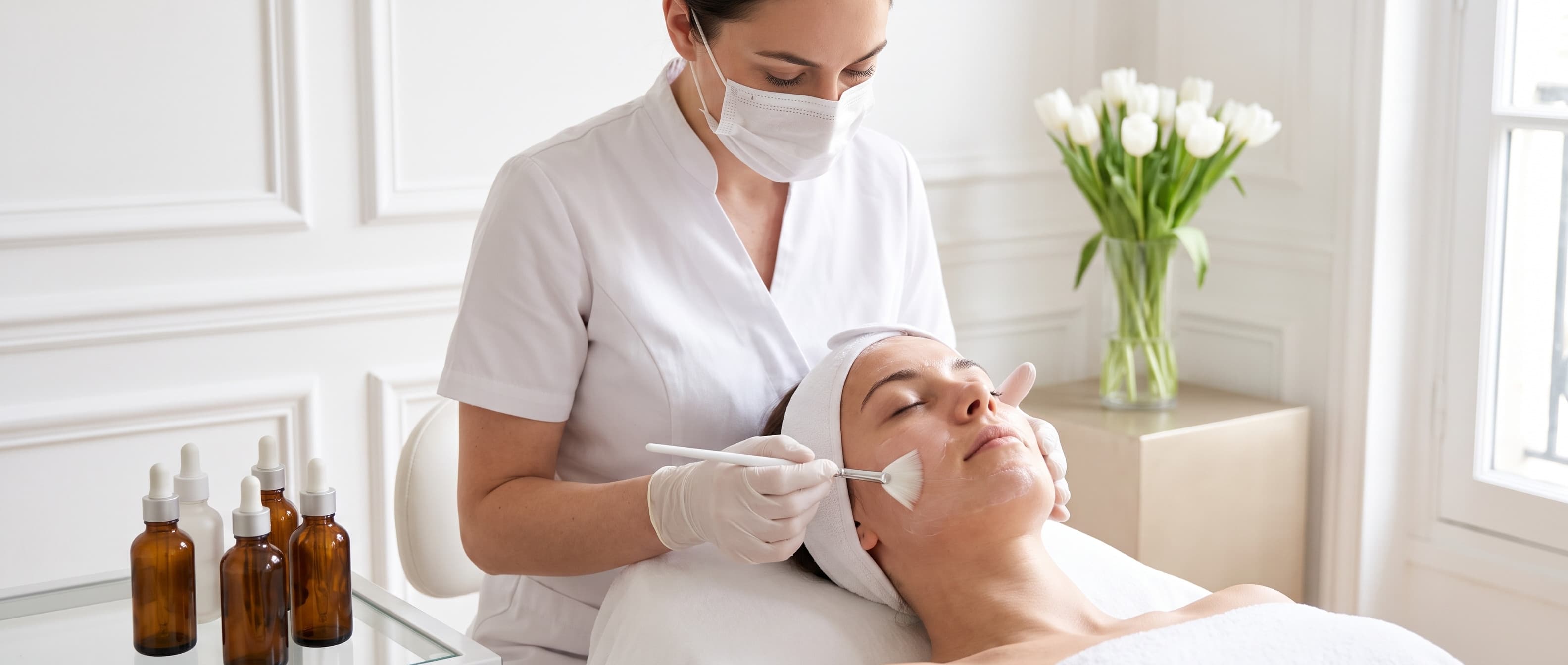
 A treatment room at J'adore
MEDICAL PEELS
Grey, tired, "thirsty" skin — it feels tight after washing, loses its radiance, and fine lines become more visible. After summer and sun exposure, it can look weakened and dehydrated.
This isn't always about wrinkles — more often it's about dehydration and the skin's reduced capacity to repair itself. DNA Recovery is a regenerating, hydrating peel (Mediderma; from the same family as Smart DNA, part of the Retix.C line — hyaluronic acid + DNA), designed for exactly this issue. Unlike strong, aggressively exfoliating acids, it focuses not on stripping the epidermis, but on hydration, revitalisation and protection — supporting the skin's natural repair mechanisms and restoring its condition with minimal irritation. We often finish the session with LED (red light), which further stimulates regeneration. This treatment suits skin that needs nourishing and rebuilding, not punishing. At J'adore Instytut, it's performed by an experienced cosmetologist. Below you'll find everything worth knowing before your first visit.
best as a series of 3–4 sessions every 1–2 weeks (often finished with LED), followed by maintenance
How it works
DNA Recovery is a regenerating, hydrating peel from the Mediderma line. Its family also includes Smart DNA (Retix.C) — a formula based on a combination of hyaluronic acid and DNA. This sets it apart from "classic" acid peels: instead of aggressively dissolving the stratum corneum, it works more towards rebuilding, hydrating and protecting than "stripping".
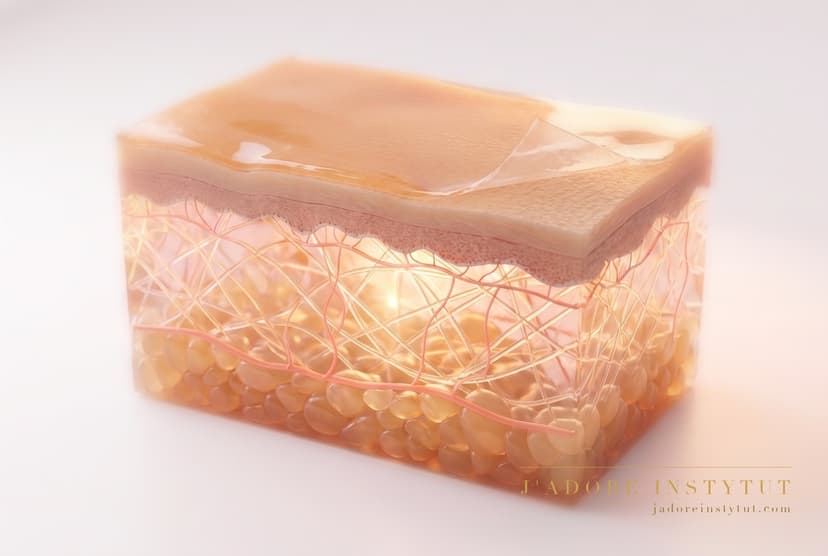
The mechanism works on two levels: on the surface, skin is cleansed, smoothed and brightened, while deeper down the treatment supports the skin's natural regeneration processes and improves hydration. Hyaluronic acid binds water in the skin, while the regenerating ingredients help restore its condition after stress — especially after sun exposure and dehydration. That's why DNA Recovery falls into the category of revitalising, hydrating peels, rather than strong, heavily exfoliating peels.
The "wow, skin peeling off in sheets" effect does not occur here — and that is the point. This is a treatment from the biorevitalising group: it renews and hydrates without forcing visible peeling. Very often we finish it with LED (red light), which additionally stimulates cells to regenerate faster — this combination is decided by the cosmetologist during the consultation.
Ideal for
Female zone and male zone
The most common reason is dehydration, loss of radiance, and skin condition after summer. The goal here is revitalisation and hydration — restoring freshness and firmness without aggressive peeling. This is a classic case of DNA Recovery for women, often given as a series of 3–4 sessions with LED, combined with a hydrating treatment programme.
What we work with
Men's skin can be oily on the surface yet dehydrated underneath — thicker, irritated after shaving, and exposed to the sun without a protection habit. DNA Recovery for men improves condition and hydration, smooths skin after shaving and supports the healing of acne marks — discreetly, with no "salon look".
What we work with
Did you know: "dry" and "dehydrated" skin are not the same thing. Dry skin is a type (little sebum), whereas dehydrated skin is a condition — it lacks water, not oil. That is why even oily skin can be dehydrated — and that is exactly when a moisturising and regenerating peel such as DNA Recovery delivers the most.
Safety
With chemical peels, both the result and safety depend on a few things worth asking about at any salon:
A peel isn't an "off-the-shelf" product for every skin type — a cosmetologist assesses your phototype, skin condition and reactivity, and chooses the strength accordingly. At J'adore, the treatment is performed by an experienced cosmetologist, and a consultation is mandatory.
We use only genuine Mediderma / Retix.C products sourced legally. A non-genuine or poorly stored peel means unpredictable results and a real risk of irritation.
The number of layers, exposure time and series are determined by your cosmetologist — and afterwards, SPF 50+ and hydration are essential. A peel without sun protection carries a risk of hyperpigmentation.
Red flags with peels ·
MEDICAL PEELS
Contraindications
Some contraindications are permanent, and some are temporary — in that case, we simply postpone the treatment until the situation passes.
From the cosmetologist's chair
The most commonly overlooked issue: cold sores. A chemical peel can "wake them up", even if they've only appeared occasionally. If you get them recurrently, tell us before starting the series — we'll then discuss prevention, and we always treat an active outbreak first and postpone the treatment by a few days.
This isn't a complete list — we'll go through your medications, health conditions, phototype and previous treatments individually during the consultation. A regenerating peel has a mild safety profile, but we still tailor it to your skin, not the other way round.

What to expect
This is a regenerating peel, not a strongly exfoliating one. After the treatment, the skin looks refreshed and moisturised; there is no "peeling in sheets". Most often you will see only slight redness and feel a fresh sensation — the full effect (radiance, smoothness, better hydration) builds up over a course of treatments.
Some clients ask after their first treatment: "so when will I start peeling?". With DNA Recovery, most often never — and that doesn't mean nothing is happening. It's a peel that works "from within": it hydrates and regenerates, and the effect shows as radiance and better skin condition, not as flaking epidermis.
The hydrating, refreshing effect is visible right away, but a series of 3–4 sessions every 1–2 weeks (often with LED) gives the fullest regeneration. After that, we maintain results with individual maintenance sessions and the right home care.
Portfolio
A record of the work in our salons — the place where we publish treatment frames and, after photo sessions, results.
A record of results — in preparation. We publish photographs of our clients only with their consent.
DNA Recovery and your lifestyle
The most common questions aren't about the treatment itself, but about what comes after: sun, makeup, sauna, exercise, home skincare products. With a peel, there's one rule — avoid irritating the skin and protect it from the sun for a few days, so it can regenerate properly.
This is the most important rule after any peel. For a few days, avoid intense sun and sunbeds, and apply SPF 50+ every day — even in winter and on cloudy days. Without it, the risk of hyperpigmentation rises and results fade quickly.
Let your skin rest and focus on hydration the same day. Makeup is usually fine from the next day, once any flushing has faded. If mild peeling appears, wait for it to pass.
High temperatures, chlorine and sweat can irritate freshly treated skin. Postpone the sauna, pool and hot baths for 1–2 days.
Intense exercise and heavy sweating right after a peel can sting and irritate skin. Light activity is fine; save intense training for the next day.
Pause strong products (retinol, AHA/BHA acids, home peels) for a few days before and after the treatment. During this time, focus on gentle hydration and barrier repair — your cosmetologist will explain the details.
Peels are best done outside periods of intense tanning. If you're planning a sunny holiday, discuss the timing of your series with your cosmetologist — and after returning with a tan, wait until your skin has "cooled down".
DNA Recovery (Smart DNA)
"Peel" covers a whole spectrum of treatments that do different things. The right choice depends on your skin concern — which is exactly why we start with a consultation, not with the name of a product:
regenerates and hydrates
not a strong exfoliating peel, and won't replace a targeted peel for hyperpigmentation or acne
refreshes and evens out skin tone
works more superficially — deeper concerns need a stronger protocol
rebuilds skin at a deeper level
not a "hydrating" treatment — needs more aftercare and sun caution
Combine with
DNA Recovery works well alongside other treatments focused on skin condition, hydration and radiance. Your cosmetologist decides on the order and intervals during the consultation, but the general logic stays consistent:
The most common misunderstanding: "I want a peel that really peels, because that means it's working." Not always true. With dehydrated, tired skin, the goal isn't maximum peeling — it's rebuilding and hydration — and here DNA Recovery works better than a strong acid, which would only dry the skin out further.
Products
Behind the phrase "DNA / regenerating peel" at a salon, there are several products with related effects — they differ in formula, strength and purpose. You don't choose them off a shelf — your cosmetologist selects them based on your skin's condition, phototype and the concern you want to address.
A regenerating, hydrating peel — supports the skin's natural repair mechanisms and rebuilds skin weakened by sun exposure and dehydration.
Dla kogoGrey, tired, dehydrated skin, after UV exposure; revitalisation as a series (often with LED).
A formula based on hyaluronic acid and DNA — strong hydration, regeneration and protection; within the Retix.C line, also aimed at skin with altered, uneven texture.
Dla kogoDehydrated skin, after UV exposure, in need of regeneration and hydration.
A gentle peel with lactic acid — exfoliates lightly while hydrating at the same time.
Dla kogoDry, dehydrated skin that needs a gentle refresh without irritation.
A brightening, antioxidant peel — adds radiance and supports protection against free radicals.
Dla kogoGrey, tired skin, when brightening the skin tone matters alongside hydration.
Fact: Where do the differences between products come from? From the strength and purpose of the formula, its composition (hyaluronic acid + DNA vs lactic acid vs vitamin C), and whether the priority is hydration, regeneration, or brightening. That's why the choice and strength are decided by a cosmetologist, based on an assessment of skin phototype and condition — not by the name on the packaging.
Price list
Checking free hours…
From the magazine
Editorial pieces on how this treatment works in practice — what happens during the session, how to prepare, where the limits are and what the first days after look like.
See also
The result lastsfreshness and hydration are visible straight away; deeper regeneration and radiance build up and last with a seriesJ’adore Instytut
This text is for information only and does not replace a consultation. DNA Recovery is a beauty treatment (a regenerating, hydrating peel from Mediderma; related to the Smart DNA formula from the Retix.C line) — the term "medical peel" refers to the class of the product, not to the treatment being performed by a doctor. The choice of peel, its strength, the series and any contraindications are determined by a cosmetologist or specialist during an individual consultation, based on an assessment of skin phototype and condition, among other factors.
Home care
Cosmetics matched to what your skin needs after a treatment — so the clinic effect lasts longer.
 hydrationSesdermaMANDELAC Moisturizing CreamView in the shop(opens in a new tab)
 post-treatment regenerationCell Fusion CDermagenis pH Biome SerumView in the shop(opens in a new tab)
 sun protectionDermaQuestSunArmor SPF50 30 mlView in the shop(opens in a new tab)
 hydrationMedidermaHylanses Md Ha Advance Concentrate SerumView in the shop(opens in a new tab)
 post-treatment regenerationVagheggiEmozioni Plus — Anti-Stress Face Mask 75mlView in the shop(opens in a new tab)
 sun protectionSkeyndorProtective cream SPF 50+ – Age Photo DefenseView in the shop(opens in a new tab)
 hydrationMedik8Lipid-balance Cleansing Oil™View in the shop(opens in a new tab)
 hydrationSelvert ThermalThe Essential Care Daily Moisturising CreamView in the shop(opens in a new tab)