Why one technique attracts so many legends
Myths about dreadlocks feed on three things. First — cultural association with the Rastafari movement and its spiritual principle of not interfering with the natural growth of hair, which is often misread as "hygiene is forbidden". Second — photos of neglected tangles that someone mistook for dreadlocks for years, which are really just dirty matted hair. Third — lack of access to reliable information: dreadlocks stayed a niche for a long time, and the internet spent years blending mythology with practice.
Seven myths — one by one
Myth 1: "To get dreadlocks, you have to stop washing your hair." This is probably the most deeply rooted myth — and also the most harmful to scalp health. Dreadlocks need clean hair, not dirty hair. Sebum, sweat and product residue create a slippery layer on the strands that makes them harder to lock and felt together — exactly the opposite of what the myth suggests. Clean hair has an open cuticle and forms a lasting structure more effectively. Properly maintained dreadlocks are washed regularly, using special shampoos without conditioning additives that would loosen the locked structure.
Myth 2: "Dreadlocks lock on their own — you just have to wait." In theory, yes — many hair types will mat into locks over time if left uncombed. In practice, what forms without any care is usually an irregular tangle, greasy at the roots and dry at the ends. It's hard to keep tidy and puts a lot of strain on the scalp. Dreadlocks done by a specialist, or methodically by yourself, have a planned, organised shape, proper sectioning and a much better starting point in terms of durability.
Myth 3: "Dreadlocks suit every hair type." This is an oversimplification that can be disappointing in practice. Curly and thicker hair often naturally tends towards dreadlocks and "holds" the structure without extra work. Straight and fine hair may need considerably more effort, specific techniques (such as crochet or twist-and-rip), and a longer forming period. It's not impossible — but it's worth knowing that the result takes much longer to appear, and the care involved will need more attention.
Myth 4: "Dreadlocks ruin your hair forever." Several separate issues hide behind this one. Excessive pulling, tightening too early and aggressive locking at the root can cause traction hair loss — and this risk shouldn't be underestimated. But dreadlocks made without excessive tension, with proper sectioning and regular scalp care, don't cause permanent damage for many people. What's more, they can be undone — especially if they're not too old — though the process is long and requires patience. "Ruined forever" is too strong a claim; "requires care" is far more accurate.
Myth 5: "Wax makes dreadlocks form faster and better." Wax and other sticky substances used to be a popular method for locking strands quickly — and they still show up in advice online. The problem: wax doesn't wash out of dreadlocks. It builds up inside the structure, collects dust and dirt, blocks the natural felting process and can cause mould inside the dread — invisible from the outside. Dreadlock specialists have long moved away from wax in favour of natural methods or specialist gels that don't leave residue.
Myth 6: "Dreadlocks belong to only one culture." The question of cultural appropriation is the subject of genuine debate, but the "only one culture" premise itself doesn't hold up historically. Plaited, uncombed or curly locks of hair appeared independently in cultures around the world — from the jata of Hindu sadhus, through the hair of Germanic warriors, to African traditions. A conversation about respecting a particular aesthetic is important, and worth having — but "dreadlocks only existed in one place" is an oversimplification that doesn't serve the truth.
Myth 7: "Finished dreadlocks look the same from day one." New dreadlocks, especially on straight or fine hair, look somewhat different from the "final" result for the first few months: they may be fuzzy, uneven, and the ends may refuse to curl. This is a normal stage of forming — and it's worth knowing in advance, so you don't decide after three weeks that "something's gone wrong". In the first year, care is the most demanding: regularly separating newly growing strands, retightening the sections, and drying properly.
What really separates good dreadlocks from bad ones
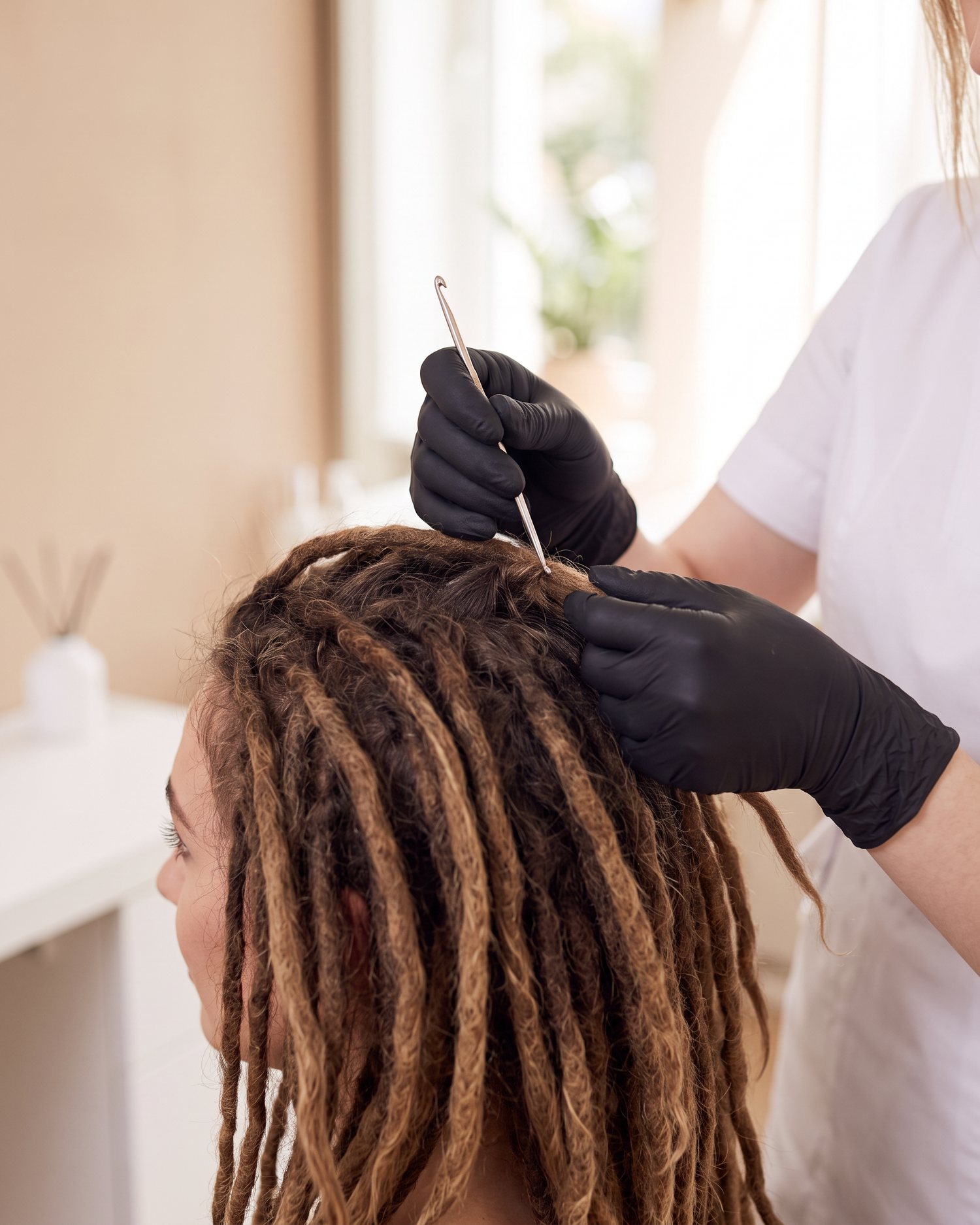
Since most myths come down to "who and how", it's worth knowing what to ask before making a decision. First — the method. There are several dreadlock techniques (twist-and-rip, crochet, backcombing, free-form) — each suited to different hair types and expected results. A specialist chooses the method to suit your hair, not their own habits. Second — sectioning. A well-planned, symmetrical division determines how the dreadlocks will sit, grow and behave as they grow out. Poor sectioning is very hard to correct. Third — aftercare. A good specialist explains how to wash, how to dry, and how to regularly separate new growth.
Dreadlocks on different hair types — what to know
Curly and thick hair
A natural ally for the technique
- Forms the dreadlock structure more easily
- Matures and "locks" faster
- Needs fewer preparatory sessions
- Free-form can be a real option
Straight and fine hair
Possible, but needs more work
- Longer forming period (often over a year)
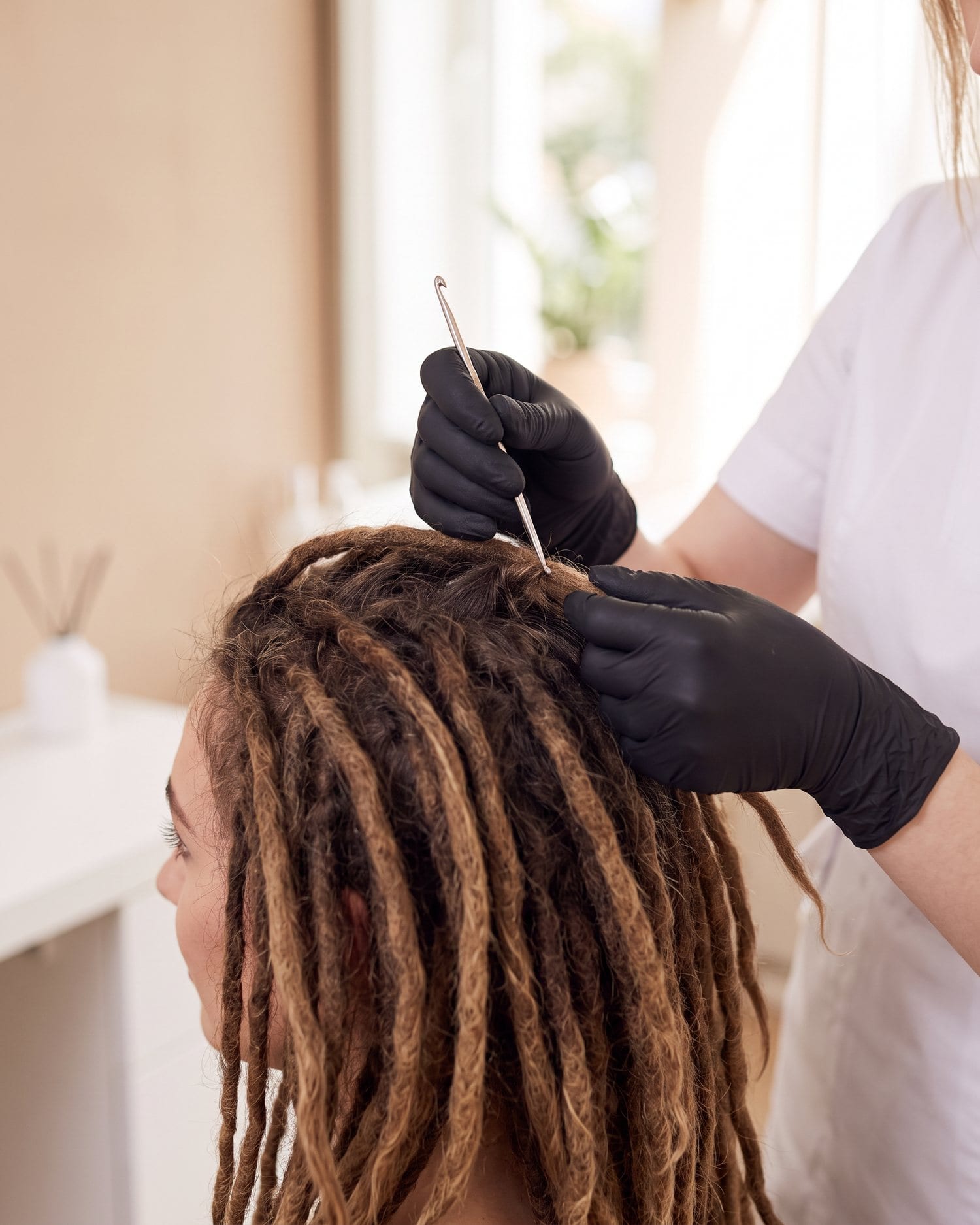
- Needs more precise techniques (crochet)
- More frequent retightening as it grows out
- Result achievable
The difference between these two profiles isn't a matter of aesthetics — it's a matter of managing expectations realistically. Someone with thick curly hair and someone with straight fine hair will leave the same salon with different dreadlocks — and both should know that before they sit down in the chair.
The aftercare nobody talks about on Instagram
Photos of mature, beautiful dreadlocks are everywhere on Instagram. Photos from the first year — when dreadlocks are fuzzy, uneven, when the roots need checking every day, and every wash ends in forty minutes of drying — are far rarer. This creates a false impression that the style "just is" and needs no attention. In reality, the first year is the most important stage — mistakes made then can be difficult or impossible to fix later.
- 01
First weeks
Dreadlocks are "fresh" and may look fuzzy and loose — especially on straight hair. The key is not to panic and not to retighten too aggressively.
- 02
Month 1–3
Roots grow out and create "loose" sections near the scalp. Time for regular separating — it prevents the dreadlocks from merging together.
- 03
Month 3–6
The structure gradually stabilises. Washing gets easier, and the dreadlocks hold their shape more confidently. Important: dry thoroughly at the root.
- 04
After a year
Mature dreadlocks. Care becomes simpler — regular washing, less frequent retightening, protection from moisture overnight.
Before you decide — a few questions worth asking yourself
Dreadlocks are a long-term commitment — both aesthetically and in terms of care. Before deciding, it's worth answering a few questions honestly. Do you have time for regular drying and separating? How do you react to the transition stage, when the style "doesn't feel like you yet"? Is your hair in good condition — dreadlocks applied to damaged, dry or brittle strands can make that worse. And do you have a specialist you trust, who understands your hair type?
A second question worth asking before your first visit: what matters more to you — a fast result or a lasting, healthy one? These two paths rarely go together. Speeding up the process with aggressive techniques or sticky substances may give the impression of an instant result, but for many people it leads to problems a few months later. Patience — especially at the start — is often the best investment.