Hair doesn't begin where you can see it
What you see in the mirror — length, shine, texture, thickness — is the final result of a process that began weeks earlier, deep in the scalp. Every hair grows from a follicle: a small, specialised structure embedded in the dermis, where cells multiply, keratinise and are pushed upward to form what we call the shaft.
This follicle is a living factory — it needs oxygen, nutrients and the right environment to function well. Blood vessels feed it. Hormones regulate it. A microbiome — a community of microorganisms that affects the surrounding skin — surrounds it. None of these mechanisms reach the shaft itself, the part above the skin. The shaft is dead in the biological sense: it doesn't regenerate from within, doesn't absorb nutrients from outside, and doesn't grow upward. It grows from below, pushed by the living follicle.
So when hair is chronically dull, thin, brittle or shedding excessively, it's worth starting the question from the bottom: what condition is the skin it grows from actually in? The answer often explains more than the chemical composition of any shampoo or serum.
What's really happening in the scalp — and how it affects your hair
A scalp can be "neglected" in several different ways — and each one affects hair quality differently. It's worth telling them apart, because mistaking symptoms for causes leads to buying more products that treat the symptom, not the source.
- Insufficient blood flow. The hair follicle needs a steady blood supply to multiply cells efficiently. When microcirculation in the scalp is weakened — by stress, a sedentary lifestyle, chronic muscle tension or poor habits — follicles work more slowly. Hair may grow thinner, more slowly, and enter the resting phase sooner. This often feels like "less hair than before", without obvious pain or visible dandruff.
- Disrupted barrier and excess oiliness. Sebaceous glands in the scalp secrete sebum — natural hydration and protection. When their function is disrupted (by harsh shampoos that strip sebum too aggressively and trigger a rebound effect, or by nutrient deficiencies), the scalp can be dry at the roots and oily within hours, at the same time. This is an environment where the follicle doesn't work optimally.
- Yeast overgrowth and inflammation. In most cases, dandruff isn't "dry skin" — it's the result of an overgrowth of Malassezia, a fungus naturally present on the skin that multiplies excessively under certain conditions. The mild inflammation this triggers around follicles can slow hair growth and weaken its anchoring in the skin. Serum applied to a scalp with active, untreated dandruff will work noticeably less well.
- Excess keratinisation at the follicle opening. Follicle openings can become blocked — by product residue, dead skin cells, environmental pollutants. This reduces the space available for growing hair and can contribute to weaker anchoring at the root. Regular scalp exfoliation removes this build-up and "unclogs" the openings.
- Chronic oxidative stress. The scalp, like all skin, is exposed to free radicals — from UV, air pollution, stress. The hair follicle is particularly sensitive to this stress. A chronic inflammatory and oxidative environment shortens the hair growth cycle and speeds up follicle miniaturisation.
Hair serum: what it really does — and what it can't
Let's start with honesty: a good hair serum makes sense and is a valuable part of a hair-care routine. The ingredients it contains — amino acids, ceramides, silk proteins, humectants, oils — can genuinely improve the condition of the shaft: they smooth the cuticle scales, reduce frizz, limit breakage and static, and add shine. These are real effects, and there's no reason to give them up.
The problem lies in what we — and manufacturers — often expect serum to do. If you expect a serum applied to the shaft to "strengthen the roots", "stop shedding" or "thicken hair" — that expectation goes beyond what the product can achieve. The shaft is a dead structure the cosmetic can penetrate; but the follicle sits beneath the skin and has no contact with serum whatsoever.
Hair serum (on the shaft)
works on what's visible
- Smooths and seals the hair cuticle
- Hydrates and limits breakage along the shaft
- Shine, less frizz, easier combing
- Protection from external factors (UV, heat)
Scalp (the foundation)
beyond the reach of a standard serum
- Blood flow and nourishment to the hair follicle
- Microbiome and inflammation at the root
- Hair growth cycle and growth rate
- Thickness of newly growing hair
In other words: serum and a healthy scalp aren't competitors — they're two different levels of the same care routine. Serum looks after what's already above the skin. Scalp condition determines what grows out of it in future. The sensible approach isn't "one or the other" — it's: look after the soil first, then polish the plant.
When to call it scalp "neglect" — the signs
The scalp rarely sends a loud alarm. It usually gives subtle signals, which we then read as "poor hair quality" and try to fix with products. It's worth learning to read them.
- 01
Quick oiliness alongside insufficient hydration
Hair looks greasy after a single day, yet the ends are dry and rough at the same time. Often the result of "over-washing" the scalp with an overly harsh shampoo that disrupts natural sebum production.
- 02
Excessive shedding with no clear medical cause
More than usual on your brush, in the shower, on your pillow — for weeks or months at a time. It can point to weakened microcirculation, deficiencies, or a disrupted growth cycle following a stressful period.
- 03
Dandruff or scalp flaking
Even mild and "purely cosmetic" flaking suggests an active inflammatory process or a microbiome out of balance. In this environment, follicles work under suboptimal conditions.
- 04
Itching and tightness of the scalp
Especially after washing or during the day. It can indicate irritation, an overly alkaline product pH, or early-stage inflammation.
- 05
New hair growing thinner and shorter than before
This is one of the key signs of follicle miniaturisation — when a follicle gradually loses its ability to produce thick, long hair. It requires action aimed at the environment, not the shaft.
What can really change the environment for the follicle
If the problem lies in the scalp, the solution needs to reach the scalp too — not just the shaft. This calls for a different way of thinking about hair care: not "which serum should I buy", but "how do I improve the conditions the follicles work in".
- Regular scalp exfoliation. Removing dead cells, sebum build-up and product residue "unclogs" follicle openings and lets the scalp breathe more easily. Exfoliation can be mechanical (a gentle brush or scrub) or enzymatic — depending on skin sensitivity.
- Scalp massage. A repeated, regular massage — even a few minutes a day — can improve microcirculation and stimulate blood flow to the follicles. It's one of the simplest, cheapest and best-documented ways to influence the environment for hair growth. The effects build gradually, but many people notice them after a few weeks.
- Scalp serum (not shaft serum). There's a clear difference on the market between serum applied to the shaft and serum designed to be massaged into the scalp. The latter targets the skin itself: stimulating circulation, reducing or normalising sebum, supporting the environment for the follicle. This is where synergy with in-salon treatments comes into play.
- Shampoo choice and washing frequency. Overly harsh cleansers disrupt scalp pH and damage the microbiome. Washing too rarely encourages build-up. The optimal approach is regular but gentle cleansing — tailored to your specific skin, not to a marketing claim of "once a week is enough".
- Diet and micronutrients. The hair follicle is one of the most metabolically active tissues in the body — it needs protein, iron, zinc, biotin, vitamin D. A chronic deficiency in any of these can show up as weaker, thinner hair. Supplementing without confirming a deficiency, though, is often pointless — it's worth checking your levels first.
How to build a routine that actually works
To sum up the whole logic: if you want your serum and other products to deliver a clear, lasting effect, look after the foundation first. This doesn't mean giving up what you already use. It means changing the order of priorities.
Shaft-focused hair care
typical routine
- Expensive serum applied to the shaft
- A mask for length
- Treating the scalp as "skin under the hair"
- Expecting results within days
Hair care that starts at the scalp
a shift in perspective
- Regular scalp cleansing and exfoliation
- Massage to support microcirculation
- Scalp serum (not just shaft serum)
- Patience — assess results after 8–12 weeks
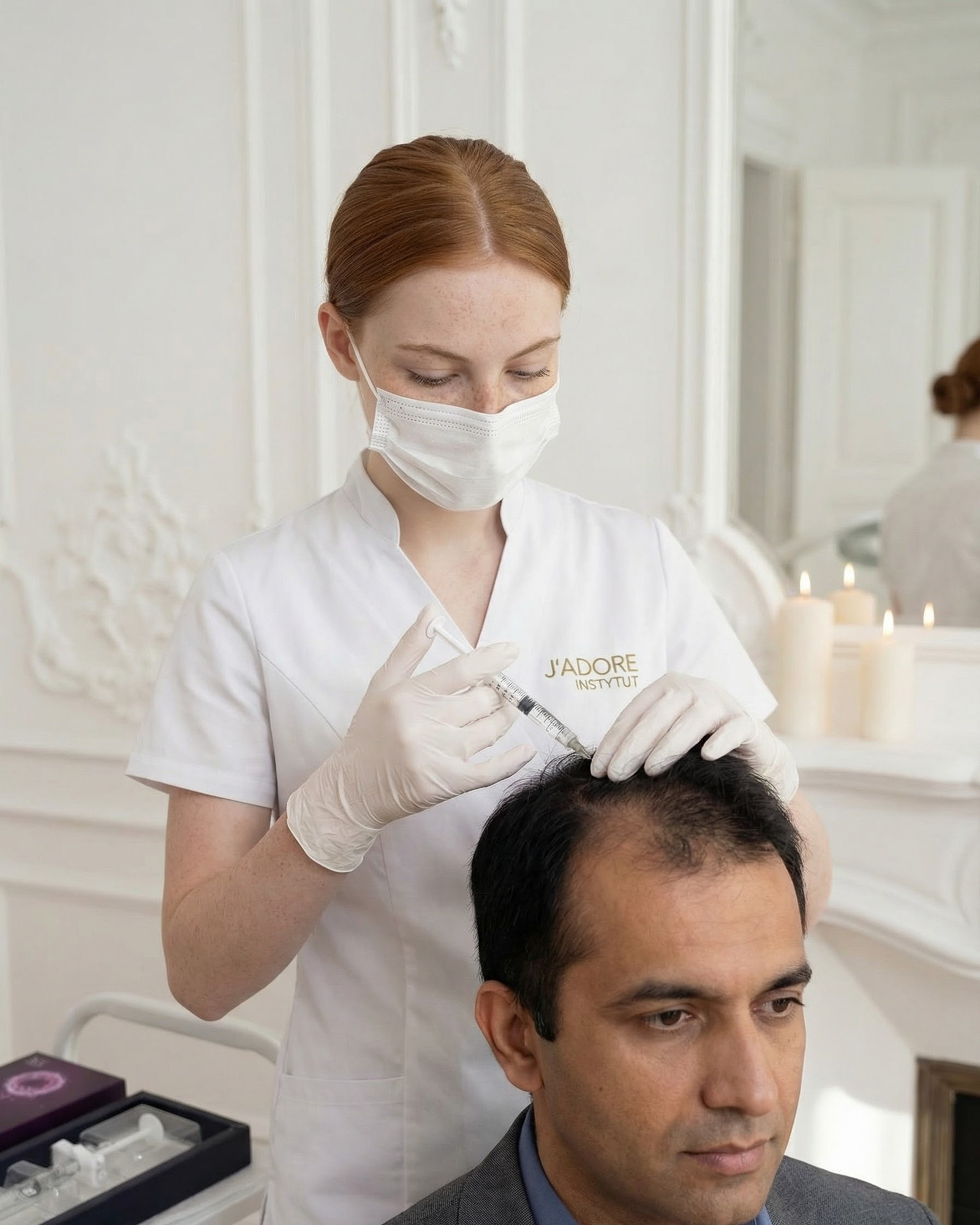
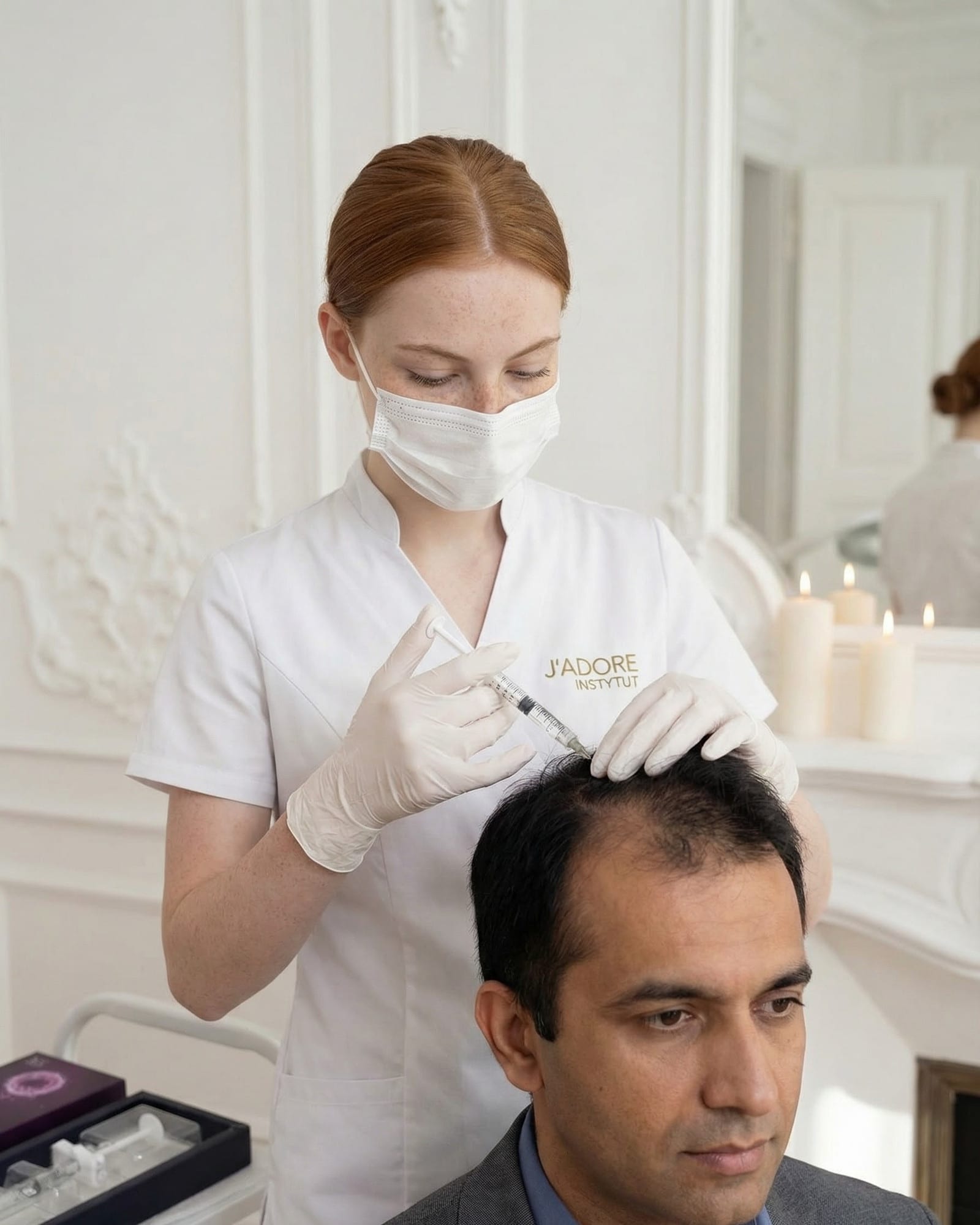
This is exactly where an in-salon treatment has its place — when the scalp condition is clearly weakened, follicle engagement is visibly affected, and home care alone isn't enough. Not as a substitute for your daily routine, but as its reinforcement from within — reaching levels no external cosmetic can reach.
Scalp mesotherapy
Delivers ingredients that support the hair follicles directly into the scalp — usually performed in a series, complementing home care where cosmetics can't reach.
Platelet-rich plasma (PRP)
Your own growth factors delivered into the scalp — they stimulate follicle activity and, for many people, support hair quality and density.
Scalp microneedling
Increases absorption of active ingredients and stimulates microcirculation — often combined with mesotherapy for better penetration.